
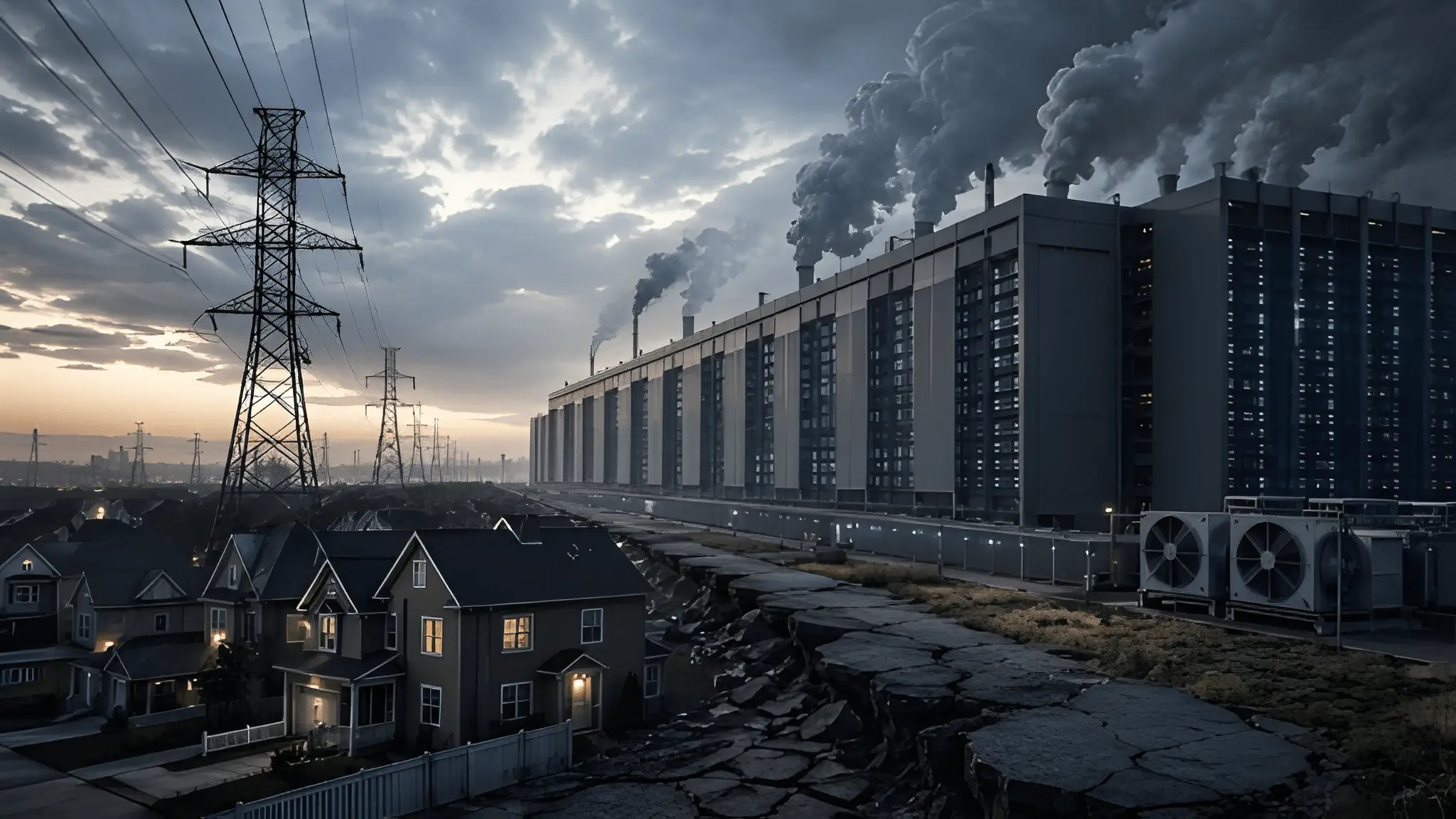
Reframing Infrastructure: From Burden to Strategic Asset
Public discourse around data centers has hardened into a familiar storyline: high energy demand, heavy water consumption, and growing strain on local infrastructure. That narrative has gained traction across planning boards, policy discussions, and community forums. Yet industry observers note a widening gap between perception and operational reality.

The critique does not emerge without basis. Data centers are energy-intensive by design, and advanced cooling systems often rely on water resources. However, the prevailing argument tends to isolate these factors without evaluating how modern facilities are evolving. The result is a one-dimensional narrative that frames data centers as extractive infrastructure rather than adaptive systems capable of delivering net-positive outcomes.
A more complete assessment shows that the issue is not the presence of data centers. The defining variable is how these facilities are designed, powered, and integrated into surrounding ecosystems.
The Design Shift Reshaping Data Center Impact
Operators have begun to rethink infrastructure models in response to both regulatory pressure and technological opportunity. Facilities no longer function solely as passive energy consumers. Instead, they are being engineered as dynamic participants in broader energy systems.

On-site power generation has emerged as a central component of this shift. By producing energy locally, operators can reduce dependency on strained grids while improving reliability. Battery storage systems further extend this capability, allowing facilities to store excess energy and deploy it during peak demand periods.
This approach can enable data centers to function as stabilizing forces within regional energy networks when grid-interactive systems, storage, and responsive load management are fully implemented.
Rather than consistently amplifying grid stress, they can absorb fluctuations and support load balancing in deployments where advanced energy management systems are actively integrated. The technical architecture already exists; deployment is accelerating as operators align infrastructure strategies with long-term sustainability goals.
Grid Integration as a Strategic Advantage
The integration of data centers into local energy systems marks a departure from traditional infrastructure planning. Historically, large facilities were evaluated based on their consumption footprint alone. Today, performance metrics increasingly include grid interaction and resilience contributions.
Facilities equipped with advanced energy management systems can respond in real time to grid conditions. During periods of excess supply, they can increase consumption or store energy. During shortages, they can reduce load or feed stored power back into the system.
This bidirectional relationship introduces a level of flexibility that conventional infrastructure cannot match. It also positions data centers as partners in energy resilience rather than competitors for limited resources.
The implications extend beyond operational efficiency. Communities can benefit from improved grid stability, reduced outage risks, and more predictable energy pricing in cases where data centers are designed to operate in coordination with local energy systems.
These outcomes challenge the assumption that data centers inherently degrade local infrastructure performance.
Water Use and the Innovation Curve
Water consumption remains one of the most cited concerns in the anti–data center narrative. Cooling systems, particularly in high-density environments, require significant thermal management resources. However, the conversation often overlooks the pace of innovation in this domain.
Advanced cooling technologies are beginning to reduce dependence on traditional water-intensive methods, although adoption varies and trade-offs with energy use and cost remain. Liquid cooling systems, closed-loop designs, and hybrid approaches are reshaping how facilities manage heat. These systems optimize thermal efficiency while minimizing resource consumption.
Operators are also exploring alternative water sources, including recycled and non-potable supplies. This reduces competition with municipal water systems and aligns facility operations with broader sustainability objectives.
The trajectory is clear: water use is not a static variable. It is a design challenge that continues to evolve as new technologies reach commercial scale.
Waste Heat as a Community Resource
One of the most underexamined opportunities lies in waste heat reuse. Data centers generate substantial thermal output as a byproduct of computation. Traditionally, this heat has been treated as an inefficiency to be dissipated.
A growing number of operators are rethinking that assumption. By capturing and redirecting excess heat, facilities can support district heating systems, warm residential buildings, and supply energy to public infrastructure.
This approach reframes waste as a resource. It also establishes a direct, tangible benefit for surrounding communities. Instead of viewing data centers as isolated industrial assets, stakeholders can evaluate them as contributors to local energy ecosystems.
The technical feasibility of heat reuse has already been demonstrated in multiple markets. Wider adoption will depend on infrastructure alignment, regulatory support, and coordinated urban planning.
Economic and Social Value Creation
Beyond energy and resource considerations, data centers contribute to local economies in ways that often receive less attention. Construction projects generate immediate employment opportunities, while long-term operations support specialized technical roles.
Infrastructure investments can drive improvements in connectivity, power systems, and transportation networks, though the scale and distribution of these benefits vary by region and project design. These upgrades can benefit adjacent industries and attract additional investment.
The broader economic impact extends into digital enablement. Data centers underpin cloud services, artificial intelligence workloads, and enterprise operations. Their presence supports innovation ecosystems that rely on low-latency, high-capacity computing infrastructure.
When evaluated through this lens, data centers function as foundational assets in modern economies rather than isolated industrial projects.
Policy and Planning as Determining Factors
The divergence between negative perception and positive potential underscores the importance of policy frameworks. Regulatory approaches that focus exclusively on ограничения and resource caps risk overlooking opportunities for optimization.
Effective policy should incentivize integration, efficiency, and innovation. This includes supporting renewable energy adoption, enabling grid-interactive capabilities, and encouraging resource reuse strategies.
Urban planning also plays a critical role. Coordinated development can align data center projects with community needs, ensuring that infrastructure investments deliver shared value. The conversation must shift from opposition to optimization. Stakeholders who approach data center development as a collaborative process are more likely to achieve sustainable outcomes.
Moving Beyond the Fear Narrative
The persistence of the anti–data center narrative reflects a broader challenge in infrastructure discourse. Complex systems are often reduced to their most visible impacts, while less tangible benefits remain underexplored.
Data centers exemplify this dynamic. Their energy use is measurable and immediate, while their contributions to resilience, innovation, and economic growth are distributed and long-term.
Industry analysts argue that this imbalance has shaped public perception in ways that do not fully reflect current realities. As technologies advance and operational models evolve, the gap between narrative and performance continues to widen.
A more balanced perspective recognizes that data centers are neither inherently harmful nor automatically beneficial. Their impact depends on design choices, operational strategies, and integration with surrounding systems.
From Opposition to Optimization
The central question is not whether data centers should exist. The demand for digital infrastructure ensures their continued expansion. The critical issue is how they are built and how they interact with the environments around them.
Modern data centers have the capacity to support energy systems, reduce inefficiencies, and generate local value when planning, integration, and operational strategies align with community and grid requirements.
Achieving these outcomes requires deliberate design, forward-looking policy, and collaborative planning.
The narrative built on fear does not account for these possibilities. A shift toward evidence-based evaluation can reframe the conversation, positioning data centers as adaptable infrastructure capable of contributing to sustainable and resilient communities.











