
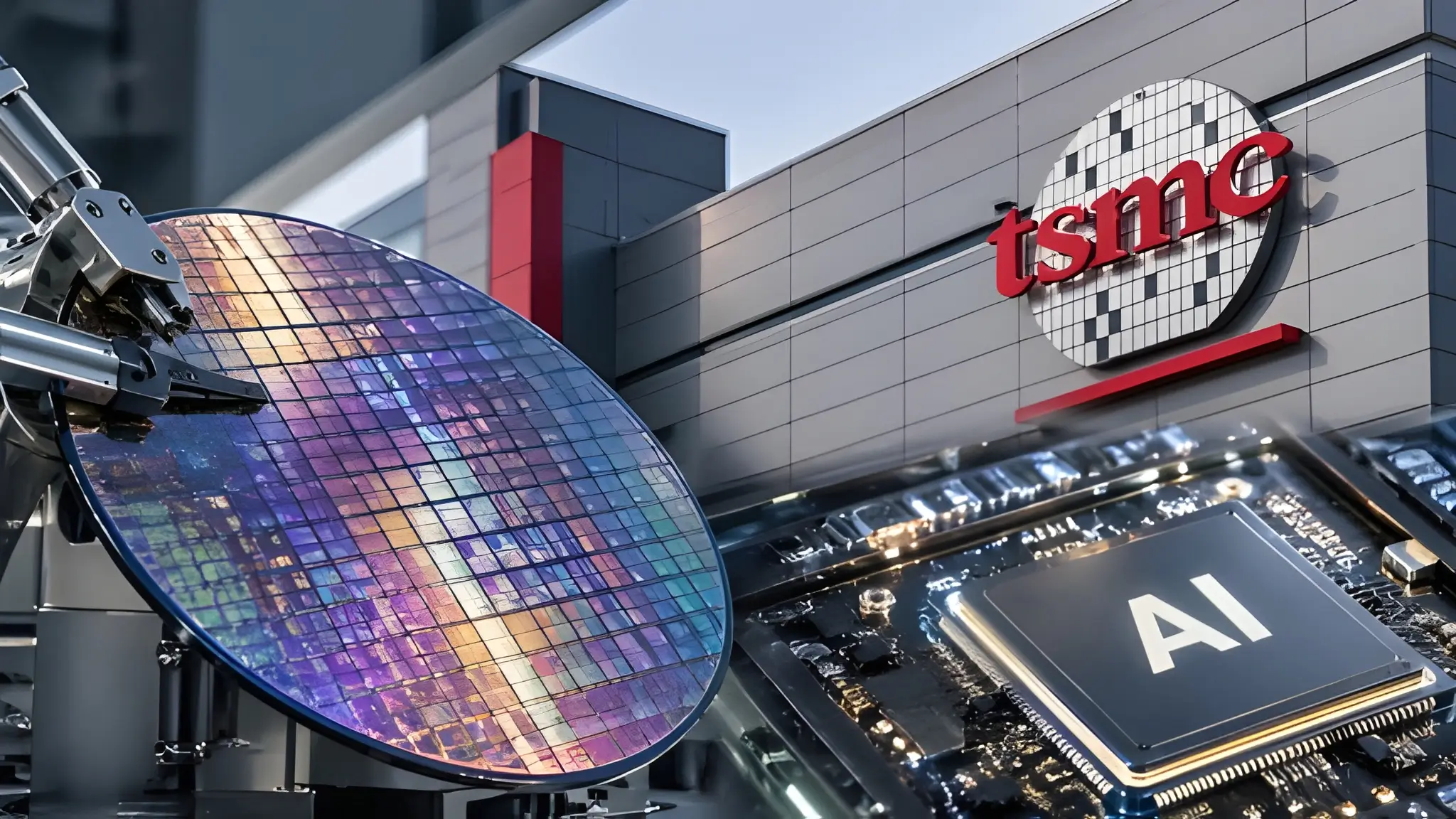
Artificial intelligence infrastructure rarely fails in obvious places, yet it often stalls in the least visible layer of the stack. Systems scale, models improve, and architectures evolve, but progress slows when physical production cannot keep pace with design ambition. The constraint does not emerge in software pipelines or model training strategies, but inside fabrication environments where silicon becomes functional hardware. Taiwan Semiconductor Manufacturing Company operates within this layer, shaping output without appearing in product narratives or benchmark discussions. Its influence remains embedded in timelines, availability, and performance ceilings rather than public-facing innovation claims. This dynamic creates an environment where the pace of artificial intelligence expansion increasingly reflects manufacturing readiness alongside continued advances in algorithmic development.

The Factory Behind Every AI Breakthrough
Every major accelerator powering artificial intelligence workloads relies on advanced process nodes that only a handful of fabrication facilities can deliver at scale. These nodes, including 5nm, 3nm, and the upcoming 2nm class, require extreme ultraviolet lithography, advanced materials engineering, and tightly controlled yield optimization processes. Taiwan Semiconductor Manufacturing Company leads this domain with consistent production maturity and a deep integration with design ecosystems across the semiconductor industry. Graphics processors, custom accelerators, and specialized inference chips all depend on these fabrication capabilities to reach performance and efficiency targets demanded by large-scale deployments. IInnovation at the chip architecture level can face constraints without corresponding progress in fabrication technology, creating a coupling between design ambition and manufacturing feasibility. The result places fabrication infrastructure as a prerequisite for every visible leap in artificial intelligence capability.
Design teams across companies build increasingly complex chip architectures with billions of transistors, yet those designs remain theoretical until fabrication processes translate them into physical wafers. Process node advancements determine transistor density, power characteristics, and thermal behavior, which directly influence system-level performance outcomes. Taiwan Semiconductor Manufacturing Company has refined these parameters through iterative node development cycles that align closely with industry roadmaps. This alignment ensures that chip designers can plan multi-year product strategies with a degree of predictability tied to fabrication progress. However, that predictability depends entirely on the foundry maintaining its technological lead and operational stability. The dependency chain thus extends from research labs to fabrication plants, anchoring the entire artificial intelligence ecosystem in a single upstream layer.
Why Hyperscalers Don’t Control Their Own Destiny
Large technology companies invest heavily in chip design capabilities, building internal teams that rival traditional semiconductor firms in expertise and scale. These organizations develop custom silicon tailored to their workloads, optimizing for performance, energy efficiency, and integration with proprietary software stacks. Despite this investment, fabrication remains external, which introduces a structural dependency on foundry partners for production timelines and output volumes. Taiwan Semiconductor Manufacturing Company allocates capacity across multiple clients, balancing demand from mobile, automotive, and high-performance segments alongside artificial intelligence requirements. This allocation process introduces constraints that even the largest technology firms cannot fully control through internal planning alone. The gap between design capability and manufacturing control defines a critical limitation in the current industry structure.

Roadmap execution for hyperscalers depends on securing fabrication slots months or even years in advance, creating a planning horizon that extends far beyond typical product cycles. Delays in fabrication schedules or yield challenges can cascade into postponed product launches and recalibrated deployment strategies. NVIDIA, AMD, and major cloud providers all operate within this framework, aligning their innovation timelines with foundry availability rather than independent ambition. This dependency introduces a competitive dimension where access to fabrication capacity becomes as important as design excellence. Companies that secure early access to advanced nodes gain a measurable advantage in performance and market positioning. Consequently, manufacturing access has evolved into a strategic variable that shapes industry leadership dynamics.
Capacity Is the New Currency in AI Infrastructure
The conversation around artificial intelligence infrastructure often centers on demand growth, yet supply constraints at the wafer level define how much of that demand can be realized in practice. Fabrication capacity operates within fixed limits determined by cleanroom space, equipment availability, and process throughput. Taiwan Semiconductor Manufacturing Company expands this capacity through multi-billion-dollar investments in new fabs, each requiring years to construct and bring to full production efficiency. Companies seeking to deploy advanced chips must secure access to this capacity well in advance, often through long-term agreements or strategic partnerships. This dynamic transforms fabrication slots into a scarce resource that carries significant economic and competitive value. The allocation of this resource increasingly influences which projects move forward and which remain constrained by supply limitations.
Pre-booking fabrication capacity has become a defining strategy for companies operating at the forefront of artificial intelligence deployment. Organizations commit capital upfront to secure production priority, effectively treating fabrication access as a foundational asset rather than a variable cost. This approach influences financial planning by increasing emphasis on long-term commitments and risk management around supply availability. Taiwan Semiconductor Manufacturing Company benefits from this structure by maintaining high utilization rates and predictable revenue streams tied to committed demand. However, clients assume the risk associated with forecasting future needs in a rapidly evolving technological landscape. The interplay between capacity commitments and innovation cycles introduces a new layer of complexity into infrastructure planning.
Advanced Packaging: The Monopoly Within the Monopoly
Even after wafers exit fabrication lines, another constraint emerges that directly affects deployment timelines and system scalability. Advanced packaging technologies such as chip-on-wafer-on-substrate integration enable multiple dies to function as a unified system, supporting the high bandwidth and density requirements of artificial intelligence accelerators. Taiwan Semiconductor Manufacturing Company has invested heavily in these packaging techniques, building capabilities that remain difficult to replicate at comparable scale. Demand for these services has increased sharply with the rise of multi-die architectures used in high-performance accelerators. Limited packaging capacity introduces a second bottleneck that compounds fabrication constraints rather than alleviating them. The result creates a dual dependency on both fabrication and integration layers within the same organization.
Advanced packaging capacity requires specialized facilities, equipment, and process expertise that differ significantly from traditional fabrication environments. Scaling these capabilities involves additional capital investment and operational complexity, extending timelines for capacity expansion. Companies relying on advanced packaging must align their deployment strategies with both wafer production and packaging availability. This alignment introduces coordination challenges that can delay system integration even when chips are ready for assembly. Taiwan Semiconductor Manufacturing Company’s position across both layers consolidates influence over end-to-end production timelines. The combination of fabrication and packaging control effectively establishes a layered bottleneck within the artificial intelligence hardware ecosystem.
AI Growth Is Now Pegged to Foundry Timelines
Artificial intelligence expansion often appears driven by software innovation and model scaling, while underlying growth rates also align closely with fabrication capacity increases. New fabrication facilities require extensive planning, regulatory approvals, and multi-year construction timelines before reaching operational readiness. Taiwan Semiconductor Manufacturing Company invests heavily in these expansions, but the pace of capacity growth remains inherently constrained by physical and financial factors. Delays in facility construction or process ramp-up directly affect the availability of advanced chips for deployment. These delays propagate through the ecosystem, influencing product launches and infrastructure scaling decisions. The linkage between fabrication timelines and artificial intelligence growth introduces a structural constraint that shapes industry expectations.
Transitioning to new process nodes introduces additional complexity, as yield optimization and defect reduction require iterative refinement over extended periods. Early production phases often deliver lower output levels, limiting the immediate availability of cutting-edge chips. Companies must therefore plan for gradual ramp-up rather than instant scalability when adopting new nodes. Taiwan Semiconductor Manufacturing Company manages these transitions through phased deployment strategies, balancing innovation with production stability. However, even well-managed transitions impose constraints on supply availability during critical periods of demand growth. This reality reinforces the dependence of artificial intelligence expansion on manufacturing execution rather than purely technological breakthroughs.
The Most Powerful AI Company Isn’t an AI Company
The structure of the artificial intelligence ecosystem reveals a distribution of influence that differs from conventional narratives centered on software and model development. Control over silicon production significantly influences which innovations reach scale and how quickly they integrate into operational systems. Taiwan Semiconductor Manufacturing Company occupies a position that intersects every major player in the ecosystem, influencing timelines, availability, and performance ceilings through its manufacturing capabilities. This position does not rely on proprietary models or consumer-facing platforms, yet it shapes outcomes across both domains. The concentration of manufacturing expertise and capacity within a single organization introduces strategic implications for the entire industry. Long-term leadership in artificial intelligence increasingly aligns with control over production infrastructure alongside advances in algorithms, software ecosystems, and capital investment.
The trajectory of artificial intelligence development will continue to reflect constraints and opportunities defined by the manufacturing layer. Companies may diversify design strategies and invest in alternative architectures, but fabrication remains a shared dependency that cannot be easily replicated. Taiwan Semiconductor Manufacturing Company’s continued investment in process technology and capacity expansion will influence how the ecosystem evolves over the coming decade. This influence extends beyond individual product cycles into the structural dynamics of global technology competition. The relationship between manufacturing control and technological leadership will likely intensify as demand for advanced chips continues to grow. The balance of power within artificial intelligence will therefore remain anchored in the physical systems that enable it.











