
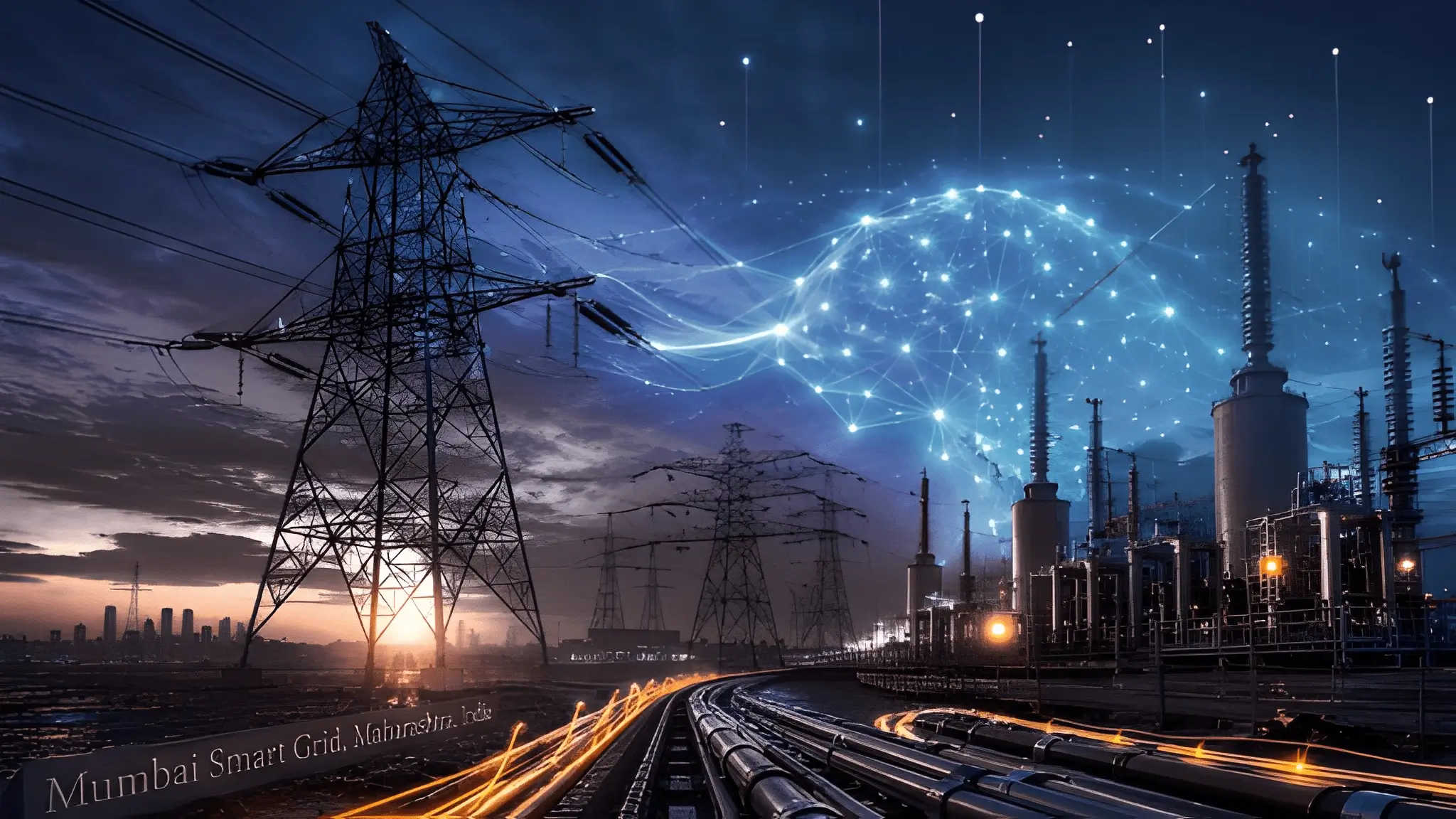
Every major technology revolution eventually collides with the physical world, and artificial intelligence has now reached that point. Behind the surge in AI investment sits an infrastructure challenge that extends far beyond servers and semiconductor manufacturing. Utilities across several regions are receiving power requests large enough to rival the electricity demand of entire cities, while transmission operators struggle to expand networks fast enough to support new projects. Land availability and tax incentives still matter, but developers increasingly view them as secondary compared with reliable grid access. Substations, switchyards, and transmission corridors have rapidly transformed into strategic assets capable of determining where the next generation of AI infrastructure can actually operate. The industry’s next competitive advantage may not come from software architecture alone because electricity availability has entered the center of the equation.

AI Clusters Are Breaking Utility Planning Models
Traditional utility forecasting models relied on gradual industrial expansion, population growth patterns, and stable commercial demand cycles across multi-year periods. Hyperscale AI campuses now disrupt that framework because a single facility can request electricity volumes equal to a mid-sized metropolitan area. Utilities historically added generation and transmission capacity through predictable planning horizons that stretched across decades rather than months. New AI clusters often request hundreds of megawatts during the earliest construction phases while developers simultaneously reserve additional future capacity. Regional grid operators now face situations where concentrated demand emerges faster than transmission studies can evaluate system reliability impacts. Energy planners increasingly redesign forecasting assumptions because older demand curves no longer reflect the speed or concentration of large digital infrastructure deployments.
AI training facilities also produce load characteristics that differ from traditional enterprise data centers built during earlier cloud expansion cycles. Graphics processing infrastructure creates dense power demand patterns that place unusual stress on substations, cooling systems, and local transmission equipment. Several utilities now confront overlapping requests from multiple hyperscalers seeking access inside the same transmission corridor at nearly identical timelines. Large campuses frequently reserve excess capacity to secure future growth flexibility, which complicates long-term infrastructure planning for regulated utilities. Researchers and infrastructure analysts increasingly warn that concentrated digital expansion could destabilize local grid balancing assumptions in several high-growth regions. Utilities therefore face mounting pressure to modernize forecasting systems that can model rapid and clustered industrial electrification rather than linear demand growth.
Transmission Delays Are Slowing The AI Buildout
Transmission infrastructure now represents one of the largest obstacles facing hyperscale AI expansion because interconnection timelines continue stretching across multiple years. Developers can construct modern data center campuses relatively quickly, yet power delivery infrastructure still requires extensive permitting reviews and environmental approvals. Many transmission projects also face local opposition, land acquisition disputes, and complex regional coordination requirements before construction begins. Utilities cannot energize new high-capacity campuses until transmission upgrades support stable delivery across surrounding networks. Several grid operators currently manage interconnection queues filled with speculative applications that further slow approval timelines for legitimate projects. Hyperscalers increasingly redesign development strategies around transmission availability rather than traditional real estate priorities.

Grid bottlenecks now influence capital allocation decisions across nearly every major AI infrastructure market in North America and Europe. Developers in Texas increasingly deploy behind-the-meter generation because transmission upgrades will not arrive fast enough to support immediate operational targets. Some operators now pursue private microgrids or temporary gas generation systems to bridge delays tied to regional grid expansion projects. Utilities continue requesting billions of dollars for transmission investment because aging networks cannot absorb concentrated digital demand without major reinforcement. Large transformer shortages also create additional pressure because manufacturers already face extended delivery lead times for critical high-voltage equipment. Consequently, transmission readiness now shapes deployment schedules as strongly as semiconductor supply chains shaped earlier phases of the AI expansion cycle.
The AI Boom Is Creating A Substation Economy
Substations once operated as overlooked components inside larger utility networks, yet they now command strategic importance within hyperscale infrastructure planning. AI campuses require immediate access to high-capacity substations capable of supporting dense and uninterrupted electricity delivery around the clock. Investors increasingly evaluate industrial land based on nearby transformer availability, voltage capacity, and expansion potential inside surrounding transmission systems. Regional infrastructure developers now market energized substations as premium assets because they can dramatically reduce project deployment timelines. Utilities also recognize that substation expansion often determines whether an AI project can proceed within commercially viable schedules. Private capital has started flowing toward switchyards, interconnect facilities, and adjacent grid infrastructure that once attracted little attention outside regulated utility markets.
The emerging substation economy extends beyond utilities because hyperscalers increasingly participate directly in electrical infrastructure development decisions. Several operators now negotiate dedicated substations or shared transmission arrangements before finalizing broader campus construction plans. Engineering firms that specialize in switchgear, transformers, and high-voltage integration now experience rising demand tied directly to AI infrastructure expansion. Equipment procurement timelines have also become critical because transformer manufacturing capacity remains constrained across several major markets. Infrastructure investors increasingly treat energized industrial sites as scarce assets capable of commanding premium valuations during future expansion phases. Meanwhile, local governments now view electrical readiness as a decisive factor when competing for large technology investments that can reshape regional economies.
Hyperscalers Are Starting To Shop For Electricity First
Large cloud providers traditionally prioritized land pricing, fiber connectivity, and regional tax incentives when selecting new campus locations. AI expansion has shifted those priorities because reliable electricity access now determines whether projects can operate at intended scale. Hyperscalers increasingly evaluate transmission congestion, interconnection timelines, and regional generation capacity before negotiating property acquisitions. Several developers now reserve electrical capacity years ahead of construction because future access remains uncertain across high-growth markets. Energy availability has become a strategic screening metric rather than a secondary operational consideration during site selection. Infrastructure consultants now describe electricity access as the defining competitive advantage for future hyperscale development corridors.
This shift has started reshaping the geography of digital infrastructure investment across multiple global regions. Markets with strong transmission networks and available generation capacity now attract disproportionate attention from cloud and AI developers. Regions that once dominated traditional data center expansion sometimes struggle because overloaded transmission systems cannot support new gigawatt-scale projects. Hyperscalers increasingly pursue partnerships with utilities, generation developers, and infrastructure funds to secure long-term electricity access before competitors lock in available capacity. Some operators even consider direct investment into generation assets or energy development platforms to reduce long-term infrastructure risk exposure. The commercial value of reliable grid access now rivals the strategic importance once assigned exclusively to semiconductor supply relationships.
Utilities Want AI Load, But Fear The Risk
Utilities view hyperscale AI demand as a major revenue opportunity because large industrial customers can support long-term asset growth and regulated returns. Several utility companies have already expanded capital expenditure plans after receiving substantial new demand requests from digital infrastructure operators. AI campuses also provide stable electricity consumption patterns that can improve long-term utilization rates for transmission and generation assets. Utilities therefore compete aggressively to attract large projects capable of supporting future infrastructure investment cycles. Financial markets have responded positively because investors expect higher regulated asset growth tied to expanding electricity demand. However, utility executives also recognize that rapid overbuilding could expose ratepayers and shareholders to substantial financial risks if projected demand weakens later.
The financial risk becomes more complicated because utilities must commit capital years before AI infrastructure reaches full operational scale. Transmission projects, substations, and generation facilities often require enormous upfront spending supported through long depreciation timelines. Utilities also face uncertainty surrounding future AI business models, efficiency improvements, and regional demand concentration patterns. Regulators increasingly question whether residential customers should absorb infrastructure costs tied primarily to private technology expansion. Some analysts warn that speculative capacity reservations from hyperscalers could distort utility planning assumptions if projects fail to materialize at projected scale. Grid operators now explore flexible load management arrangements with AI operators because adaptive demand systems may reduce the need for excessive infrastructure expansion during peak periods.
AI Infrastructure Is Turning Grid Access Into A Premium Asset
The next stage of artificial intelligence expansion will depend heavily on electrical infrastructure rather than solely on advances inside semiconductor manufacturing or software development. Grid access now influences where hyperscalers build, how utilities invest capital, and which regions attract large digital infrastructure ecosystems. Transmission corridors, substations, and interconnection rights increasingly function as strategic assets that can accelerate or delay billions of dollars in investment. Infrastructure operators that can deliver reliable power quickly will likely gain disproportionate economic importance during the next decade of technology expansion. Governments, utilities, and hyperscalers now face mounting pressure to coordinate planning frameworks that can support accelerated electricity demand growth without destabilizing regional grids. The global AI race has effectively transformed reliable electricity delivery into one of the most valuable infrastructure advantages in the modern industrial economy.











