
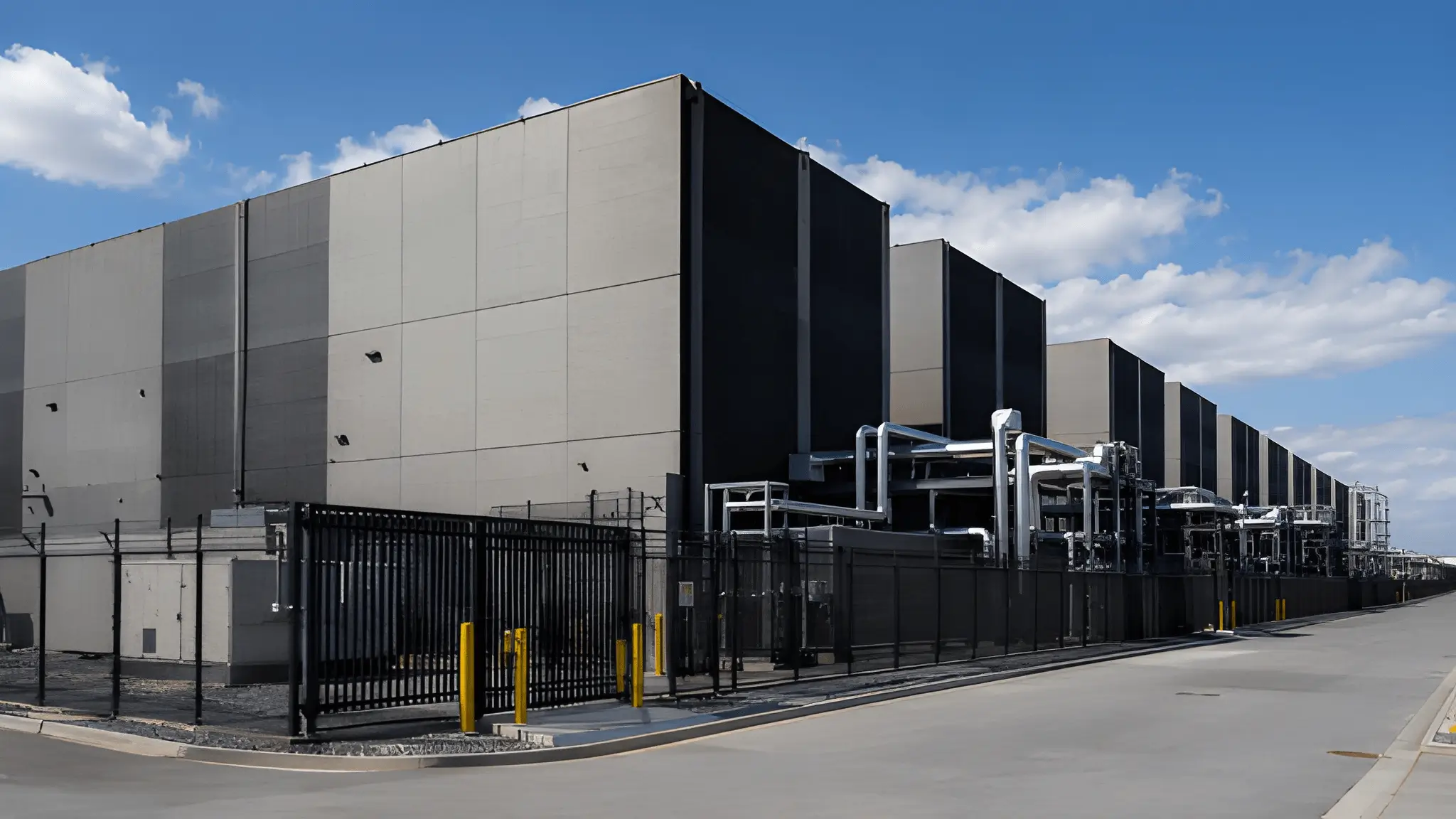
A freight train no longer announces industrial expansion before sunrise. Residents now notice windowless AI campuses through silent construction fencing, utility upgrades, and giant concrete shells rising beside highways with limited public visibility into their operational purpose. The modern industrial landmark arrives without smokestacks, worker parking lots, or public storefronts that signal economic participation to nearby communities. Instead, local neighborhoods confront vast buildings with no visible purpose beyond security gates, backup generators, and layers of restricted access. Massive digital infrastructure projects increasingly occupy suburban edges while offering little physical connection to the people living around them. That disconnect has started to reshape public perception of large-scale computing facilities across regional planning debates and municipal approval hearings.

For decades, industrial growth carried recognizable visual cues that communities could interpret through jobs, traffic patterns, and commercial activity surrounding a facility. Modern hyperscale campuses operate differently because their economic role remains abstract while their physical footprint dominates local landscapes with unmistakable permanence. Residents often struggle to connect the scale of these projects with any meaningful daily interaction that feels visible or locally accessible. The result creates a strange civic imbalance where communities absorb infrastructure burdens without seeing corresponding signs of participation or shared identity. Local resistance has therefore shifted beyond concerns about land use and entered conversations about social legitimacy, cultural fit, and political accountability. Public hearings increasingly reflect emotional frustration toward developments that appear detached from the neighborhoods supporting their operational existence.
The Architecture of Resentment
Large computing campuses rarely resemble the industrial centers that shaped twentieth-century economic identity across manufacturing towns and logistics corridors. Their architecture prioritizes operational efficiency, thermal control, and physical security rather than visual engagement with surrounding civic environments. Long exterior walls often stretch across multiple acres without windows, storefronts, or pedestrian features that create a sense of activity or community participation. Residents looking at these facilities frequently encounter blank facades, perimeter fencing, and tightly controlled entry points that communicate exclusion rather than economic integration. Unlike factories that once generated visible labor ecosystems, these structures appear almost dormant despite consuming extraordinary amounts of energy and infrastructure capacity. That visual contradiction has made hyperscale campuses symbolic representations of technological expansion detached from ordinary social experience.
The absence of visible human activity inside these developments amplifies public discomfort because people instinctively associate industrial scale with workforce presence and community circulation. Traditional industrial projects usually produced nearby restaurants, retail activity, transportation movement, and recognizable labor routines that embedded facilities into local identity over time. Modern computing infrastructure operates with relatively small staffing requirements despite occupying enormous physical footprints across suburban and semi-rural land. Consequently, some communities perceive these campuses as physically dominant developments rather than collaborative economic anchors contributing to neighborhood life. Public frustration grows further when developers present projects through technical language focused on capacity metrics instead of explaining how the infrastructure fits into civic culture. Political leaders increasingly recognize that aesthetics and public perception now influence infrastructure acceptance alongside tax revenue projections.

When Infrastructure Stops Feeling Neighborly
Industrial projects historically gained acceptance because communities could identify direct reciprocal relationships between local disruption and economic participation. Manufacturing plants employed thousands of nearby residents, logistics hubs generated secondary businesses, and energy facilities often supported broad municipal investment through local workforce integration. Large computing campuses rarely operate with the same visible economic reciprocity despite their substantial land acquisition and utility consumption requirements. Residents frequently hear about future digital innovation while struggling to identify tangible forms of participation that affect everyday community life. The imbalance becomes especially noticeable when infrastructure demands alter water access, electricity pricing discussions, or transportation planning without corresponding increases in local interaction. Public reaction increasingly reflects frustration with infrastructure that appears operationally detached from surrounding community engagement.
Community tension also emerges because many hyperscale developments minimize public-facing design elements that historically softened industrial expansion into residential regions. Older economic projects often incorporated visitor centers, community partnerships, educational programs, or recognizable civic sponsorships that created visible relationships between corporations and surrounding towns. Modern computing facilities emphasize security isolation and operational secrecy due to competitive pressures and infrastructure protection requirements across cloud and artificial intelligence markets. However, that operational logic unintentionally reinforces public perceptions that communities exist merely as utility providers supporting distant corporate ecosystems. Meanwhile, residents increasingly evaluate infrastructure proposals through emotional and cultural frameworks rather than purely economic calculations about investment volume or property tax projections. Public approval processes now reflect broader questions about whether technological expansion still recognizes the social obligations traditionally associated with industrial presence.
The Rise of the “Closed-Door Economy”
Modern computing infrastructure represents one of the most financially valuable forms of industrial development currently reshaping regional economies and land use planning. Yet many surrounding communities experience these projects primarily through construction disruption, utility negotiations, and restricted physical access rather than visible economic circulation. Massive campuses often support high-value digital activity while remaining largely inaccessible to the towns physically hosting their operations. Residents cannot observe the services produced inside these facilities because the value exists within remote cloud systems, algorithmic processing, and enterprise infrastructure relationships. That separation creates a perception that extraordinary wealth generation occurs nearby without creating proportional local participation or civic visibility. Economic abstraction therefore becomes a central challenge shaping public attitudes toward large-scale computing expansion across multiple regions.
The optics surrounding these campuses matter because communities increasingly judge industrial legitimacy through visibility, accessibility, and perceived integration into local social structures. A facility generating enormous digital value while remaining physically sealed from surrounding residents can appear detached from the civic environments enabling its operational existence. Smaller workforce requirements can intensify that perception because communities no longer witness large employment ecosystems forming around these developments in the same manner associated with older industrial growth. Consequently, residents sometimes interpret hyperscale expansion as economic growth that feels disconnected from visible local participation or social infrastructure development. Nevertheless, developers continue emphasizing macroeconomic investment figures that often fail to address emotional concerns regarding accessibility and shared participation. Public skepticism grows when economic messaging appears disconnected from lived neighborhood experiences surrounding these highly secured facilities.
Why Hyperscale Campuses Suddenly Feel Politically Toxic
Local zoning disputes involving large computing facilities increasingly attract statewide political attention because infrastructure approvals now carry reputational implications beyond ordinary development decisions. Municipal boards once approached these projects primarily through tax revenue analysis, environmental review procedures, and long-term land use planning considerations. Public reaction has evolved significantly as residents frame hyperscale expansion within broader anxieties surrounding artificial intelligence, corporate concentration, and infrastructure inequality. Elected officials therefore encounter pressure from constituents who view approval decisions as symbolic endorsements of controversial technological ecosystems rather than routine economic development opportunities. Political calculations become especially sensitive when communities perceive limited local benefits alongside visible environmental or infrastructure burdens associated with campus operations. Approval debates increasingly reflect concerns about accountability, transparency, and democratic influence over rapidly expanding digital infrastructure systems.
Regional leaders also recognize that infrastructure opposition can quickly evolve into broader narratives about governance priorities and corporate favoritism within local development policy. Residents frequently interpret aggressive incentive packages or accelerated permitting processes as evidence that political institutions prioritize technology expansion above neighborhood concerns and long-term planning stability. Campaign dynamics around computing facilities have consequently become more volatile because infrastructure disputes now intersect with public distrust toward major technology companies and artificial intelligence commercialization. Furthermore, local resistance movements increasingly organize through coordinated regional networks that amplify community frustrations across multiple proposed development sites. Political leaders therefore face growing reputational risk when supporting projects perceived as less visibly integrated into surrounding communities or environmentally disproportionate relative to visible public benefit. Infrastructure decisions that once appeared primarily technical now carry broader symbolic significance within debates about technological power and community representation.
Data Centers Are Inheriting Big Tech’s Trust Problem
Public frustration toward social media platforms, digital surveillance practices, and artificial intelligence deployment has gradually expanded beyond software companies into physical infrastructure associated with technological expansion. Communities increasingly interpret large computing campuses as direct extensions of the corporations shaping controversial online ecosystems and automated decision-making systems. Residents increasingly connect the physical building with broader concerns surrounding misinformation, privacy practices, labor disruption, and algorithmic opacity linked to large technology firms. That shift fundamentally changes how local populations evaluate infrastructure proposals because opposition now carries emotional and political dimensions unrelated to traditional industrial concerns alone. Computing facilities therefore inherit reputational baggage accumulated through years of public debate surrounding digital platform influence and corporate accountability. The infrastructure itself becomes a visible symbol for broader technological distrust that previously existed mostly within abstract online discussions.
Technology companies once benefited from public narratives portraying digital infrastructure as inherently progressive, innovative, and economically transformative for surrounding communities. Current public sentiment appears more cautious because residents increasingly associate large-scale technology expansion with concentrated corporate power and limited democratic oversight. Massive computing campuses amplify those concerns by introducing highly visible physical manifestations of industries many people already distrust for social and economic reasons. Consequently, local hearings regarding infrastructure projects often include criticism related to artificial intelligence ethics, platform governance, and labor automation despite those topics extending beyond zoning considerations. Developers now confront the challenge of rebuilding institutional trust within communities that increasingly interpret infrastructure proposals through accumulated skepticism toward the broader technology sector. Public acceptance may therefore depend less on technical efficiency metrics and more on whether companies can establish authentic local legitimacy beyond corporate branding campaigns.
Communities No Longer Want Silent Giants Next Door
Future expansion across large-scale computing infrastructure may depend heavily on whether developers rethink how these facilities interact with the communities surrounding them every day. Residents increasingly expect infrastructure projects to demonstrate visible forms of participation, accessibility, and local contribution beyond property tax forecasts or generalized innovation language. Facilities operating as sealed industrial compounds risk intensifying public resistance because communities increasingly interpret silence and isolation as indicators of social detachment. Developers therefore face mounting pressure to incorporate architectural transparency, civic partnerships, educational engagement, and locally recognizable public value into future project planning strategies. Infrastructure acceptance now requires more than operational efficiency because communities increasingly evaluate whether technological growth aligns with neighborhood identity and long-term regional cohesion. Public legitimacy has become an increasingly important operational consideration rather than a secondary communications challenge attached to infrastructure deployment.
Communities no longer respond passively to industrial expansion that appears disconnected from public experience, especially when developments occupy significant physical and environmental footprints across residential regions. Local governments increasingly understand that infrastructure projects perceived as socially inaccessible can generate prolonged political friction regardless of projected economic output. Developers that continue treating communities primarily as utility environments may encounter escalating resistance during future approval cycles and expansion negotiations. Regional planning debates already show signs that public expectations around transparency, participation, and neighborhood integration will shape the trajectory of future computing infrastructure deployment. The silent industrial giant no longer escapes scrutiny simply because its operations remain hidden behind blank walls and restricted gates.











