 Skip to content
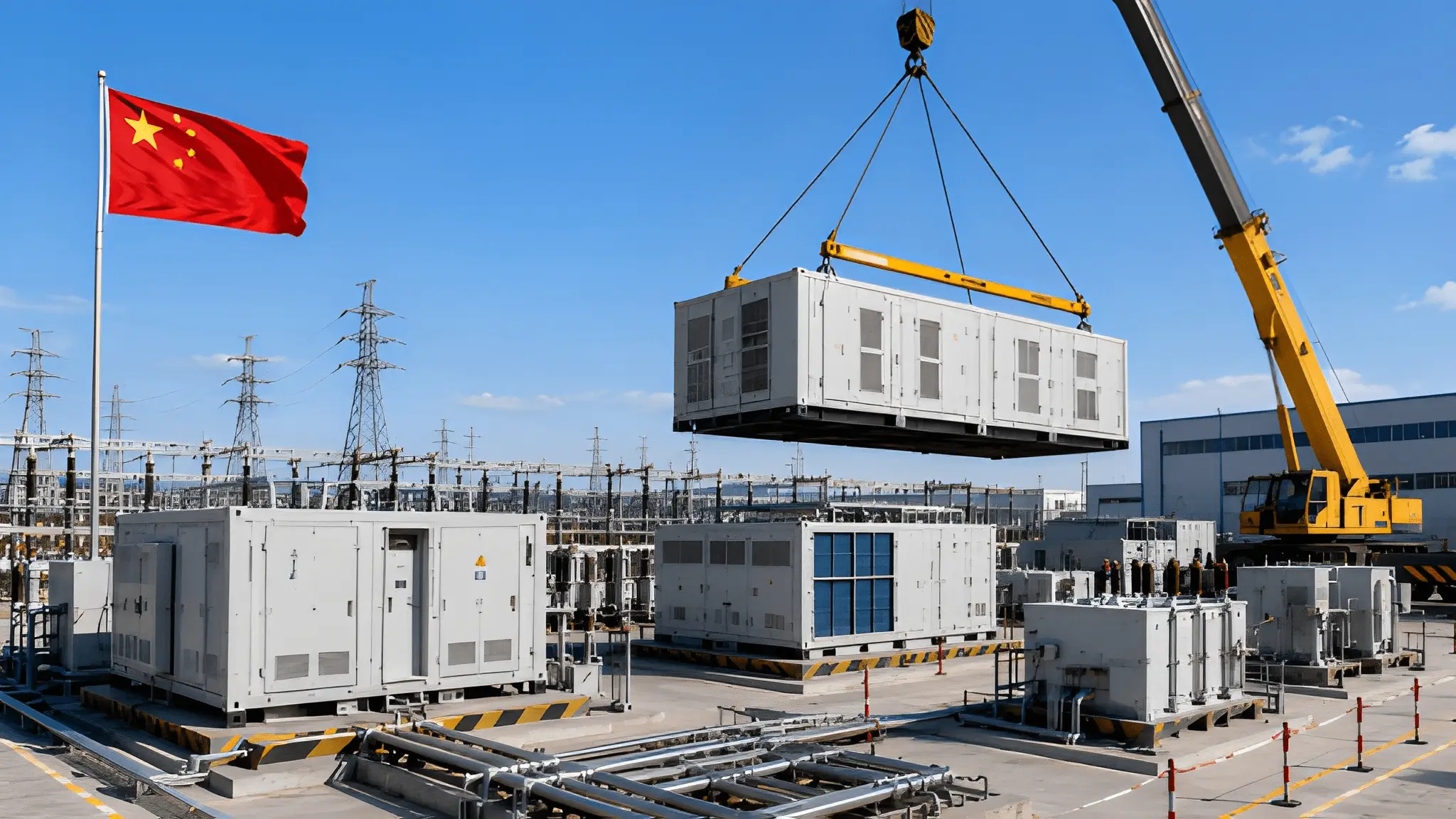
Across major economies, the challenge increasingly centers on how quickly operators can secure power, cooling capacity, and deployment-ready infrastructure capable of supporting the next generation of AI workloads. China has moved aggressively to address that challenge through a new prefabricated computing power hub introduced in Qingdao, a project designed to accelerate the delivery of energy infrastructure for large-scale data centers. According to information released through state media, the modular approach aims to compress construction timelines significantly while reducing both capital costs and land requirements. The initiative reflects a broader recognition that the future of AI competitiveness depends as much on infrastructure execution as it does on semiconductor innovation. As governments and private investors seek faster paths to computational scale, the methods used to deliver energy infrastructure are becoming strategic assets in their own right.

For decades, modular construction transformed sectors ranging from manufacturing to logistics by reducing build complexity and improving project predictability. China now appears intent on applying the same principles to the power systems that support advanced computing facilities. Rather than constructing critical electrical infrastructure entirely on-site, prefabricated infrastructure can allow portions of equipment integration, assembly, and testing to take place before deployment, a practice commonly associated with modular construction approaches used across multiple infrastructure sectors. This approach can shorten construction schedules, reduce labor requirements, and create greater standardization across projects. More importantly, it addresses one of the most persistent obstacles facing data center expansion globally: the time required to connect new facilities to reliable energy sources. As AI demand accelerates across cloud computing, model training, and inference applications, reducing deployment timelines increasingly carries strategic value that extends far beyond traditional construction economics.
The Real Constraint Behind AI Expansion Is Infrastructure Readiness
Although public discussions about artificial intelligence often focus on chips and models, infrastructure developers increasingly identify power availability as the defining bottleneck. The world’s largest technology companies continue announcing multi-billion-dollar investments in data centers, yet many projects face delays tied to grid connections, transmission upgrades, and utility approvals. Consequently, infrastructure readiness has become a critical factor in determining where AI capacity can be deployed most efficiently. China’s prefabricated power hub strategy directly targets this challenge by attempting to streamline the energy side of data center construction. The model demonstrates how nations can accelerate AI infrastructure deployment without waiting for traditional construction cycles to unfold. However, speed alone may not fully resolve the broader environmental, community, and resource questions that increasingly influence where future facilities can be built.
While China focuses on modular power delivery, a growing number of infrastructure projects in regions such as West Texas are exploring development strategies centered on proximity to energy and water resources. Rather than concentrating primarily on construction speed, this model seeks to place computing facilities directly alongside the resources they require to operate. The concept has gained particular traction in West Texas, where abundant energy production, large tracts of sparsely populated land, and alternative water resources create conditions that differ sharply from those found in traditional data center markets. Supporters argue that the approach reduces permitting friction, minimizes competition for community resources, and lowers long-term operating risk. As AI infrastructure scales into gigawatt territory, these considerations are becoming increasingly important to investors evaluating project durability. The result is a growing belief that location strategy may ultimately prove as valuable as engineering innovation.
Project Horizon Illustrates the Energy-First Philosophy
One of the most closely watched examples of this approach is Project Horizon, a planned AI data center campus being developed by Poolside Infrastructure Company in Pecos County within the Permian Basin region of West Texas. The project envisions approximately 1.2 gigawatts of initial capacity while retaining the potential for substantial future expansion. Unlike many proposed facilities near metropolitan centers, the development sits on desert ranchland located more than twenty-five miles from Fort Stockton. That location reflects a deliberate effort to separate large-scale computing infrastructure from residential growth corridors, high-value agricultural areas, and municipal resource systems. Developers view physical proximity to energy production as a foundational advantage rather than a secondary consideration. By designing around resource availability from the outset, the project seeks to eliminate many of the constraints confronting conventional data center developments.
The Permian Basin remains one of the world’s most productive hydrocarbon regions, making energy access a defining characteristic of the area. Project Horizon plans to begin operations using on-site generation supported by aero-derivative gas turbines equipped with low-emission selective catalytic reduction systems and future carbon capture compatibility. The architecture also incorporates flexibility through the potential integration of natural gas, solar generation, grid connectivity, and battery storage systems. This multi-source design reflects a growing preference for energy resilience rather than dependence on a single supply pathway. Developers believe that generating power near fuel production can reduce exposure to transmission bottlenecks and utility delays that increasingly affect major infrastructure projects elsewhere. As demand for AI computing continues rising, energy proximity is emerging as an operational advantage capable of influencing both deployment schedules and long-term economics.

Water Strategy Is Becoming a Competitive Differentiator
Power availability may dominate headlines, but water increasingly occupies a central role in data center planning. Many regions experiencing strong data center growth also face concerns about resource allocation, agricultural demand, and population expansion. As a result, developers are under growing pressure to demonstrate that new facilities will not create additional strain on local water systems. Project Horizon addresses that concern through a closed-loop liquid cooling architecture designed to transfer heat directly from computing equipment while minimizing water consumption. The system rejects heat at higher temperatures through an outdoor chiller plant and avoids evaporative cooling losses commonly associated with traditional approaches. By relying on non-potable groundwater resources already covered under existing allocations, the project attempts to separate data center growth from municipal drinking water supplies and agricultural competition.
Public resistance to data center construction has intensified across several regions as communities evaluate concerns related to land use, water consumption, traffic generation, and power demand. Consequently, site selection increasingly influences both regulatory outcomes and project timelines. The Texas model attempts to reduce these conflicts by placing facilities in remote areas where development creates fewer direct interactions with existing population centers or agricultural activity. Supporters argue that locating projects on desert ranchland can reduce potential conflicts with agricultural activity and residential development while preserving farmland and existing community land-use patterns elsewhere. The strategy reflects a broader shift toward infrastructure planning that anticipates community objections before construction begins. As projects grow larger and more visible, developers may find that avoiding potential conflicts proves more effective than attempting to resolve them later.
Industry Leaders See Community Acceptance as Essential
Infrastructure developers increasingly recognize that social acceptance can influence project success as much as engineering capability. Robert Bonar, Chief Executive Officer of Poolside Infrastructure Company, highlighted that reality directly when discussing the rationale behind the Texas location strategy. “Public resistance to data centers in other areas like Ohio and Pennsylvania is real… We believe there’s a better solution here.” His comments reflect a broader industry understanding that future AI infrastructure must address concerns about environmental impact and community resource competition. Investors, regulators, and local stakeholders now evaluate projects through a wider lens that extends beyond economic output alone. Therefore, infrastructure designs that proactively reduce friction may gain advantages in both permitting and long-term operational stability.
Beyond natural gas production, the Permian Basin possesses another resource that may influence future data center economics: produced water. Oil extraction generates significant volumes of wastewater that require management, treatment, or disposal throughout the production lifecycle. Historically, operators relied heavily on underground injection methods, but regulatory scrutiny has increased amid concerns regarding seismic activity and other environmental risks. Consequently, energy companies have begun exploring alternative uses for treated produced water. Data center cooling represents one of the most frequently discussed opportunities because facilities require substantial thermal management capacity without necessarily needing potable water. If treatment technologies continue advancing, produced water could become a strategic infrastructure resource that simultaneously addresses industrial waste challenges and supports AI deployment.
Why Consumers Could Benefit From Smarter Infrastructure Planning
The implications extend beyond infrastructure developers and energy companies. Faster deployment of computing capacity can help support expanding demand for cloud services, enterprise AI tools, and advanced digital applications across the broader economy. Infrastructure strategies that reduce pressure on transmission systems and municipal resources are being promoted by developers as a way to help limit resource-related conflicts associated with data center expansion. In some cases, energy-integrated developments may be designed with the capability to supply excess electricity to regional power systems, subject to interconnection arrangements and regulatory approvals. Workforce development initiatives tied to large-scale projects may further contribute to local economic activity and skills training. Therefore, the design decisions made today could influence not only AI competitiveness but also the affordability and accessibility of future digital services.
The emerging contrast between China’s prefabricated power hubs and Texas’ resource-integrated developments highlights two distinct approaches to solving the same challenge. One prioritizes deployment speed through modular construction, while the other seeks long-term sustainability through strategic alignment with energy, water, and land resources. Both models recognize that AI growth depends on infrastructure execution rather than computing hardware alone. Yet the broader lesson may be that successful projects increasingly require a combination of speed, efficiency, environmental resilience, and community compatibility. As AI investment accelerates globally, the most successful developers will likely be those capable of integrating all four elements into a single deployment strategy. The next phase of the AI race may ultimately belong not to the fastest builders, but to the smartest infrastructure planners.












