
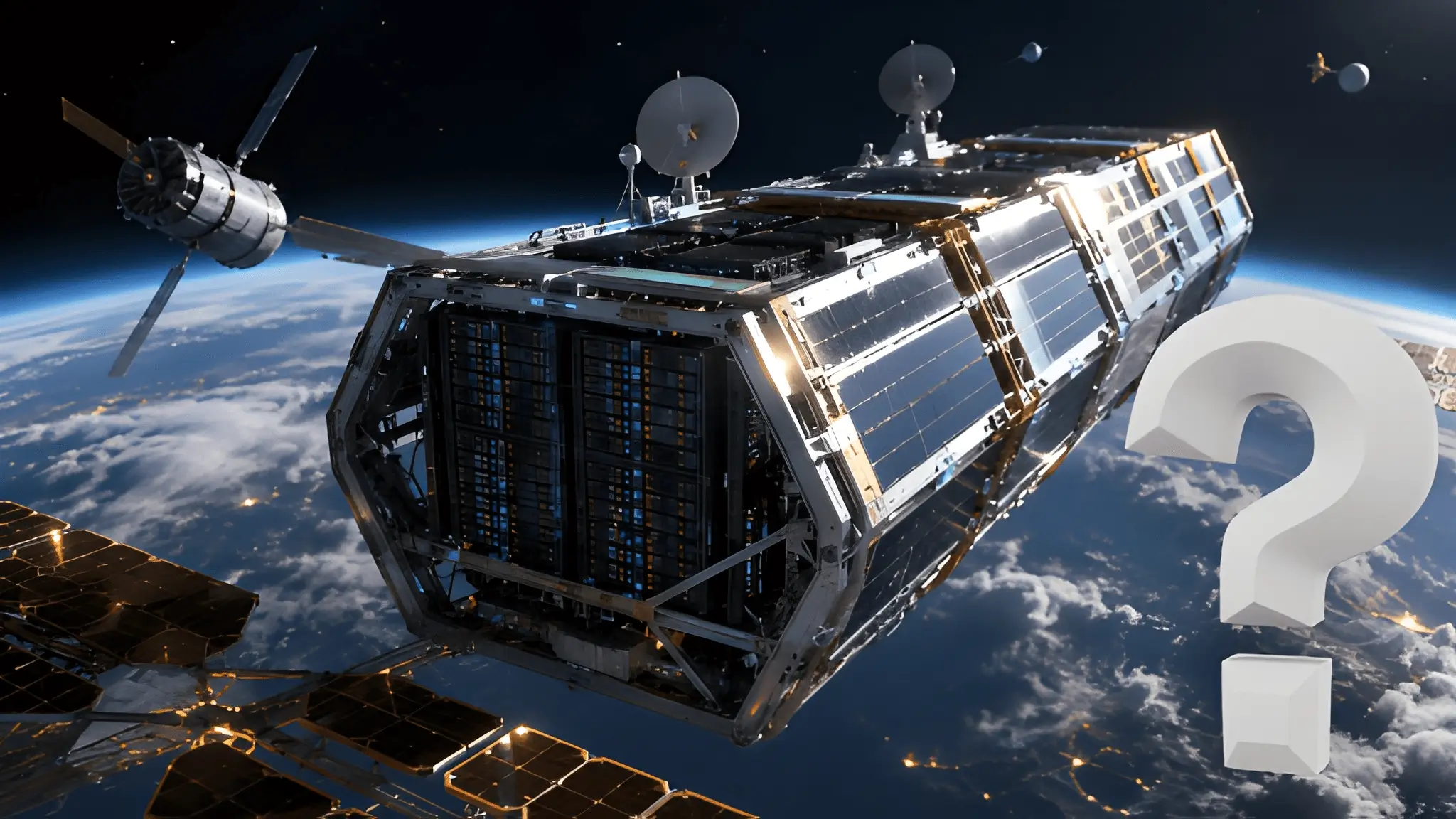
The debate around orbital data centers often begins with scale. Supporters ask whether artificial intelligence workloads will grow large enough to justify moving computing infrastructure beyond Earth’s atmosphere. Investors discuss future demand curves. Engineers evaluate launch costs. Technology companies showcase ambitious concepts that place servers in orbit to access abundant solar energy and avoid terrestrial constraints. Yet that conversation may start in the wrong place.

The more consequential question is why the industry appears increasingly comfortable discussing orbital infrastructure while many of the inefficiencies inside today’s AI ecosystem remain unresolved. The fascination with orbital data centers reflects something larger than engineering ambition. It reveals an industry searching for new capacity narratives at a moment when existing infrastructure faces growing scrutiny. The challenge is not simply generating more compute. The challenge is determining whether current compute resources are being used effectively enough to justify entirely new frontiers.
That distinction matters because infrastructure expansion has historically followed optimization. Railroads became more efficient before expanding. Telecommunications networks improved utilization before extending reach. Cloud computing matured through virtualization and resource sharing before hyperscale growth accelerated. AI infrastructure appears to be moving in the opposite direction. The discussion increasingly focuses on where the next generation of compute will reside rather than how existing capacity performs.
The Utilization Problem Nobody Wants To Lead With
The AI sector frequently presents compute demand as an unstoppable force. Training requirements continue to rise. Inference workloads expand across industries. Enterprises seek larger deployments. Governments pursue sovereign AI initiatives. Those trends are real. What remains less visible is how efficiently the industry uses the infrastructure already deployed.

Many AI environments continue to encounter workload fragmentation, uneven resource allocation, idle hardware periods, and capacity mismatches between training and inference operations, although the severity varies across deployments.Organizations continue to reserve infrastructure for future demand that may not materialize immediately.
Large deployments often prioritize availability over utilization, creating conditions where significant resources remain underused. None of these challenges are unique to AI. Every major computing transition has encountered similar inefficiencies. The difference is that some orbital data center discussions frame future capacity requirements as a primary challenge for AI infrastructure growth. In reality, utilization remains a major variable in determining how much new infrastructure is truly necessary. If an industry cannot consistently maximize the value of existing assets, questions naturally emerge about the urgency of launching entirely new ones.
Space Solves A Different Problem
The strongest argument for orbital data centers may have little to do with AI demand itself. Instead, space appears increasingly attractive because it exists outside many of the constraints shaping terrestrial infrastructure development. Across multiple regions, new data center projects encounter resistance from local communities concerned about power consumption, land use, environmental impacts, and infrastructure strain. Utilities face growing pressure to evaluate large power requests carefully. Policymakers are examining energy allocation priorities more closely as AI demand accelerates. These pressures create friction.
Space, at least conceptually, offers a narrative that avoids much of that friction. It shifts the discussion away from local grid constraints, zoning debates, water availability concerns, and environmental tradeoffs. Orbital infrastructure becomes a vision of expansion unconstrained by geography. That vision carries obvious appeal. But it also risks reframing a terrestrial governance challenge as an engineering challenge. The question becomes whether orbital data centers solve compute limitations or simply relocate the conversation away from difficult decisions occurring on Earth.
The Growth Narrative Never Stops Looking For New Territory
Technology sectors have frequently responded to growth constraints by exploring new markets, platforms, or deployment models. When markets mature, industries seek new geographies. When physical constraints emerge, industries pursue new platforms. When growth becomes harder to sustain, industries search for larger narratives capable of extending future expectations. Space has long served that role.
It represents the ultimate frontier, a place where conventional limitations appear less relevant. Investors understand the symbolism. Technology leaders understand the storytelling power. Policymakers recognize the strategic implications. That does not make orbital infrastructure unrealistic. It does suggest that the enthusiasm surrounding it may not be entirely driven by technical necessity.
The AI industry currently faces practical questions about power availability, grid readiness, cooling requirements, permitting timelines, and infrastructure economics. Those questions are complex and politically sensitive. They often produce slower growth trajectories than markets prefer. Orbital data centers introduce a different conversation. They move attention toward possibility rather than limitation. For an industry built around future potential, that shift can be valuable regardless of deployment timelines.
The Economics Still Demand An Explanation
Supporters of orbital infrastructure correctly argue that launch costs have declined and may continue to fall. They also point to long-term opportunities involving solar energy generation and space-based computing ecosystems. Those developments deserve attention. At the same time, economic fundamentals remain difficult to ignore. Every infrastructure platform competes against alternatives. The benchmark for orbital data centers is not historical technology. It is terrestrial infrastructure that continues to improve rapidly.
Power systems are evolving. Cooling technologies are advancing. Grid modernization efforts are expanding. New regions continue attracting investment. Operators are finding ways to increase density and improve efficiency within existing footprints. Orbital infrastructure must eventually demonstrate advantages substantial enough to justify its complexity. Until then, the conversation risks becoming detached from the operational realities that currently define AI deployment decisions. Markets ultimately reward efficiency, not imagination alone. That principle applies whether infrastructure sits in a suburban industrial park or several hundred kilometers above Earth.
What If The Real Constraint Is Management?
One interpretation of the orbital data center debate deserves greater attention. Perhaps the issue is not compute scarcity. Perhaps the issue is compute management. If AI demand continues growing while utilization challenges persist, organizations will naturally seek additional capacity. New facilities will be built. Power requests will increase. Infrastructure investment will accelerate. But growth alone does not prove efficiency.
An industry can consume enormous resources while still allocating them imperfectly. It can expand capacity while leaving optimization opportunities untouched. It can pursue ambitious engineering projects while postponing uncomfortable operational reforms. Viewed through that lens, orbital data centers become less a symbol of technological inevitability and more a test of industry priorities.
The question is not whether humanity possesses the engineering capability to place data centers in orbit. The question is whether the AI ecosystem has exhausted the opportunities available on Earth before attempting to move beyond it.
Orbit Should Be The Last Optimization Layer
Orbital data centers remain an emerging concept that could become part of future digital infrastructure if technical and economic hurdles are successfully addressed. Technological history repeatedly shows that concepts once considered impractical can evolve into viable industries. The challenge is determining when a frontier becomes necessary. Today’s AI infrastructure conversation often treats expansion as the default response to demand growth. Yet expansion and optimization are not interchangeable strategies. One increases resources. The other increases value from resources already available. That distinction sits at the center of the orbital data center debate.
If AI demand truly reaches a point where terrestrial infrastructure can no longer keep pace despite significant efficiency gains, orbital computing will have a compelling case. Until then, the industry’s enthusiasm for space risks looking less like a response to compute scarcity and more like an attempt to escape the constraints that force difficult decisions on Earth. The future of AI infrastructure may eventually extend into orbit. Its credibility, however, will still be determined by how effectively it manages the infrastructure already grounded.











