
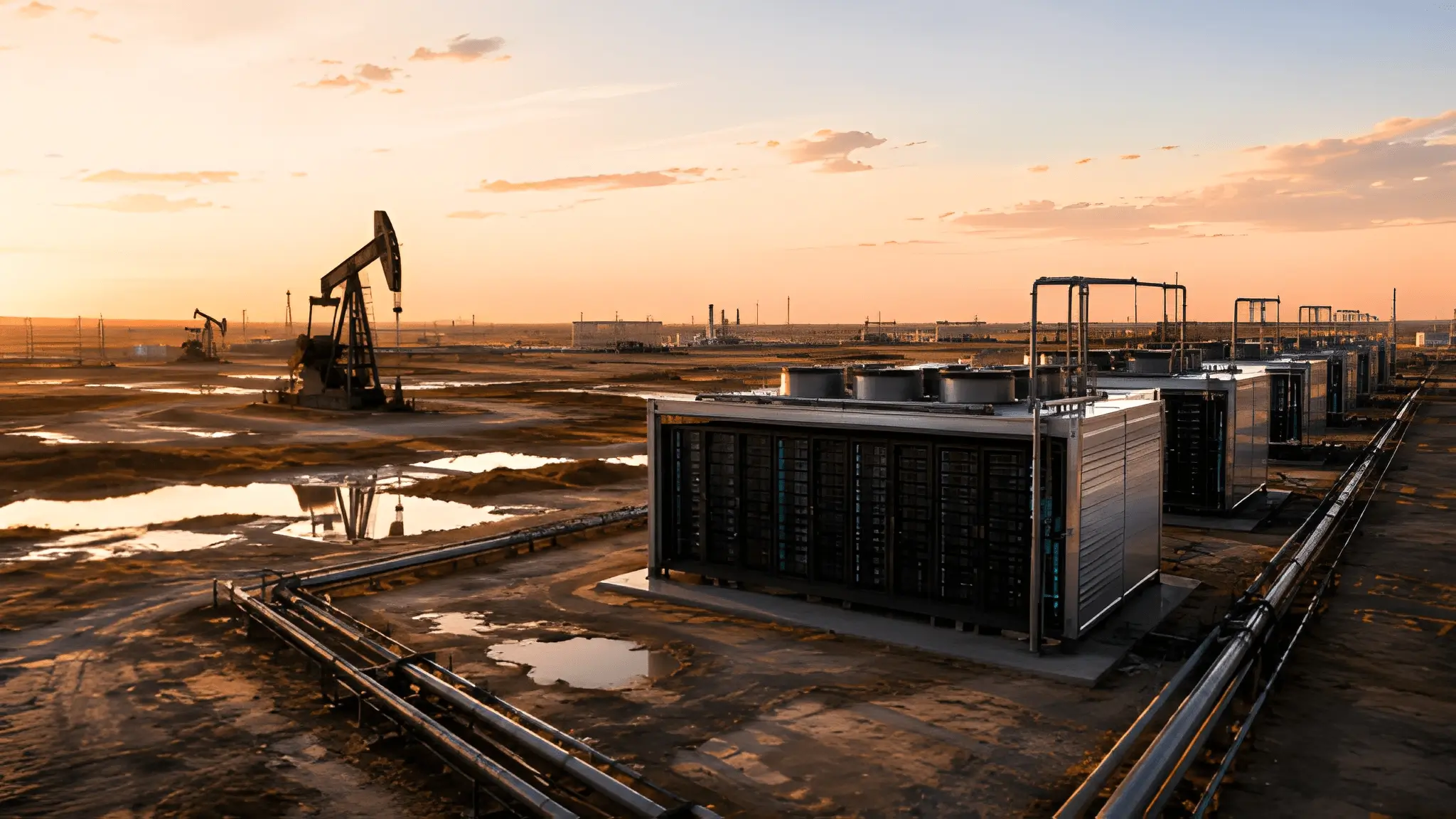
Every new artificial intelligence campus begins with a familiar promise. Developers describe faster computing, cleaner energy, better efficiency, and stronger digital economies. Yet, In many large-scale developments, the physical conversation begins by identifying undeveloped land, securing permits, negotiating utility connections, and engaging local communities about another major industrial project. That assumption deserves more scrutiny. The debate surrounding AI infrastructure often centers on power generation, advanced cooling systems, semiconductor supply chains, and network capacity. Land often receives less public attention than discussions about power, cooling, or compute capacity. When it enters the conversation, the focus frequently shifts toward where the industry can build next rather than whether existing industrial landscapes deserve greater consideration.

Thousands of industrial sites already exist across North America, Europe, the Middle East, and parts of Asia. Former oil and gas fields occupy vast areas with transmission corridors, substations, heavy-duty roads, utility easements, and industrial zoning that once supported continuous energy production. Despite sharing many characteristics that modern data center campuses require, these landscapes have received comparatively limited attention in broader discussions about AI infrastructure. The industry’s greatest land constraint may not be scarcity. It may be imagination.
AI keeps searching for empty land while industrial land waits
The current development model encourages expansion into agricultural regions, suburban edges, and undeveloped landscapes because these sites appear flexible on paper. Large parcels simplify campus planning, while open terrain offers room for phased construction. Reality tends to complicate those assumptions. Every proposed greenfield development introduces fresh environmental reviews, new utility negotiations, transportation upgrades, water discussions, wildlife assessments, and community engagement. Each requirement serves a legitimate public purpose, yet together they stretch project timelines and increase uncertainty.
Brownfield industrial sites present a different equation. Former oil and gas production areas already supported equipment, heavy vehicles, continuous operations, and high-energy infrastructure. Many contain utility corridors that connected production facilities with regional transmission systems. Local governments often understand industrial permitting because these regions have managed similar activities for decades. That existing framework cannot eliminate every development challenge, but it changes where the conversation begins. Instead of convincing communities to accept industrial activity for the first time, developers would often work within places where industrial identity already exists. That distinction matters more as AI demand accelerates.

The industry’s sustainability narrative has a missing chapter
Technology companies increasingly emphasize renewable electricity procurement, carbon reduction strategies, water stewardship, and responsible supply chains. These commitments influence procurement decisions, investor communications, and long-term infrastructure planning. Yet broader sustainability discussions frequently place greater emphasis on operational emissions, renewable electricity, and water use than on the environmental implications of land disturbance and site selection. Building entirely new campuses requires grading, excavation, new access roads, fresh utility corridors, and extensive site preparation. Even efficient projects reshape landscapes that previously served agriculture, ecosystems, or undeveloped land. Repurposing industrial sites shifts the sustainability calculation. Existing roads reduce new construction.
Established utility corridors minimize additional land fragmentation. Industrial zoning limits conflicts over land-use conversion. Legacy infrastructure may shorten project development while avoiding some environmental disruption associated with entirely new campuses. None of this automatically makes every former oil field suitable for AI infrastructure. Contamination, remediation requirements, geological stability, and available electrical capacity remain critical engineering considerations. The broader point lies elsewhere. If sustainability becomes a guiding principle for AI expansion, redevelopment deserves greater visibility alongside renewable power purchases and operational efficiency metrics. Carbon accounting should not stop at electricity consumption. It should also include where infrastructure chooses to exist.
Oil infrastructure may become digital infrastructure
Energy transitions rarely erase existing infrastructure overnight. Railroads continued carrying freight after highways expanded. Industrial ports adapted to container shipping instead of disappearing. Manufacturing districts evolved rather than relocating entirely. Oil-producing regions could experience a similar transformation. Pipeline corridors already connect strategic locations. Transmission infrastructure frequently serves energy-producing regions. Industrial workforces understand complex facility operations, maintenance schedules, safety protocols, and utility coordination. These capabilities align surprisingly well with large-scale digital infrastructure.
Instead of viewing former extraction landscapes as economic leftovers, policymakers could recognize them as physical platforms for new industrial investment. That shift changes more than land use. It changes the story communities tell about economic transition. Replacing declining industrial activity with high-value digital infrastructure has the potential to create continuity instead of abandonment. Where workforce skills, investment, and retraining align, communities can preserve elements of their industrial economy while participating in emerging technology sectors rather than seeing investment shift elsewhere. The transition becomes evolutionary rather than disruptive.
Permitting may become AI’s biggest competitive advantage
Technology discussions often celebrate faster chips, denser racks, and more efficient cooling architectures. Infrastructure developers understand another reality. Projects move when permits move. Power availability receives considerable attention because utilities cannot manufacture additional capacity overnight. Permitting follows a similar pattern. Regulatory approval increasingly determines deployment schedules as environmental scrutiny, public consultation, and infrastructure coordination expand. Brownfield redevelopment offers an opportunity to reduce some of that friction. Industrial zoning, existing transportation infrastructure, and established utility rights-of-way create a planning environment that differs substantially from undeveloped sites.
Developers still face environmental obligations, remediation standards, and engineering reviews. Those responsibilities remain essential. The difference lies in starting from an industrial baseline instead of creating one. As AI infrastructure becomes more capital intensive, deployment speed evolves into a competitive advantage. Every month saved during development influences customer acquisition, financing costs, and market positioning. The conversation should therefore ask an uncomfortable question. Why does the industry continue treating permitting as an unavoidable obstacle instead of considering locations where much of that institutional groundwork already exists?
Reinvention may matter more than expansion
The AI economy increasingly defines itself through scale. Larger campuses, greater power consumption, higher rack densities, more megawatts. Those metrics shape headlines, investment announcements, and competitive positioning. They also encourage an assumption that progress requires constant physical expansion into new territory. History suggests otherwise. Industrial revolutions rarely succeed because societies continuously discover untouched land. They succeed because existing infrastructure adapts to new economic realities. Former oil fields represent more than available acreage. They represent decades of investment in transportation, utilities, industrial logistics, workforce development, and regional planning.
Ignoring those assets while searching elsewhere reflects an infrastructure strategy that prioritizes novelty over practicality. Not every abandoned energy site can host a hyperscale campus. Some lack sufficient electrical capacity. Others require extensive remediation or remain economically unsuitable. But treating the entire category as irrelevant overlooks an opportunity hiding in plain sight. AI infrastructure does not need every former oil field. It only needs enough strategically positioned sites to demonstrate that the future can emerge from the physical foundations of the past. That possibility challenges one of the industry’s strongest assumptions. Perhaps the next generation of AI infrastructure should stop asking where new land exists and start asking which industrial landscapes have already done the hardest work. Because the dirt may already know how to build AI.











