 Skip to content
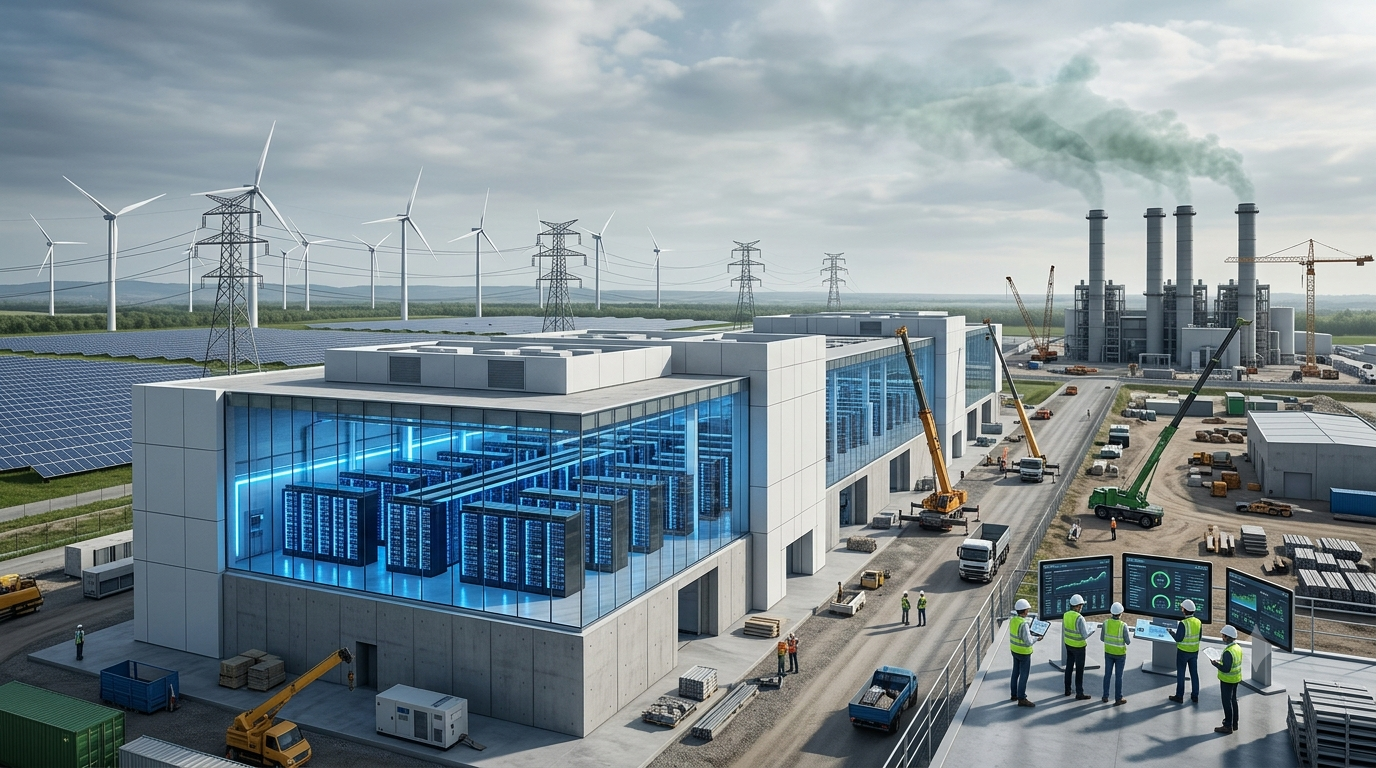
Artificial intelligence has become one of the biggest drivers of digital infrastructure investment worldwide. Cloud providers continue expanding data center capacity to meet growing demand for AI training and inference. Amazon remains at the center of that expansion through its Amazon Web Services business. However, the company’s latest sustainability disclosures reveal a growing environmental challenge alongside its infrastructure growth. Carbon emissions increased by 16 percent during 2025, highlighting the complex relationship between AI expansion and long-term climate commitments. Amazon’s latest Sustainability Report attributes much of this increase to record investments in data center infrastructure supporting cloud computing and artificial intelligence. The company expanded its global footprint while deploying more computing capacity across multiple regions. Those investments strengthened AWS’s ability to serve enterprise customers adopting generative AI applications. At the same time, new facilities increased demand for electricity, construction materials, equipment manufacturing, and supporting infrastructure. Together, these factors contributed to the company’s highest annual emissions increase in several years.

AI Infrastructure Has Changed Amazon’s Sustainability Equation
For years, Amazon steadily reduced the carbon intensity of its operations despite rapid business growth. Renewable energy investments, logistics optimization, and operational efficiencies helped offset expanding business activity. AI infrastructure has introduced a different scale of energy demand that changes this equation considerably. Modern GPU clusters require significantly higher electrical capacity than conventional cloud workloads. Consequently, every new AI campus carries a larger environmental footprint before efficiency improvements begin delivering measurable benefits. Unlike traditional enterprise servers, AI systems often operate continuously under sustained computational loads. Large language model training can require thousands of high-performance accelerators working simultaneously for extended periods. Inference services also consume increasing amounts of electricity as businesses integrate AI into daily operations. Therefore, cloud providers must construct larger facilities with greater electrical capacity than previous generations of data centers. These infrastructure requirements extend well beyond server hardware and include substations, cooling systems, transmission upgrades, and backup power equipment.
Data Center Construction Contributes Beyond Electricity Consumption
Operational electricity receives significant attention during discussions about AI sustainability. However, constructing new hyperscale facilities also creates substantial upstream emissions before servers become operational. Steel, concrete, semiconductor manufacturing, cooling equipment, electrical infrastructure, and transportation all contribute to embodied carbon across the construction process. Amazon acknowledged that accelerated infrastructure deployment increased emissions associated with purchased goods, capital equipment, and supply chain activities. These indirect emissions remain among the most difficult categories for large technology companies to reduce. Building AI-ready campuses also requires larger electrical and mechanical systems than conventional cloud facilities. Higher-density server deployments demand advanced cooling technologies, expanded power distribution equipment, and increasingly sophisticated thermal management infrastructure. Meanwhile, suppliers continue scaling manufacturing capacity for transformers, switchgear, cooling components, and specialized AI hardware. Every stage within this supply chain generates additional emissions before computing services begin supporting customers. As a result, infrastructure expansion affects sustainability metrics long before operational efficiency initiatives can offset those impacts.
Renewable Energy Progress Continues Despite Higher Emissions
The increase in carbon emissions does not indicate that Amazon has slowed its renewable energy strategy. Instead, both trends have progressed simultaneously as infrastructure demand continues accelerating. Amazon remains one of the world’s largest corporate purchasers of renewable electricity through investments in solar, wind, and other clean energy projects. The company continues adding renewable generation capacity across numerous countries to support growing operational demand. These investments strengthen long-term decarbonization efforts even as AI infrastructure expands more rapidly than anticipated. Renewable electricity, however, cannot immediately eliminate emissions associated with every aspect of data center development. Grid availability varies significantly across different regions where hyperscale facilities are constructed. Some projects initially depend on existing electricity mixes before additional renewable capacity becomes operational. Equipment manufacturing and construction activities also generate emissions beyond direct electricity consumption. Consequently, sustainability progress increasingly depends on addressing both operational energy use and the broader infrastructure ecosystem supporting artificial intelligence.

Purchased Electricity Has Become A Growing Challenge
Electricity demand has emerged as one of the fastest-growing components of Amazon’s operational footprint. AI infrastructure requires continuous access to reliable, high-capacity power that conventional enterprise workloads rarely demanded. Consequently, utilities across multiple regions are expanding generation, transmission, and distribution infrastructure to support hyperscale developments. Amazon’s report shows that emissions linked to purchased electricity increased significantly during 2025. This trend reflects both higher energy consumption and the pace at which AI infrastructure is expanding globally. Meeting AI demand also requires greater resilience across power systems. Data centers cannot tolerate prolonged interruptions without affecting cloud services and enterprise applications. Therefore, operators invest heavily in redundant electrical systems, backup generation, battery storage, and advanced power management technologies. These investments improve operational reliability while supporting increasingly complex AI workloads. Nevertheless, additional infrastructure also contributes to the broader carbon footprint associated with digital expansion.
Supply Chain Emissions Remain Difficult To Reduce
Direct operational emissions represent only one part of Amazon’s sustainability challenge. Most emissions originate throughout a vast supply chain that supports construction, manufacturing, logistics, and technology deployment. AI data centers intensify this challenge because they require specialized hardware produced through energy-intensive manufacturing processes. Graphics processors, advanced networking equipment, transformers, cooling systems, and semiconductor fabrication all contribute to upstream emissions. Reducing these emissions depends on improvements extending far beyond Amazon’s own facilities. Suppliers also face growing pressure to expand production while improving environmental performance. Manufacturing advanced AI hardware requires highly specialized materials, precision engineering, and complex global supply chains. Meanwhile, demand continues rising faster than manufacturing capacity in many segments. Amazon therefore depends on thousands of suppliers making simultaneous progress toward lower-carbon operations. Achieving meaningful reductions requires collaboration across industries rather than isolated sustainability initiatives.
Efficiency Still Plays A Critical Role
Despite rising emissions, Amazon continues improving the efficiency of its infrastructure. Modern AWS facilities incorporate advanced cooling systems, intelligent energy management, and increasingly efficient server technologies. These improvements reduce the amount of electricity required for each computing task compared with previous generations. As a result, infrastructure efficiency continues improving even as total energy demand grows. This distinction highlights the difference between operational efficiency and absolute carbon emissions. Artificial intelligence also creates opportunities to optimize infrastructure itself. Machine learning increasingly supports predictive cooling, workload scheduling, and energy management across hyperscale campuses. These technologies improve equipment utilization while reducing unnecessary power consumption during normal operations. However, efficiency gains alone cannot fully offset the enormous increase in computing demand driven by generative AI. Total infrastructure growth currently outpaces many operational improvements.
Can Amazon Still Reach Net Zero By 2040?
Amazon remains committed to achieving net-zero carbon emissions by 2040 through its Climate Pledge initiative. That objective predates the recent surge in artificial intelligence investment and remains central to the company’s sustainability strategy. However, executives now acknowledge that unprecedented AI demand introduces additional complexity into that journey. Expanding global compute capacity while reducing total emissions requires balancing business growth with long-term environmental objectives. Few organizations have attempted infrastructure expansion at this scale while pursuing aggressive decarbonization targets. Future progress will depend on several interconnected factors. Renewable electricity deployment must continue accelerating across key markets supporting hyperscale infrastructure. Semiconductor manufacturers and equipment suppliers also need lower-carbon production methods. Grid modernization, advanced cooling technologies, and next-generation energy storage will further influence long-term emissions trajectories. Together, these developments will determine whether infrastructure growth and climate commitments can advance at the same pace.
Amazon’s Challenge Reflects A Broader Industry Shift
Amazon is not alone in confronting this challenge. Every major hyperscale cloud provider is rapidly expanding AI infrastructure while pursuing ambitious sustainability commitments. Microsoft, Google, Meta, and Oracle have all announced multi-billion-dollar investments in new AI data centers over the past two years. Those facilities require unprecedented levels of electricity, cooling capacity, and supporting infrastructure. As AI adoption accelerates, the industry’s environmental footprint is becoming a central business consideration rather than a secondary reporting metric. Utilities are also adapting to this transformation. Many regions now face rising demand for grid upgrades, renewable generation, and transmission expansion to support hyperscale campuses. Some operators are investing directly in clean energy projects, battery storage, and alternative power sources to improve long-term energy security. Others are exploring advanced nuclear technologies, geothermal energy, and hydrogen to complement renewable electricity. The future of AI infrastructure increasingly depends on energy innovation as much as computing innovation.
Sustainability Will Define The Next Phase Of AI Infrastructure
The rapid growth of artificial intelligence has fundamentally changed how technology companies approach infrastructure planning. Speed, scale, and computational performance remain essential competitive advantages. However, investors, regulators, enterprise customers, and local communities now examine environmental performance with equal attention. Carbon intensity, water consumption, power sourcing, and construction impacts increasingly influence infrastructure decisions alongside technical capabilities. This shift is encouraging a broader transition toward more sustainable data center design. Liquid cooling, high-efficiency power systems, modular construction, AI-driven energy optimization, and renewable energy integration are becoming standard elements of next-generation facilities. Companies are also evaluating embodied carbon throughout their supply chains rather than focusing solely on operational emissions. These developments suggest sustainability is evolving from a compliance exercise into a strategic requirement for future AI growth.
Conclusion
Amazon’s 16 percent increase in carbon emissions during 2025 illustrates the growing tension between AI expansion and corporate climate commitments. The company continues investing heavily in renewable electricity, operational efficiency, and long-term decarbonization while simultaneously building record levels of AI infrastructure. Those parallel efforts demonstrate that sustainability progress has not stopped, but infrastructure demand is currently advancing even faster. The broader lesson extends well beyond a single company. Artificial intelligence is reshaping global digital infrastructure at an unprecedented pace, creating new challenges for electricity systems, supply chains, and environmental strategies. Technology companies can no longer evaluate AI growth independently from energy and sustainability planning. As hyperscale investment continues worldwide, the organizations that successfully balance computing expansion with measurable emissions reductions will help define the next generation of responsible AI infrastructure.










