
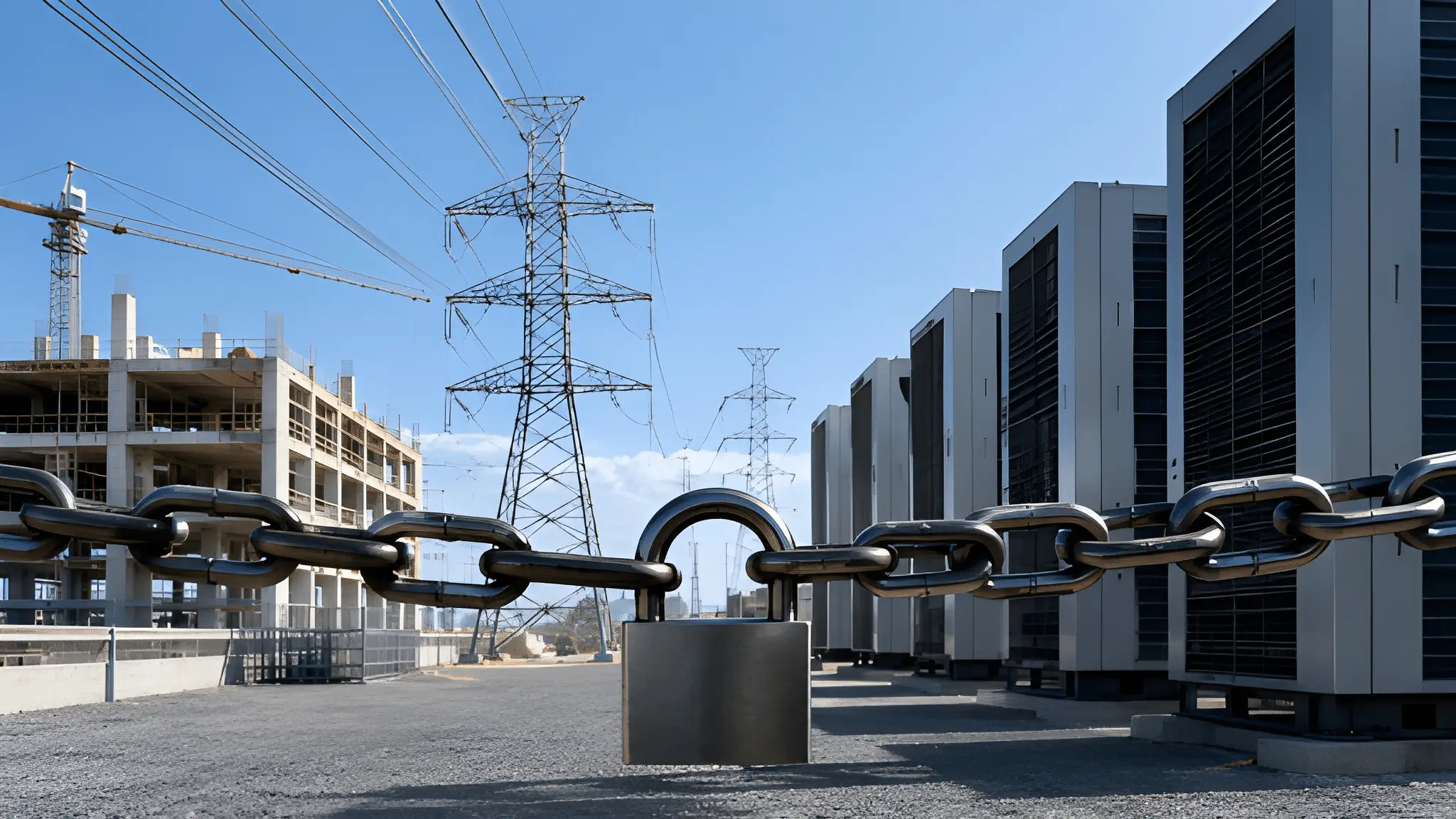
Electricity has become the currency of the AI economy, yet availability tells only part of the story. A growing challenge sits between generation and consumption: grid capacity that exists on paper but never reaches productive use. Across advanced digital markets, connection rights increasingly function as strategic assets. Some projects advance rapidly toward construction, while others spend years navigating financing, permitting, design revisions, or changing commercial priorities. During that period, valuable electrical capacity can remain unavailable to other projects until connection rights expire, milestones are missed, or grid operators reallocate capacity under applicable regulatory frameworks.

Ireland’s latest approach reflects a broader shift in infrastructure governance rather than a uniquely Irish problem. Instead of assuming every announced development will eventually materialize, policymakers are placing greater emphasis on whether projects demonstrate credible execution. That distinction matters because every reserved megawatt carries an opportunity cost extending well beyond the data center industry. The conversation increasingly emphasizes improving how existing grid capacity is allocated alongside expanding electricity generation, recognizing that both will shape the pace of future AI infrastructure development.
Scarcity has changed the economics of grid reservations.
Grid connections once represented another milestone in a lengthy development process. Today they have become one of the most difficult resources to secure. Demand from AI infrastructure, industrial electrification, renewable energy integration, manufacturing, transportation, and housing has dramatically increased competition for limited network capacity. This shift changes developer incentives. Obtaining a connection position early can reduce future uncertainty. Yet when market conditions change, projects frequently evolve alongside them. Financial structures shift. Technology roadmaps change. Land ownership changes hands. Compute demand forecasts move upward or downward.
Some developments proceed as planned, while others pause indefinitely. None of these outcomes necessarily reflects poor planning or bad intentions. Large infrastructure projects naturally encounter uncertainty. The challenge emerges when uncertainty locks away electrical capacity that could immediately support projects with completed financing, regulatory approvals, and construction schedules. Idle capacity therefore becomes more than a scheduling inconvenience. It becomes an economic bottleneck.

The industry often measures power shortages without measuring unused power.
Forecasts project rising consumption, expanding hyperscale campuses, and increasing pressure on national grids. These projections deserve attention, but they often overlook another variable: electricity that technically exists within planning frameworks yet remains inaccessible because allocated projects have stalled. Forecasts project rising consumption, expanding hyperscale campuses, and increasing pressure on national grids. These projections deserve attention, but they often overlook another variable: electricity that technically exists within planning frameworks yet remains inaccessible because allocated projects have stalled. Grid shortages and grid allocation inefficiencies produce similar outcomes from the perspective of businesses seeking new connections.
Both delay investment. Both increase development costs. Both slow regional economic growth. The difference lies in potential solutions. Expanding transmission infrastructure requires years of engineering, regulatory approval, environmental assessment, procurement, and construction. Improving allocation policies often requires governance reforms rather than physical assets. That makes allocation discipline one of the fastest infrastructure improvements available to mature electricity markets.
Credibility is becoming a measurable infrastructure resource.
Developers traditionally competed through access to land, financing, engineering expertise, and customer relationships. Increasingly, they also compete through demonstrated execution capability. Questions surrounding project credibility extend beyond financial capacity alone. Regulators increasingly examine development timelines, planning progress, technical readiness, permitting milestones, contractual commitments, and evidence that construction can begin within reasonable timeframes. Electricity networks increasingly serve as platforms supporting national economic competitiveness. Every reserved connection represents a public resource with consequences extending across multiple industries. Governments therefore face growing pressure to ensure allocation decisions maximize economic productivity rather than preserve optionality indefinitely. That does not imply speculative investment lacks value. Early-stage development remains essential for discovering future opportunities. However, the balance between encouraging innovation and preventing long-term resource immobilization continues to shift.
AI infrastructure has exposed planning assumptions that no longer fit modern demand.
Previous infrastructure cycles rarely experienced simultaneous pressure from cloud computing, AI model training, industrial decarbonization, electric vehicles, battery storage, renewable generation, advanced manufacturing, and digital sovereignty initiatives. Today’s electricity system supports all of these transitions at once. Planning frameworks originally designed around relatively predictable industrial growth now face highly concentrated demand arriving within compressed timeframes. Single campuses can require power comparable to entire municipalities. That reality increases the importance of ensuring every connection allocation produces measurable economic outcomes. The challenge extends beyond Ireland. Utilities, transmission operators, and regulators across North America, Europe, and Asia increasingly confront similar questions regarding queue management, project prioritization, milestone enforcement, and connection reform. The underlying issue remains remarkably consistent regardless of geography. When electricity becomes scarce, governance becomes infrastructure.
Reserved but unused electrical capacity creates indirect consequences that rarely appear within project announcements. Manufacturers may postpone facility expansions while awaiting connections. Housing developments encounter infrastructure constraints. Healthcare facilities planning modernization projects compete within increasingly crowded allocation systems. Smaller technology companies often lack the financial flexibility to wait years for network access. These effects accumulate gradually rather than appearing through dramatic grid failures. Investment decisions move elsewhere. Regional competitiveness weakens incrementally. Infrastructure planning becomes increasingly difficult because forecasts assume demand that never fully materializes. The economic cost therefore extends beyond unused electricity. It includes delayed productivity, postponed employment, deferred innovation, and reduced confidence among investors seeking predictable infrastructure availability.
The next generation of AI infrastructure will depend as much on governance as engineering.
Engineering breakthroughs continue attracting headlines. Faster chips, advanced cooling systems, higher rack densities, and improved energy efficiency all reshape digital infrastructure. Yet none of those technologies solves allocation inefficiencies. Physical infrastructure succeeds only when administrative systems keep pace with technological change. Transparent milestone requirements, periodic project reviews, realistic delivery schedules, and mechanisms allowing unused capacity to return efficiently into broader circulation may become equally important as additional power generation. That evolution does not discourage investment. Instead, it rewards projects prepared to execute while creating greater certainty for utilities, communities, investors, and competing industries. Predictability often produces stronger investment environments than unrestricted optionality.











