

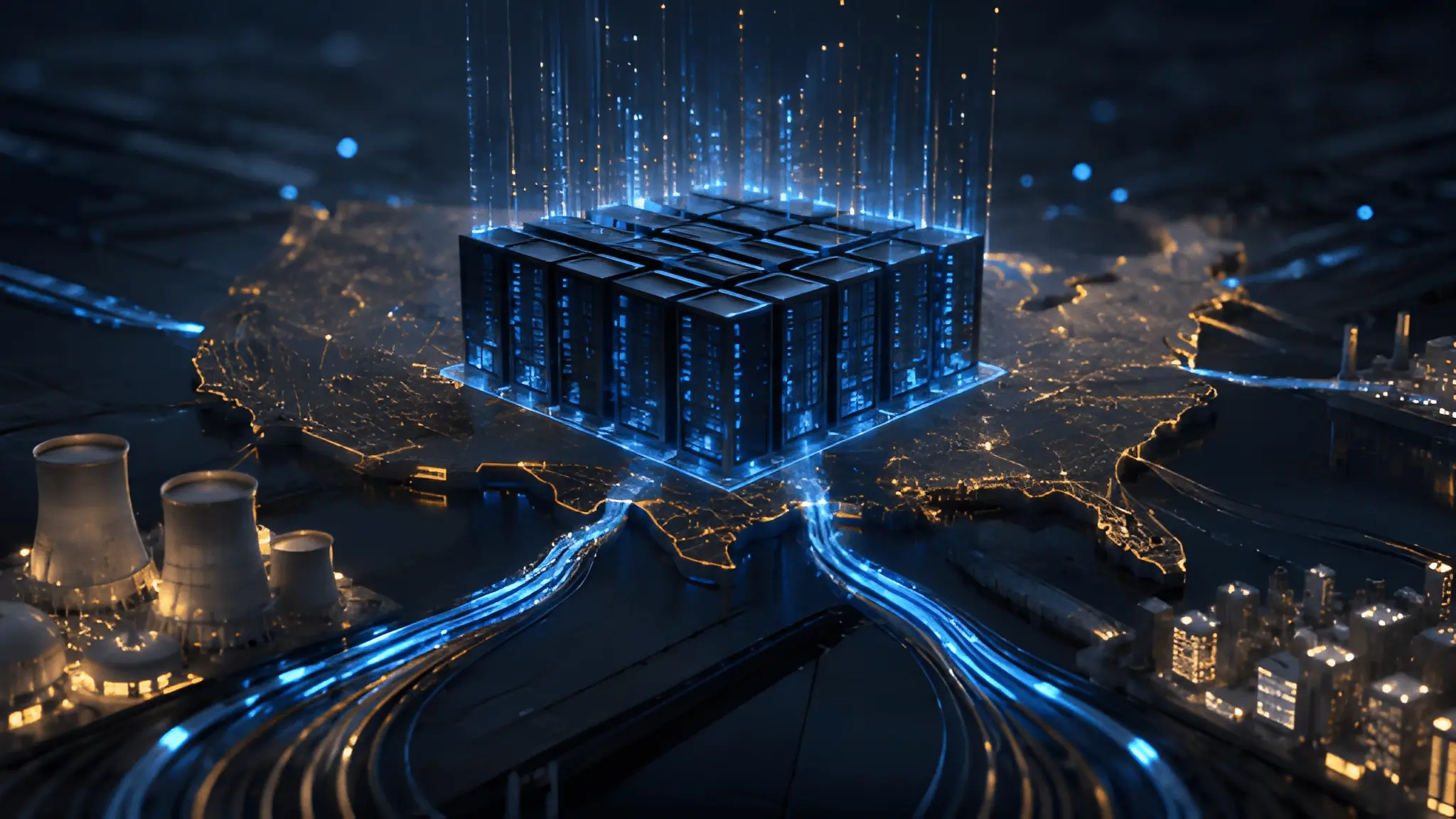
The rapid expansion of artificial intelligence is beginning to redefine the economics of electricity across the United States, with new projections suggesting data centers will account for one-fifth of national power consumption within the next decade. The forecast reflects a structural shift rather than a temporary surge, as hyperscale operators accelerate investments in AI infrastructure capable of supporting increasingly compute-intensive workloads. Electricity demand, once characterized by gradual and predictable growth, is now entering a period of sustained expansion driven by digital infrastructure instead of traditional industrial sectors. That transformation is forcing utilities, regulators, grid operators and infrastructure developers to rethink long-established assumptions about capacity planning. The implications extend well beyond technology companies because the competition for electricity is becoming a central consideration in economic development, industrial policy and long-term energy security.
AI Infrastructure Reshapes National Power Demand
Data centers currently account for approximately 5.9% of US electricity consumption, but that share will increase to roughly 12% by 2030 before reaching around 20% by 2035. The forecast indicates that one in every five units of electricity generated nationwide could ultimately support digital infrastructure dedicated largely to artificial intelligence workloads. Such growth represents one of the fastest shifts in electricity consumption patterns recorded in recent decades and significantly exceeds previous market expectations. Reports estimates total US data center electricity demand will reach approximately 194 gigawatts by 2035, reflecting an 83% increase from its December forecast because the pipeline of AI projects has expanded considerably. Instead of incremental additions to existing facilities, developers are planning entirely new campuses designed around high-density computing environments that require unprecedented levels of continuous electrical supply.
The revised demand projections underscore how AI has fundamentally altered infrastructure planning across the technology sector. Earlier forecasts assumed a steadier pace of data center development that aligned with conventional cloud computing growth, but the emergence of generative AI has changed that trajectory. Training advanced language models and operating inference clusters require substantially higher computing densities than previous enterprise workloads, creating demand for significantly larger facilities equipped with specialized hardware. These installations operate continuously while consuming enormous amounts of electricity, making reliable power availability a primary consideration during site selection. As investment announcements continue to accelerate, infrastructure developers increasingly evaluate energy access before assessing traditional advantages such as connectivity or land availability. The result is a growing convergence between digital infrastructure planning and long-term electricity strategy.
Artificial Intelligence Drives A New Generation Of Data Centers
The expansion of AI infrastructure differs markedly from earlier waves of cloud investment because computing density has increased dramatically within each new generation of facilities. AI clusters rely on advanced accelerators that consume substantially more electricity than conventional enterprise servers, while cooling requirements rise alongside processor performance. This combination creates facilities that require far greater power capacity from their first day of operation, increasing pressure on utilities already facing growing demand from multiple sectors. Projection of 194 gigawatts illustrates the scale of infrastructure required to sustain anticipated AI deployment across industries. One gigawatt of electricity is roughly equal to the power capacity of one traditional nuclear reactor, according to Bloomberg. Those comparisons highlight how AI has become an energy challenge as much as a computing challenge, requiring coordinated investment across generation, transmission and distribution networks.
The forecast also reflects a notable acceleration compared with previous industry expectations. Large technology companies increasingly view compute capacity as a strategic asset, prompting aggressive construction plans designed to secure long-term competitive advantage. That investment cycle extends beyond hyperscale operators, with enterprise AI adoption creating additional demand for colocation providers and specialized infrastructure developers. Each new facility contributes to cumulative pressure on electricity systems that were originally designed for a slower and more predictable growth profile. The result is a structural transformation in infrastructure planning that links digital competitiveness directly to national energy capacity.
Grid Constraints Become A Strategic Infrastructure Challenge
Rapid growth in AI infrastructure is exposing limitations across electricity networks that experienced relatively modest demand growth for almost two decades. Grid operators now face the challenge of connecting increasingly power-intensive facilities while maintaining reliability for existing residential, commercial and industrial consumers. In response, several data center developers are exploring dedicated on-site electricity generation to supplement traditional grid connections and reduce exposure to transmission bottlenecks. These strategies include natural gas generation and other localized power solutions capable of supporting continuous AI operations when grid capacity remains constrained. Such developments illustrate how electricity has evolved from a background operational requirement into a strategic component of infrastructure investment decisions. Meanwhile, competition for available capacity continues to intensify as additional AI projects enter development pipelines.
Local approval processes have become another significant factor influencing deployment timelines. Multiple proposed projects across the United States have encountered permitting delays or temporary development restrictions because communities and policymakers are assessing their long-term electricity requirements and environmental impacts. Those reviews increasingly consider whether existing infrastructure can accommodate large-scale data centers without affecting broader regional electricity reliability. Those observations reinforce growing concerns that infrastructure expansion must keep pace with AI investment if broader electrification objectives are to remain achievable.
AI Is Redefining The Future Of American Energy
The convergence of artificial intelligence, digital infrastructure and electricity markets represents one of the most significant structural changes facing the US economy over the coming decade. What began as an expansion in cloud computing has evolved into a broader transformation that links technological competitiveness directly with national energy capacity. That shift places grid modernization, generation investment and transmission development at the center of the country’s digital economy strategy. Utilities, regulators, technology companies and infrastructure investors will increasingly need to coordinate long-term planning as electricity becomes a defining constraint on AI expansion. The availability of reliable power is no longer simply supporting digital transformation; it is becoming one of the factors that will determine its pace.
The coming decade is therefore likely to redefine how energy and technology sectors interact across the United States. Data centers are transitioning from large electricity consumers into strategic infrastructure assets whose growth influences national investment priorities, regional economic development and electricity market design. Meeting projected demand will require continued expansion across conventional generation, renewable energy, transmission infrastructure and localized power solutions capable of supporting next-generation AI facilities. At the same time, policymakers will need to balance infrastructure development with affordability, environmental considerations and long-term grid resilience. The AI boom is reshaping far more than the technology industry, it is transforming the foundations of the American electricity system itself. As the competition for compute accelerates globally, the race to secure reliable electricity is becoming equally decisive.










