
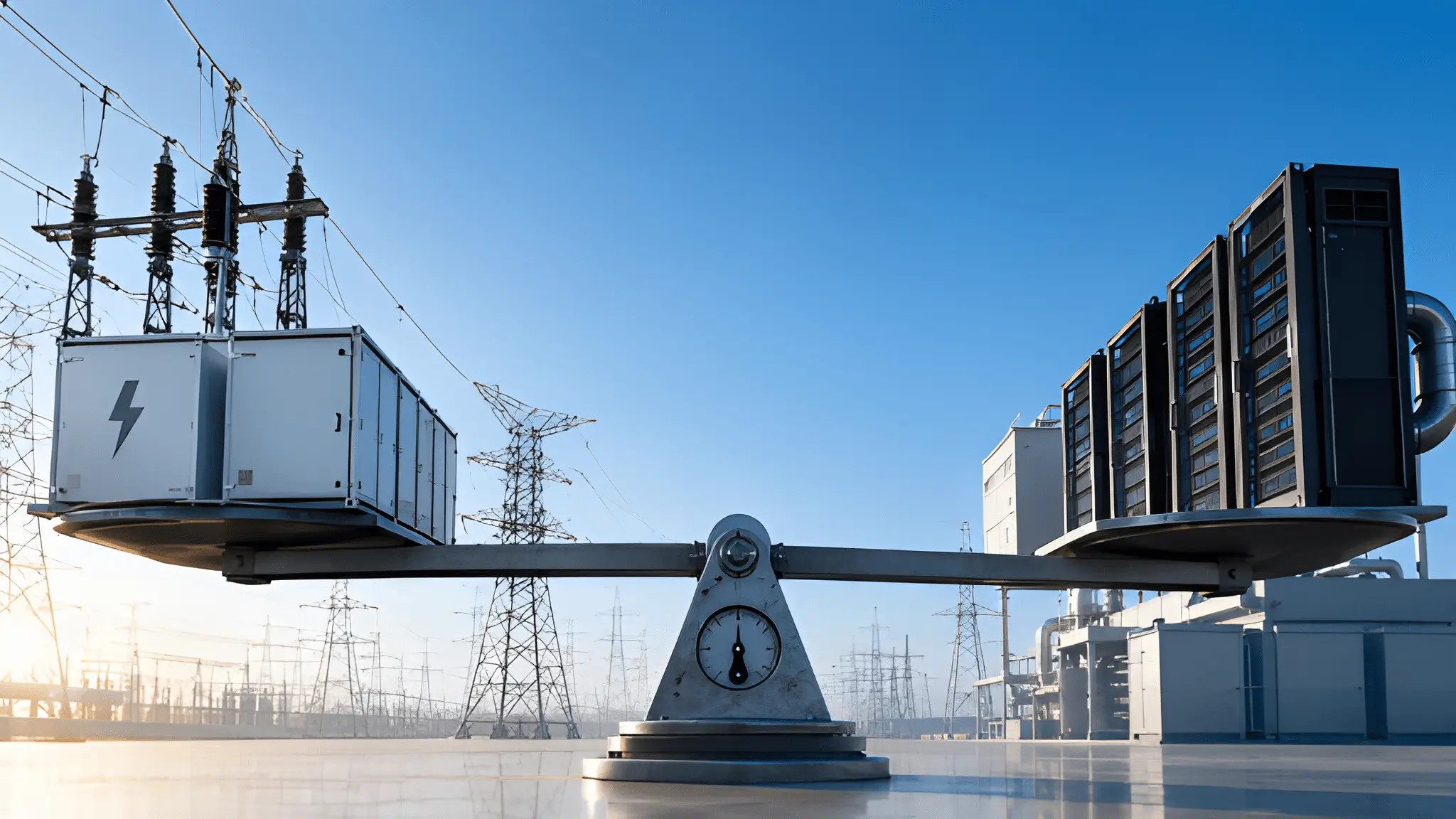
Selecting an AI infrastructure location no longer ends with comparing electricity tariffs, available acreage, or incentive packages because electrical behavior under dynamic load increasingly determines commercial performance. Enterprise buyers often discover that identical installed capacity produces very different computational output once clusters begin executing synchronized training workloads with rapid power transitions. Procurement teams therefore face a decision that extends beyond energy procurement into electrical engineering, operational resilience, and financial forecasting for every model deployment. Infrastructure planning now requires understanding how a transmission network responds when thousands of accelerators simultaneously change consumption instead of assuming every megawatt delivers identical business value. Capacity planning becomes considerably more meaningful when utilization rather than installed infrastructure defines return on investment across the entire deployment lifecycle. This shift has elevated electrical stability into an increasingly important infrastructure consideration alongside compute density for organizations deploying large AI workloads that require dependable high-power operation.

Selecting infrastructure based solely on advertised electricity pricing increasingly overlooks variables that influence productive compute over the life of an AI deployment. Organizations investing hundreds of millions into accelerator clusters measure success through completed training cycles, predictable delivery schedules, and sustained utilization instead of theoretical facility capacity. Commercial outcomes increasingly depend upon whether electrical infrastructure accommodates rapid load variation without triggering operational constraints across the surrounding grid. Infrastructure that appears financially attractive during procurement can become substantially more expensive once operational limitations reduce productive compute hours across successive model development cycles. Consequently, electrical characteristics previously examined only by utility engineers now influence executive decisions involving capital allocation, expansion planning, and geographic diversification. Power quality has consequently emerged as a measurable business variable instead of remaining a purely technical engineering consideration.
The Cheap Megawatt Mirage: Why $/kW Lies on Day One
Headline electricity pricing frequently dominates site-selection presentations because simple cost comparisons create an impression of objective financial advantage. Those figures rarely describe how effectively a location supports sustained high-density computational loads operating with synchronized power fluctuations throughout extended training sessions. Electrical systems experiencing limited short-circuit strength or constrained network flexibility may require utilities to introduce operational controls that never appear within initial commercial marketing material. Curtailment events, temporary export restrictions, and operational balancing requirements generally emerge only after detailed engineering studies and interconnection negotiations progress toward completion. These limitations affect usable computing capacity rather than installed electrical capacity, creating a measurable difference between purchased infrastructure and productive infrastructure over time. Enterprise buyers therefore benefit from evaluating delivered computational availability instead of focusing exclusively upon nominal electrical pricing.
Training workloads differ from conventional enterprise computing because thousands of accelerators frequently synchronize activity during checkpoint restoration, distributed optimization, and communication-intensive computational phases. Rapid load transitions create electrical behavior that stresses surrounding networks differently from relatively stable industrial consumption profiles, particularly where system strength remains limited. Utilities evaluating these facilities increasingly examine dynamic load characteristics alongside total connected capacity before approving operational conditions for large-scale deployments. However, low electricity pricing cannot compensate for operational restrictions that reduce effective accelerator utilization across multi-month training programs. Financial models that ignore these engineering realities often underestimate deployment costs because extended completion timelines consume additional infrastructure, labor, and opportunity resources. Commercial value ultimately depends more on consistently usable electrical capacity that supports sustained accelerator utilization than on contracted electrical capacity priced at the lowest rate.

When Your Interconnection Agreement Becomes Your Throttle
Interconnection agreements increasingly contain detailed operational provisions describing how large electrical consumers interact with surrounding transmission infrastructure under changing load conditions. Utilities now evaluate parameters governing load ramp behavior, recovery characteristics, and operational responsiveness because extremely large AI clusters can influence local system stability differently from conventional commercial facilities. These contractual provisions establish operating envelopes intended to preserve broader grid reliability rather than simply allocating electrical capacity to individual customers. Engineering analysis therefore becomes inseparable from commercial negotiation because infrastructure capability directly influences contractual flexibility throughout facility operations. Procurement teams that overlook these provisions risk acquiring capacity that cannot consistently operate at intended computational intensity. Commercial certainty increasingly depends upon engineering compatibility between computational demand and network behavior.
Utilities may specify acceptable load transition characteristics before approving full operational capacity where local transmission conditions require additional stability safeguards. Electrical systems exhibiting relatively lower stiffness can require more conservative operational limits to minimize disturbances during rapid demand variation from hyperscale computational facilities. Contractual operating boundaries consequently influence realized computational output despite substantial installed electrical infrastructure remaining physically available. Meanwhile, organizations connecting to electrically stronger transmission systems may face fewer operational constraints because higher system strength generally provides greater capability to accommodate rapid changes in large electrical loads, subject to utility-specific engineering assessments. Executive decision-making therefore benefits from examining interconnection engineering documentation alongside financial proposals before finalizing strategic infrastructure investments. Commercial competitiveness increasingly depends upon understanding these technical commitments before construction begins rather than discovering operational constraints after energization.
Ride-Through Without Uptime: Paying for Power You Can’t Use
Traditional infrastructure metrics frequently emphasize facility availability because uninterrupted operations remain fundamental to enterprise computing environments. High availability alone does not guarantee efficient AI training when electrical conditions interrupt workload continuity without causing complete facility outages. Distributed training environments periodically save checkpoints before resuming synchronized computation, creating predictable transitions that require stable electrical behavior throughout the supporting infrastructure. Systems unable to accommodate these transitions efficiently may preserve operational uptime while still reducing effective accelerator productivity across extended computational cycles. Idle accelerators continue consuming valuable capital resources even when electrical conditions prevent immediate workload resumption following operational adjustments. Infrastructure value therefore depends upon sustaining productive computational continuity rather than merely maintaining powered facilities.
Repeated pauses, gradual recovery behavior, or conservative operational sequencing can lengthen total training duration despite every major infrastructure component remaining technically available throughout execution. Extended completion timelines influence research productivity, hardware utilization, project scheduling, and capital efficiency without necessarily appearing within conventional uptime reporting metrics. Financial performance increasingly reflects completed computational output instead of infrastructure availability because enterprise AI investments derive value from delivered models rather than energized facilities. Consequently, productive infrastructure supports rapid workload recovery after operational transitions while maintaining predictable execution characteristics across distributed accelerator environments. Organizations evaluating infrastructure quality therefore gain more meaningful commercial insight by examining workload continuity metrics alongside conventional facility reliability measurements. Time-to-train increasingly represents a financial metric closely connected with electrical behavior rather than solely computational architecture.
How Weak Stiffness Quietly Kills Your AI Roadmap Velocity
Infrastructure limitations increasingly influence strategic planning because unpredictable computational performance affects product development schedules well beyond engineering organizations. AI roadmaps frequently depend upon sequential model development where one completed training cycle enables subsequent experimentation, validation, optimization, and deployment activities across multiple business functions. Operational uncertainty within supporting electrical infrastructure therefore propagates through research timelines, commercialization planning, and executive investment decisions with measurable organizational consequences. Engineering teams often compensate by redesigning workload scheduling, reducing computational intensity, or redistributing workloads across geographically separated facilities to preserve delivery commitments. These adaptations introduce operational complexity that would otherwise remain unnecessary under more predictable electrical conditions. Infrastructure quality therefore directly influences organizational execution speed rather than merely supporting technical operations.
Infrastructure predictability also reshapes procurement strategy because enterprises increasingly compare self-operated facilities against colocation environments capable of delivering stronger electrical performance characteristics. Investment decisions extend beyond construction economics into measurable differences involving deployment certainty, utilization consistency, and operational scalability across future computational expansion. Electrical performance therefore becomes a competitive differentiator for infrastructure providers seeking long-term enterprise AI workloads requiring dependable execution characteristics. Ultimately, organizations evaluating total ownership economics increasingly recognize that infrastructure consistency reduces scheduling uncertainty more effectively than nominal electricity savings alone. Reliable computational delivery strengthens executive confidence in planning successive deployment phases while supporting broader digital transformation objectives. Infrastructure decisions increasingly determine organizational agility because electrical predictability influences every subsequent stage of AI development.
The Best Location Is No Longer Cheapest, It’s the Most Predictable
Enterprise AI infrastructure economics increasingly reward locations capable of consistently delivering usable computational capacity rather than simply advertising attractive electricity pricing or abundant connected power. Electrical behavior under dynamic workloads now influences accelerator utilization, operational predictability, deployment confidence, and long-term financial performance across every stage of model development. Organizations evaluating infrastructure through delivered computational output instead of installed electrical capacity gain a more accurate understanding of total ownership economics. Site selection therefore requires integrating transmission engineering, interconnection analysis, operational modeling, and commercial evaluation into a unified investment framework. Predictable electrical performance supports higher infrastructure productivity while reducing uncertainty surrounding future expansion initiatives and enterprise AI adoption. Competitive advantage increasingly emerges from dependable infrastructure behavior instead of isolated procurement savings.
Premium infrastructure locations may command higher initial electricity costs, yet they frequently deliver superior commercial performance when sustained utilization, predictable execution, and expansion flexibility become primary business objectives. Strong electrical foundations reduce operational compromises that otherwise accumulate gradually through extended training timelines, constrained utilization, and evolving contractual limitations over multi-year infrastructure lifecycles. Executive teams increasingly complement traditional infrastructure capacity metrics with operational measures such as accelerator utilization, workload completion, and delivery timelines to better evaluate overall investment performance. Infrastructure strategy therefore continues shifting toward electrical predictability as organizations prioritize resilient execution over purely transactional energy pricing comparisons. Long-term competitiveness increasingly depends upon selecting locations where electrical characteristics consistently support ambitious computational objectives under real operating conditions. The most valuable infrastructure investment ultimately delivers predictable productive capacity rather than inexpensive connected capacity.











