
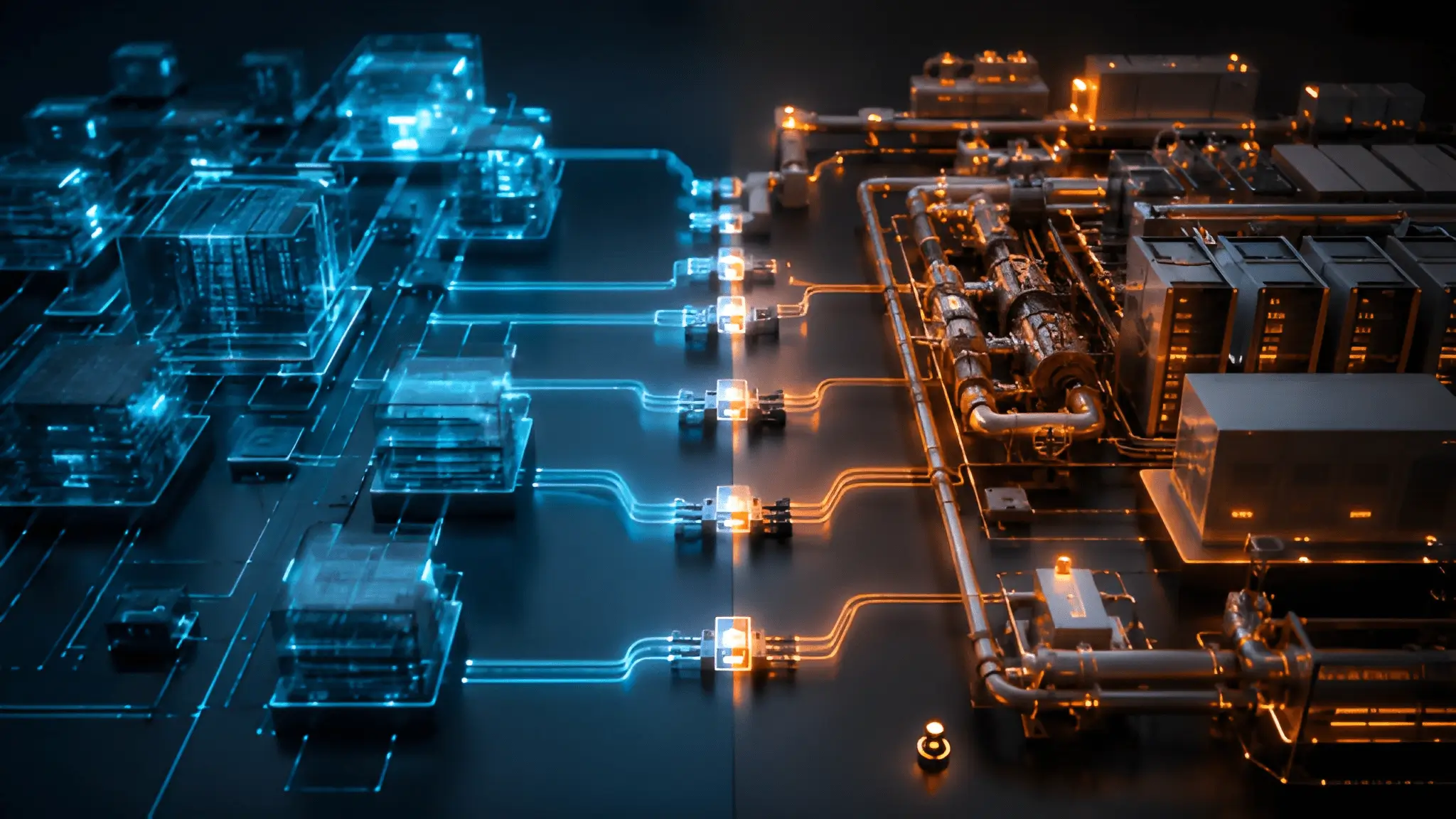
A design review often begins with a familiar question about whether a project requires N, N+1 or 2N redundancy. The discussion usually ends once everyone agrees on the notation because the letters appear to provide a complete description of resilience. Those labels simplify procurement, guide specification documents and make comparison between competing designs easier. They can also encourage the assumption that identical terminology describes equivalent resilience across different infrastructure domains, even though industry guidance evaluates electrical, mechanical and IT redundancy according to different operational characteristics. In practice, data redundancy represents only one dimension of resilience because the same notation also applies to electrical infrastructure, cooling systems, servers and storage, where each discipline interprets failure through a different physical reality. Understanding those differences matters far more than choosing the label itself.

Modern computing environments recover from faults through software, firmware and orchestration as readily as through hardware duplication. A virtual machine can migrate between hosts without requiring an engineer to touch a cabinet, while a failed chiller may demand manual isolation, valve sequencing and careful thermal stabilization before cooling capacity fully returns. Both events may occur inside a site advertised as 2N, although their operational consequences bear little resemblance to one another. The notation remains identical even though the mechanisms of protection differ fundamentally. That difference deserves greater attention because infrastructure decisions increasingly depend upon assumptions hidden behind familiar terminology.
In White Space, Redundancy Fails Over. In Grey Space, It Fails Differently
Redundancy inside white space revolves around maintaining application availability rather than preserving individual hardware components. Cluster software, distributed storage platforms and hypervisors constantly evaluate system health before redirecting workloads whenever a server, processor or storage node becomes unavailable. The transition frequently occurs without human intervention because orchestration platforms continuously monitor resource status and make placement decisions according to predefined policies. Physical hardware certainly underpins those capabilities, yet software determines how quickly applications continue operating after component failure. Availability therefore emerges from coordinated decision-making rather than simple duplication of equipment. Grey space follows an entirely different sequence whenever equipment becomes unavailable because physical energy cannot migrate with the flexibility enjoyed by software workloads. Electrical distribution depends upon breakers, transformers, switchgear, generators, busways and protection devices that obey physical laws instead of orchestration policies.
Mechanical systems therefore require physical transitions that unfold across time instead of logical transitions completed through software commands. Redundancy consequently becomes an operational process instead of an immediate computing event. Many infrastructure discussions unintentionally merge these two realities because both environments describe resilience through identical letters. Engineers may correctly specify dual-corded servers, redundant network fabrics and clustered storage while simultaneously overlooking the operational behaviour of cooling or electrical infrastructure supporting those systems. An application may survive loss of one server within seconds because workload orchestration continues uninterrupted, whereas restoration of mechanical redundancy after equipment isolation can require inspection, sequencing and confirmation before capacity returns. Both systems remain technically redundant, although their operational timelines differ dramatically. Recognizing those distinct behaviours creates a more realistic understanding of infrastructure resilience than redundancy notation alone can provide.

Failure Behavior Is Defined by Physics, Not Labels
Infrastructure failures become easier to understand when they are analysed as physical events rather than logical interruptions. A server cluster evaluates processor health, memory integrity and network reachability before redirecting workloads according to software policies that have already been validated through testing. An electrical distribution system instead responds to protection settings, breaker coordination and available fault current before power reaches another path. Cooling infrastructure introduces an additional layer because water temperature, pressure stability and equipment sequencing influence recovery long after the initiating event has ended. Every redundant mechanical component therefore inherits the operating characteristics of the physical medium that it manages instead of the software environment supporting applications. The same redundancy notation consequently represents two entirely different recovery narratives even though procurement documents often describe both with identical terminology.
Mechanical resilience also depends upon stable operating conditions before a redundant path can assume production load without introducing another operational risk. Pumps cannot instantly achieve hydraulic equilibrium after every changeover because pressure fluctuations and valve positions influence system behavior throughout the transition. Chillers similarly require coordinated sequencing to avoid thermal instability, compressor stress or unnecessary cycling that could reduce operational reliability during recovery. Electrical infrastructure follows comparable principles because synchronisation, breaker status and protective coordination determine whether an alternate source can safely accept additional demand. Time therefore becomes an engineering variable within grey space because every physical transition introduces operational dependencies that software failover rarely encounters.
Logical Continuity Does Not Equal Physical Continuity
The distinction becomes increasingly important as rack densities continue rising because thermal and electrical margins become less forgiving than they were during earlier generations of infrastructure. High-density compute platforms consume available cooling capacity differently from conventional enterprise workloads and therefore expose weaknesses hidden inside redundant mechanical architectures. White space can often redistribute applications away from stressed hardware while grey space must continue transporting electrical power, removing heat and maintaining environmental stability through physical equipment. Those responsibilities cannot migrate across the building with the same flexibility enjoyed by software-defined infrastructure because every component remains constrained by installed topology and mechanical behaviour. Appreciating those constraints allows redundancy discussions to move beyond shorthand notation toward operational understanding that reflects how infrastructure actually behaves under stress.
White space rewards logical abstraction because applications rarely depend upon the identity of a specific server once orchestration platforms assume control. Grey space rewards physical separation because electricity, cooling water and airflow continue following immutable physical paths regardless of software intelligence. Those different realities create the central misunderstanding surrounding redundancy terminology because identical letters describe fundamentally different engineering behaviors. One environment primarily protects workloads through software decisions, while the other protects operating conditions through disciplined control of physical infrastructure. Redundancy therefore deserves to be evaluated through failure behaviour instead of notation because operational outcomes ultimately determine resilience rather than architectural labels alone.
Your Second Copy Isn’t Second If It Breathes The Same Air
Redundancy frequently disappears long before equipment fails because duplicated assets often inherit common infrastructure that remains invisible within high-level architectural diagrams. Two transformers may receive power through separate electrical paths while their monitoring networks terminate inside the same communications cabinet. Parallel chilled-water systems may appear completely independent until engineers discover that both depend upon a common control network, shared valve gallery or identical instrumentation. Separate UPS systems may successfully isolate electrical faults while cable routing converges inside one vertical riser before reaching the white space distribution network. Hardware duplication therefore represents only one dimension of resilience because hidden dependencies frequently determine whether redundancy survives an actual failure.
Service corridors provide an instructive example because they often carry electrical feeders, fibre networks, control wiring and mechanical services through a single physical route. Designers usually optimize those spaces for construction efficiency, maintainability and future expansion without fully considering the operational implications of route convergence. A fire event, water ingress or accidental damage inside that corridor can therefore affect systems that specification documents describe as fully independent. Physical proximity quietly becomes a common-mode failure mechanism despite every major component satisfying redundancy requirements on paper. Independence consequently depends upon separation of supporting infrastructure as much as separation of the primary equipment itself.
Shared Infrastructure Creates Shared Risk
Independent systems rarely become dependent because of the primary equipment itself, since those assets are usually specified with considerable attention to redundancy objectives. Dependency instead emerges through supporting infrastructure that quietly serves both redundant paths without attracting the same level of design scrutiny. Control cabling, fibre pathways, containment systems, drainage routes and maintenance access often evolve through practical construction decisions that optimize installation rather than operational isolation. Those decisions appear reasonable when each discipline reviews only its own drawings because every individual system continues to satisfy its design intent. Cross-disciplinary analysis frequently reveals that supposedly independent systems converge inside the same physical spaces long before reaching their intended destinations. True redundancy therefore depends upon understanding how supporting infrastructure connects every system instead of evaluating each discipline in isolation.
Airflow containment illustrates this principle because its effectiveness depends upon maintaining intended airflow separation throughout the white space rather than relying solely on additional cooling capacity. Redundant cooling systems can still experience reduced operational independence if both paths depend upon the same containment boundary, return-air route or airflow management strategy. Mechanical resilience therefore extends beyond chillers, pumps and CRAHs into the physical design that supports stable airflow under normal and abnormal operating conditions. Similar considerations apply where redundant pipework passes through common penetrations or where separate electrical feeders share identical containment for practical construction reasons. The operational independence of redundant systems therefore depends upon both equipment separation and the supporting physical infrastructure that connects them.
Duplication Ends Where Shared Dependencies Begin
Control infrastructure deserves equal attention because modern data centers increasingly depend upon integrated digital supervision rather than isolated mechanical operation. Building Management Systems, Electrical Power Monitoring Systems and automation controllers exchange operational information continuously to coordinate alarms, sequencing and environmental stability across multiple disciplines. Those communication networks frequently extend across both redundant infrastructure paths because centralised visibility improves operational efficiency during normal conditions. A communication fault, software issue or incorrectly applied configuration can therefore influence both supposedly independent systems at precisely the moment redundancy becomes most valuable. Duplicate plant cannot compensate for shared decision-making if every redundant asset ultimately receives commands from the same operational logic.
Many design reviews conclude once equipment counts satisfy the specified redundancy objective because those criteria remain visible, measurable and comparatively straightforward to verify. Operational resilience emerges only after engineers trace every dependency connecting those systems throughout the building, including routes that appear unrelated to primary power or cooling equipment. The exercise often identifies unexpected convergence points that survive multiple design stages because no single engineering discipline owns responsibility for reviewing the complete dependency chain. Resilience therefore improves when designers evaluate physical independence with the same rigour applied to electrical capacity or cooling performance. The most reliable redundant architecture rarely belongs to the site containing the greatest quantity of duplicate equipment, but rather to the one containing the fewest hidden common dependencies.
The N+1 Trap During Maintenance Window
Most infrastructure performs exactly as expected while every component remains energised, available and operating within its intended design envelope. Confidence in an N+1 architecture often develops during those stable operating conditions because spare capacity remains visible without requiring engineers to disturb the production environment. The true assessment begins when maintenance removes one component from service and the remaining infrastructure must continue supporting every operational requirement without introducing unacceptable operational risk. Uptime Institute distinguishes this capability through the concept of concurrent maintainability, recognising that redundant capacity alone does not ensure uninterrupted operation during planned work. Maintenance therefore becomes the moment when redundancy transitions from theoretical design intent into measurable operational performance.
Redundancy Is Proven During Planned Work, Not Normal Operation
Electrical infrastructure demonstrates this distinction clearly because removing a transformer, UPS module or switchboard from service affects much more than the equipment itself. Isolation procedures require protection settings, switching sequences and downstream distribution paths to continue functioning correctly throughout the maintenance activity. Every temporary operating configuration changes the overall risk profile because the remaining infrastructure now carries responsibilities normally distributed across multiple components. An architecture that comfortably supports production demand under normal conditions may expose unexpected operational constraints once engineers begin isolating equipment for inspection or replacement. Planned maintenance therefore becomes an engineering exercise in preserving operational independence rather than simply preserving available capacity.
Cooling infrastructure introduces another layer of complexity because thermal systems respond gradually rather than instantaneously during maintenance activities. Isolating a CRAH, pump or chiller affects water flow, pressure relationships and thermal distribution across the wider cooling network before temperatures eventually stabilise. Remaining equipment must absorb those changing operating conditions while maintaining environmental stability across increasingly dense compute deployments. Mechanical redundancy therefore depends upon predictable system behaviour throughout the transition instead of merely possessing sufficient installed cooling capacity after the transition concludes. Those operational characteristics explain why maintenance planning remains inseparable from redundancy planning inside modern data center infrastructure.
Concurrent Maintainability Exposes Hidden Weaknesses
Concurrent maintainability examines the infrastructure from the perspective of operational continuity rather than installed capacity because every planned intervention changes the behaviour of the wider system. A redundant design only demonstrates its intended value when engineers can safely isolate, service and restore individual components without exposing production systems to unnecessary operational risk. That objective depends upon independent electrical paths, mechanically isolated cooling loops and carefully coordinated operating procedures working together throughout the maintenance activity. Documentation alone cannot guarantee those outcomes because real operating conditions frequently reveal dependencies that remained invisible during design reviews. Maintenance therefore becomes the most reliable validation of whether N+1 genuinely behaves as intended when infrastructure transitions away from its normal operating configuration.
Cooling Circuits in White Space
Mechanical isolation frequently introduces challenges that have no direct equivalent inside white space because physical systems continue responding to hydraulic, thermal and electrical conditions throughout the maintenance window. A cooling circuit removed from service changes pressure characteristics across the remaining network even when redundant equipment remains available elsewhere in the building. Electrical switching similarly alters power flow through distribution equipment that may not experience identical loading during everyday operation. Those temporary operating conditions often become the period when hidden weaknesses emerge because infrastructure now functions differently from the configuration originally observed during commissioning. Operational resilience therefore depends upon understanding transitional behavior instead of assuming that spare equipment automatically guarantees uninterrupted service.
White space generally experiences maintenance through workload mobility because clustered applications, virtualisation platforms and software-defined infrastructure can redistribute computing demand while individual hardware receives service. Grey space instead experiences maintenance through physical isolation, sequential switching and controlled restoration because infrastructure cannot relocate electricity or chilled water with comparable flexibility. Those different maintenance models explain why identical redundancy notation often creates unrealistic expectations among stakeholders who naturally assume that every redundant system behaves like clustered compute resources. Physical infrastructure continues obeying engineering constraints regardless of how resilient the software environment becomes. Effective redundancy planning therefore recognizes maintenance as an operational condition rather than treating it as an exceptional event outside normal design assumptions.
One Recovers In Seconds, The Other In Shifts
Redundancy discussions frequently focus upon whether an alternate path exists while paying far less attention to how quickly that path can restore normal operating conditions after a failure. White space generally measures success through uninterrupted application availability because orchestration platforms, clustered services and resilient storage architectures redirect workloads automatically once unhealthy resources become unavailable. Those recovery decisions occur within software, allowing applications to resume operation long before engineers investigate the original hardware failure. Grey space evaluates recovery through an entirely different process because physical infrastructure must first establish safe operating conditions before redundant equipment assumes production responsibilities. Time therefore becomes a defining characteristic of infrastructure resilience rather than a secondary operational metric.
Mechanical recovery begins with understanding the condition of the affected equipment before any attempt to restore normal operation proceeds. Engineers often inspect alarms, verify equipment status, confirm protection settings and evaluate surrounding systems before introducing another transformer, chiller or pump into the production environment. That deliberate sequence protects infrastructure from secondary failures that could arise if equipment returns to service before stable operating conditions exist. Every stage therefore contributes directly to resilience because disciplined restoration frequently prevents larger operational disruptions than immediate intervention might create. Grey space consequently values controlled recovery above rapid recovery because physical systems carry risks that software failover does not encounter.
Mechanical Restoration Is an Operational Discipline
Mechanical infrastructure rarely returns to normal operation through a single action because every restart influences the behaviour of interconnected systems throughout the building. Operators must confirm equipment status, establish stable operating conditions and validate that supporting systems remain prepared to accept changing electrical or thermal loads before completing restoration. Each decision affects pressure, temperature, electrical coordination or equipment sequencing that extends well beyond the failed component itself. A successful recovery therefore depends as much upon disciplined operational execution as it does upon redundant hardware installed during construction. Grey space consequently rewards predictable operating procedures because physical infrastructure cannot ignore intermediate states while transitioning back to normal service.
Software recovery follows a markedly different philosophy because orchestration platforms generally conceal much of the underlying infrastructure complexity from the application layer. Virtual machines, containers and clustered databases continue operating provided sufficient compute capacity remains available elsewhere inside the environment. Applications therefore evaluate service availability rather than the health of a specific server, allowing recovery to occur without exposing users to the underlying hardware event. Mechanical infrastructure offers no comparable abstraction because electricity, chilled water and airflow must continue moving through physical assets that remain subject to engineering constraints. Recovery in grey space therefore reflects the restoration of stable operating conditions rather than merely the availability of an alternate component.
Recovery Time Changes the Meaning of Redundancy
This distinction changes the practical interpretation of redundancy because identical architecture labels conceal fundamentally different operational expectations. A redundant compute platform demonstrates success by maintaining application continuity despite individual hardware failures. A redundant cooling or electrical plant demonstrates success by restoring safe and predictable operating conditions without creating secondary failures during recovery. Those objectives overlap in purpose but differ completely in execution because one prioritises workload continuity while the other prioritises controlled infrastructure behavior. Recovery time therefore becomes an important measure of operational resilience because redundant infrastructure delivers value only when alternate systems can restore stable operating conditions within the required operational objectives.
Recovery planning deserves the same engineering attention as capacity planning because the path back to normal operation often determines whether an isolated incident remains isolated. Infrastructure that restores itself through disciplined, predictable sequences usually experiences fewer operational surprises than infrastructure designed solely around equipment duplication. The quality of restoration procedures therefore becomes part of the redundancy architecture instead of an operational activity performed after design completion. Redundancy should consequently be evaluated according to how safely infrastructure fails, how predictably it recovers and how independently each supporting system behaves throughout that process. Those questions reveal considerably more about operational resilience than the letters N, N+1 or 2N can communicate on their own.
The Control System That Can Veto Your 2N
Electrical and mechanical engineers frequently devote significant effort to eliminating single points of failure within transformers, UPS systems, chillers, pumps and distribution networks while assuming that the control layer naturally inherits the same resilience. Modern data centers increasingly rely upon Building Management Systems, Electrical Power Monitoring Systems and automation platforms to coordinate alarms, switching logic, equipment sequencing and environmental responses across every major infrastructure discipline. Those platforms rarely generate power or cooling themselves, yet they determine how redundant equipment responds when abnormal conditions emerge. A duplicated mechanical plant therefore remains operationally dependent upon the intelligence coordinating its behaviour unless the automation architecture itself reflects equivalent levels of resilience. The operational authority exercised by control systems means they can quietly become the most influential component inside an otherwise fault-tolerant infrastructure.
Automation performs far more than simple monitoring because contemporary control platforms continuously evaluate operating conditions before issuing commands that affect pumps, chillers, cooling towers, switchgear and other critical assets. Those commands determine equipment start order, load sharing, standby rotation, alarm handling and recovery sequences that influence infrastructure stability during both normal operation and abnormal events. If the control architecture becomes unavailable, incorrectly configured or isolated from field devices, duplicated infrastructure may remain physically healthy while losing the coordinated behaviour required to function as intended. The plant has not disappeared, yet its ability to respond intelligently has become impaired because the decision layer governing its operation no longer reflects the assumptions embedded within the redundancy design. Control resilience therefore deserves the same architectural scrutiny traditionally reserved for power and cooling assets themselves.
Intelligence Must Be Redundant Too
Control resilience begins with recognizing that software, communications networks and field controllers collectively form another infrastructure layer rather than simply supporting the physical plant beneath them. Every redundant transformer, UPS module, pump and chiller ultimately depends upon reliable communication with sensors, programmable controllers and supervisory platforms that translate operating conditions into coordinated actions. Those components exchange status information continuously so that sequencing logic, alarm priorities and protection strategies remain aligned with the actual condition of the infrastructure. A disruption affecting those communication paths can therefore reduce the effectiveness of otherwise healthy redundant equipment because operational decisions no longer reflect current system conditions. Redundancy consequently extends beyond mechanical duplication into the architecture governing how infrastructure interprets and responds to changing operational events.
Designers increasingly separate automation domains to prevent one software fault from influencing every critical system simultaneously. Independent controllers, segmented industrial networks and distributed decision-making allow essential equipment to continue operating even when higher-level supervisory applications become unavailable. Local control capability also ensures that field devices maintain safe operating behaviour without waiting for instructions from central management platforms. Those architectural principles reduce operational coupling because intelligence remains available closer to the equipment performing the physical work. Control redundancy therefore becomes an exercise in preserving autonomous decision-making rather than merely duplicating operator workstations or supervisory servers.
Duplicate Plant Still Depends Upon One Decision Layer
The relationship between BMS and EPMS further illustrates why operational independence matters because both environments often exchange information that influences infrastructure behavior during abnormal conditions. Electrical alarms may trigger cooling responses, while environmental conditions may affect electrical operating strategies through predefined automation rules. That integration improves operational awareness and enables coordinated management of complex infrastructure, yet it also creates opportunities for configuration errors or unintended dependencies to propagate across multiple engineering disciplines. Robust redundancy therefore requires careful definition of where systems cooperate, where they remain independent and which decisions must continue locally even when supervisory platforms experience faults. Intelligent infrastructure succeeds not because every function becomes centralised, but because every essential function continues operating safely despite losing access to central coordination.
The growing sophistication of automation should encourage engineers to evaluate control architecture with the same discipline applied to electrical single-line diagrams and mechanical flow schematics. Duplicate plant provides limited operational assurance if every critical action still depends upon one communications path, one supervisory controller or one software configuration governing the entire environment. Modern resilience therefore depends upon distributing operational authority across multiple independent layers so that individual failures remain contained instead of cascading throughout the infrastructure. The control system should reinforce physical redundancy rather than quietly overriding it through shared operational dependencies. A genuinely resilient 2N design therefore requires duplicate intelligence alongside duplicate equipment because operational decisions influence resilience just as profoundly as the assets executing those decisions.
Dual-Corded In White, Single-Path In Grey
Dual-corded servers have become a widely accepted design practice because they allow IT equipment to receive power simultaneously from two independent sources. Each power supply normally connects to separate distribution paths so that failure affecting one feed does not interrupt the operation of the server itself. That arrangement significantly improves application availability when upstream infrastructure genuinely maintains electrical independence throughout the complete distribution chain. The benefit, however, depends upon every intermediate element preserving separation instead of gradually converging through practical installation decisions. Redundancy therefore begins at the server but succeeds only if the surrounding infrastructure protects that independence all the way back to the source.
Many electrical systems satisfy schematic requirements while unintentionally reducing physical diversity through common routing decisions that appear harmless during construction. Separate feeders may leave independent switchboards before entering the same cable riser, crossing identical service corridors or terminating inside shared distribution spaces prior to reaching the white space. Those arrangements preserve electrical separation under ordinary operating conditions, yet they increase exposure to localised events capable of affecting both supposedly independent paths simultaneously. Fire, water ingress, accidental mechanical damage or maintenance activity within one shared area can therefore compromise infrastructure designed around dual electrical sources. Physical routing consequently deserves the same level of engineering attention as electrical topology because diversity disappears whenever independent paths occupy the same environment.
False 2N Begins Where Routes Converge
Physical separation determines whether dual electrical paths remain independent after leaving the drawing board because every shared route introduces another opportunity for a common-mode failure. Two feeders originating from different switchboards can still lose meaningful diversity if they travel through the same shaft, occupy the same containment system or terminate within the same distribution enclosure before branching toward separate racks. Those decisions often emerge from practical construction constraints rather than intentional reductions in resilience because available building space rarely accommodates completely isolated pathways without careful planning. The resulting architecture may satisfy the functional intent of dual distribution while quietly weakening the physical independence expected from a genuine 2N design. Infrastructure therefore deserves to be evaluated according to where independent paths physically converge instead of where they logically separate.
Mechanical services frequently reveal comparable patterns because cooling distribution follows physical routes that inevitably interact with the building structure. Parallel chilled-water pipework may initially leave separate pumping systems before crossing the same ceiling void, sharing structural penetrations or occupying identical plant corridors on the journey toward the white space. Independent cooling capacity therefore remains vulnerable whenever one localised incident affects both physical routes simultaneously through damage, contamination or restricted access. Designers often focus upon pump redundancy and chiller availability while giving less attention to the building geometry connecting those systems together. Physical diversity consequently depends as much upon routing discipline as it does upon equipment selection because infrastructure follows buildings rather than schematic diagrams.
Electrical Diversity Can Disappear Before Reaching the Rack
Containment systems also deserve closer examination because electrical and mechanical pathways increasingly compete for limited space within high-density developments. Cable trays, pipe supports, communications infrastructure and maintenance access frequently occupy adjacent environments that appear independent from an operational perspective while remaining physically exposed to the same external event. A maintenance activity affecting one service route can therefore influence neighbouring infrastructure despite every individual system meeting its own redundancy objectives. Separation should consequently be measured according to exposure rather than ownership because shared environmental conditions frequently create stronger dependencies than shared equipment. A resilient architecture emerges when every critical path preserves its independence throughout the complete journey from source to destination without repeatedly entering the same physical risk zone.
The most convincing demonstration of redundancy rarely appears within equipment schedules because duplicate assets alone reveal little about their surrounding dependencies. Engineers gain a clearer understanding by tracing every electrical, mechanical and communications path through the building while asking which single event could realistically influence more than one supposedly independent system. That exercise frequently identifies convergence points created by architecture, construction sequencing or later expansion rather than by shortcomings in the original redundancy objective. Physical routing therefore deserves equal prominence alongside electrical topology whenever resilience becomes a design priority. Dual-corded equipment fulfils its intended purpose only when every upstream path preserves the independence promised at the rack itself.
Isolation Is The Real Letter Grade
Redundancy becomes substantially more meaningful when infrastructure is evaluated according to the potential consequences of failure instead of the quantity of duplicate equipment installed throughout the site. Every physical event possesses a blast radius that extends beyond the failed component because surrounding systems may share the same room, structural penetration, service corridor or environmental condition. A transformer fault, pipe leak or fire suppression discharge does not recognise architectural redundancy labels because each event affects every exposed asset within its physical reach. The practical objective therefore extends beyond duplicating equipment to reducing the number of critical systems that can be affected by a single initiating event through physical separation and independent infrastructure paths. Isolation consequently becomes an important engineering principle because limiting shared exposure reduces the likelihood that one incident will affect multiple redundant systems simultaneously.
Fire compartmentation illustrates this principle because independent electrical and mechanical systems achieve greater resilience when they occupy physically separated zones rather than neighbouring positions inside the same enclosure. A building designed around effective compartmentation reduces the likelihood that heat, smoke or suppression activities affecting one area will simultaneously compromise another supposedly independent infrastructure path. Similar thinking applies to cooling distribution, communications rooms and cable routes because physical barriers interrupt the spread of operational consequences beyond the initiating event. The value of those barriers often remains invisible during everyday operation because they exist primarily to preserve independence under abnormal conditions. True redundancy therefore depends upon limiting shared exposure as much as providing duplicate equipment capable of accepting additional load after a failure.
Separation Creates Real Independence
Physical separation represents the most practical expression of resilience because it reduces the opportunity for one event to influence multiple infrastructure paths at the same time. Engineers often achieve this objective by distributing redundant equipment across different fire compartments, independent plant rooms and distinct service routes rather than concentrating everything inside one convenient location. Those decisions may increase design complexity during construction, yet they significantly reduce the probability that a single operational event will compromise both primary and standby systems together. Separation therefore creates resilience before a failure occurs because it limits the number of assets exposed to the same physical conditions. Infrastructure that preserves meaningful physical distance between redundant systems generally provides more predictable operational behavior than infrastructure relying solely upon equipment duplication.
Electrical infrastructure benefits from this philosophy because independent feeders remain considerably more resilient when they travel through different shafts, risers and distribution areas before reaching the white space. Mechanical systems achieve comparable advantages when chilled-water loops, condenser-water piping and associated control networks avoid unnecessary convergence throughout the building. Communications infrastructure deserves identical treatment because automation networks, monitoring systems and protection signalling increasingly influence the behavior of every critical engineering discipline. Independence therefore extends across power, cooling and operational intelligence rather than belonging exclusively to one technical domain. The objective shifts from installing additional equipment toward ensuring that every redundant path experiences a genuinely independent physical journey from source to destination.
Blast Radius Defines Practical Resilience
Operational planning reinforces those architectural decisions because physical separation only delivers its intended value when maintenance, testing and restoration activities preserve that independence throughout the infrastructure lifecycle. Expansion projects, temporary installations and later modifications can gradually introduce new convergence points that were absent during the original design phase. Regular engineering reviews therefore remain essential because redundancy naturally evolves alongside infrastructure growth rather than remaining fixed after commissioning. Resilience consequently depends upon continuously validating isolation instead of assuming that historical design documentation still reflects present operating conditions. The most dependable redundancy strategy combines physical separation with disciplined operational governance that protects those design principles throughout the life of the data center.
Physical isolation provides additional context when evaluating redundancy because it complements equipment counts by showing how effectively infrastructure limits the impact of a single failure across independent systems. Engineers who evaluate redundancy through blast radius naturally begin tracing cable routes, cooling circuits, communications networks and maintenance access instead of focusing exclusively upon equipment schedules. That broader perspective exposes dependencies that remain invisible when redundancy is measured only by the number of duplicate assets installed inside the building. Physical independence therefore becomes an operational characteristic that can be observed, tested and continuously improved throughout the infrastructure lifecycle. The strongest redundancy architecture is rarely the one with the greatest quantity of equipment, but the one that most effectively prevents a single event from expanding beyond its original point of failure.
Stop Counting Letters, Start Tracing Failure Stories
The industry has relied upon N, N+1 and 2N for decades because those designations provide a concise vocabulary for communicating infrastructure intent across engineering disciplines. Those letters remain valuable because they simplify procurement discussions, specification development and early-stage architectural planning without requiring every stakeholder to analyse detailed engineering drawings. Their usefulness, however, is greatest when they are considered alongside an understanding of how electrical, mechanical and IT systems behave during planned maintenance and fault conditions, rather than being treated as complete descriptions of operational resilience. Every redundancy label conceals an operational narrative describing how electricity, cooling, communications and control systems respond once the unexpected occurs. Engineers therefore gain far greater insight by examining that narrative than by debating which notation appears inside the project documentation.
White space tells a story centred upon workload continuity because software abstracts hardware failures through clustering, orchestration and distributed computing techniques that maintain application availability despite individual component loss. Grey space tells a different story because physical infrastructure must continue transporting electrical energy, removing heat and maintaining environmental stability through equipment that remains governed by engineering constraints instead of software abstraction. Those different operational characteristics explain why identical redundancy terminology should be interpreted within the context of the infrastructure discipline to which it is being applied. The difference does not imply that one environment demonstrates superior resilience because each protects availability through methods appropriate to its own physical reality. Appreciating those distinctions encourages more informed engineering decisions than relying upon familiar notation alone.
Follow the Failure Path, Not the Specification Sheet
A more practical approach begins by tracing every credible failure path across the complete infrastructure rather than assuming that redundancy notation already captures the full operational picture. Engineers can examine how electrical power enters the building, how cooling reaches the white space, how automation coordinates responses and where those independent paths unintentionally converge before reaching production systems. That exercise often reveals opportunities to improve resilience without fundamentally changing the installed equipment because many operational weaknesses originate from routing, controls or maintenance practices rather than insufficient capacity. The resulting discussion naturally shifts from equipment procurement toward engineering behaviour under realistic operating conditions. Redundancy consequently becomes an evolving operational discipline instead of a static design characteristic recorded within project documentation.
The most useful question for future infrastructure reviews may therefore become remarkably simple because it encourages engineers to investigate behaviour rather than labels. Instead of asking whether an architecture qualifies as N, N+1 or 2N, engineering teams can ask which realistic sequence of events could still interrupt both white and grey spaces despite the intended redundancy. That change in perspective transforms redundancy from a specification exercise into a practical exploration of operational resilience supported by physical evidence instead of optimistic assumptions. Every traced dependency strengthens confidence because every verified point of independence reduces uncertainty before the next unexpected event arrives. The letters continue serving an important purpose, although the story behind those letters ultimately determines whether the infrastructure fulfils the resilience they promise.











