 Skip to content
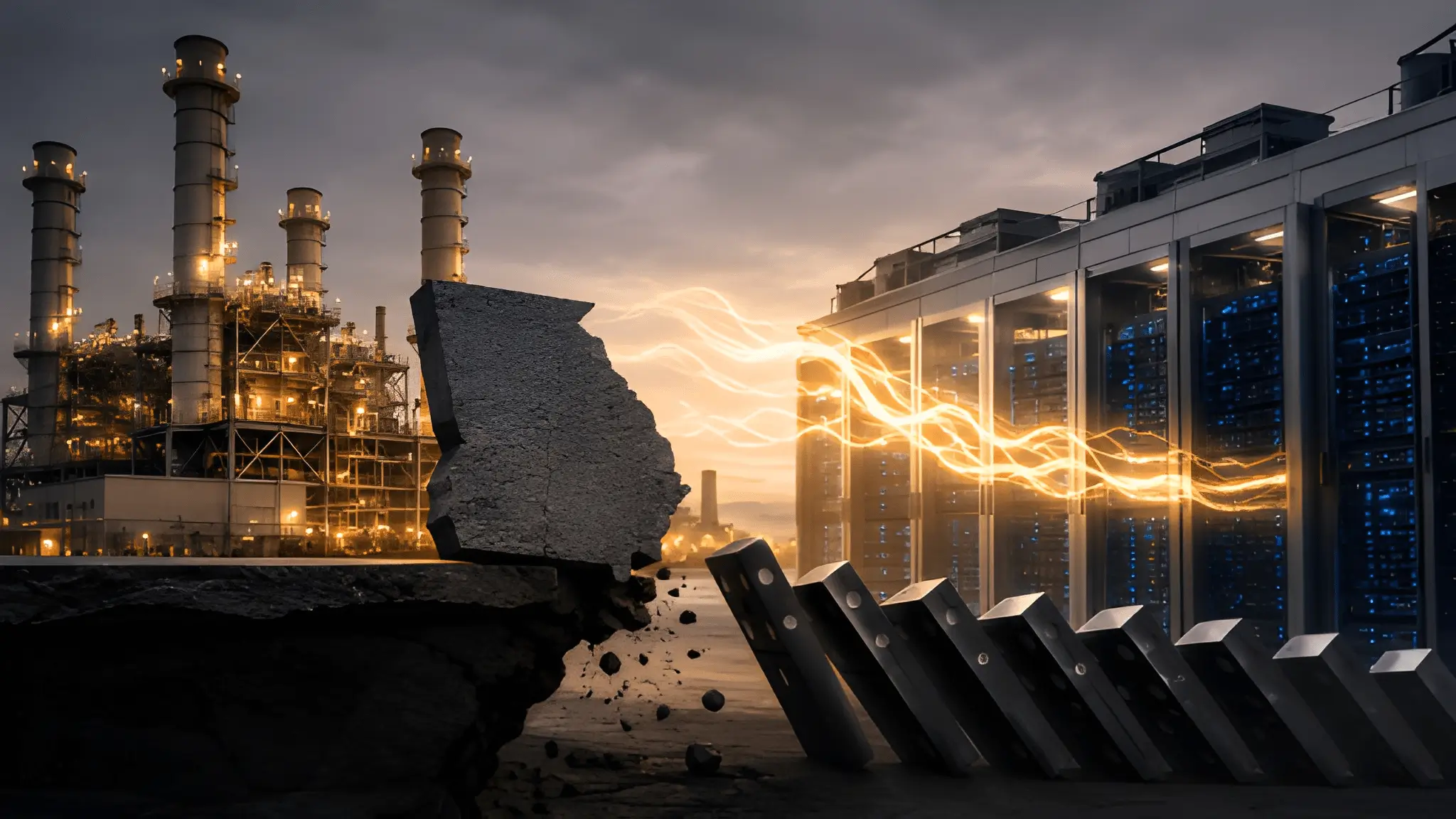
The conversation surrounding AI infrastructure rarely stays confined to servers, accelerators, or networking equipment for long. It eventually reaches the electric grid because every new generation of computing demands more electricity than the last. Georgia’s proposed temporary power plant has entered that conversation as an emergency response to growing electricity demand, yet its significance extends well beyond one state’s permitting decisions. The proposal raises a broader question about how hyperscale infrastructure could evolve over the next decade.
Temporary generation may appear to solve an immediate capacity shortage, but it also introduces an operating model where electricity production begins moving alongside digital infrastructure rather than remaining exclusively within the public utility ecosystem. That distinction deserves more attention than the temporary nature of the project itself. The emerging pattern suggests that future AI campuses may no longer wait for transmission upgrades, substation expansions, or regional grid planning cycles. Instead, they could increasingly arrive with dedicated power resources already attached. If that transition accelerates, the industry will not simply change how it powers data centers. It will redefine who controls one of AI’s most valuable competitive assets.
The industry is beginning to treat electricity as infrastructure instead of a utility service
Utilities historically built generation, transmission, and distribution systems that served everyone connected to the network. Large industrial customers received priority planning, but they still depended on the broader grid. AI infrastructure changes that equation because computing demand now grows faster than traditional utility planning timelines. Transmission projects frequently require years of engineering reviews, environmental studies, regulatory approvals, and construction. AI investment cycles operate on a dramatically shorter schedule. Companies making multibillion-dollar infrastructure commitments often cannot delay deployments until regional electricity networks catch up. That timing mismatch creates pressure to find alternatives.
Temporary gas-fired generation, mobile power assets, or dedicated generation facilities begin looking less like emergency solutions and more like strategic infrastructure components. The discussion gradually shifts away from obtaining electricity and toward securing guaranteed megawatts regardless of broader grid constraints.That represents an important shift in thinking. Electricity no longer functions only as an operational expense. It increasingly becomes a prerequisite for market participation.
Dedicated generation could reshape competitive advantage
The data center industry traditionally competed on location, connectivity, cooling efficiency, and construction speed. Reliable electricity always mattered, but utilities generally provided that foundation. AI changes the hierarchy. Power availability now determines whether projects break ground at all. Regions with available electrical capacity attract investment faster than markets facing transmission bottlenecks. Developers already evaluate substations, feeder availability, and utility commitments with the same attention previously reserved for fiber connectivity and land acquisition. Dedicated generation introduces another layer.
Instead of competing for existing electrical capacity, organizations may begin competing over ownership of new generation assets. That distinction matters because ownership provides greater certainty than allocation. A campus supported by dedicated generation can reduce exposure to changing utility timelines, regional congestion, and lengthy interconnection queues. While those projects still require regulatory oversight and environmental review, they alter the relationship between infrastructure developers and public electricity systems. The competitive conversation therefore shifts beyond data center construction. It increasingly includes long-term energy strategy.
The grid risks becoming the secondary option instead of the primary one
Public electricity networks remain essential for economic development, reliability, and regional resilience. They cannot simply disappear from the AI ecosystem. However, the industry’s planning priorities may evolve. Instead of asking whether utilities can support future AI growth, developers could begin asking how much infrastructure they should build independently before connecting to the grid. That subtle change carries broader implications. Private generation does not necessarily eliminate dependence on utilities, but it reduces the urgency of waiting for shared infrastructure improvements.
Organizations capable of financing dedicated generation may advance projects faster than competitors relying exclusively on public planning cycles. The result could create uneven infrastructure development across regions. Areas with abundant grid capacity continue attracting investment naturally. Regions facing prolonged transmission constraints may increasingly rely on hybrid approaches where private generation bridges the gap. Georgia’s proposal illustrates how quickly those conversations can move from theoretical planning into practical infrastructure decisions.
Temporary projects often influence permanent strategies
Infrastructure has a habit of redefining expectations. Technologies introduced as temporary solutions frequently establish new operational standards once markets recognize their practical value. Cloud computing followed that pattern. Edge deployments followed it as well. Modular construction became common after demonstrating faster delivery schedules. Power infrastructure could experience a similar evolution. A temporary generation project designed to support near-term demand may demonstrate logistical, financial, or operational advantages that encourage broader adoption elsewhere. That possibility does not guarantee widespread deployment of dedicated gas-fired facilities.
Instead, it highlights a larger principle. Once developers prove that colocated generation shortens deployment timelines or reduces uncertainty, other forms of dedicated generation could receive greater consideration. Natural gas, small modular reactors when commercially available, long-duration energy storage, renewable generation paired with storage, and future hybrid systems may all enter strategic planning discussions. The technology itself matters less than the operating model. The defining characteristic becomes direct control over energy availability.
Infrastructure planning now extends beyond the data center fence line
Discussions about AI infrastructure often focus on processors, cooling systems, networking equipment, and software platforms. Power planning deserves equal attention. Electricity increasingly shapes where investment flows, how quickly campuses open, and whether expansion plans remain financially viable. Generation assets, substations, transmission corridors, and interconnection agreements now influence digital infrastructure strategy almost as much as semiconductor roadmaps. That broader perspective changes how executives evaluate risk. Grid reliability remains important, but infrastructure resilience increasingly depends on controlling multiple layers of the energy supply chain. The conversation therefore expands beyond utility partnerships. It now includes fuel availability, generation flexibility, permitting timelines, operational redundancy, and long-term energy ownership. Those considerations resemble traditional industrial planning more than conventional data center development.
Georgia may represent the beginning of a larger infrastructure philosophy
The proposed temporary plant should not automatically become a template for every market. Regional energy policies, environmental priorities, fuel availability, and regulatory frameworks differ significantly across jurisdictions. Yet the proposal introduces an idea that the industry cannot easily ignore. What happens when computing infrastructure begins treating power generation as an integrated design requirement instead of an external dependency?
If AI deployment continues expanding at its current pace, electricity may evolve into the industry’s most strategically managed asset. Organizations will compete not only for advanced processors and prime real estate but also for predictable access to generation capacity before construction even begins. The most influential infrastructure race may therefore unfold long before a server powers on. The next generation of AI campuses could compete less on how efficiently they consume electricity and more on how effectively they secure it. That possibility makes Georgia’s temporary proposal worth watching, not because it solves today’s capacity challenge, but because it hints at tomorrow’s infrastructure blueprint.












