 Skip to content
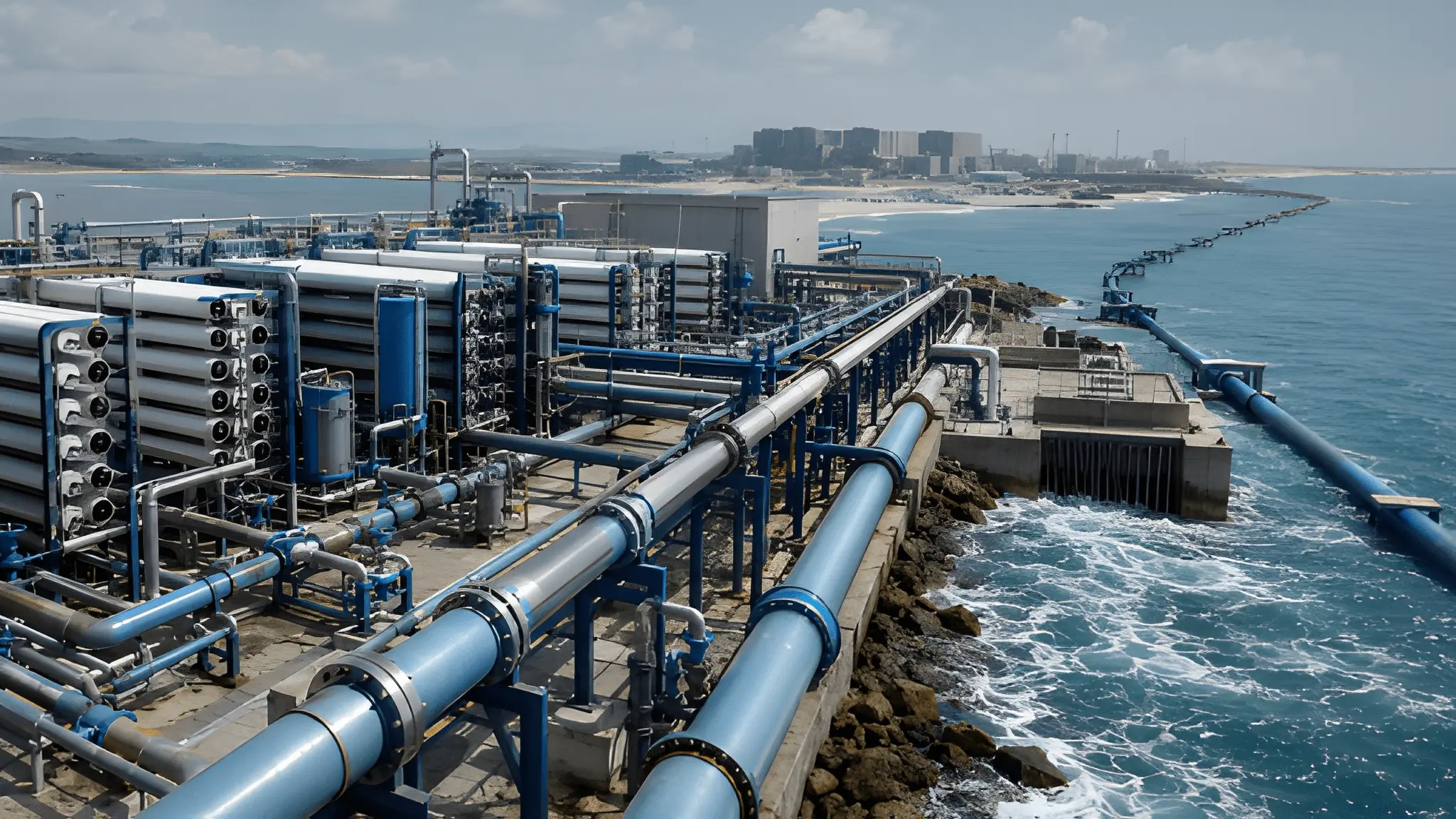
Cloud infrastructure keeps moving toward locations that promise reliable power, abundant land, and lower environmental constraints, yet water availability increasingly shapes every investment discussion. Coastal sites appear attractive because seawater surrounds them in volumes that seem capable of supporting continuous industrial cooling without competing directly with municipal freshwater supplies. Several large-scale coastal developments have incorporated desalination into their infrastructure planning to reduce dependence on local freshwater resources where water availability could otherwise constrain industrial expansion, particularly in regions facing chronic water scarcity. Financial models, however, become considerably more complicated once desalination plants, marine intake systems, energy requirements, permitting obligations, and long-term discharge monitoring enter the equation. Executives evaluating coastal developments therefore face a broader infrastructure decision instead of selecting a cooling technology in isolation. Understanding those interconnected dependencies determines whether desalination creates durable operational resilience or merely transfers environmental pressures into another ecosystem.

Why The Coast Looked Like The Easy Answer
Freshwater constraints placed increasing pressure on operators to reconsider where large computing campuses could expand without intensifying regional water stress. Coastal regions offered an appealing alternative because seawater resources appeared effectively unlimited when viewed against conventional freshwater withdrawals. Several coastal infrastructure projects have presented desalination as part of integrated utility planning, although environmental assessments continue to evaluate desalination facilities independently alongside the broader development. Public attention surrounding evaporative cooling also reinforced that narrative because water consumption became a visible sustainability concern for hyperscale facilities. However, replacing freshwater sources does not eliminate the engineering complexity associated with producing cooling-grade water suitable for sensitive mechanical systems. Site selection consequently evolved beyond geography into an integrated assessment of energy availability, marine infrastructure, regulatory oversight, and long-term operating expenditure.
Developers increasingly recognized that proximity to coastlines could simplify certain supply constraints while introducing entirely different categories of operational dependency. Reverse osmosis systems require extensive pretreatment, continuous maintenance, reliable electrical supply, and high-pressure pumping before producing freshwater suitable for industrial applications. Those requirements influence project economics because desalination infrastructure becomes part of the overall facility investment rather than an external public utility. Cooling demand also fluctuates with computing workloads, creating operating patterns that desalination assets must support without compromising production reliability. Coastal access therefore represents only one component within a much broader infrastructure equation that includes energy efficiency, environmental permitting, maintenance capability, and marine engineering resilience. Decision makers ultimately gain strategic flexibility only when every supporting system performs consistently across decades instead of simply during initial commissioning.
Desalination Doesn’t Remove Water Use, It Relocates It
Desalination converts seawater into freshwater through energy-intensive treatment processes instead of creating new water resources for industrial consumption. Marine intake systems first collect seawater before pretreatment removes suspended particles, biological material, and contaminants that could damage reverse osmosis membranes. High-pressure equipment subsequently separates freshwater from dissolved salts while producing a concentrated saline by-product commonly known as brine. That freshwater then supports industrial cooling systems much like conventionally sourced water after additional treatment where necessary. Meanwhile, reliance on inland freshwater resources can decline, while environmental management increasingly focuses on marine water intake, desalination energy requirements, and responsible coastal brine discharge. Water therefore remains an actively managed resource throughout the process rather than disappearing from the sustainability equation.

Industrial sustainability discussions sometimes describe desalination as reducing freshwater dependence, although that statement requires careful operational context to avoid oversimplification. Facilities indeed withdraw less freshwater from rivers, reservoirs, or groundwater systems when desalinated supplies replace conventional sources for cooling applications. Marine ecosystems, however, become directly connected to facility performance because seawater intake and discharge operate continuously alongside computing infrastructure. Energy demand also increases because reverse osmosis plants require substantial electricity to overcome osmotic pressure during freshwater production. Those additional electricity requirements increase operating expenditure because desalination adds energy consumption, maintenance, membrane replacement, and marine infrastructure costs throughout the facility lifecycle. Infrastructure planning therefore benefits from evaluating complete resource flows instead of measuring only reductions in freshwater withdrawal volumes.
The Brine Question No Cooling Model Accounts For
Brine management increasingly attracts regulatory attention because desalination produces concentrated saline discharge containing elevated salt concentrations relative to surrounding seawater. Marine discharge systems typically release that brine through engineered outfalls designed to encourage rapid dilution within receiving waters under approved environmental conditions. Local oceanography nevertheless influences dilution performance because currents, temperature gradients, bathymetry, and ecological sensitivity vary considerably between coastal regions. Environmental assessments therefore examine discharge characteristics alongside intake design rather than evaluating desalination capacity alone during project approval. Consequently, regulators increasingly request detailed ecological monitoring programs that continue after facilities begin commercial operation. Long-term compliance becomes an operational responsibility extending throughout the useful life of both desalination assets and associated computing infrastructure.
Brine management discussions have gained additional visibility because several large coastal development programs incorporate desalination into broader infrastructure planning rather than treating it as an isolated utility asset. Projects associated with large-scale urban development, including those planned for Saudi Arabia’s NEOM region, have highlighted how desalination, energy generation, water distribution, and environmental stewardship increasingly operate as interconnected systems. Public scrutiny now extends beyond freshwater production capacity toward cumulative marine impacts, monitoring obligations, and ecosystem resilience over multiple decades. Discharge engineering can reduce localized environmental effects through diffuser design and careful site selection, yet those measures require continuous verification under changing marine conditions. Financial planning therefore extends beyond plant construction because long-term environmental compliance carries recurring operational costs that influence total infrastructure economics. Executive teams evaluating coastal campuses increasingly recognize that marine stewardship becomes a permanent component of digital infrastructure ownership rather than a permitting milestone completed before construction.
What Reliance, Neom and Coastal Builds Are Really Testing
Large coastal developments increasingly demonstrate that the central question extends beyond whether desalination technology functions reliably because commercial reverse osmosis has matured across multiple industrial sectors. Instead, integrated infrastructure programs are evaluating whether hyperscale computing, dedicated energy assets, desalination facilities, transmission networks, and regional water systems can operate as a coordinated ecosystem without creating additional dependencies for surrounding communities. Reliance Industries has outlined major digital infrastructure ambitions in western India, while India’s coastal industrial corridors continue attracting investment because they provide access to ports, electricity networks, and large development parcels. NEOM similarly incorporates desalination into a wider strategy supporting urban development, industrial activity, and advanced digital infrastructure instead of serving only a single operational requirement. Those examples illustrate how desalination increasingly functions as shared infrastructure whose performance influences multiple sectors simultaneously. Capital allocation therefore shifts toward ecosystem planning rather than optimizing an individual cooling system in isolation.
Co-location also introduces operational interdependence because every supporting utility influences the resilience profile of the entire campus throughout its operating life. Desalination facilities require uninterrupted electricity, intake reliability, membrane replacement schedules, chemical supply chains, and marine infrastructure maintenance before cooling systems receive treated water. Any disruption affecting one supporting asset can cascade across computing operations if sufficient redundancy has not been incorporated into the original infrastructure design. Finally, community stakeholders increasingly evaluate whether industrial water production affects fisheries, coastal ecosystems, local development priorities, or regional energy demand alongside the economic benefits associated with digital investment. Developers therefore face expectations that extend beyond engineering performance into environmental transparency, stakeholder engagement, and long-term operational accountability. Successful coastal infrastructure strategies will likely depend as much on governance frameworks as on technical innovation supporting desalination itself.
Fix For The Industry, Or Cost Passed To The Ocean?
Desalination expands the number of viable locations for large computing campuses by reducing dependence on constrained freshwater resources, yet it does not eliminate water management from infrastructure planning. Every litre of treated freshwater requires supporting investments in energy supply, marine intake systems, treatment equipment, discharge engineering, environmental monitoring, and long-term operational oversight. Those requirements reshape the economic profile of coastal facilities because water production becomes an integrated industrial process rather than a conventional utility service. Infrastructure executives therefore benefit from evaluating total lifecycle costs instead of focusing exclusively on freshwater savings achieved during facility operation. Strategic decisions become stronger when environmental obligations, operating expenditure, and ecosystem resilience receive equal consideration alongside computing capacity expansion. Sustainable infrastructure ultimately depends on balancing engineering performance with responsible stewardship across every resource supporting digital operations.
Coastal desalination should therefore be viewed as an infrastructure trade-off instead of a universal answer to industrial water scarcity. Freshwater withdrawals may decline substantially where desalinated supplies replace inland sources, although marine ecosystems assume greater importance within the operational boundary of every connected facility. Financial models likewise require greater precision because desalination affects energy demand, maintenance expenditure, regulatory compliance, environmental monitoring, and infrastructure resilience throughout the asset lifecycle. Decision makers considering projects associated with Reliance, NEOM, or comparable coastal developments are effectively testing whether integrated utility ecosystems can scale alongside accelerating computational demand without introducing unacceptable environmental dependencies. Long-term success will depend less on proving that desalination technology works than on demonstrating that complete infrastructure systems remain economically sustainable, environmentally accountable, and operationally resilient together. That distinction determines whether future coastal campuses represent genuinely balanced resource management or simply relocate existing pressures from inland freshwater supplies toward the marine environment.












