
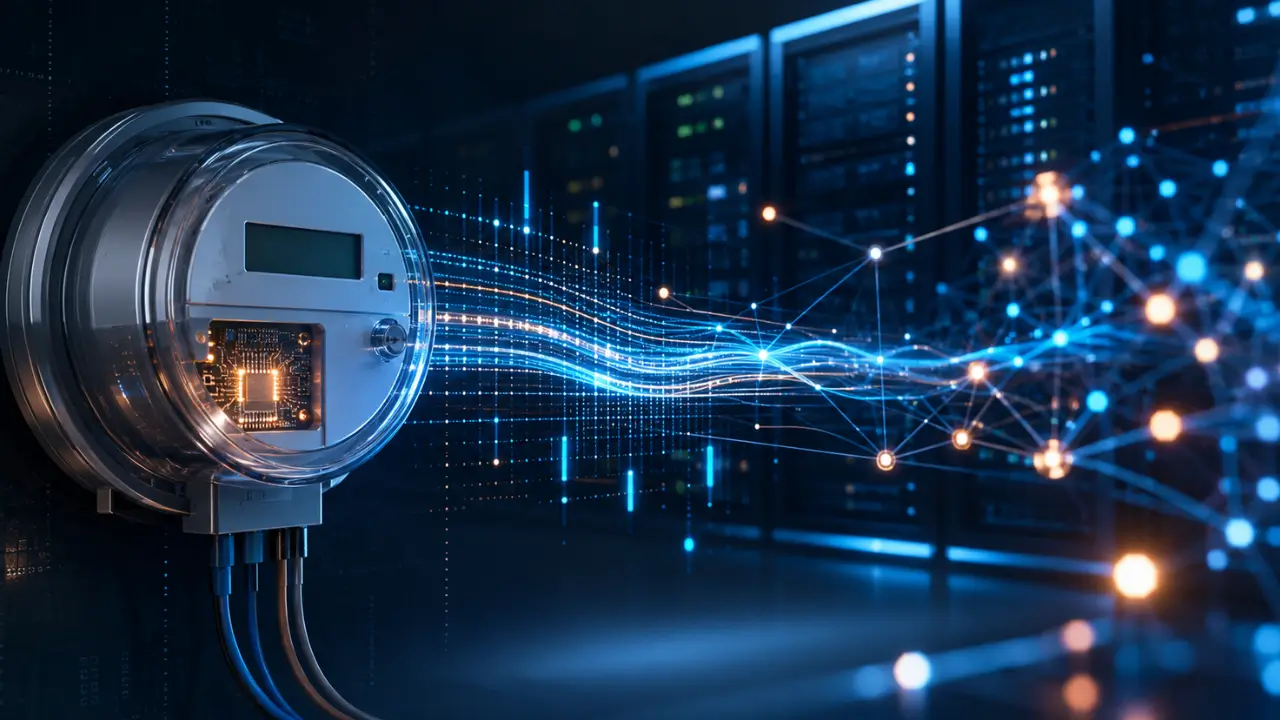
Electricity has become an active operating variable rather than a background utility for modern AI infrastructure. Compute demand now changes throughout the day because training campaigns, inference services, storage operations, and supporting infrastructure rarely consume power with identical behavior across every hour. Infrastructure teams therefore need energy visibility that evolves at the same pace as workload execution instead of waiting for billing summaries that describe events long after they occurred. That shift has elevated meter data from an accounting record into a primary operational signal capable of informing scheduling, resilience, and energy optimization decisions. Organizations that continue treating metering information as a financial artifact often discover that they understand costs long after they have already lost operational flexibility. The competitive advantage increasingly belongs to operators who understand electricity consumption while workloads are still running rather than after invoices arrive.

Why Electricity Must Become A Live Operational Signal
Artificial intelligence has also changed the rhythm of electricity demand in ways that traditional operational reporting rarely captures. Large training jobs may occupy hardware continuously for extended periods, while inference environments often respond instantly to user activity that fluctuates throughout the day. Cooling systems, storage platforms, networking equipment, and power electronics all react differently as those workloads evolve, creating electrical behavior that changes much faster than monthly reporting cycles can represent. Decision makers therefore need visibility into the sequence of events that produced each demand profile rather than only understanding the accumulated consumption after operations have finished. Raw interval data creates that timeline because it records how energy changes over time instead of simply documenting how much energy was consumed. That distinction turns electricity into an operational dataset rather than a historical financial record.
The conversation around AI infrastructure frequently emphasizes processors, networking fabrics, cooling architectures, and power availability, yet another control layer receives much less attention despite influencing every operational decision. Smart meters already observe how electricity enters a site, but many organizations still access those measurements through delayed portals designed primarily for billing reconciliation instead of operational intelligence. Such workflows separate compute orchestration from the physical behavior occurring at the electrical boundary of the property. Every optimization engine therefore works with an incomplete understanding of actual power consumption because it lacks direct access to the signal that describes reality. Meter data strategy closes that gap by placing interval telemetry inside operational systems where scheduling, forecasting, sustainability, and resilience decisions already occur. The organizations that control this information layer gain visibility that software alone cannot reconstruct after the fact.
From Billing Artifact To Operational Telemetry
Electricity meters traditionally supported revenue collection because utilities required trustworthy measurements for customer billing rather than continuous operational optimization. That design philosophy influenced the software ecosystems surrounding meter infrastructure, causing finance teams to receive most consumption records while operational teams often relied upon dashboards generated from separate instrumentation. AI infrastructure challenges that separation because scheduling decisions increasingly depend upon understanding actual electrical behavior while workloads remain active. Direct interval data therefore becomes valuable long before accounting systems begin invoice reconciliation or cost allocation activities. Operational teams gain an independent source of truth that reflects real consumption rather than estimated demand derived from equipment utilization. This evolution transforms metering from a passive measurement system into an active participant within infrastructure operations.

Native Resolution Creates Operational Context
A smart meter does far more than measure accumulated electricity because it preserves the sequence in which demand changes over time. Native interval readings provide chronological visibility that exposes ramps, sustained demand periods, recovery phases, and idle windows without requiring downstream estimation models to reconstruct missing behavior. Infrastructure software can therefore evaluate whether workload placement aligns with observed electrical conditions instead of relying solely upon processor utilization or scheduler assumptions. High-frequency operational awareness becomes increasingly valuable as AI environments introduce simultaneous training, inference, storage, and networking activity across shared electrical infrastructure. Engineers gain the ability to compare scheduling behavior directly against measured electrical outcomes instead of comparing planned behavior against simulated expectations. Meter telemetry therefore becomes a validation layer for every optimization decision made throughout the compute environment.
Monthly energy statements compress thousands of operational decisions into a single financial summary that cannot explain why electrical demand evolved in a particular manner. Engineers attempting to optimize AI operations from those summaries essentially analyze the conclusion of a story without observing the events that produced it. Interval telemetry restores that missing chronology because every measurement preserves temporal context alongside consumption itself. Operations teams can then associate workload launches, storage events, cooling adjustments, and infrastructure changes with corresponding electrical behavior while those relationships remain observable. That level of visibility supports operational learning because infrastructure teams evaluate cause and effect directly instead of inferring relationships from delayed reports. Meter data strategy therefore establishes an evidence layer that continuously informs operational improvement rather than documenting historical spending alone.
The Resolution Gap In Enterprise Load Visibility
Operational visibility depends upon the quality of the underlying measurements rather than the sophistication of the dashboards built above them. Aggregated energy reporting smooths electrical behavior into averages that often conceal the short-duration changes defining modern AI workloads. Native interval data preserves the chronological progression of electrical demand, allowing operators to distinguish gradual increases from abrupt ramps and sustained utilization from temporary spikes. Those distinctions influence scheduling decisions because infrastructure rarely responds identically to different load profiles that produce similar total consumption over a reporting period. Engineering teams therefore gain a more accurate representation of how compute, cooling, networking, and supporting electrical systems interact throughout workload execution. Direct access to interval measurements creates an operational record that software can evaluate without reconstructing missing details from summarized reports.
Native Interval Resolution Reveals What Aggregation Conceals
Electrical demand rarely follows a perfectly predictable trajectory once AI workloads begin sharing infrastructure with storage services, networking equipment, and environmental control systems. Short transitions between idle periods and sustained utilization often occur faster than conventional reporting intervals can meaningfully capture. Aggregated datasets compress those transitions into generalized averages that remove much of the operational context required for optimization. Infrastructure teams may therefore recognize that energy consumption increased during a reporting period without understanding precisely when the change occurred or what operational event initiated it. Native interval resolution preserves those temporal relationships because every measurement remains attached to a specific point in time. Engineers can correlate electrical behavior directly with workload execution instead of relying upon inferred relationships assembled after operations have already concluded.
The difference between summarized reporting and interval telemetry becomes increasingly significant as orchestration systems attempt to optimize workloads automatically. Optimization models that incorporate accurate interval observations can evaluate changing electrical conditions with greater fidelity than models relying solely on aggregated historical summaries, particularly when scheduling decisions depend on temporal load behavior. Every missing transition reduces the system’s ability to identify recurring demand signatures associated with particular applications or scheduling decisions. Operators may therefore believe infrastructure behaves consistently even though interval measurements reveal recurring electrical patterns that aggregated reporting never exposes. Meter data strategy addresses that visibility gap by preserving the original signal instead of relying exclusively upon processed representations designed for financial reconciliation. Organizations that retain native resolution build optimization models upon observed reality rather than reconstructed approximations.
Understanding Ramps, Recovery, And Idle Behavior
Electrical systems respond continuously to workload behavior, yet summarized reporting often masks the transitions that determine how efficiently infrastructure actually operates. A training campaign that increases demand gradually presents different operational characteristics than one that reaches peak consumption almost immediately after execution begins. Cooling systems, electrical distribution equipment, and supporting infrastructure react to those changes according to the timing of the demand profile rather than simply its accumulated energy consumption. Interval measurements preserve those sequences, allowing operators to identify recurring operational signatures that accompany specific categories of AI activity. Such visibility supports more informed scheduling because future workloads can account for previously observed electrical behavior instead of relying solely upon theoretical resource estimates. Direct meter access therefore improves operational understanding without requiring additional instrumentation across every supporting system.
Recovery periods deserve as much attention as demand increases because infrastructure efficiency depends upon how quickly electrical systems stabilize after intensive compute activity concludes. Native interval records reveal whether energy consumption returns smoothly to baseline conditions or remains elevated after workloads complete their execution. Those observations provide practical insight into cooling response, auxiliary equipment behavior, and scheduling interactions that aggregated reporting frequently conceals. Engineering teams can compare recurring recovery characteristics across different workload categories to determine whether orchestration policies require adjustment. The resulting operational intelligence supports incremental improvements grounded in observed electrical performance rather than assumptions derived from processor utilization alone. Meter data therefore becomes a valuable diagnostic resource throughout the complete workload lifecycle instead of serving only as an accounting reference.
When Workload Orchestration Operates Without Ground Truth
Modern workload orchestration platforms excel at distributing compute resources, balancing processor utilization, and allocating memory according to application requirements. Those capabilities, however, often depend upon infrastructure metrics generated inside servers rather than measurements captured at the electrical boundary where energy actually enters the site. Compute utilization and electricity consumption frequently move together, yet they do not remain perfectly synchronized because cooling systems, networking infrastructure, storage platforms, and power conversion equipment each contribute to total demand differently. Orchestration engines therefore operate with only a partial representation of infrastructure behavior when they cannot reference direct meter telemetry. Every scheduling decision becomes an optimization against inferred electrical conditions instead of verified consumption data recorded in real time. Direct interval measurements establish the physical ground truth that allows orchestration software to validate operational assumptions before repeating them at scale.
Schedulers Cannot Optimize What They Cannot Measure
Infrastructure software increasingly incorporates predictive models that estimate resource requirements before workloads begin execution. Those models perform effectively when historical observations accurately represent physical operating conditions across a broad range of scenarios. Missing interval telemetry weakens that foundation because prediction engines cannot compare estimated demand against verified electrical behavior throughout workload execution. The resulting disconnect gradually reduces confidence in scheduling recommendations because operators cannot determine whether deviations originated from application behavior, environmental conditions, or inaccurate energy assumptions. Native meter data closes that verification loop by supplying an independent operational reference that exists outside the compute environment itself. Comparing predicted consumption with measured electrical outcomes provides a validated feedback loop that enables organizations to refine scheduling models using observed infrastructure behavior rather than relying exclusively on estimated consumption.
Ground truth matters because infrastructure optimization depends upon understanding how physical systems respond instead of how software expects them to respond. AI environments combine diverse workloads whose electrical characteristics evolve according to data movement, processor activity, cooling response, storage utilization, and networking demand. Internal performance metrics describe only portions of that interaction because each subsystem observes infrastructure from a different perspective. Meter telemetry provides a unified operational reference that reflects the combined electrical outcome of every infrastructure component regardless of where consumption originates. Engineering teams therefore evaluate scheduling policies against measured reality instead of independently interpreting fragmented telemetry generated by separate systems. Organizations that align orchestration with direct interval measurements establish a stronger operational foundation for every future optimization initiative.
Synchronizing Compute Decisions With Electrical Reality
Workload orchestration becomes substantially more effective when compute scheduling reflects actual electrical conditions instead of static infrastructure assumptions. Interval meter data introduces a continuously updated operational signal that schedulers can reference while determining whether flexible workloads should execute immediately or wait for more favorable conditions. That capability does not replace existing resource management platforms because processor utilization, memory availability, storage capacity, and network performance remain essential scheduling inputs. Direct electrical telemetry instead complements those measurements by exposing the infrastructure response that application metrics alone cannot fully represent. Scheduling decisions consequently evolve from purely compute-oriented optimization toward infrastructure-aware orchestration informed by both digital and physical operating conditions. Meter data strategy therefore expands the intelligence available to orchestration platforms without fundamentally changing their operational purpose.
Electrical visibility also supports operational consistency because repeated workload patterns become easier to recognize when every execution cycle references the same source of truth. Infrastructure teams can compare successive workload runs against historical interval measurements to determine whether energy behavior remains stable or begins diverging over time. Such comparisons often reveal operational changes that traditional infrastructure monitoring detects only after secondary effects become noticeable elsewhere in the environment. Engineers can investigate evolving demand characteristics before they develop into broader operational inefficiencies because the electrical signal records the earliest physical response to changing infrastructure conditions. Continuous access to interval telemetry therefore supports proactive optimization while preserving confidence in automated scheduling policies. The resulting orchestration framework reflects observed infrastructure performance rather than assumptions carried forward from previous operating conditions.
The Hidden Cost Of Unmanaged Coincidence
Electrical infrastructure rarely experiences its greatest operational pressure because of a single application acting independently. Multiple workloads often begin, expand, or overlap within similar time windows, creating coincident demand that places significantly greater stress on electrical systems than isolated activities executed separately. Average utilization cannot fully describe those operating conditions because identical daily consumption profiles may produce very different infrastructure behavior depending upon when individual workloads occur. Native interval meter data preserves the timing relationships between those events, allowing operators to understand how simultaneous activity shapes overall electrical demand. Engineering teams therefore evaluate operational exposure through observed demand patterns instead of relying exclusively upon cumulative energy consumption or summarized utilization reports. Meter data strategy transforms coincidence from an invisible operational risk into a measurable characteristic that scheduling systems can actively consider.
Coincident Peaks Define Operational Exposure
AI infrastructure increases the importance of coincident demand because diverse workload categories frequently share common electrical resources despite serving entirely different operational purposes. Training jobs, inference services, storage synchronization, backup activity, and cooling responses may each appear manageable when evaluated independently, yet their combined electrical behavior often determines actual infrastructure conditions. Aggregated reporting generally captures only the resulting energy consumption without preserving enough chronological detail to explain how those overlaps developed. Interval measurements instead reveal the sequence through which separate operational events converged into a single period of elevated demand. Infrastructure planners can then distinguish recurring coincidence from isolated operational anomalies instead of treating every high-demand period as an identical event. Direct ownership of interval history therefore supports more precise operational planning across increasingly dynamic compute environments.
Understanding coincident demand changes how organizations approach optimization because timing becomes as important as total consumption. Two scheduling strategies may consume similar amounts of electricity over the course of a day while producing entirely different electrical stress profiles across supporting infrastructure. Native interval telemetry allows operators to evaluate those differences objectively because every demand transition remains recorded within the historical dataset. Scheduling policies consequently evolve beyond minimizing energy consumption toward reducing undesirable demand overlap that unnecessarily increases operational pressure. Engineering teams gain practical evidence supporting workload sequencing decisions rather than depending upon assumptions derived from average utilization trends. Organizations that understand coincidence operate with greater control over electrical behavior than those relying exclusively upon summarized consumption records.
Reactive Peak Avoidance Limits Operational Efficiency
Many optimization strategies attempt to reduce electrical peaks only after infrastructure monitoring identifies elevated demand conditions. That reactive approach inevitably limits operational flexibility because workloads have already begun execution before orchestration systems recognize that undesirable demand patterns have emerged. Direct interval meter data supports a different operating model by providing continuous historical context that informs scheduling decisions before recurring coincidence develops again. Engineering teams can identify repeatable electrical signatures associated with specific workload combinations and modify orchestration policies accordingly. Preventive scheduling gradually replaces reactive intervention because infrastructure decisions become informed by verified operational history instead of responding only after demand has already increased. Meter data strategy therefore shifts peak management from operational correction toward deliberate infrastructure planning.
Historical interval datasets become increasingly valuable as organizations accumulate longer records describing the electrical consequences of infrastructure decisions across changing operational conditions. Patterns that appear unrelated within isolated reporting periods frequently become recognizable once engineers evaluate consistent interval measurements collected over extended operating cycles. Recurring workload combinations, maintenance activities, storage synchronization, and environmental responses each contribute distinctive electrical signatures that summarized reporting rarely preserves. Infrastructure teams can therefore refine orchestration policies using observed operational evidence instead of broad assumptions regarding expected system behavior. Continuous access to native meter information supports organizational learning because every scheduling cycle contributes additional insight into future optimization opportunities. Electrical history consequently becomes an operational asset rather than merely a regulatory or financial archive.
Time-Matched Carbon Begins At The Meter
Carbon reporting increasingly depends upon understanding not only how much electricity an operation consumes but also when that electricity is consumed. Annual energy accounting provides an overall picture of consumption, yet it cannot describe the changing characteristics of electricity supplied throughout different operating periods. Electricity generation sources continuously evolve as grid conditions change, making the timing of consumption an important element of credible operational carbon analysis. Native interval meter data establishes the chronological foundation required to align electricity use with corresponding grid conditions at the same point in time. Engineering teams therefore gain the ability to evaluate operational decisions against time-specific energy consumption rather than relying exclusively upon broad reporting periods. Meter data strategy creates the measurement layer necessary for more precise carbon accounting without changing the underlying physical infrastructure.
Interval Consumption Creates Credible Carbon Alignment
Time-matched carbon analysis begins with trustworthy consumption records because every subsequent calculation depends upon the quality of the underlying operational data. Interval measurements preserve the exact sequence of electrical demand, allowing sustainability platforms to compare consumption against independently available carbon intensity information covering the same operating windows. Aggregated reporting removes much of that chronological precision because individual consumption events become merged into broader summaries before analysis begins. Sustainability teams therefore lose valuable operational context that could otherwise support more informed workload scheduling decisions. Direct access to native interval telemetry preserves that context from the moment electricity enters the site until analytical systems evaluate its environmental implications. The resulting carbon framework reflects observed operational behavior instead of reconstructed estimates assembled from summarized datasets.
AI infrastructure presents unique sustainability challenges because workload execution often remains flexible even when service availability requirements remain unchanged. Certain processing activities can shift within acceptable operating windows without affecting user experience, while latency-sensitive services must continue responding immediately regardless of external conditions. Native interval meter data enables infrastructure teams to distinguish those workload categories according to verified electrical behavior rather than generalized scheduling assumptions. Carbon optimization therefore becomes an operational exercise grounded in measured consumption instead of a reporting activity performed after electricity has already been used. Organizations that retain direct ownership of interval measurements establish a stronger foundation for aligning operational flexibility with evolving sustainability objectives. Time-aware energy intelligence ultimately supports more credible environmental decision-making than annual accounting alone can provide.
Moving Beyond Annual Carbon Accounting
Annual sustainability reporting remains valuable for governance and disclosure purposes, yet operational decision-making increasingly requires a much finer understanding of energy behavior. AI environments change continuously throughout the day as workloads enter, complete, pause, or migrate across available compute resources. Carbon performance therefore reflects the interaction between workload timing and electricity consumption rather than annual totals viewed in isolation. Native interval telemetry provides the operational chronology required to evaluate those interactions with substantially greater precision. Infrastructure teams can compare different scheduling approaches against measured electrical behavior while maintaining consistency across engineering and sustainability objectives. Meter data strategy consequently connects operational optimization with environmental performance through a shared evidence base grounded in direct measurement.
Direct ownership of interval consumption records also improves organizational confidence because sustainability analyses remain based upon internally controlled operational evidence instead of delayed summaries obtained through external reporting platforms. Engineering teams can validate data quality, investigate anomalies, and maintain consistent analytical methodologies across operational and environmental use cases. That continuity becomes increasingly valuable as AI infrastructure grows more dynamic and workload scheduling evolves in response to changing business priorities. Carbon optimization no longer depends exclusively upon retrospective reporting because operational systems continuously receive the measurements required for ongoing evaluation. Native meter telemetry therefore serves both engineering and sustainability functions without requiring separate measurement frameworks. Organizations benefit from a unified operational record that supports technical accuracy alongside credible environmental accountability.
Data Residency Starts At The Edge Of Your Facility
The physical meter sits at the boundary where electricity enters an operation, yet the information it produces does not always remain under the direct control of the organization consuming that electricity. Many metering deployments continue to depend upon utility portals, third-party dashboards, or delayed reporting interfaces that prioritize billing workflows over operational responsiveness. Those platforms often satisfy commercial requirements while limiting how quickly engineering teams can retrieve, integrate, or automate access to interval measurements. AI infrastructure places different expectations on operational data because scheduling systems benefit from timely and programmatic access instead of periodic downloads designed for financial reconciliation. Direct ownership of interval meter data therefore becomes an architectural consideration rather than an administrative preference. Organizations that control their own measurement streams gain greater flexibility to integrate energy intelligence across operational systems without introducing unnecessary intermediaries.
Ownership Of Meter Data Determines Operational Agility
Operational agility depends upon timely access to trustworthy meter information, and delays in obtaining interval data from external reporting environments can reduce how quickly infrastructure software incorporates verified electrical measurements into operational decision-making, depending on the utility’s data delivery model. Engineering platforms increasingly exchange telemetry through standardized interfaces that allow orchestration systems, monitoring platforms, and analytical tools to operate from a shared operational picture. Interval meter data should participate within that same ecosystem because electricity represents a critical infrastructure resource rather than an isolated accounting input. Native access allows organizations to preserve measurement fidelity while avoiding repeated manual extraction or transformation processes that complicate downstream analysis. Data pipelines consequently become simpler, more transparent, and easier to validate because operational systems receive measurements directly from their authoritative source. Meter data strategy therefore strengthens infrastructure responsiveness by reducing the distance between physical events and operational decision-making.
Control over operational information also influences long-term technology strategy because infrastructure evolves continuously while measurement requirements become increasingly sophisticated. Organizations that depend exclusively upon externally managed reporting environments often inherit limitations regarding data format, retention, integration capabilities, and analytical flexibility. Direct stewardship of interval telemetry allows engineering teams to adapt operational workflows without waiting for external platform enhancements or predefined reporting structures. Historical measurements remain available for future analytical methods that may not yet exist when the data is originally collected. Engineering investments therefore continue generating value beyond their initial operational purpose because the underlying measurements remain accessible for evolving optimization strategies. Ownership of the signal layer ultimately preserves strategic flexibility across changing infrastructure and software environments.
API-Ready Meter Intelligence Supports Modern Infrastructure
Modern infrastructure increasingly depends upon interoperable software capable of exchanging operational information through secure and standardized interfaces. Interval meter data becomes substantially more valuable when it flows directly into orchestration platforms, digital twins, sustainability systems, operational dashboards, and analytical environments without repeated manual intervention. API-ready measurement pipelines support that objective because they allow operational intelligence to become available wherever infrastructure decisions occur. Engineering teams can therefore incorporate verified electrical behavior into existing automation frameworks instead of maintaining isolated reporting workflows disconnected from day-to-day operations. Native meter integration creates consistency across operational systems because every platform references the same verified measurements instead of maintaining separate interpretations of electrical activity. Meter data strategy consequently becomes an enabling layer supporting broader digital infrastructure modernization.
Operational resilience also improves when organizations manage interval telemetry as an internal strategic asset rather than relying solely upon externally hosted reporting environments. Local stewardship enables infrastructure teams to establish governance policies covering retention, validation, security, version control, and integration according to operational requirements rather than predefined reporting constraints. Engineering platforms can continue accessing historical and current measurements through consistent interfaces even as surrounding software ecosystems evolve over time. Analytical models therefore maintain continuity because the underlying measurement architecture remains stable despite changes occurring elsewhere within the operational environment. Infrastructure modernization becomes more predictable when foundational operational datasets remain under direct organizational control. Native meter ownership strengthens both operational independence and long-term architectural flexibility without altering the physical electrical infrastructure itself.
Turning Interval Data Into Actionable Load Intelligence
Interval meter data becomes valuable only after organizations integrate it into operational workflows that influence real infrastructure decisions. Raw measurements provide an accurate record of electrical behavior, yet they do not automatically improve scheduling, resilience, or sustainability without analytical context and operational integration. Engineering teams therefore establish processing pipelines that validate incoming measurements, preserve chronological integrity, and enrich electrical observations with workload metadata generated across compute environments. Those combined datasets allow infrastructure software to associate electrical behavior with specific operational activities instead of treating every demand change as an isolated event. Operational intelligence emerges through consistent interpretation rather than through measurement alone because infrastructure optimization depends upon understanding both the signal and the conditions that produced it. Meter data strategy consequently extends beyond collection into the disciplined management of trustworthy operational information that supports continuous decision-making.
Transforming Raw Measurements Into Operational Decisions
Actionable load intelligence also depends upon maintaining a continuous relationship between electrical observations and infrastructure operations rather than performing occasional retrospective analysis. AI environments evolve throughout the operating day as workloads begin execution, migrate between resources, complete processing, or remain idle while awaiting additional data. Native interval telemetry preserves those operational transitions in chronological order, enabling analytical platforms to recognize recurring electrical signatures associated with specific scheduling behaviors. Infrastructure teams can evaluate whether previous orchestration decisions consistently produce desirable demand profiles or whether repeated adjustments create avoidable operational variability. Analytical confidence improves because measured electrical behavior remains directly connected to the operational events that generated it instead of being reconstructed from aggregated reporting after the fact. Organizations therefore convert interval measurements into dependable operational knowledge that continuously strengthens infrastructure management.
Engineering organizations increasingly view operational data as a strategic asset whose value grows through repeated use across multiple technical disciplines. The same interval measurements supporting workload orchestration can also inform electrical planning, operational resilience, infrastructure validation, and sustainability analysis without requiring separate measurement frameworks. Consistent access to trustworthy data encourages collaboration because engineering, operations, and energy management teams evaluate common operational evidence instead of maintaining isolated analytical models built upon different datasets. Infrastructure improvements consequently become easier to validate because every stakeholder references the same measured electrical behavior throughout the optimization process. Continuous operational learning develops naturally as interval history accumulates across changing workload conditions and infrastructure configurations. Meter data strategy therefore establishes a shared analytical foundation that supports increasingly sophisticated operational capabilities throughout the AI infrastructure lifecycle.
Building Smarter Demand Curves Through Continuous Intelligence
Demand optimization does not necessarily require reducing computational activity because many AI environments contain workloads with varying degrees of scheduling flexibility. Certain processing tasks must execute immediately to satisfy service expectations, while others can shift within acceptable operating windows without affecting application outcomes. Native interval measurements enable infrastructure teams to identify those opportunities using verified electrical behavior rather than generalized assumptions regarding resource utilization. Scheduling systems can then incorporate historical demand characteristics into future workload placement decisions while preserving operational reliability. Electrical demand gradually becomes more deliberate because orchestration policies respond to observed infrastructure behavior instead of static planning assumptions. Meter data strategy transforms electrical history into an operational guide that continuously informs future scheduling decisions.
Continuous intelligence also improves infrastructure adaptability because operational environments rarely remain static for extended periods. New applications, evolving AI models, hardware refresh cycles, cooling modifications, and changing business priorities all influence electrical behavior in ways that historical averages cannot fully anticipate. Interval telemetry captures those changes as they occur, allowing analytical platforms to recognize emerging demand characteristics before they become deeply embedded within operational practices. Engineering teams therefore refine scheduling strategies through ongoing observation instead of relying exclusively upon periodic optimization initiatives separated by long reporting intervals. Successive operating cycles expand the historical interval dataset available for analysis, allowing organizations to evaluate infrastructure behavior across a broader range of observed operating conditions. Organizations steadily improve demand management by learning directly from measured infrastructure behavior over time.
Control The Signal Layer Before You Optimize The Stack
AI infrastructure continues to evolve toward greater automation, higher compute density, and increasingly dynamic workload orchestration, yet every optimization ultimately depends upon the quality of the operational information supporting those decisions. Electricity remains one of the few infrastructure resources that every workload consumes regardless of processor architecture, storage technology, networking design, or cooling configuration. Engineering teams that control this operational signal establish a consistent reference point from which scheduling, resilience, sustainability, and capacity planning can all develop with greater confidence. Meter data strategy consequently becomes less about measurement technology and more about ensuring that every operational decision begins with trustworthy evidence instead of delayed summaries or inferred assumptions. Organizations that recognize the meter as a continuous operational sensor rather than a periodic billing instrument position themselves to build infrastructure strategies grounded in measurable physical reality.
Interval Intelligence Is The Foundation Of AI Infrastructure Control
The progression toward increasingly intelligent infrastructure does not eliminate the need for reliable measurement because automation performs only as well as the information available to guide its decisions. Workload orchestration platforms, predictive analytical models, digital twins, sustainability systems, and operational dashboards each improve when they reference verified electrical behavior instead of isolated infrastructure metrics viewed independently. Native interval telemetry supplies that common operational language because it captures how every infrastructure component collectively influences electricity consumption throughout changing operating conditions. Engineering organizations therefore reduce uncertainty by aligning software intelligence with direct observations recorded at the electrical boundary of the operation itself. Consistent access to trustworthy measurements also supports continuous operational learning because every scheduling decision produces additional evidence that future optimization strategies can evaluate objectively. Meter data strategy strengthens the complete operational ecosystem by ensuring that intelligence develops from verified physical behavior rather than increasingly sophisticated estimation alone.
The organizations most prepared for future AI infrastructure will likely distinguish themselves not only through computational capability but also through their ability to understand how electricity behaves across increasingly complex operational environments. Native interval measurements preserve that understanding by recording the chronology, variability, and interaction of electrical demand as infrastructure evolves over time. Direct ownership of those measurements enables engineering teams to integrate energy awareness into orchestration, planning, sustainability, resilience, and operational governance without depending upon delayed external reporting. Every subsequent optimization initiative therefore begins with an accurate representation of physical infrastructure behavior rather than reconstructed historical summaries assembled after operational decisions have already concluded. Meter data strategy establishes the signal layer upon which every higher-level optimization capability ultimately depends, making it a foundational component of modern AI operations rather than a secondary administrative function.











