
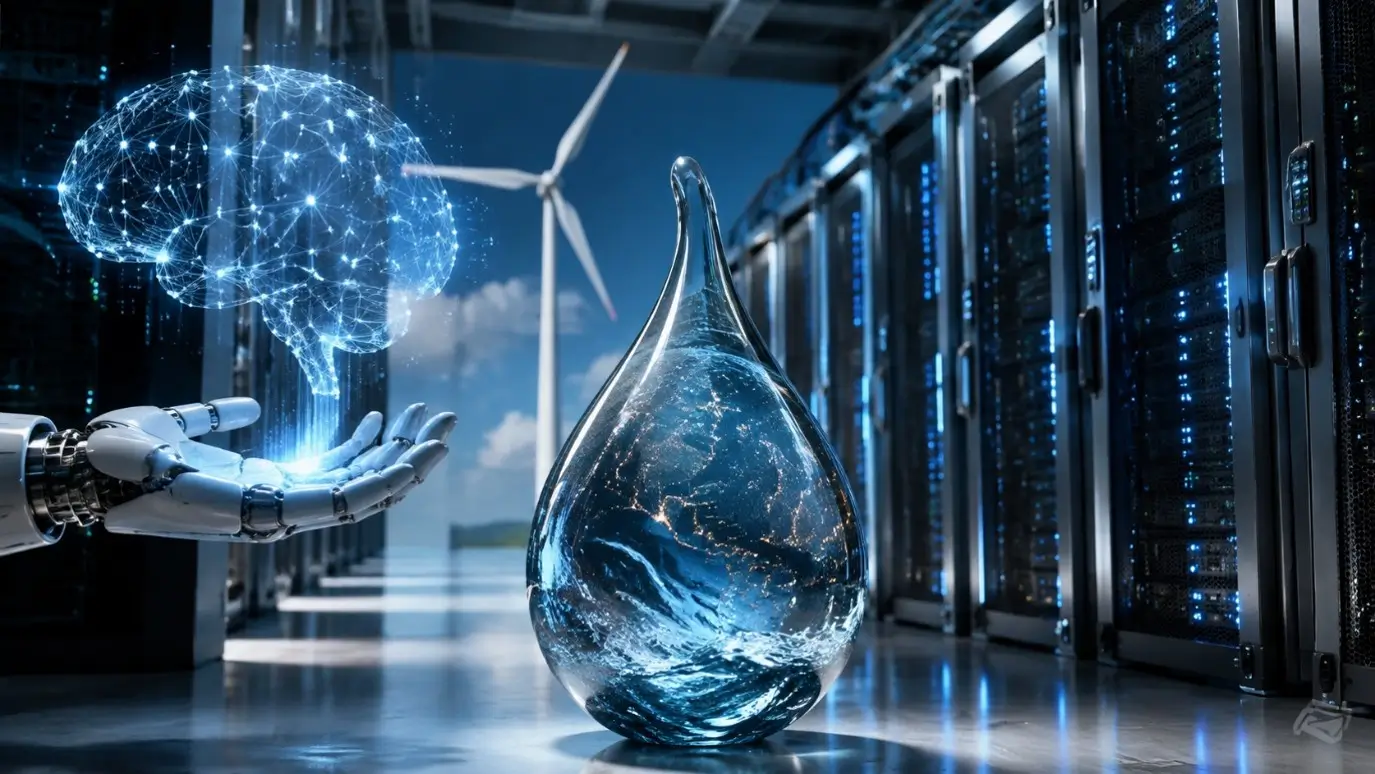
Artificial intelligence has changed how people interact with technology, but every AI response depends on a physical system working behind the scenes. A simple search, generated image, recommendation, or automated task requires computing power, electricity, cooling systems, and networks that operate continuously. The rapid expansion of AI has created a new infrastructure challenge where performance alone is no longer the only priority. Sustainable AI data centers are becoming essential because the future of artificial intelligence depends on how efficiently these systems use energy, manage resources, and reduce environmental impact.

The sustainability challenge of AI infrastructure goes beyond electricity consumption. Data centers depend on multiple interconnected systems, including processors, networking equipment, storage platforms, power distribution systems, and cooling technologies. Each component influences the environmental footprint of computing operations. Hardware manufacturing, energy sourcing, water consumption, and lifecycle management all contribute to the overall sustainability profile of AI infrastructure.
Building sustainable AI data centers requires a balanced approach because no single technology can solve every environmental challenge. Renewable energy can reduce electricity-related emissions, efficient hardware can lower energy demand, advanced cooling can improve thermal management, and responsible lifecycle practices can address supply-chain impacts. The next generation of AI infrastructure will depend on combining these approaches to support technological growth with better resource management.
Why Carbon Emissions Matter in AI Data Centers
Carbon emissions from AI infrastructure come from multiple stages of the computing lifecycle. Electricity consumption during operations represents one important source, but emissions also occur during hardware manufacturing, equipment transportation, construction activities, and supply-chain processes. This broader view is important because reducing operational emissions alone does not address the complete environmental impact of AI systems.

AI workloads require significant computing capacity, and every computing process consumes electricity. The carbon impact of that electricity depends on how it is generated and supplied. A data center using electricity from a lower-carbon energy mix can have a different emissions profile compared with a similar system operating in a carbon-intensive electricity environment. Energy sourcing therefore plays a major role in determining the operational carbon footprint of AI infrastructure.
Sustainable AI data centers must address emissions across both operational activities and the wider infrastructure lifecycle. Improving processor efficiency, optimizing workloads, adopting cleaner energy sources, and designing better cooling systems can reduce environmental impact. However, these improvements work best when combined with accurate carbon measurement and responsible infrastructure planning.
Moving Beyond Operational Carbon Emissions
The environmental footprint of AI infrastructure begins before computing equipment becomes operational. Semiconductor production, server manufacturing, networking equipment, and construction materials require energy and resources during production. These upstream activities create what are commonly known as embodied emissions, which remain part of the overall carbon footprint even after operational improvements are introduced.
The growth of AI has increased attention toward hardware lifecycle management because advanced computing systems often require specialized components. Newer hardware generations can improve performance and efficiency, but manufacturing new equipment also creates additional environmental impacts. Extending equipment life, improving reuse strategies, and supporting responsible recycling can help reduce pressure on materials and supply chains.
Carbon reduction in AI infrastructure requires a complete lifecycle approach. Operators need to consider where emissions originate, which improvements create the greatest impact, and how infrastructure decisions influence future environmental performance. Sustainable AI data centers will depend on continuous improvement across hardware design, energy management, cooling systems, and operational practices.
Understanding Different Sources of Carbon Emissions
Carbon accounting frameworks help organizations understand where emissions come from and how they can be reduced. Scope 1 emissions represent direct emissions from sources controlled by an organization, while Scope 2 emissions relate to indirect emissions from purchased electricity, heating, cooling, or steam. Scope 3 emissions cover indirect emissions across the wider value chain, including manufacturing, transportation, purchased goods, and supplier activities.
For AI data centers, Scope 2 emissions receive significant attention because electricity consumption forms a major part of operational activity. Computing equipment, cooling systems, and supporting infrastructure require continuous power. The carbon impact depends on the electricity source, grid composition, and energy procurement strategy used by the operator.
Scope 3 emissions create a more complex challenge because they involve activities outside direct operational control. Semiconductor manufacturing, hardware production, logistics, and infrastructure development contribute to the wider carbon footprint of AI systems. Addressing these emissions requires stronger collaboration across suppliers and technology providers because sustainability depends on visibility throughout the complete value chain.
Creating a Complete Carbon Management Strategy
A sustainable AI infrastructure strategy requires accurate emissions measurement before reduction efforts begin. Organizations need to understand whether emissions originate from electricity consumption, equipment manufacturing, transportation, or other lifecycle activities. Carbon accounting provides a structured method to identify these sources and develop targeted improvement plans.
Reducing emissions requires action across multiple areas rather than focusing on one solution. Cleaner electricity sources can reduce operational emissions, while efficient computing systems can lower energy requirements. Better cooling designs, responsible procurement practices, and improved hardware lifecycle management can address additional environmental impacts.
The future of AI infrastructure depends on balancing computational growth with environmental responsibility. AI systems will continue requiring advanced computing resources, but infrastructure decisions will determine how efficiently those resources are used. Sustainable AI data centers represent a shift toward designing computing environments that deliver performance while reducing unnecessary environmental pressure.
Building Cleaner Energy Systems for AI Growth
Electricity is one of the most important resources supporting AI infrastructure because computing systems operate continuously and require reliable power availability. Renewable energy sources such as solar, wind, hydroelectric, and geothermal power can support lower-carbon electricity strategies when integrated effectively into energy systems. The transition toward cleaner power requires careful planning because AI workloads need consistent and dependable electricity supply.
Renewable energy strategies can include direct renewable electricity procurement, renewable energy certificates, on-site generation, and participation in broader clean-energy programs. Each approach has different characteristics, and the environmental impact depends on factors such as location, grid conditions, and implementation methods. Sustainable AI data centers require careful evaluation of renewable energy choices rather than relying on a single approach.The increasing demand for AI computing has strengthened the connection between digital infrastructure and energy systems. Future data center development will depend on how effectively technology companies, energy providers, and infrastructure designers manage electricity demand while improving environmental performance. Renewable energy will remain an important part of this transition, but it must work alongside efficiency improvements and responsible infrastructure design.
Why Energy Efficiency Has Become Critical for AI Data Centers
AI infrastructure depends on large-scale computing systems that process complex workloads continuously. Every processor, memory module, networking component, and storage system requires electricity to operate. As AI applications expand, improving energy efficiency has become a central requirement because better efficiency helps infrastructure deliver more computing capability while reducing unnecessary resource consumption.
Energy efficiency does not simply mean using less electricity. It means achieving better computational outcomes with improved use of available resources. Hardware architecture, software optimization, workload scheduling, and cooling design all influence how effectively a data center converts electricity into useful computing performance. A more efficient infrastructure approach considers the relationship between computing power, energy demand, and operational design.
Sustainable AI data centers require efficiency improvements across the entire computing ecosystem. Reducing energy waste remains important, but sustainability also depends on addressing carbon emissions, water consumption, material usage, and lifecycle impacts across infrastructure systems. This broader approach helps create a more complete understanding of environmental performance rather than focusing only on electricity consumption.
Improving Efficiency Across Hardware, Software and Operations
Modern AI workloads place new demands on computing infrastructure because they require specialized processors and high-performance systems. Improving hardware efficiency can reduce the energy needed for specific computing tasks, but hardware improvements alone cannot solve every challenge. Software optimization, workload management, and intelligent resource allocation also influence how effectively infrastructure uses available computing capacity.
Software plays an important role in energy efficiency because it determines how computing resources are allocated and utilized. Efficient scheduling can reduce unnecessary resource consumption, while workload optimization can improve hardware utilization. AI infrastructure therefore requires collaboration between hardware engineers, software developers, and operations teams to achieve better overall efficiency.
Cooling systems also influence energy efficiency because removing heat requires additional energy resources. A computing environment that improves processor performance but ignores thermal management may not achieve the expected efficiency gains. Sustainable AI data centers need integrated designs where computing systems, power systems, and cooling technologies operate together.
How Power Usage Effectiveness Works
Power Usage Effectiveness, commonly known as PUE, is one of the most widely used measurements for evaluating data center energy efficiency. The metric compares total data center energy consumption with the energy delivered directly to computing equipment. It helps operators understand how much energy supports actual computing workloads compared with supporting systems such as cooling and power infrastructure.
A lower PUE value indicates that a greater proportion of energy reaches computing equipment rather than supporting infrastructure. Improvements in cooling design, power distribution, and operational management can influence PUE performance. However, PUE should be viewed as one measurement tool rather than a complete definition of sustainability.
PUE does not measure every environmental impact associated with AI infrastructure. The metric focuses on energy efficiency within the data center environment but does not capture carbon emissions from electricity sources, hardware manufacturing impacts, water consumption, or supply-chain emissions. A complete sustainability strategy requires combining PUE with broader environmental measurements.
Why PUE Alone Cannot Define Sustainable AI Infrastructure
PUE provides valuable information about infrastructure efficiency, but it does not explain how efficiently computing resources are being used. Two data centers may achieve similar PUE results while supporting very different workloads and computing outcomes. Understanding sustainability requires examining both infrastructure efficiency and computational efficiency.
AI workloads have introduced additional complexity because accelerated computing systems create different thermal and energy requirements compared with traditional computing environments. A data center designed for general workloads may require significant changes to support high-density AI systems. Cooling architecture, power delivery, and equipment configuration must evolve alongside changing computational requirements.
The future of sustainable AI data centers will require multiple measurements working together. Energy efficiency metrics, carbon accounting methods, water assessments, and lifecycle analysis provide different perspectives on environmental performance. Combining these measurements creates a more accurate picture of how responsibly AI infrastructure uses resources.
Water Usage: The Often Overlooked Sustainability Challenge – Why Water Matters in AI Infrastructure
Energy consumption receives significant attention in data center sustainability discussions, but water usage has become another important consideration. Some cooling systems use water as part of the heat removal process, especially designs that rely on evaporative cooling methods. The amount of water consumed depends on cooling architecture, climate conditions, operational practices, and system design.
Water availability varies significantly across locations, which means cooling strategies must consider regional environmental conditions. A cooling approach that works effectively in one location may create different sustainability challenges elsewhere. Sustainable AI data centers require careful evaluation of local resources, climate conditions, and long-term environmental impacts.
The relationship between water and energy also creates additional complexity. Some cooling approaches may reduce electricity demand while increasing water consumption, while other designs may require more energy but lower water usage. Infrastructure decisions therefore require balancing multiple sustainability factors rather than optimizing only one environmental metric.
Reducing Water Impact Through Better Cooling Strategies
Improving water efficiency requires better understanding of cooling system performance and resource requirements. Operators can evaluate cooling technologies, operational settings, and environmental conditions to identify opportunities for reducing unnecessary water consumption. These improvements often involve combining engineering design changes with smarter operational practices.
Alternative cooling approaches are gaining attention as AI workloads increase thermal demands. Air cooling remains common in many environments, but higher-density computing systems have encouraged exploration of liquid cooling technologies. These approaches can provide improved heat transfer capabilities and support computing environments with greater thermal requirements.
Water sustainability does not require eliminating every form of water usage because cooling needs vary depending on infrastructure design. The objective is to understand where water is consumed, improve efficiency, and select cooling approaches that match operational and environmental requirements. Sustainable AI data centers will increasingly evaluate water alongside energy and carbon performance.
Liquid Cooling: Supporting the Next Generation of AI Computing – Why AI Workloads Are Changing Cooling Requirements
Traditional cooling approaches were designed around computing environments with lower heat density. Modern AI systems use powerful processors that generate significant thermal loads, creating new challenges for heat management. As computing density increases, cooling technologies must evolve to maintain reliability while supporting efficient operation.
Liquid cooling transfers heat through liquid-based systems that can provide more effective heat removal compared with air-based approaches in certain high-density computing environments. These systems can support advanced processors by managing heat closer to the source. Different liquid cooling designs exist, including direct-to-chip cooling and immersion cooling approaches.
Direct-to-chip liquid cooling uses specially designed cold plates attached near high-heat components such as processors. The cooling liquid absorbs heat and transfers it away from computing equipment through a controlled thermal management system. This approach has gained attention because it supports high-performance computing environments where traditional cooling methods may face limitations.
Heat Reuse and the Future of Thermal Management
Cooling systems traditionally focus on removing heat from computing environments, but future designs increasingly consider whether waste heat can provide additional value. Heat reuse involves capturing thermal energy generated by computing systems and redirecting it toward applications such as building heating or industrial processes where suitable conditions exist.
Some liquid cooling approaches can enable higher-temperature heat recovery because they may operate with warmer coolant loops compared with certain traditional cooling systems, although the practical benefit depends on system design, operating conditions, and heat reuse requirements.
Heat reuse requires coordination between computing infrastructure and surrounding energy systems. The availability of nearby heat demand, appropriate infrastructure connections, and suitable temperature requirements influence whether recovery projects become practical. Sustainable AI data centers will increasingly examine how thermal energy can be managed as part of a broader resource strategy.
Net-Zero Strategies for Sustainable AI Data Centers – Moving From Carbon Reduction Goals to Practical Infrastructure Changes
Net-zero strategies have become an important part of sustainability planning as AI infrastructure continues to expand. Achieving lower emissions requires more than purchasing cleaner electricity because carbon impact exists across operations, supply chains, equipment manufacturing, and infrastructure development. A complete approach focuses on reducing emissions wherever possible while improving the way computing systems use energy and resources.
The concept of net zero requires organizations to measure emissions, reduce avoidable sources, and address remaining emissions through appropriate climate strategies. For AI infrastructure, this means examining electricity consumption, cooling systems, hardware production, and supplier activities. A data center cannot achieve meaningful sustainability progress without understanding the complete lifecycle impact of the systems supporting AI workloads.
Sustainable AI data centers need practical carbon reduction pathways rather than relying on a single solution. Renewable electricity, energy efficiency, advanced cooling, workload optimization, and responsible hardware management each address different parts of the environmental challenge. These approaches become more effective when combined into a coordinated infrastructure strategy.
Reducing Emissions Before Addressing Remaining Carbon Impact
Carbon reduction strategies are most effective when they focus first on preventing unnecessary emissions. Improving energy efficiency, reducing operational waste, adopting lower-carbon electricity sources, and extending equipment life can directly reduce the amount of carbon produced by infrastructure operations. These actions create measurable improvements before considering additional climate measures.
Energy efficiency plays a major role because electricity consumption directly influences operational emissions in many data center environments. Better processor efficiency, optimized workloads, improved cooling systems, and smarter infrastructure management can reduce energy requirements. These improvements also support operational resilience by creating systems that use resources more effectively.
Carbon reduction requires a broader view because infrastructure decisions influence environmental performance over many years. Selecting efficient equipment, designing adaptable systems, and improving lifecycle planning can reduce future emissions. Sustainable AI data centers must consider both current operations and the long-term impact of infrastructure choices.
Carbon Management and Sustainability Reporting – Measuring Emissions Across the AI Infrastructure Lifecycle
Carbon management begins with accurate measurement because infrastructure operators need to understand where emissions originate before developing reduction plans. Scope-based reporting provides a structured framework for identifying direct emissions, purchased energy impacts, and value-chain emissions. This approach helps separate different environmental challenges and supports more targeted sustainability decisions.
Scope 1, Scope 2, and Scope 3 categories provide different perspectives on infrastructure emissions. Scope 1 focuses on direct emissions from controlled sources, Scope 2 covers purchased energy-related emissions, and Scope 3 includes broader value-chain activities. Together, these categories create a more complete understanding of environmental impact.
For AI infrastructure, Scope 3 emissions remain a significant area of focus because hardware supply chains involve complex manufacturing processes. Semiconductor production, equipment manufacturing, transportation, and material sourcing all contribute to lifecycle emissions. Addressing these impacts requires better collaboration between technology providers, suppliers, and infrastructure operators.
Why Sustainability Measurement Requires Multiple Indicators
Energy consumption alone cannot provide a complete picture of environmental performance. A system may improve electricity efficiency while still creating impacts through hardware production, water usage, or material consumption. Sustainable AI data centers require multiple measurement approaches to understand the relationship between different environmental factors.
Carbon accounting, energy efficiency measurements, water assessments, and lifecycle analysis each provide different insights. Metrics such as PUE can show infrastructure efficiency, while emissions accounting can reveal carbon impact and lifecycle analysis can highlight supply-chain considerations. Together, these measurements create a broader sustainability assessment.
Better measurement supports better decision-making because infrastructure improvements can be prioritized based on environmental impact. Data-driven sustainability planning helps identify whether investments should focus on energy sourcing, cooling improvements, hardware efficiency, or lifecycle management. The objective is to create balanced systems that improve resource efficiency across multiple areas.
Hardware Lifecycle and Circular Computing – The Environmental Impact Before AI Hardware Reaches Data Centers
The sustainability journey of AI infrastructure begins before computing equipment becomes operational. Manufacturing processors, servers, storage systems, and networking equipment requires energy, materials, and complex production processes. These activities contribute to embodied emissions that remain part of the infrastructure lifecycle.
Advanced AI hardware often requires specialized semiconductor manufacturing processes that involve significant technical complexity. Increasing computational performance can improve efficiency during operation, but producing new hardware also creates environmental considerations. Sustainable infrastructure planning must therefore evaluate both performance improvements and lifecycle impacts.
Extending hardware usefulness can reduce unnecessary resource consumption by keeping equipment productive for longer periods. Maintenance strategies, equipment reuse, refurbishment, and responsible recycling can support more efficient resource management. Circular approaches help reduce the environmental pressure created by frequent hardware replacement.
Building Circular Computing Practices
Circular computing focuses on maintaining the value of equipment and materials through reuse, repair, recovery, and recycling. Instead of treating hardware as a short-term resource, circular approaches consider how equipment can remain useful throughout a longer lifecycle. This perspective supports better resource management and reduces dependence on constant replacement.
AI infrastructure can benefit from lifecycle planning that begins during procurement and continues through deployment, maintenance, and end-of-life management. Decisions made during equipment selection influence future sustainability outcomes. Designing systems with upgrade possibilities and responsible disposal pathways can improve long-term environmental performance.
Circular computing does not mean avoiding technological progress because newer hardware generations can deliver important efficiency improvements. The challenge lies in balancing innovation with responsible resource use. Sustainable AI data centers must evaluate when upgrades create meaningful benefits and when extending existing equipment provides better environmental outcomes.
Designing AI Infrastructure for Longer Operational Life – Creating Adaptable Systems for Future Computing Requirements
AI technology changes rapidly, and infrastructure must adapt to evolving computational requirements. Flexible designs can support equipment upgrades, cooling modifications, and changing power requirements without requiring complete replacement of existing systems. Adaptability helps infrastructure respond more efficiently as computing needs develop.
Modern AI workloads create new demands for power distribution and thermal management. High-performance processors require infrastructure capable of supporting increased computing density while maintaining operational reliability. Designing adaptable systems allows infrastructure operators to respond to changing hardware requirements more effectively.
Adaptability can reduce the need for complete infrastructure redesign and may allow existing systems to accommodate some technology transitions more efficiently. However, future computing requirements may still require significant upgrades depending on workload changes and technology development. Sustainable infrastructure planning requires balancing flexibility with realistic expectations about technological evolution.
Infrastructure Longevity as a Sustainability Strategy
Longer infrastructure lifecycles can reduce the environmental impact associated with frequent construction, equipment replacement, and resource consumption. Extending operational life requires careful planning because older systems must continue meeting performance, reliability, and efficiency requirements. Lifecycle decisions should consider both environmental benefits and technological limitations.
Modular designs, standardized components, and flexible cooling systems can improve the ability to upgrade infrastructure over time. These approaches support maintenance and adaptation while reducing the need for complete system replacement. Sustainable AI data centers increasingly focus on designs that support long-term operational flexibility.
The future of AI infrastructure will depend on systems that can evolve without creating unnecessary environmental impact. Longer operational life, responsible hardware management, and efficient upgrades can contribute to more sustainable computing environments. Infrastructure longevity will become an important factor in balancing AI growth with resource responsibility.
The Future of Sustainable AI Data Centers – Designing AI Infrastructure Around Resource Efficiency
The future of artificial intelligence will depend not only on advances in algorithms and computing power but also on how efficiently the supporting infrastructure uses resources. AI systems require physical environments where processors, networks, storage systems, and cooling technologies can operate reliably. As demand for AI services grows, sustainable AI data centers will become increasingly important because infrastructure decisions directly influence energy consumption, carbon emissions, and resource management.
Future data centers will need to balance computing performance with environmental responsibility. This balance requires improvements across multiple areas, including energy sourcing, cooling design, hardware efficiency, and lifecycle management. No single technology can address every sustainability challenge because infrastructure systems operate through complex relationships between electricity, materials, water, and operational processes.
Sustainable infrastructure development requires long-term thinking because data centers often operate for many years after construction. Decisions made during design influence future energy consumption, cooling requirements, and upgrade possibilities. Building adaptable systems today can help infrastructure respond to future AI workloads while reducing unnecessary environmental pressure.
How AI Infrastructure Can Become More Sustainable
AI infrastructure sustainability depends on continuous improvement rather than a single transformation. Renewable energy can reduce electricity-related emissions, while energy-efficient hardware can lower resource requirements. Advanced cooling technologies can improve thermal management, and better lifecycle practices can address environmental impacts beyond daily operations.
The relationship between computing and energy systems will continue becoming more connected. Data centers require reliable electricity, while energy systems increasingly need better coordination with growing digital demand. Future infrastructure planning will require stronger alignment between computing requirements, renewable energy availability, and operational efficiency.
Sustainable AI data centers will also depend on better transparency and measurement. Carbon accounting, energy efficiency indicators, water assessments, and lifecycle analysis help identify where improvements create the greatest environmental benefit. Better measurement allows infrastructure decisions to move from assumptions toward evidence-based strategies.
Measuring Sustainability Beyond Energy Consumption – Why Energy Alone Cannot Define Environmental Performance
Electricity consumption remains an important sustainability factor, but it does not represent the complete environmental impact of AI infrastructure. A data center can improve energy efficiency while still creating impacts through hardware manufacturing, supply chains, water consumption, and material use. A broader evaluation approach is necessary to understand the full sustainability profile of computing systems.
Carbon emissions, water usage, energy efficiency, and lifecycle impacts represent different dimensions of sustainability. Each measurement provides valuable information, but no single metric can explain every environmental factor. Sustainable AI data centers require a combination of measurements to evaluate performance across different resource categories.
This broader approach changes how infrastructure decisions are evaluated. Instead of focusing only on reducing electricity consumption, operators can examine how energy choices, cooling technologies, hardware strategies, and operational practices interact. A complete sustainability framework considers the relationship between different systems rather than improving one area while creating challenges elsewhere.
Creating Better Sustainability Evaluation Frameworks
Sustainability frameworks provide a structured method for understanding environmental performance. Carbon accounting standards help identify emissions sources, efficiency metrics help evaluate energy usage, and water assessments provide insight into cooling-related impacts. Together, these approaches create a more complete understanding of infrastructure sustainability.
Measurement also helps identify where improvements can create the greatest impact. For example, one data center may benefit more from renewable electricity adoption, while another may achieve greater improvement through cooling optimization or hardware efficiency upgrades. The right strategy depends on infrastructure design, location, workload requirements, and available resources.
Future AI infrastructure will require more transparent sustainability evaluation because environmental performance is becoming a critical part of technology development. Better reporting and measurement practices can encourage more responsible decisions throughout the computing ecosystem. Sustainable AI data centers will rely on accurate information to guide improvements over time.
Building a More Sustainable Relationship Between AI and the Physical World – Understanding the Connection Between Digital Growth and Physical Resources
Artificial intelligence often appears as a digital experience, but every AI service depends on physical infrastructure. Servers, processors, networks, cooling systems, energy systems, and manufacturing supply chains create the foundation that allows AI applications to function. Understanding this physical connection is essential when evaluating the environmental impact of artificial intelligence.
The growth of AI demonstrates how digital innovation remains connected to physical resource requirements. Computing power requires electricity, equipment requires materials, and infrastructure requires carefully designed environments. Sustainable development depends on improving how efficiently these resources are used throughout the technology lifecycle.
The challenge is not stopping technological progress but improving the relationship between innovation and resource management. AI infrastructure can continue evolving while adopting better approaches to energy efficiency, emissions reduction, water management, and lifecycle planning. The future of sustainable computing depends on creating systems that support innovation while respecting environmental limits.
Preparing for the Next Phase of AI Infrastructure Growth
The next generation of AI infrastructure will require stronger integration between computing systems and sustainability practices. Data centers will need to manage increasing computational requirements while improving energy performance and reducing environmental impact. This transition will depend on engineering improvements, operational strategies, and better resource planning.
Cooling innovation will remain an important part of this evolution because thermal management directly influences infrastructure efficiency. Liquid cooling, improved heat management, and potential heat reuse strategies can support future computing environments where traditional approaches may become less effective. These technologies will continue developing as AI workloads become more demanding.
Sustainable AI data centers represent a broader shift in how digital infrastructure is designed and operated. The goal is not simply to build more computing capacity but to create systems that use energy, water, materials, and equipment more responsibly. The future of AI will depend on infrastructure that combines technological capability with environmental awareness.
Conclusion: Making the AI Revolution More Sustainable
The rapid expansion of artificial intelligence has created a new phase of computing where infrastructure decisions influence environmental outcomes. Every AI service depends on physical systems that consume energy, require cooling, use materials, and rely on complex supply chains. Understanding these connections is essential for developing computing environments that can support future growth responsibly.
Sustainable AI data centers require action across multiple areas, including renewable energy adoption, energy efficiency improvements, cooling innovation, carbon management, water stewardship, and responsible hardware lifecycle practices. These strategies work together because sustainability challenges are interconnected. Improving one area while ignoring others may limit the overall environmental benefit.
The future of AI infrastructure will depend on creating a balance between computational advancement and responsible resource use. Technology development does not exist separately from environmental considerations because every digital experience depends on physical systems. Sustainable AI data centers represent the transition toward infrastructure designed to deliver advanced computing while reducing unnecessary environmental impact.











