 Skip to content
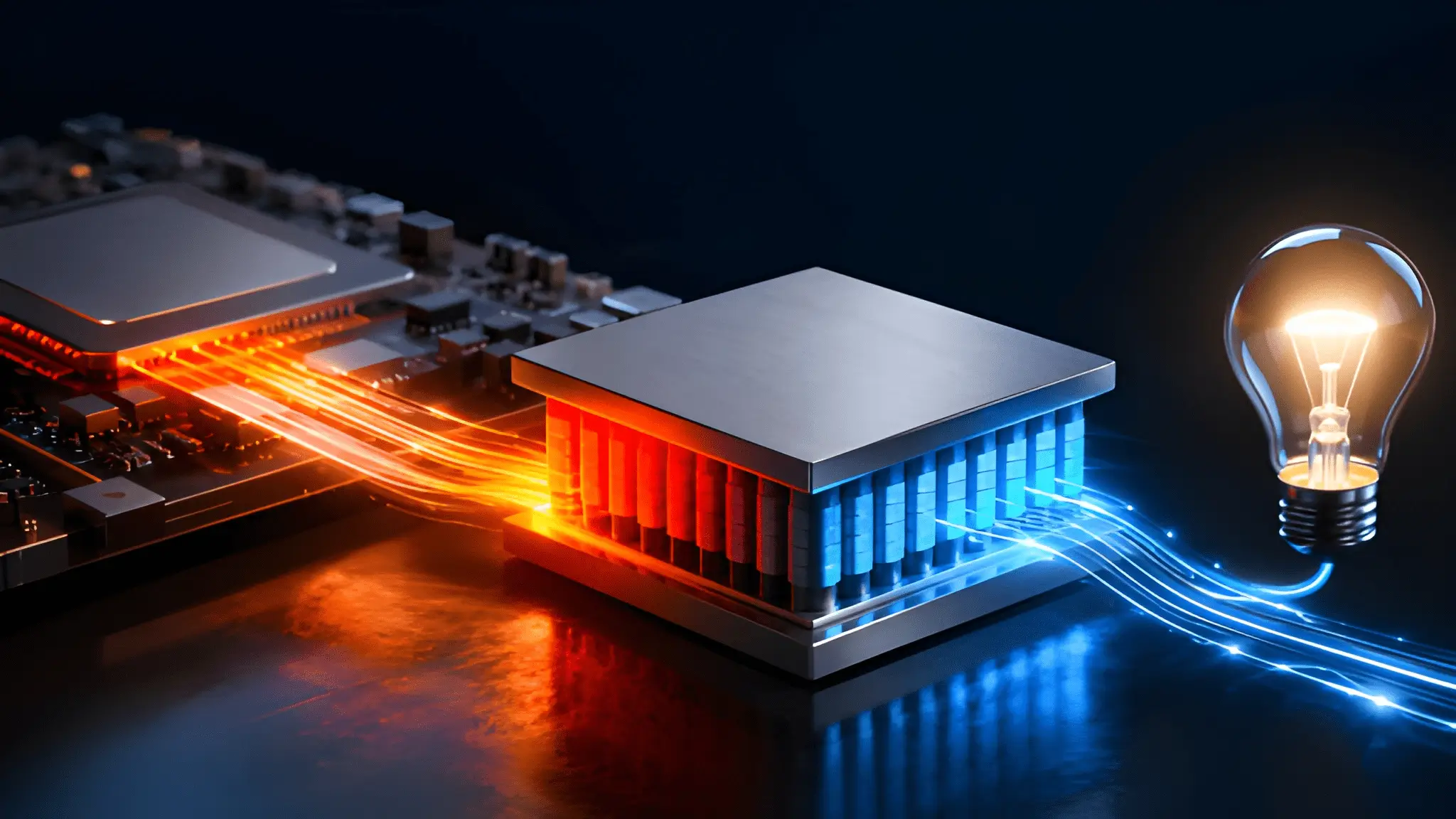
Artificial intelligence has fundamentally changed how data centers consume electricity, forcing infrastructure developers to reconsider not only how they deliver power but also how they manage the enormous volumes of heat produced during computation. As rack densities continue to climb and advanced AI accelerators require more cooling capacity, thermal management has become an increasingly important consideration in modern data center design. However, NanoTherma’s approach focuses on recovering value from low-grade waste heat by converting part of that thermal energy into usable electricity. Israeli startup NanoTherma believes that assumption leaves a significant opportunity untapped inside modern computing facilities. Rather than viewing waste heat solely as an engineering challenge, the company is building technology that treats it as a recoverable energy resource capable of supporting broader infrastructure efficiency.

NanoTherma Targets Heat Lost Inside Data Centers
NanoTherma recently launched after securing a $400,000 pre-seed investment from the ICI Fund to advance its thermoelectric energy recovery platform. The company develops advanced thermoelectric panels that convert low-grade waste heat directly into usable electricity at the point of generation. Unlike conventional approaches that focus exclusively on cooling performance, NanoTherma’s technology adds an additional layer of energy recovery within existing infrastructure environments. The company has prioritized data centers as its first commercial market because AI-driven computing has significantly increased thermal output while placing additional pressure on facility power budgets. The startup argues that converting otherwise discarded heat into electricity can improve overall energy efficiency, reduce operating costs, and support long-term sustainability objectives. Moreover, the company says its technology improves energy efficiency while reducing operational costs and contributing to sustainability goals.
The company’s strategy focuses on recovering usable electricity from low-grade waste heat inside data centers. Traditionally, cooling systems have discharged low-grade waste heat instead of converting it into usable electricity. NanoTherma uses advanced thermoelectric technology to convert low-grade waste heat into usable electricity. The company selected data centers as its initial market because rising power density and cooling demands create significant amounts of untapped thermal energy. Instead of allowing that thermal energy to dissipate through cooling systems, the startup aims to capture part of it and immediately convert it into usable electrical power. Therefore, the company seeks to improve overall energy efficiency by transforming part of that waste heat into electricity.
Nanomaterials Power Thermoelectric Energy Conversion
At the center of NanoTherma’s platform, advanced nanomaterials integrated into thermoelectric panels generate electricity from low-temperature waste heat. The company builds the technology with semiconductor-compatible manufacturing processes that support scalable production. This manufacturing compatibility helps simplify commercialization while supporting long-term cost reductions as production volumes increase. The company says its manufacturing approach supports further cost reductions as production scales. Instead of introducing entirely new production methods, NanoTherma relies on semiconductor-compatible manufacturing processes. As a result, the startup combines advanced materials research with commercially practical production methods that support enterprise-scale adoption.

The company’s manufacturing strategy focuses on semiconductor-compatible processes that support scalable production. Companies across the semiconductor industry routinely consider how to scale advanced materials technologies for commercial manufacturing. NanoTherma developed its technology with semiconductor-compatible processes to support future commercial manufacturing. If the company succeeds, the approach could deliver consistent manufacturing quality while lowering production costs over time. The company’s manufacturing approach supports broader deployment through scalable production. Its emphasis on scalable manufacturing complements its objective of deploying thermoelectric energy recovery technology across multiple infrastructure environments.
AI Power Constraints Shape NanoTherma’s Strategy
NanoTherma’s commercial focus reflects a growing recognition that electricity availability has become one of the defining constraints shaping AI infrastructure expansion. Accelerated computing clusters require enormous volumes of reliable electrical capacity, while the company views improving energy utilization as increasingly important as AI computing expands. NanoTherma’s technology focuses on recovering usable electricity from low-grade waste heat generated during computing operations. The company’s approach seeks to improve the overall efficiency of existing energy use inside data centers. NanoTherma believes recovering usable electricity from waste heat represents one pathway toward achieving that objective without fundamentally altering computing operations. Consequently, NanoTherma is initially focusing on data centers where large amounts of low-grade waste heat are available.
Those observations illustrate how NanoTherma frames heat not simply as an unavoidable byproduct of digital infrastructure but as a resource with measurable economic potential. Data centers already invest heavily in removing thermal energy to maintain hardware reliability and operational stability. Recovering a portion of that energy before it leaves the system introduces an additional dimension to facility optimization strategies. While thermoelectric recovery alone will not eliminate the need for expanded power infrastructure, it could contribute incremental efficiency improvements that become increasingly valuable as AI workloads continue to grow. Furthermore, operators face mounting pressure to improve both economic and environmental performance without compromising computing capacity. Heat recovery is central to NanoTherma’s approach of converting low-grade waste heat into usable electricity.
Platform Extends Beyond Digital Infrastructure
Although NanoTherma has chosen data centers as its initial commercial market, the company’s technology is designed for applications extending well beyond digital infrastructure. Many industrial environments generate continuous streams of low-grade waste heat that currently remain underutilized despite representing potential energy resources. Semiconductor fabrication facilities, telecommunications infrastructure, and other industrial operations all produce thermal output that could support thermoelectric electricity generation under appropriate operating conditions. The company says its technology can be extended beyond data centers to semiconductor fabs, telecom infrastructure, and other environments where low-grade waste heat is abundant. The platform is designed for applications across multiple industries where recoverable low-grade waste heat is available. Accordingly, its long-term strategy extends beyond AI infrastructure toward broader industrial energy optimization.
The broader application of NanoTherma’s platform reflects its design for multiple industrial environments. Beyond data centers, the company identifies semiconductor fabrication facilities, telecom infrastructure, and other industrial environments as potential applications. The platform combines advanced thermoelectric technology with semiconductor-compatible manufacturing processes. NanoTherma’s platform follows that pattern by combining thermoelectric energy recovery with scalable manufacturing techniques suitable for diverse deployment environments. The company has designed the platform so it can be deployed in data centers as well as other industrial environments where low-grade waste heat is abundant. Ultimately, the company is pursuing a strategy that treats waste heat as a recoverable infrastructure asset rather than an unavoidable operational cost.












