 Skip to content
AI infrastructure expansion is creating new cooling challenges
The AI data center cooling race is becoming an important consideration as organizations expand artificial intelligence deployments and require more advanced computing infrastructure. Access to GPUs, accelerated computing platforms and high-performance systems is increasing the need for efficient thermal management strategies across modern data centers. AI infrastructure growth is creating additional engineering challenges related to power availability, cooling capacity and facility design alongside the continued need for increased computing capacity. As companies move from AI experimentation to production deployments, infrastructure decisions are becoming more complex.

Organizations need reliable computing capacity, optimized platforms and infrastructure solutions that can support demanding AI workloads. The discussion around AI infrastructure increasingly includes factors beyond processor availability, including power systems, cooling technologies, networking capabilities and facility requirements. This shift has created opportunities for specialized infrastructure providers and data center operators focused on supporting AI workloads. These organizations are exploring advanced cooling approaches to manage increasing thermal requirements created by high-performance computing systems.
For enterprises adopting AI, infrastructure decisions often consider reliability, energy efficiency, thermal management capabilities and operational requirements when evaluating technology providers. Cooling is no longer only a facility management function but an important component of AI infrastructure planning. Companies developing scalable cooling approaches can support higher compute density by improving thermal management efficiency and helping optimize energy use within data center environments. As AI workloads continue expanding, cooling technology is becoming closely connected with infrastructure scalability.
AI workloads are changing traditional data center cooling requirements
Traditional data center cooling strategies were designed around workloads with lower and more predictable thermal densities compared with current AI systems. Modern AI accelerators generate significant heat because they perform intensive computational operations within compact hardware configurations. As organizations deploy more GPU-based systems, cooling architectures must adapt to support increased rack densities and changing workload patterns. The challenge is not simply removing heat but maintaining performance, reliability and operational efficiency under demanding conditions. For end users, these infrastructure decisions directly influence service availability, AI application performance and long-term technology costs.

Enterprises increasingly depend on infrastructure providers that can deliver consistent computing capacity without interruptions caused by thermal limitations. Cooling decisions are becoming more closely connected with business outcomes because AI applications require dependable infrastructure performance. A company running customer-facing AI services depends on computing environments that can maintain reliability during periods of increased demand. The effectiveness of cooling systems is one of several infrastructure factors that can influence the deployment and scaling of AI capabilities across business environments. Other considerations include computing resources, software platforms, security requirements and operational priorities.
Liquid cooling is becoming a major discussion in AI infrastructure
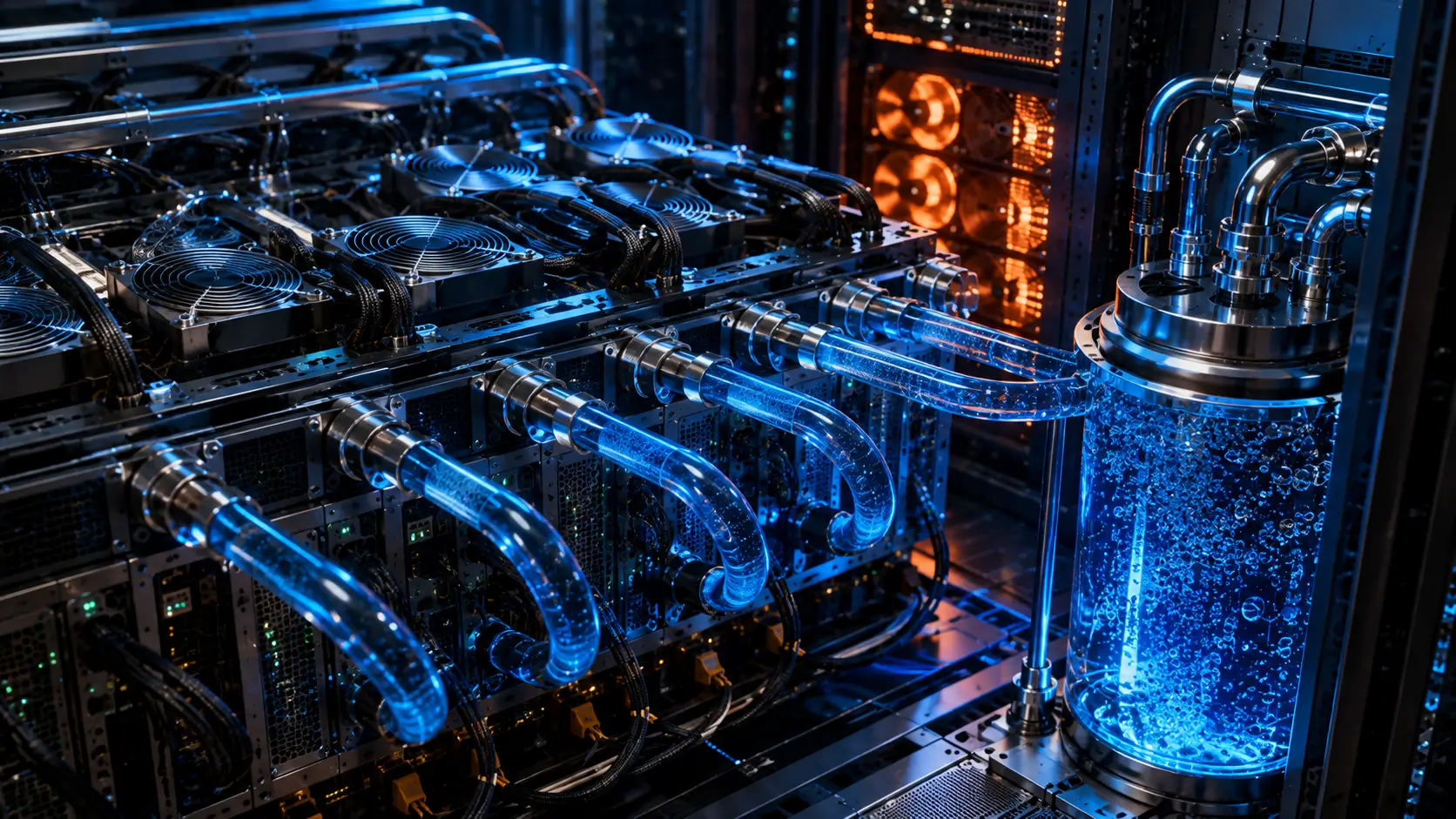
The growth of high-performance AI systems has increased interest in advanced cooling methods, including liquid cooling approaches designed for higher-density computing environments. These technologies are being evaluated because modern AI hardware can create thermal requirements that challenge some conventional cooling methods. Unlike traditional air-based systems, liquid cooling can transfer heat more efficiently from high-performance components in certain data center configurations. This makes it a relevant technology discussion for organizations planning future AI infrastructure deployments. Cooling technology choices involve long-term planning rather than short-term equipment decisions.
Enterprises must consider hardware compatibility, facility design, operational requirements and future scalability when selecting cooling approaches. The technology selection process depends on workload requirements, investment considerations and infrastructure objectives. Different environments may require different cooling solutions based on performance expectations and operational priorities. AI infrastructure deployments currently use different cooling approaches depending on workload requirements, facility design, hardware configurations and operational objectives. The industry is likely to continue exploring multiple thermal management strategies as AI systems evolve.
Cooling efficiency is becoming an important factor in AI infrastructure competition
The competitive landscape for AI infrastructure is expanding beyond access to advanced processors and computing capacity. Infrastructure providers must also demonstrate their ability to operate systems efficiently while managing energy consumption, facility constraints and operational complexity. The growing focus on the AI data center cooling race highlights how thermal performance is becoming an increasingly important consideration in AI infrastructure planning and operations. Customers are evaluating infrastructure based on multiple factors, including reliability, efficiency and scalability. A provider that supports higher computing density with efficient cooling systems can offer customers greater flexibility when deploying AI workloads.
Better thermal management can improve infrastructure utilization and help organizations plan future expansion. Cooling efficiency also affects sustainability objectives because reducing unnecessary energy consumption can contribute to lower operational impact. However, efficiency improvements depend on multiple factors, including hardware design, software optimization, facility architecture and workload management. Cooling innovation alone cannot solve every infrastructure challenge. Successful AI infrastructure strategies require coordination between processors, networking systems, power management, software platforms and thermal solutions.
Enterprises are evaluating AI infrastructure through a broader operational lens
AI adoption decisions are increasingly influenced by infrastructure considerations beyond model performance. Organizations deploying AI applications must evaluate computing availability, reliability, cost management and long-term scalability. Cooling systems may not be visible to end users, but they influence the infrastructure experience behind every AI service. A reliable AI application depends on stable computing environments that can operate efficiently under changing workload conditions. Thermal management failures or inefficient infrastructure design can affect operational continuity and resource availability.
This creates a stronger connection between facility engineering decisions and business outcomes. Enterprises may increasingly consider infrastructure efficiency when selecting technology partners for AI deployments. The ability to provide scalable computing while managing power and cooling requirements can become an important evaluation factor. As AI becomes embedded across industries, infrastructure decisions will influence how quickly organizations can deploy applications and achieve business value from artificial intelligence.
The AI data center cooling race is connecting computing with energy strategy
The expansion of AI workloads is creating stronger connections between computing infrastructure and energy management strategies. Data centers require reliable electricity, efficient cooling systems and carefully planned facility designs to support advanced computing environments. As AI workloads increase, organizations must consider how infrastructure choices affect operational costs and scalability. Cooling systems are directly connected to energy consumption because thermal management requires resources to maintain optimal operating conditions.
More efficient cooling approaches can help reduce energy requirements while supporting higher-performance computing environments. However, infrastructure decisions involve trade-offs between technology capability, investment requirements and operational objectives. Enterprises need infrastructure strategies that can adapt as AI workloads change over time. This requires collaboration between hardware providers, data center operators, software developers and technology customers. The future of AI deployment will depend on how effectively these interconnected systems work together.
The future of AI scaling may depend on thermal innovation
The AI infrastructure market is placing increasing attention on efficiency alongside expansion as organizations evaluate the cost, energy requirements and scalability of AI deployments. Increasing computing capacity remains important, but infrastructure providers must also address the thermal challenges created by advanced AI systems. The AI data center cooling race reflects how physical infrastructure requirements are influencing the next stage of AI growth. Cooling innovation can contribute to more efficient AI workload scaling by supporting thermal management requirements and helping maintain reliable infrastructure operations.
For end users, effective cooling strategies can contribute to improved infrastructure reliability, efficient resource utilization and better management of operational requirements. These benefits can influence how organizations plan and scale AI applications. Infrastructure providers will need to consider cooling as a core design element rather than a supporting function. The ability to manage heat efficiently is becoming an important capability for AI infrastructure providers as they design systems for increasingly demanding workloads.
The future of AI infrastructure will require balanced improvements across processors, software, power systems and thermal management. The organizations that successfully combine these elements may be better positioned to support large-scale AI adoption. For enterprises, the most important question is not only how much computing power is available, but how efficiently that computing power can be delivered. The AI data center cooling race represents a broader shift in infrastructure strategy where thermal management, energy efficiency and scalability are becoming central considerations for the future of artificial intelligence.












