
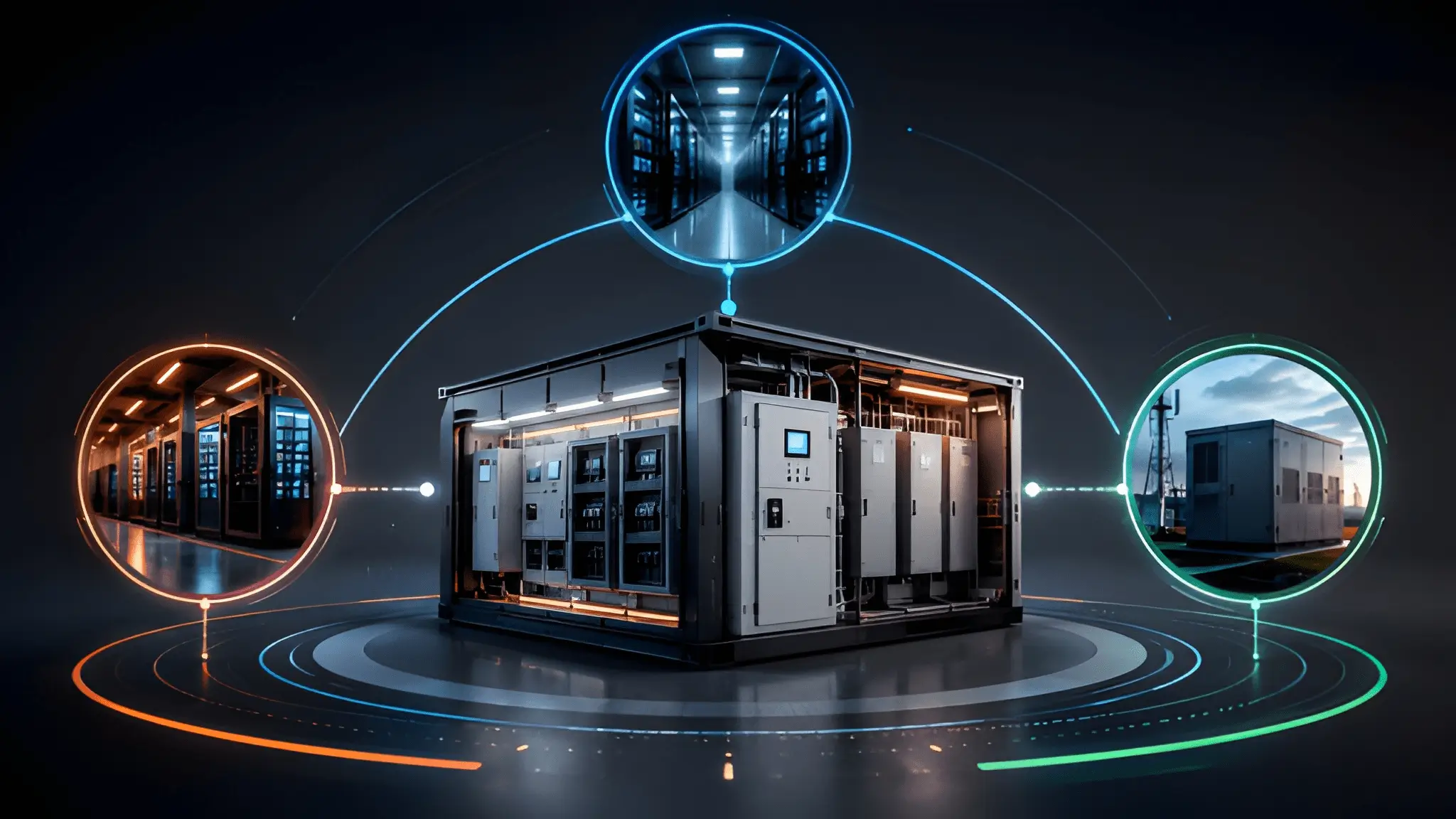
A standardized Electrical Power Distribution Pod, commonly referred to as an EPOD, represents more than a prefabricated enclosure containing electrical equipment. The conversation around digital infrastructure has shifted away from simply adding more capacity toward delivering capacity with greater predictability. Power systems have become the pacing element for modern deployments because every decision surrounding compute density ultimately depends on electrical readiness rather than the physical availability of land or buildings. Traditional electrical construction methods often introduce site-specific engineering decisions that complicate procurement, manufacturing, commissioning, and long-term operational consistency. Those challenges have encouraged designers to reconsider whether electrical infrastructure should remain a construction activity or evolve into a standardized industrial product assembled before arriving on site. That distinction now influences deployment strategy across hyperscale campuses, multitenant colocation environments, and geographically distributed edge locations because each model pursues different operational priorities while depending on the same fundamental electrical backbone.

The platform integrates medium-voltage distribution, low-voltage switchgear, protection systems, UPS infrastructure, monitoring, controls, and supporting mechanical elements into a factory-tested assembly with clearly defined electrical and mechanical interfaces. Manufacturing these assemblies under controlled conditions creates repeatable quality while reducing dependence on variable site conditions that often affect conventional construction programs. The objective extends beyond shortening installation activities because standardized production also improves engineering continuity from one deployment to another without fundamentally changing the platform architecture. This product-oriented philosophy allows infrastructure teams to think about expansion through repeatable modules instead of isolated construction projects that require unique engineering decisions every time capacity grows.
Standardized Architecture for Divergent Deployment Models
Electrical infrastructure has traditionally reflected the characteristics of the site where it would eventually operate, making every major deployment a unique engineering exercise. Different utility interfaces, redundancy expectations, environmental conditions, equipment layouts, and maintenance philosophies frequently produced custom electrical lineups even when overall operational objectives remained similar. That engineering model worked effectively when digital infrastructure expanded gradually, but accelerated AI deployments have compressed delivery schedules while increasing pressure on supply chains and commissioning teams. Standardization therefore represents an operational strategy designed to remove unnecessary engineering variability rather than reducing functional flexibility within the finished infrastructure. Instead of customizing every power system from the ground up, designers establish a common structural framework that accepts configuration changes without altering its fundamental architecture. The resulting platform creates engineering consistency that extends across procurement, manufacturing, transportation, installation, commissioning, operations, and future capacity expansion.
A mature EPOD architecture separates structural consistency from operational flexibility through clearly defined internal interfaces instead of extensive redesign. Core electrical equipment occupies predictable positions that simplify manufacturing processes while maintaining standardized cable routing, protection coordination principles, control integration, monitoring interfaces, and maintenance access pathways. Designers then modify enclosure characteristics, environmental protection, external interfaces, airflow management, and deployment orientation according to site requirements without changing the electrical foundation supporting the platform. Manufacturing teams therefore repeat established production methods while deployment teams receive systems that remain operationally familiar regardless of their destination. That continuity reduces engineering uncertainty throughout the project lifecycle while supporting different deployment models from a common industrialized production process.

A Common Platform Supporting Three Infrastructure Models
The practical value of platform standardization becomes more apparent when comparing hyperscale campuses, colocation buildings, and distributed edge deployments side by side. Each environment places different operational demands on electrical infrastructure, yet all depend upon reliable power conversion, protection, distribution, monitoring, maintainability, and controlled commissioning processes. Hyperscale operators value rapid replication because campuses often expand through successive construction phases that benefit from identical infrastructure modules. Colocation providers emphasize flexibility because tenant requirements change over time without predictable occupancy patterns across every data hall. Edge operators prioritize deployment consistency because geographically distributed installations benefit from identical maintenance procedures even when environmental conditions differ significantly between locations. A standardized EPOD platform aligns these requirements by maintaining one engineering foundation while allowing deployment-specific adaptations through configuration rather than redesign, reducing complexity without restricting operational diversity.
The standardized philosophy also strengthens lifecycle management after commissioning concludes because infrastructure remains recognizable throughout successive deployments. Operations teams interact with familiar equipment layouts, maintenance procedures, monitoring interfaces, alarm structures, documentation standards, and replacement strategies regardless of deployment type. Training therefore focuses on mastering one platform rather than learning entirely different electrical architectures for every project category. Spare component planning also becomes more predictable because interchangeable systems reduce inventory diversity across multiple deployment environments. Those operational advantages accumulate over many years, reinforcing the idea that infrastructure standardization influences long-term operational efficiency just as significantly as initial construction performance.
Hyperscale Deployment: Replication at Scale
Hyperscale infrastructure has evolved around the principle that repeatability creates operational advantage because identical systems simplify deployment, commissioning, maintenance, and future expansion. Large campuses rarely reach their final capacity during the first construction phase, making phased development an essential characteristic of hyperscale growth rather than an occasional project decision. Electrical infrastructure therefore needs to support sequential deployment without introducing engineering changes that interrupt manufacturing continuity or alter operational procedures between phases. A standardized EPOD platform addresses this requirement by treating every deployment module as part of a repeatable architectural sequence instead of an individually engineered installation. Factory-produced electrical assemblies arrive with consistent structural layouts, internal equipment arrangements, protection schemes, monitoring interfaces, and connection philosophies that remain unchanged from one phase to the next. This repeatable foundation allows expansion strategies to focus on deployment sequencing rather than repeated electrical redesign, preserving engineering consistency throughout the campus lifecycle.
Large-format deployments also benefit from standardized manufacturing because factory environments eliminate many of the uncertainties associated with site-built electrical systems. Production teams work within repeatable quality control processes while using consistent assembly procedures that remain independent of weather, labor availability, or changing site logistics. Testing can occur before shipment, allowing commissioning teams to validate interfaces instead of constructing complete electrical systems in the field under compressed project schedules. Transportation planning likewise becomes more predictable because module dimensions, connection points, and lifting requirements follow established manufacturing standards. This industrial approach aligns naturally with hyperscale development strategies where deployment velocity depends upon coordinated manufacturing rather than incremental field construction activities.
Supporting Campus Expansion Through Modular Continuity
Hyperscale campuses rarely expand as isolated buildings because operators typically plan electrical infrastructure around successive deployment phases that align with future compute demand and utility availability. The EPOD platform supports this planning model by allowing additional electrical capacity to integrate into an existing campus without introducing new structural concepts or unfamiliar operational procedures. Engineers can repeat established deployment templates while maintaining consistent equipment orientation, protection coordination, monitoring architecture, and maintenance workflows throughout every construction phase. That consistency simplifies engineering documentation because later phases inherit proven design principles instead of introducing fundamentally different electrical architectures. Expansion therefore becomes an exercise in extending a validated platform rather than developing an entirely new infrastructure design for every campus addition. Operational teams benefit because every newly commissioned module behaves in a familiar manner that aligns with previously deployed infrastructure across the entire campus environment.
Construction sequencing also becomes more efficient when electrical systems follow predictable manufacturing and installation patterns across multiple deployment phases. Site preparation activities can proceed independently while factory production continues in parallel, reducing dependency between civil construction progress and electrical assembly work. Delivery schedules become easier to coordinate because standardized modules require familiar transportation, handling, positioning, and interface procedures regardless of which expansion phase they support. Commissioning teams likewise benefit from established testing methodologies that remain applicable across successive deployments because underlying system architecture remains unchanged. Knowledge accumulated during earlier project phases therefore carries directly into later expansions without requiring extensive retraining or revised operational documentation. This continuity reflects one of the defining strengths of prefabricated infrastructure because every completed phase contributes directly to the efficiency of future deployment activities.
Replication as the Primary Design Principle
Hyperscale deployment strategies increasingly depend upon infrastructure that behaves as a repeatable manufacturing product instead of a unique construction outcome. The EPOD platform supports that objective by preserving a consistent electrical architecture while allowing deployment schedules to expand alongside campus growth without repeated engineering effort. Manufacturing processes remain stable because structural layouts and internal system integration follow standardized production methods across every deployment cycle. Operational familiarity also improves because maintenance teams encounter the same equipment relationships regardless of when a particular module entered service within the campus lifecycle. Campus evolution therefore becomes a structured progression of repeatable infrastructure additions rather than a sequence of unrelated engineering projects that gradually increase operational complexity.
The ability to replicate electrical infrastructure consistently can simplify long-term operational planning because standardized modules support consistent maintenance practices, documentation, and lifecycle management across the campus. Asset documentation follows the same organizational structure from one deployment phase to another, allowing engineering teams to reference familiar maintenance procedures without interpreting different platform designs. Predictable equipment layouts improve inspection routines because technicians encounter standardized access paths, monitoring interfaces, and protection systems throughout the campus. Procurement strategies also benefit because replacement components align with a common electrical architecture rather than supporting multiple customized system variants. These operational efficiencies emerge gradually throughout the infrastructure lifecycle, reinforcing the value of standardization well beyond initial construction and commissioning activities.
Colocation Deployment: Addressing Multi-Tenant Variability
Colocation environments differ fundamentally from hyperscale campuses because infrastructure must support multiple independent customers whose operational requirements evolve throughout the facility lifecycle. Electrical distribution therefore needs to accommodate changing occupancy patterns, different rack densities, varying service expectations, and phased customer growth without disrupting neighboring deployments. Conventional approaches often introduce customized electrical modifications whenever new tenant requirements emerge, gradually increasing infrastructure complexity across the building. A standardized EPOD platform approaches this challenge differently by preserving one structural electrical foundation while allowing configurable service boundaries that adapt to changing occupancy conditions. Internal electrical systems remain consistent because modifications occur primarily through distribution interfaces, enclosure arrangements, and deployment configurations rather than redesigning the underlying platform architecture. This separation between platform integrity and operational flexibility enables infrastructure teams to respond to tenant diversity without sacrificing engineering consistency across the broader colocation environment.
Tenant requirements rarely remain static because customers frequently expand capacity, adjust equipment density, modify redundancy expectations, or reconfigure their operational footprints over time. Electrical infrastructure must therefore accommodate these transitions while preserving reliability for every tenant operating within the same building. The EPOD platform supports this operational reality by maintaining standardized electrical architecture beneath configurable distribution strategies that align with changing customer allocations. Engineers retain familiar protection coordination, equipment layouts, monitoring systems, and maintenance procedures even as service boundaries evolve throughout the facility lifecycle. This operational continuity allows infrastructure teams to implement tenant changes without introducing unnecessary engineering diversity into the electrical platform itself.
Enabling Phased Occupancy Through Configurable Distribution
Colocation providers often commission infrastructure ahead of full occupancy because customer acquisition progresses over time rather than occurring simultaneously across every available data hall. Electrical systems therefore need to support incremental activation while maintaining stable operational performance for already occupied spaces. A standardized EPOD platform aligns naturally with phased occupancy because electrical modules can support staged distribution without requiring structural redesign as new tenants arrive. Distribution pathways, monitoring capabilities, protection systems, and operational controls remain part of the original platform architecture while customer-specific activation occurs through planned configuration strategies. This approach reduces engineering disruption because future occupancy scenarios already exist within the design philosophy instead of requiring reactive infrastructure modifications. The result is a more predictable operational environment where infrastructure evolves alongside customer growth while preserving platform consistency across the entire colocation facility.
Operational management also becomes more consistent because standardized electrical systems simplify maintenance planning across spaces occupied by different customers with different service expectations. Maintenance personnel interact with familiar switchgear layouts, UPS arrangements, monitoring interfaces, and safety procedures regardless of which tenant environment they support during a particular activity. Documentation remains easier to maintain because engineering standards apply consistently across the building instead of reflecting years of customized infrastructure additions. Spare component inventories also remain more manageable because common equipment supports diverse customer environments without requiring extensive platform variation. These characteristics strengthen operational resilience by reducing engineering fragmentation while preserving the flexibility that multitenant infrastructure requires throughout its operational lifecycle.
Edge Deployment: Adaptation to Constrained Environments
Edge infrastructure introduces a different deployment reality because available sites rarely resemble purpose-built data center campuses. Many edge locations operate within existing commercial properties, industrial environments, telecommunications sites, transportation corridors, or utility-adjacent spaces where physical constraints influence every infrastructure decision. Electrical systems therefore need to accommodate irregular footprints, varying utility interfaces, transportation limitations, and diverse environmental conditions without abandoning operational consistency. A standardized EPOD platform addresses these challenges by maintaining a common electrical architecture while adapting external characteristics to reflect local deployment requirements instead of redesigning the electrical core for every location. Structural consistency allows factory manufacturing processes to remain stable even when enclosure dimensions, weather protection, cable entry arrangements, or installation orientations require adjustment for individual projects. This separation between the standardized electrical platform and configurable site interfaces enables distributed deployments to preserve engineering continuity despite significant variation in physical surroundings.
Distributed infrastructure also changes how deployment teams approach logistics because many edge sites provide limited access for heavy equipment, staging areas, or extended construction activities. Factory-integrated electrical assemblies reduce the amount of field integration required after delivery by consolidating power equipment, protection systems, monitoring controls, and supporting infrastructure before transportation. Installation teams therefore focus on positioning, utility connection, verification, and commissioning instead of assembling complex electrical systems within constrained environments. This deployment methodology improves consistency because manufacturing quality remains independent of local construction conditions or workforce availability across geographically dispersed locations. Operational familiarity also extends across distributed sites because maintenance personnel encounter standardized equipment layouts and monitoring platforms regardless of where individual EPOD installations operate.
Maintaining Operational Consistency Across Distributed Infrastructure
Edge deployments often expand through many smaller installations instead of a few centralized campuses, creating operational complexity that extends beyond engineering design into long-term lifecycle management. Every additional location introduces maintenance scheduling, asset documentation, monitoring integration, spare component planning, and service coordination that become increasingly difficult when electrical platforms differ significantly from one deployment to another. A standardized EPOD architecture reduces that operational diversity by ensuring every installation shares common equipment relationships, monitoring interfaces, electrical protection philosophies, and maintenance procedures. Engineering teams therefore spend less effort interpreting different platform designs because operational knowledge transfers directly between geographically separated sites. Documentation also remains consistent because configuration changes occur within an established platform architecture instead of generating entirely new electrical system designs for each deployment. The resulting operational model supports distributed infrastructure growth without allowing engineering variation to accumulate across expanding edge networks.
Environmental adaptation also becomes more manageable because standardized platforms accommodate changing external conditions through configurable enclosure systems instead of electrical redesign. Weather exposure, ventilation strategies, ingress protection, thermal management, and external service access can all reflect site-specific operating conditions while preserving the internal electrical architecture that supports long-term operational consistency. Engineers therefore retain validated electrical designs while adapting deployment characteristics to suit different climates, locations, and installation constraints. This approach strengthens lifecycle reliability because operational procedures remain stable even though physical surroundings vary considerably between installations. Distributed infrastructure ultimately benefits from engineering predictability because every location contributes to a larger operational ecosystem built upon one repeatable electrical platform rather than numerous unrelated system designs.
Platform Integrity Without Re-Engineering
A unified EPOD platform succeeds because its adaptability originates from a stable engineering framework instead of repeated structural redesign. Traditional electrical infrastructure often evolves through project-specific customization that gradually produces multiple platform variants with different layouts, equipment relationships, protection philosophies, and operational procedures. Every additional variation increases engineering documentation, manufacturing complexity, maintenance requirements, and spare component diversity throughout the infrastructure lifecycle. A standardized EPOD architecture avoids this progression by establishing one structural and electrical core capable of supporting different deployment scenarios through predefined configuration pathways rather than custom engineering. Internal equipment placement, electrical coordination, monitoring architecture, and maintenance accessibility remain fundamentally consistent while external implementation reflects deployment-specific operational requirements. This distinction allows the platform to accommodate diverse infrastructure environments without compromising the engineering discipline established during the original product development process.
The design philosophy emphasizes configurable interfaces rather than configurable electrical architecture because interface adaptation creates operational flexibility without altering validated system relationships. Cable entry arrangements, enclosure geometry, environmental protection, airflow management, installation orientation, and external service access can all change according to deployment requirements while preserving the electrical platform supporting those interfaces. Manufacturing teams therefore continue building a recognizable product rather than developing unique assemblies for every customer environment. Engineering validation can become more efficient because the core system architecture remains consistent across multiple deployment scenarios, reducing the need to validate entirely new electrical designs for each implementation. Platform integrity therefore extends beyond manufacturing consistency into long-term operational confidence because every deployment inherits the same proven engineering foundation.
Configuration Rather Than Customization
Configuration and customization often appear similar during project planning, yet they produce fundamentally different operational outcomes throughout the infrastructure lifecycle. Customization modifies the platform itself, creating unique engineering decisions that frequently affect manufacturing, commissioning, documentation, maintenance, and future expansion activities. Configuration instead operates within predefined engineering boundaries where validated options support deployment diversity without changing the structural identity of the platform. The EPOD model follows this second approach by defining standardized electrical architecture while allowing controlled variation through enclosure selection, interface positioning, airflow arrangements, service accessibility, and environmental adaptation. Every deployment therefore remains part of the same product family instead of becoming a distinct engineering project with its own operational characteristics. This disciplined approach strengthens lifecycle consistency because engineering decisions accumulate within one controlled platform architecture instead of expanding into numerous customized system variants.
Lifecycle management benefits directly from this philosophy because standardized platforms simplify maintenance planning, engineering documentation, operator training, and replacement component strategies across every deployment environment. Operational teams spend less time interpreting infrastructure differences because equipment layouts, monitoring interfaces, safety procedures, and electrical relationships remain familiar throughout hyperscale, colocation, and edge deployments. Future upgrades also become more predictable because engineers extend an established architecture instead of integrating multiple unrelated electrical systems into one operational environment. Knowledge transfer improves naturally because technical experience gained within one deployment remains directly applicable to the next regardless of location or infrastructure model. Platform integrity therefore becomes an operational asset that continues generating value long after construction activities conclude and routine infrastructure management begins.
Thermal and Spatial Behavior Across Deployment Contexts
Electrical infrastructure no longer operates independently from thermal strategy because increasing rack densities have strengthened the relationship between power delivery and heat management throughout modern computing environments. An EPOD platform therefore needs to integrate into broader cooling strategies without requiring changes to its electrical foundation whenever deployment conditions evolve. Many hyperscale campuses are designed around repeatable thermal environments where infrastructure modules support consistent equipment layouts and scalable deployment across successive construction phases. Colocation environments introduce greater diversity because neighboring spaces frequently operate at different rack densities while serving independent customer workloads with unique cooling preferences. Edge deployments create another operational profile because external environmental exposure, seasonal temperature variation, and localized installation constraints influence enclosure performance differently than controlled data hall environments.
Maintaining thermal consistency also depends upon predictable equipment placement because airflow characteristics become more manageable when electrical assemblies follow standardized layouts. Internal equipment positioning influences maintenance access, cable routing, service clearances, and localized heat dissipation, making consistent design an important contributor to operational stability throughout different deployment environments. Standardized manufacturing establishes repeatable spatial relationships that engineering teams can validate before modules reach the installation site, reducing uncertainty during commissioning and subsequent operation. Deployment-specific adaptations therefore concentrate on enclosure performance and environmental interaction instead of modifying internal equipment arrangements that have already undergone manufacturing validation. This distinction strengthens engineering confidence because environmental flexibility develops around a stable electrical architecture instead of altering the architecture itself whenever deployment conditions change. Operational teams likewise benefit because maintenance procedures remain familiar across every installation despite differences in surrounding thermal environments.
Spatial Adaptability Without Structural Redesign
Spatial planning differs significantly between hyperscale, colocation, and edge environments because each deployment model organizes infrastructure according to different operational priorities. Hyperscale developments generally emphasize orderly expansion through repeatable campus blocks, allowing electrical infrastructure to align with predictable construction sequences and standardized utility corridors. Colocation providers frequently balance customer growth with available white space, requiring electrical distribution systems to coexist with evolving occupancy patterns inside shared buildings. Edge deployments often introduce the greatest spatial variation because existing site conditions, transportation limitations, and surrounding infrastructure determine equipment placement rather than idealized design geometry. The EPOD platform accommodates these different spatial realities by preserving one structural framework while adjusting external interfaces, installation orientation, service access, and enclosure arrangements according to deployment requirements. This approach enables engineers to retain manufacturing consistency while adapting the physical presentation of the platform to match site-specific constraints without altering its validated electrical foundation.
A configurable spatial strategy also supports long-term operational continuity because infrastructure remains recognizable even when physical layouts differ between deployment locations. Maintenance personnel continue working with familiar equipment relationships, monitoring interfaces, safety procedures, and electrical protection systems regardless of how the surrounding site influences installation geometry. Documentation likewise retains a common engineering structure because configuration changes occur within predefined architectural boundaries rather than producing entirely new platform variants. Expansion projects become easier to coordinate because new deployments inherit the same structural logic that guided previous installations while responding appropriately to local site conditions. The resulting balance between spatial adaptability and engineering discipline reinforces the value of standardized prefabricated infrastructure across increasingly diverse computing environments.
Configurable Resiliency Across Service Tiers
Resiliency expectations differ considerably across digital infrastructure because deployment models support different operational priorities, maintenance philosophies, and service availability objectives. Some environments prioritize simplified electrical architectures that balance operational efficiency with practical redundancy, while others require more comprehensive resilience strategies that minimize interruption during maintenance or equipment events. Traditional engineering approaches often addressed these differing requirements by developing separate electrical designs for each deployment category, increasing platform diversity throughout the infrastructure portfolio. A standardized EPOD architecture instead preserves one structural and electrical foundation while allowing resiliency objectives to emerge through configurable system arrangements rather than platform redesign. PProtection coordination, equipment integration, monitoring architecture, and maintenance accessibility remain consistent, while redundancy configurations can be implemented according to deployment-specific operational and design requirements. This philosophy allows infrastructure teams to support different service expectations without abandoning the engineering continuity established by a unified prefabricated platform.
A configurable resiliency model also strengthens lifecycle flexibility because infrastructure requirements frequently evolve as operational priorities change over time. New compute deployments, changing application profiles, and future capacity expansion may influence redundancy expectations long after the original installation reaches service. The EPOD platform supports these transitions by organizing electrical architecture around modular system relationships instead of fixed deployment assumptions. Engineers therefore retain a stable design framework while adjusting electrical pathways, service segmentation, and operational configuration according to validated engineering options already incorporated into the platform. Operational teams continue working with familiar equipment layouts and monitoring systems because resiliency evolves within the existing architecture rather than introducing unfamiliar electrical platforms.
A Unified Platform Model for Next-Generation Infrastructure
Digital infrastructure has entered a period where deployment methodology has become as strategically important as equipment selection because power availability alone no longer determines how quickly compute environments reach production. Engineering organizations now evaluate infrastructure according to its ability to support predictable manufacturing, repeatable commissioning, scalable expansion, and long-term operational consistency across multiple deployment models. A standardized EPOD platform reflects this shift by replacing project-specific electrical engineering with a product-oriented architecture that remains technically consistent throughout hyperscale campuses, multitenant colocation environments, and distributed edge locations. Rather than creating separate electrical systems for every deployment scenario, the platform establishes one validated engineering foundation capable of supporting different operational requirements through controlled configuration. This approach simplifies manufacturing while preserving the flexibility required to address distinct thermal conditions, spatial constraints, resiliency objectives, and installation environments without compromising engineering integrity.
The value of this philosophy extends beyond construction because infrastructure continues evolving long after commissioning concludes through capacity expansion, operational refinement, maintenance planning, and technology refresh cycles. Every additional deployment benefits from engineering knowledge accumulated during previous implementations because standardized electrical architecture creates continuity throughout the infrastructure lifecycle. Maintenance teams interact with familiar equipment relationships, monitoring interfaces, protection systems, and operational procedures regardless of deployment location or facility type. Documentation remains consistent because configuration occurs within predefined engineering boundaries instead of introducing unrelated platform variants over time. Lifecycle management therefore becomes more predictable as infrastructure portfolios expand because standardized platforms help maintain consistent operational processes, documentation, and maintenance practices across multiple deployments. This continuity transforms standardization into an operational strategy that delivers lasting value beyond the initial project schedule.
One Platform Supporting the Next Generation of Digital Infrastructure
The future of digital infrastructure will depend less upon developing separate electrical solutions for individual deployment categories and more upon creating platforms capable of adapting to diverse operating environments without sacrificing engineering consistency. Hyperscale operators commonly pursue repeatable campus expansion, colocation providers regularly adapt to changing customer requirements, and edge deployments frequently operate across varied physical locations with distinct environmental conditions. A unified EPOD architecture demonstrates that these deployment realities do not require different electrical platforms when configuration replaces redesign as the primary engineering principle. Standardized manufacturing, predictable commissioning, familiar maintenance practices, and common operational procedures remain available across every deployment model because the structural identity of the platform never changes. This engineering continuity enables infrastructure teams to focus their efforts on deployment execution and operational optimization rather than repeatedly solving the same architectural challenges for each new project.
This unified platform model also reflects a broader evolution within digital infrastructure where industrialized manufacturing increasingly replaces conventional construction as the preferred method for delivering critical electrical systems. Factory integration improves quality control, reduces engineering variation, and establishes repeatable production processes that support deployment across different geographic regions and operating environments. Configuration flexibility preserves local adaptability while maintaining a standardized engineering foundation that simplifies lifecycle management throughout expanding infrastructure portfolios. Organizations adopting this model gain operational consistency because every deployment strengthens existing engineering knowledge instead of introducing another unique platform requiring separate documentation, maintenance procedures, and operational expertise. The result is an infrastructure strategy built upon repeatability, configurability, and manufacturing discipline rather than continuous customization, allowing electrical systems to evolve alongside modern computing requirements without losing technical coherence.











