...
NVIDIA H200 shipments delayed to Q3  · BREAKING: Microsoft confirms 3GW data centre expansion in Asia-Pacific ·  AWS announces new sovereign cloud regions in India and UAE  · Arm-based servers now 24% of hyperscale deployments ·  EU AI Act enforcement enters phase two  · Global data centre investment hits $612B in 2026 ·  TSMC Arizona yields improve to 68% on 3nm process  · OpenAI valuation reaches $400B after latest funding round ·  NVIDIA H200 shipments delayed to Q3  · BREAKING: Microsoft confirms 3GW data centre expansion in Asia-Pacific ·  AWS announces new sovereign cloud regions in India and UAE  · Arm-based servers now 24% of hyperscale deployments ·  EU AI Act enforcement enters phase two  · Global data centre investment hits $612B in 2026

Liquid Cooling Is Becoming an Infrastructure Decision, Not Just a Thermal Upgrade

AI infrastructure is changing how operators approach thermal management. Processor density now influences the physical design of many data center

Share
liquid cooling for AI data centers

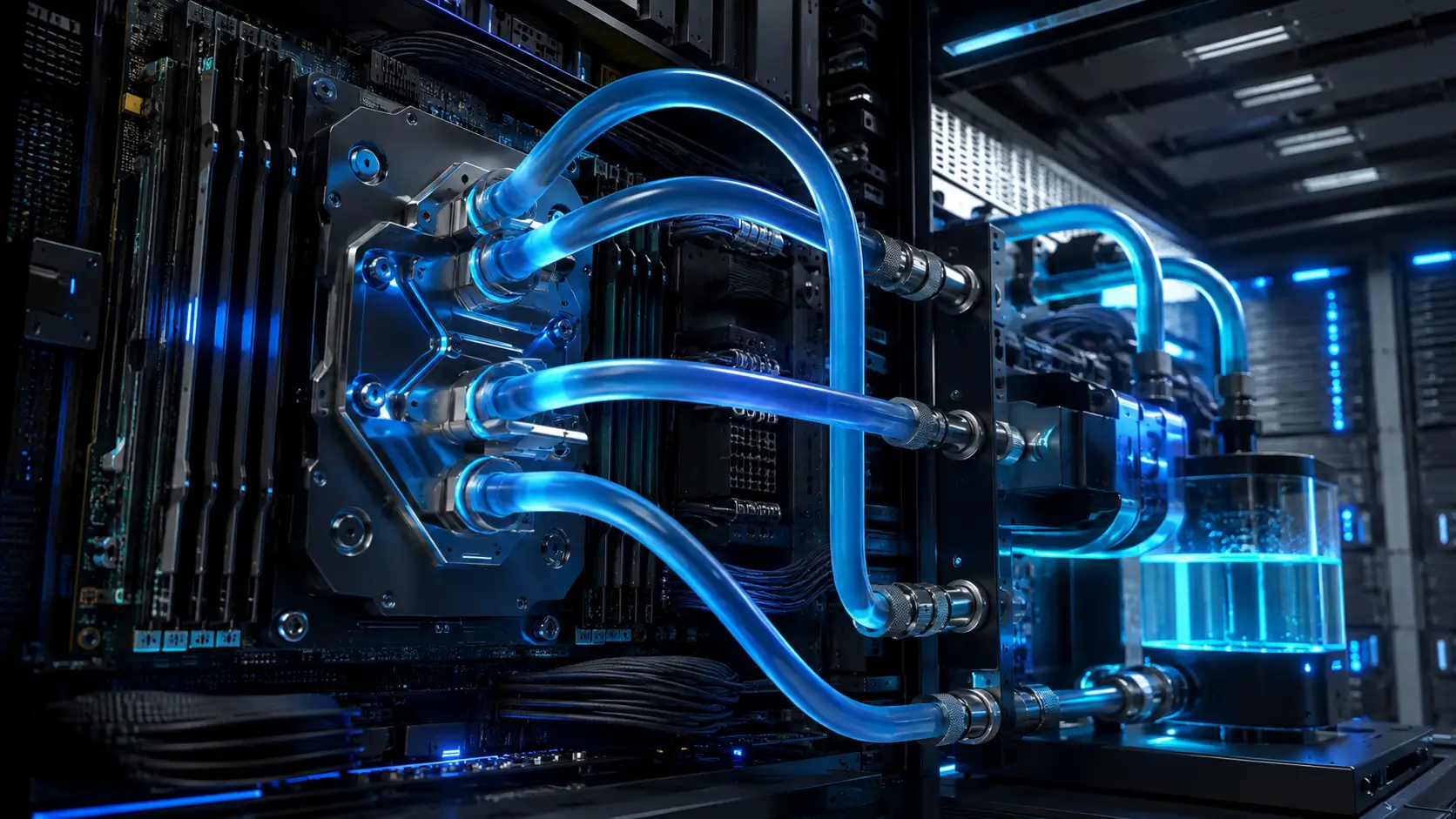
AI infrastructure is changing how operators approach thermal management. Processor density now influences the physical design of many data center environments. Chandra Mohan Mittal recently highlighted this shift in a discussion about AI workloads, GPU clusters and high-density racks. His commentary points to direct-to-chip, rear-door and hybrid cooling as important options for these environments. Cooling increasingly needs consideration alongside IT architecture and broader facility design. Higher processor heat also changes how operators plan heat removal. Operators must therefore consider rack configuration, electrical capacity, controls, maintenance access and future expansion. For end users, the key question is whether the cooling architecture matches the workload and facility requirements.

Rack density is changing the operating equation

The most consequential change for end users is the relationship between compute density and thermal density. AI and HPC systems can place significant processing capability into compact rack footprints. That concentration can also increase the amount of heat that equipment must reject. Traditional air cooling remains relevant across many data center environments. It can work well where rack density and workload characteristics match the existing thermal design. However, higher heat density can increase the value of cooling methods that capture heat closer to its source. Direct-to-chip liquid cooling does this through cold plates and associated fluid infrastructure. For end users, the important issue is how well cooling capacity matches the thermal profile of the computing equipment.

Liquid cooling introduces a broader infrastructure dependency

A liquid-cooled rack depends on more than the equipment installed inside the rack. The cooling chain can include cold plates, manifolds, hoses, CDUs, pumps, heat exchangers and controls. Facility-side heat rejection equipment also forms part of that system. Each component must work with the others to maintain required thermal conditions. The CDU can connect the facility cooling loop with the liquid loop serving IT equipment. Pumps and controls also introduce additional electrical requirements. Operators therefore need to consider cooling as part of facility resilience and broader infrastructure planning. For end users, a liquid-cooling specification should describe the complete operating system rather than one isolated component.

The hybrid model may remain important for mixed environments

The growth of liquid cooling does not mean that every data center will abandon air cooling. Data center environments can contain conventional servers, storage and networking equipment alongside higher-density computing systems. These systems can have different thermal requirements within the same facility. Hybrid cooling can provide one way to introduce liquid-based heat removal without redesigning the entire environment. Rear-door heat exchangers can support rack-level heat removal in suitable deployments. Direct-to-chip systems can address equipment with higher thermal requirements. Immersion cooling provides another option, although hardware compatibility and operating practices remain important. The strongest approach may therefore be the one that matches cooling technology with actual rack density, IT load and facility design.

Reliability has to remain ahead of efficiency

Energy efficiency is an important reason to evaluate liquid cooling. Reliability, however, remains central to any mission-critical deployment. A system that reduces energy use still needs dependable thermal control and manageable operations. Liquid systems introduce fluid-management requirements that require careful engineering and monitoring. Leak detection, commissioning and maintenance also become important parts of the operating model. Physical connections between cooling components and IT equipment require attention during service activities. Liquid-cooling deployments can also require coordination among mechanical, electrical, controls and IT teams. From an end-user perspective, reliable performance depends on both the technology and the practices used to manage it.

Cooling architecture should follow the workload, not the marketing cycle

The growth of AI infrastructure is increasing interest in cooling technologies designed for higher-density computing. Technology selection still requires workload-specific engineering. A facility built for dense GPU clusters can have different thermal requirements from a conventional enterprise environment. Rack configurations and processor generations can also vary within AI deployments. Utilization patterns and deployment models can further influence thermal requirements. These differences make blanket assumptions about liquid cooling difficult to justify. Operators should examine heat loads, rack density, facility capacity and operational requirements before selecting an architecture. Cooling should support the computing strategy rather than dictate it without evidence.

The real test will come during expansion and operations

The suitability of a cooling architecture becomes particularly important during facility expansion. The same applies when operators introduce higher-density computing equipment. AI hardware can evolve faster than the mechanical infrastructure supporting it. That difference can create a risk of future thermal or capacity constraints. Operators therefore need to consider how cooling systems can accommodate changing rack densities and equipment configurations. Fluid requirements, controls and monitoring can also change as deployments evolve. Modularity and controllability can help operators manage these changes alongside raw cooling capacity. For end users, predictable cooling performance becomes increasingly important as the compute environment changes.

The industry needs to judge liquid cooling by outcomes

Liquid cooling continues to attract attention as high-density computing changes thermal requirements. Its value should still be assessed through operational outcomes rather than technology labels. Higher compute density is useful only when surrounding infrastructure can maintain performance and availability. Energy savings also matter most when they coexist with dependable thermal control. Water requirements can influence facility planning and depend on the complete cooling architecture. Local climate, facility design and operating conditions can also affect the resource profile. Sustainability assessments should therefore rely on measurable system performance rather than assumptions about one cooling method. Current industry guidance increasingly treats cooling as part of broader data center infrastructure design.

End users will ultimately decide what becomes standard

The next phase of data center cooling is unlikely to produce one architecture for every facility. Different workloads and operating environments require different thermal strategies. Current industry evidence supports continued use of air, hybrid and liquid approaches. Each approach can serve different density, performance and facility requirements. This creates more choice for data center customers while increasing the importance of careful evaluation. Procurement teams, facilities engineers and IT leaders need to understand how cooling affects the wider infrastructure. Companies deploying AI workloads can evaluate systems through uptime, performance, efficiency, maintainability and scalability. Liquid cooling is therefore best viewed as an increasingly important tool for high-density computing rather than a universal replacement for existing cooling methods.

[simple-author-box]

More from AI Infrastructure

AI data center operators are treating cooling as a core infrastructure decision. It is

Many projections about artificial intelligence eventually collide with a less comfortable assumption: that the

An AI data center performs an unusual energy conversion: electricity becomes computation, and a

COMPUTE WEEKLY

The briefing that 40,000+ tech leaders read every Monday. Sharp, fast, essential.

Great! We’ve received your information.

Building an AI Startup Without Owning GPUs

Not owning GPUs has become the default, deliberate strategy for building an AI company — not a compromise founders accept reluctantly. H100 rental rates fell 64-75% in fifteen months, a dense ecosystem of neoclouds and inference-as-a-service providers now lets startups skip infrastructure entirely, and credit programs can fund a company’s first year before a founder writes a check
Most Read

Why Infrastructure Planning Now Starts With Availability A data center project can have a

A property can look enormous from the site entrance and still offer almost no

As rack power rises toward the megawatt range, the physical footprint of power-delivery equipment

A data center project can look complete long before it delivers usable capacity. The

AI infrastructure now affects capital planning, operating costs, asset values, and business growth. A

Disruptor Spotlight

Cerebras Systems

The chip that makes Nvidia nervous. Cerebras’ Wafer Scale Engine is rewriting the rules of AI inference at scale.
Faster
0 x
YoY Revenue
0 x
Transistors
0 T
Market Pulse
MSFT
+1.02%
NVDA
+0.66%
AMZN
-0.078%
AMD
-6.95%
TSMC
-2.98%
Indicative only · Not financial advice
Upcoming Events
SEP
The AI Infrastructure Race (India)
WEBINAR · ONLINE
The AI Infrastructure Race: Won on Power, Land and Trust — Not Capital
MAY
0
AI Infrastructure Summit
DUBAI · IN PERSON
MEA’s premier AI infrastructure event.
JUN
0 0
Compute Forecast Summit
SINGAPORE · IN PERSON
Our flagship APAC event. Early bird open.
Latest Moves
Live
ecolab
Ecolab Deepens Cooling Strategy With $4.75B CoolIT Acquisition
Ecolab is making one of its biggest moves yet into AI infrastructure after completing its $4.75 billion acquisition of liquid cooling specialist CoolIT Systems
Pure DC AVK Europe data center microgrid Dublin 110MW AI infrastructure Ireland 2026
Pure DC and AVK Deploy Europe’s First 110 MW Data Center Microgrid in Dublin
The Pure DC Dublin microgrid has made history as Europe’s first large-scale on-site data center microgrid, launched in partnership with power solutions provider AVK at Pure DC’s campus in Ireland.
Pace Digitek
Pace Digitek Partners With MEGMEET to Expand AI Data Center Power Business
India’s AI infrastructure ecosystem continues to mature as domestic technology manufacturers move beyond traditional telecommunications and industrial markets toward high-growth digital infrastructure opportunities
Follow Compute Forecast
11K followers
1200 followers
Companies to Watch
CW
CoreWeave
Neo Cloud · $19B · IPO Watch
CB
Cerebras Systems
AI Hardware · $4.25B · Pre-IPO
G42
G42
Sovereign AI · Abu Dhabi
H
Humain
Saudi AI · $40B Fund
Latest Podcast
AI Capex, Cloud Margins & the Nuclear Bet
48 MIN · 25 APR 2026

Liquid Cooling Is Becoming an Infrastructure Decision, Not Just a Thermal Upgrade

AI infrastructure is changing how operators approach thermal management. Processor density now influences the physical design of many data center

Share
liquid cooling for AI data centers
4
847 SHARES

0
SHARES

[simple-author-box]

More from AI Infrastructure

Why Infrastructure Planning Now Starts With Availability A data center project can have a

A property can look enormous from the site entrance and still offer almost no

As rack power rises toward the megawatt range, the physical footprint of power-delivery equipment

A data center project can look complete long before it delivers usable capacity. The

COMPUTE WEEKLY

The briefing that 40,000+ tech leaders read every Monday. Sharp, fast, essential.

Great! We’ve received your information.

Global AI Infrastructure Outlook 2026

The briefing that 40,000+ tech leaders read every Monday. Sharp, fast, essential.
Download Free
Most Read

Why Infrastructure Planning Now Starts With Availability A data center project can have a

A property can look enormous from the site entrance and still offer almost no

As rack power rises toward the megawatt range, the physical footprint of power-delivery equipment

A data center project can look complete long before it delivers usable capacity. The

AI infrastructure now affects capital planning, operating costs, asset values, and business growth. A

Disruptor Spotlight

Cerebras Systems

The chip that makes Nvidia nervous. Cerebras’ Wafer Scale Engine is rewriting the rules of AI inference at scale.
Faster
0 x
YoY Revenue
0 x
Transistors
0 T
Market Pulse
NVDA
$924.60
+2.4%
MSFT
$421.30
+1.1%
AMZN
$192.80
-0.6%
NVDA
$924.60
+2.4%
NVDA
$924.60
+2.4%
Indicative only · Not financial advice
Upcoming Events
MAY
0 0
DCD Global — London
LONDON · IN PERSON
World’s largest DC event. CF is media partner.
MAY
0
AI Infrastructure Summit
DUBAI · IN PERSON
MEA’s premier AI infrastructure event.
JUN
0 0

Compute Forecast Summit

SINGAPORE · IN PERSON
Our flagship APAC event. Early bird open.
Latest Moves
  • Live
Sam Altman
OpenAI appoints new Chief Infrastructure Officer to lead $100B DC programme
27 APR · OPENAI
Sam Altman
OpenAI appoints new Chief Infrastructure Officer to lead $100B DC programme
27 APR · OPENAI
Sam Altman
OpenAI appoints new Chief Infrastructure Officer to lead $100B DC programme
27 APR · OPENAI
Follow Compute Forecast
18.4K followers
12.1K followers
9.3K subscribers
41 episodes
Companies to Watch
CW
CoreWeave
Neo Cloud · $19B · IPO Watch
CB
Cerebras Systems
AI Hardware · $4.25B · Pre-IPO
G42
G42
Sovereign AI · Abu Dhabi
CW
Humain
Saudi AI · $40B Fund
Latest Podcast
AI Capex, Cloud Margins & the Nuclear Bet
48 MIN · 25 APR 2026
Scroll to Top
Seraphinite AcceleratorOptimized by Seraphinite Accelerator
Turns on site high speed to be attractive for people and search engines.