NVIDIA H200 shipments delayed to Q3  · BREAKING: Microsoft confirms 3GW data centre expansion in Asia-Pacific ·  AWS announces new sovereign cloud regions in India and UAE  · Arm-based servers now 24% of hyperscale deployments ·  EU AI Act enforcement enters phase two  · Global data centre investment hits $612B in 2026 ·  TSMC Arizona yields improve to 68% on 3nm process  · OpenAI valuation reaches $400B after latest funding round ·  NVIDIA H200 shipments delayed to Q3  · BREAKING: Microsoft confirms 3GW data centre expansion in Asia-Pacific ·  AWS announces new sovereign cloud regions in India and UAE  · Arm-based servers now 24% of hyperscale deployments ·  EU AI Act enforcement enters phase two  · Global data centre investment hits $612B in 2026

Available Data Center Space Doesn’t Mean AI-Ready Capacity

The data center industry has a measurement problem hiding in plain sight. A facility can have vacant halls, available megawatts

Share
AI-ready capacity

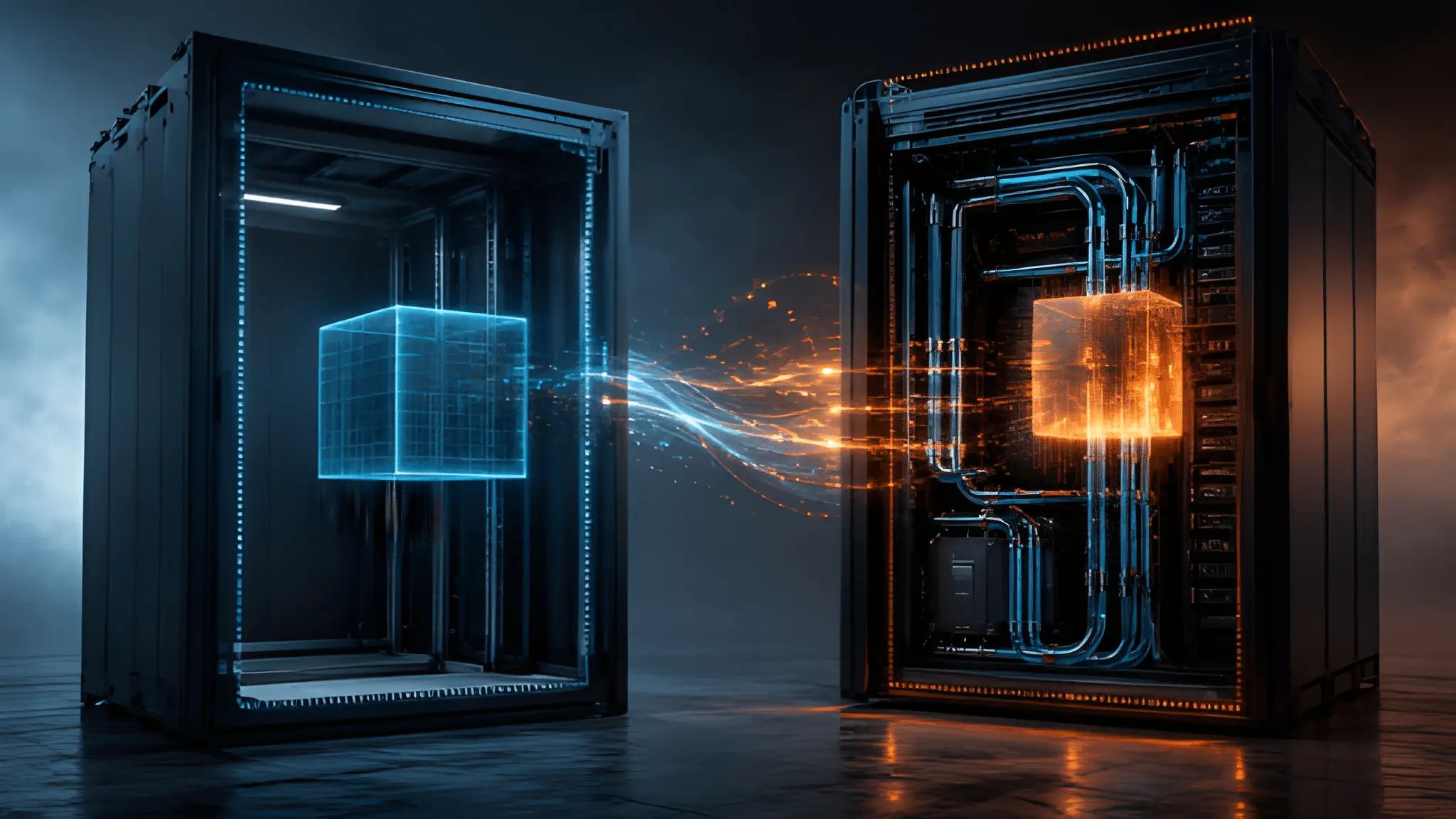
The data center industry has a measurement problem hiding in plain sight. A facility can have vacant halls, available megawatts and expansion room, yet still offer little practical value to an AI operator. The distinction matters because the infrastructure required for large-scale AI workloads no longer fits neatly inside the traditional definition of data center capacity. Some capacity metrics can make data center space appear more interchangeable than it actually is for AI deployments. If a building has floor area, power access and connectivity, it can appear ready for another customer. AI challenges that assumption.

Modern AI infrastructure places unusually high demands on rack density, power distribution, cooling, floor loading and heat rejection. Those requirements can turn an apparently available facility into what might be called phantom capacity: space that exists physically but cannot support the workload that increasingly drives demand. That changes the nature of the shortage. The question is no longer simply how many megawatts or square feet the industry has available. It is how much of that capacity can support AI without forcing operators into an expensive reconstruction project.

A vacant hall can conceal an infrastructure mismatch

Traditional capacity metrics remain useful, but they increasingly tell only part of the story. A data center operator can advertise available space while the underlying infrastructure reflects design assumptions from an earlier generation of computing. A hall configured for moderate-density enterprise servers may have ample room for racks, yet lack the electrical topology or cooling architecture required by dense accelerator deployments. The physical shell may remain usable even when its supporting infrastructure cannot meet AI requirements. The problem sits underneath it.

AI racks can concentrate substantially more power into a smaller footprint than conventional enterprise deployments. That density changes the requirements for busways, switchgear, power distribution units, backup systems and thermal management. It also changes how operators must arrange racks and airflow. A facility therefore cannot become AI-ready simply because someone can physically place GPUs inside it. The distinction resembles the difference between having an empty warehouse and having a warehouse equipped for a specialized industrial process. The floor area exists in both cases, but only one can perform the required job without significant modification. That is where phantom capacity becomes an important industry concept.

AI turns compatibility into the real capacity metric

AI infrastructure has effectively transformed capacity from a space problem into a compatibility problem. A prospective operator needs to examine the entire chain from utility interconnection to the rack. The available electrical capacity must align with the site’s distribution architecture. The cooling system must handle the expected thermal load. The floor must accommodate heavier equipment where necessary. Rack layouts must support high-density configurations, and the heat-rejection system must move the resulting thermal energy out of the facility. A weakness in any one of those layers can constrain deployment.

This creates a more complicated definition of AI-ready capacity. A facility may have 20 megawatts of nominal power available, but that figure does not automatically translate into 20 megawatts of usable AI capacity. The site’s electrical design, redundancy requirements, cooling configuration and deployment topology determine how much of that theoretical capacity an operator can actually use. The gap between those numbers can become commercially significant. It can also distort how the industry interprets supply. When market reports count available facilities without accounting for workload compatibility, they risk overstating the amount of infrastructure capable of absorbing AI demand. The resulting supply figure may look reassuring while the pool of genuinely deployable capacity remains much smaller.

Cooling exposes the phantom-capacity problem quickly

Cooling provides one of the clearest examples of why existing capacity cannot automatically support AI. Air cooling remains effective for many conventional workloads, but high-density accelerator deployments can push thermal requirements beyond the assumptions embedded in older facility designs. Operators may need liquid cooling systems, redesigned heat-rejection infrastructure or additional thermal distribution equipment to accommodate higher rack densities. That does not mean every AI deployment requires the same cooling architecture. It means the cooling system has become a more consequential constraint in determining what a facility can support.

A hall with available power but insufficient thermal capacity therefore has a practical ceiling. The same applies to electrical infrastructure. A facility may connect to a sufficiently large utility supply while its internal distribution system cannot deliver that power to racks at the density an AI cluster requires. Upgrading that topology can involve changes to electrical rooms, distribution paths, redundancy schemes or protection systems, depending on the facility’s existing design and the density of the planned AI deployment. It can require redesigning electrical rooms, distribution paths, redundancy schemes and protection systems. At that point, the industry must ask whether it still considers the facility “available” or whether it has effectively become a redevelopment project.

The economics of conversion may erase the advantage

The most uncomfortable part of phantom capacity concerns economics. Repurposing an existing facility can appear faster and cheaper than developing a new site. The building already exists, the land has already been developed, and some infrastructure remains usable. Those advantages can make brownfield conversion attractive when AI demand grows faster than new construction can deliver capacity. But the economics change when the conversion requires extensive infrastructure replacement.

A project that needs new cooling distribution, electrical equipment, structural reinforcement, rack redesign and heat-rejection upgrades may no longer represent a simple capacity conversion. It becomes a capital-intensive modernization effort with its own schedule, permitting requirements and supply-chain dependencies. The building may still provide value, but the original assumption that its capacity was immediately available becomes difficult to defend. This creates an important distinction between time to building and time to AI-ready deployment. The first metric can look favorable while the second remains constrained.

[simple-author-box]

More from AI Infrastructure

The heat problem is becoming an infrastructure problem AI data centers now face a

AI cooling infrastructure costs are becoming harder to separate from computing economics. The industry

A data center’s carbon footprint is usually discussed as if it begins when a

COMPUTE WEEKLY

The briefing that 40,000+ tech leaders read every Monday. Sharp, fast, essential.

Great! We’ve received your information.

Building an AI Startup Without Owning GPUs

Not owning GPUs has become the default, deliberate strategy for building an AI company — not a compromise founders accept reluctantly. H100 rental rates fell 64-75% in fifteen months, a dense ecosystem of neoclouds and inference-as-a-service providers now lets startups skip infrastructure entirely, and credit programs can fund a company’s first year before a founder writes a check
Most Read

Demand is broadening across enterprise workloads APAC’s infrastructure story is changing in ways that

AI infrastructure decisions increasingly influence what enterprises can build, test, and deliver. They also

Why Infrastructure Planning Now Starts With Availability A data center project can have a

A property can look enormous from the site entrance and still offer almost no

As rack power rises toward the megawatt range, the physical footprint of power-delivery equipment

Disruptor Spotlight

Cerebras Systems

The chip that makes Nvidia nervous. Cerebras’ Wafer Scale Engine is rewriting the rules of AI inference at scale.
Faster
0 x
YoY Revenue
0 x
Transistors
0 T
Market Pulse
MSFT
+1.02%
NVDA
+0.66%
AMZN
-0.078%
AMD
-6.95%
TSMC
-2.98%
Indicative only · Not financial advice
Upcoming Events
SEP
The AI Infrastructure Race (India)
WEBINAR · ONLINE
The AI Infrastructure Race: Won on Power, Land and Trust — Not Capital
MAY
0
AI Infrastructure Summit
DUBAI · IN PERSON
MEA’s premier AI infrastructure event.
JUN
0 0
Compute Forecast Summit
SINGAPORE · IN PERSON
Our flagship APAC event. Early bird open.
Latest Moves
Live
ecolab
Ecolab Deepens Cooling Strategy With $4.75B CoolIT Acquisition
Ecolab is making one of its biggest moves yet into AI infrastructure after completing its $4.75 billion acquisition of liquid cooling specialist CoolIT Systems
Pure DC AVK Europe data center microgrid Dublin 110MW AI infrastructure Ireland 2026
Pure DC and AVK Deploy Europe’s First 110 MW Data Center Microgrid in Dublin
The Pure DC Dublin microgrid has made history as Europe’s first large-scale on-site data center microgrid, launched in partnership with power solutions provider AVK at Pure DC’s campus in Ireland.
Pace Digitek
Pace Digitek Partners With MEGMEET to Expand AI Data Center Power Business
India’s AI infrastructure ecosystem continues to mature as domestic technology manufacturers move beyond traditional telecommunications and industrial markets toward high-growth digital infrastructure opportunities
Follow Compute Forecast
11K followers
1200 followers
Companies to Watch
CW
CoreWeave
Neo Cloud · $19B · IPO Watch
CB
Cerebras Systems
AI Hardware · $4.25B · Pre-IPO
G42
G42
Sovereign AI · Abu Dhabi
H
Humain
Saudi AI · $40B Fund
Latest Podcast
AI Capex, Cloud Margins & the Nuclear Bet
48 MIN · 25 APR 2026

Available Data Center Space Doesn’t Mean AI-Ready Capacity

The data center industry has a measurement problem hiding in plain sight. A facility can have vacant halls, available megawatts

Share
AI-ready capacity
0
847 SHARES

0
SHARES

[simple-author-box]

More from AI Infrastructure

Demand is broadening across enterprise workloads APAC’s infrastructure story is changing in ways that

AI infrastructure decisions increasingly influence what enterprises can build, test, and deliver. They also

Why Infrastructure Planning Now Starts With Availability A data center project can have a

A property can look enormous from the site entrance and still offer almost no

COMPUTE WEEKLY

The briefing that 40,000+ tech leaders read every Monday. Sharp, fast, essential.

Great! We’ve received your information.

Global AI Infrastructure Outlook 2026

The briefing that 40,000+ tech leaders read every Monday. Sharp, fast, essential.
Download Free
Most Read

Demand is broadening across enterprise workloads APAC’s infrastructure story is changing in ways that

AI infrastructure decisions increasingly influence what enterprises can build, test, and deliver. They also

Why Infrastructure Planning Now Starts With Availability A data center project can have a

A property can look enormous from the site entrance and still offer almost no

As rack power rises toward the megawatt range, the physical footprint of power-delivery equipment

Disruptor Spotlight

Cerebras Systems

The chip that makes Nvidia nervous. Cerebras’ Wafer Scale Engine is rewriting the rules of AI inference at scale.
Faster
0 x
YoY Revenue
0 x
Transistors
0 T
Market Pulse
NVDA
$924.60
+2.4%
MSFT
$421.30
+1.1%
AMZN
$192.80
-0.6%
NVDA
$924.60
+2.4%
NVDA
$924.60
+2.4%
Indicative only · Not financial advice
Upcoming Events
MAY
0 0
DCD Global — London
LONDON · IN PERSON
World’s largest DC event. CF is media partner.
MAY
0
AI Infrastructure Summit
DUBAI · IN PERSON
MEA’s premier AI infrastructure event.
JUN
0 0

Compute Forecast Summit

SINGAPORE · IN PERSON
Our flagship APAC event. Early bird open.
Latest Moves
  • Live
Sam Altman
OpenAI appoints new Chief Infrastructure Officer to lead $100B DC programme
27 APR · OPENAI
Sam Altman
OpenAI appoints new Chief Infrastructure Officer to lead $100B DC programme
27 APR · OPENAI
Sam Altman
OpenAI appoints new Chief Infrastructure Officer to lead $100B DC programme
27 APR · OPENAI
Follow Compute Forecast
18.4K followers
12.1K followers
9.3K subscribers
41 episodes
Companies to Watch
CW
CoreWeave
Neo Cloud · $19B · IPO Watch
CB
Cerebras Systems
AI Hardware · $4.25B · Pre-IPO
G42
G42
Sovereign AI · Abu Dhabi
CW
Humain
Saudi AI · $40B Fund
Latest Podcast
AI Capex, Cloud Margins & the Nuclear Bet
48 MIN · 25 APR 2026
Scroll to Top