 Skip to content
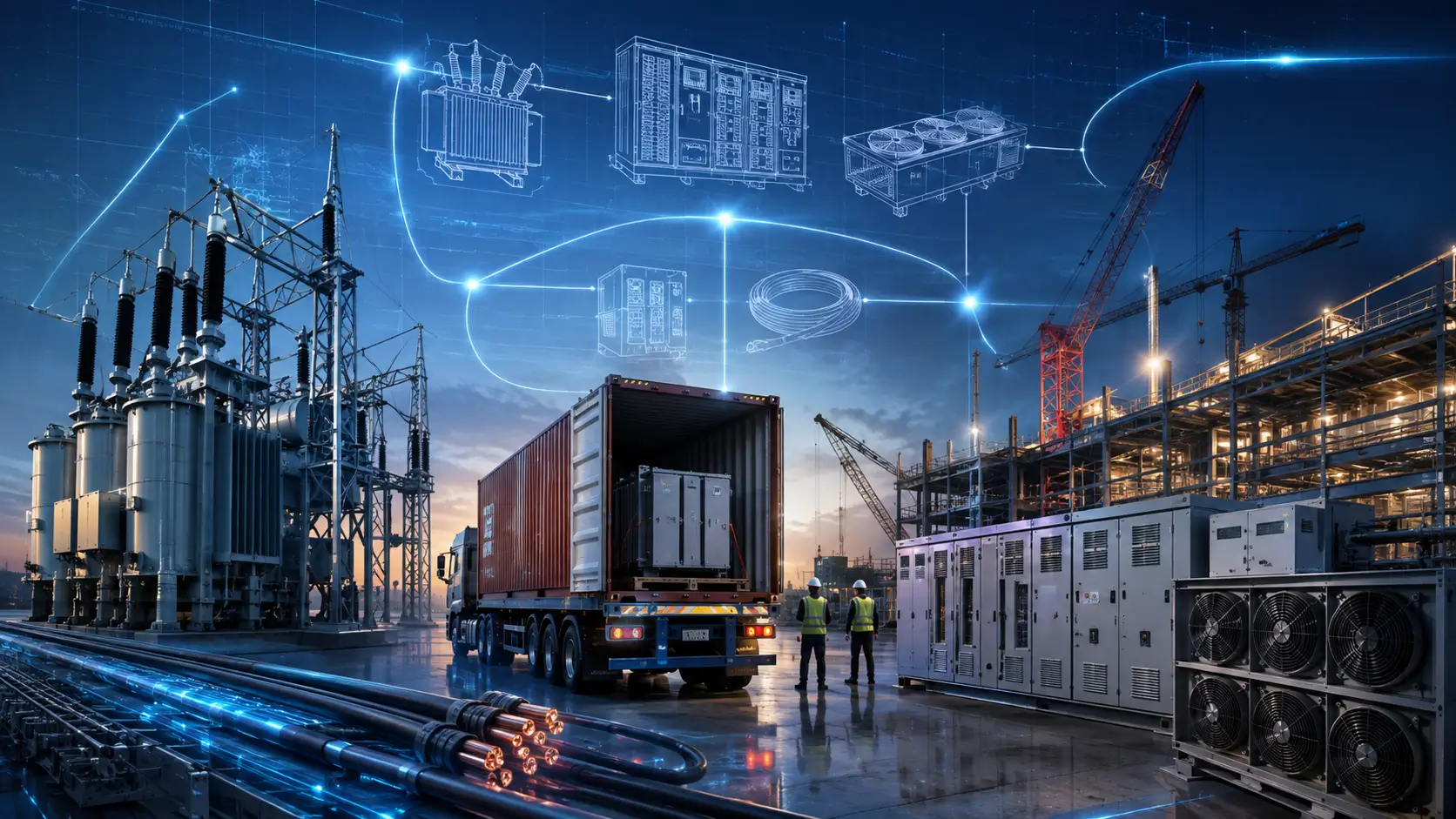
The modern AI data center faces a problem that does not fit inside a server rack. A company can secure GPUs and still wait for the infrastructure needed to use them. That gap matters because end users do not consume accelerators in isolation. They consume AI services supported by complete and operational infrastructure. Those services depend on power, cooling, networking and sufficient computing capacity. Public discussion often focuses on semiconductor and accelerator availability. GPUs remain central to both AI training and inference workloads. However, deployment also depends on many supporting systems arriving on schedule. The AI data center supply chain therefore extends far beyond the server itself.

Transformers, switchgear, busways, cabling and cooling systems support the physical environment around computing equipment. Networking gear, power electronics and control systems add further technical dependencies. These categories involve different suppliers, production schedules and installation requirements. Specialized engineers and contractors create another important layer in the process. Commissioning teams must also verify that the completed systems work together. Purchasing more equipment does not automatically expand those technical capabilities. The challenge is therefore not limited to finding one missing component. It involves coordinating many systems into a functioning computing environment. That coordination can influence when planned AI capacity becomes operational.
Capacity Delays Eventually Reach the User
A delayed data center can become an end-user issue when computing demand approaches available capacity. Providers must then manage the resources that are already operational. The effects can differ based on workload requirements and service arrangements. Announced infrastructure projects also do not necessarily represent available customer capacity. A facility may still require construction, equipment delivery or commissioning. Developers using cloud services ultimately depend on this underlying infrastructure. The impact can therefore extend beyond the construction site itself. Infrastructure delays can affect the timing of additional computing capacity. For users, the important question is when that capacity becomes accessible.
Comparing infrastructure plans only by accelerator purchases misses part of the deployment picture. Computing equipment requires a complete physical and operational environment. Power systems must support the equipment before workloads can run. Cooling systems must maintain suitable operating conditions for dense hardware. Networks must connect computing resources and move workload data. Facility systems must also be tested before entering service. Commissioning confirms that interconnected systems operate as intended. GPUs therefore provide useful computing capacity only within a functioning infrastructure environment. The AI data center supply chain determines how quickly that environment can come together.

A GPU Is Only One Part of the System
AI infrastructure discussions often emphasize servers and accelerators. Those systems provide the computing capacity used by AI workloads. However, a GPU cluster depends on several upstream infrastructure layers. Electrical systems deliver power through substations, transformers and switchgear. Distribution equipment then moves that power closer to computing loads. Power electronics help condition, convert and protect electrical supply. Each system must support the operating requirements of the facility. Equipment categories can also have different production and delivery schedules. The computing environment cannot operate as intended without this electrical foundation.
Cooling represents another essential part of the infrastructure system. Dense computing equipment generates heat that must be removed effectively. Cooling systems help maintain appropriate operating conditions across the facility. Their design can include mechanical equipment, piping and control systems. Those systems must work alongside the electrical and IT infrastructure. Installation can also depend on the completion of other construction activities. A delay in one supporting system can affect the broader project sequence. The available GPUs do not remove those physical dependencies. Usable AI capacity requires both computing hardware and operational cooling infrastructure.
Networking and Controls Complete the Environment
Networking infrastructure connects servers, storage and other computing resources. Distributed AI workloads depend on those connections to exchange data between systems. The networking layer also requires supporting power and physical installation. Controls and monitoring systems provide visibility into equipment and facility performance. Operators use these systems to manage complex infrastructure environments. These technologies add more equipment and integration requirements to each project. They may also involve separate suppliers and technical specialists. The result is a system with multiple interdependent components. A completed data center must bring those components into operation together.
Ordering equipment early does not guarantee that every dependency will arrive in sequence. Servers can reach a site before electrical systems are ready. Cooling equipment can arrive while related piping or controls remain unfinished. Networking hardware can also wait for the surrounding facility infrastructure. Contractors must coordinate work across several technical disciplines. Each discipline can follow a different construction or installation schedule. A delay in a critical dependency can affect later project activities. The process therefore follows a dependency chain rather than a simple shopping list. Individual equipment availability does not automatically create usable computing capacity.
The Real Bottleneck Is Synchronization
Infrastructure components do not share identical production cycles or delivery schedules. Some equipment can move through manufacturing and delivery more quickly. Larger electrical and mechanical systems can require longer planning periods. Providers may therefore make procurement decisions before future demand becomes fully clear. That creates a connection between capacity forecasting and infrastructure procurement. Companies must estimate future computing demand and facility requirements. Those estimates influence power, cooling and equipment planning. Actual demand may later differ from the original projections. That uncertainty can complicate infrastructure development and deployment schedules.
The challenge grows when multiple organizations expand infrastructure at the same time. They can compete for equipment, construction resources and technical services. Supply chain planning can therefore influence the overall deployment schedule. Project teams must identify the dependencies that affect the critical path. They must also coordinate procurement with construction and installation activities. Early equipment delivery does not always accelerate the entire project. Other systems may still determine when the facility can enter operation. Project conditions can differ significantly between locations and facilities. The final capacity timeline depends on how those dependencies progress.
Skilled Capacity Cannot Be Ordered Like Hardware
Hardware counts do not capture every constraint affecting AI infrastructure. Facilities also require engineers, electricians and specialized technical personnel. Expanding those capabilities requires recruitment, training and practical experience. A rapid increase in construction activity can increase demand for these services. Installation teams must coordinate electrical, mechanical and IT systems. Testing teams must then verify the performance of integrated infrastructure. Commissioning remains necessary before a facility can provide intended services. The presence of major equipment alone does not establish operational readiness. Technical service capacity therefore remains part of the broader deployment equation.
AI infrastructure also places significant demands on supporting facility systems. Higher computing density can increase the power and cooling requirements of deployments. Electrical, mechanical and IT systems must operate as an integrated environment. That integration requires coordinated design and installation work. Teams must also test the systems before they support production workloads. Manufacturing output alone does not describe available computing capacity. Delivered equipment still requires installation and operational verification. Personnel and specialized services support that transition into usable infrastructure. The supply chain therefore includes both physical equipment and technical capacity.
The Dependency Chain Extends to the End User
Developing an AI model and making it broadly accessible are separate stages. A completed model still requires infrastructure for inference and ongoing operation. That infrastructure can include computing, storage and networking resources. Providers must manage those resources based on technical and commercial requirements. Capacity constraints can influence the timing and scale of service expansion. The specific effects can vary by provider and deployment model. Businesses may also encounter different limits based on their workload requirements. Service agreements can further shape how available capacity is allocated. Infrastructure conditions therefore remain relevant after model development ends.
The same infrastructure constraints can produce different experiences across markets. Power availability varies between regions and individual locations. Equipment access and construction capacity can also differ by market. Permitting and infrastructure conditions may further affect development timelines. These differences can influence where new capacity becomes operational. End users rarely interact directly with the equipment behind those decisions. However, supporting infrastructure can influence when services become accessible. The relationship between infrastructure and availability therefore extends beyond the data center. The user experience begins only after the underlying systems become operational.
Infrastructure Planning Can Shape Product Availability
Accelerators remain essential to the development and operation of AI services. However, they represent one dependency within a larger infrastructure system. Organizations must also manage power, cooling and networking requirements. Controls and specialized services add further operational dependencies. Infrastructure planning can therefore influence when computing services support customer workloads. Investment announcements do not necessarily indicate that capacity is already operational. Hardware procurement figures also do not guarantee immediate service availability. Facilities must integrate and commission their supporting systems. The AI data center supply chain affects the timeline between investment and usable capacity.
A completed building does not automatically provide available AI computing capacity. IT equipment must be installed and connected to supporting infrastructure. Electrical systems must operate according to the facility’s requirements. Cooling systems must support the thermal demands of the equipment. Networking systems must connect the computing environment. Operators must also test and commission the integrated facility. Only then can the environment support its intended workloads. The deployment process therefore depends on coordination across several technical layers. Synchronization becomes as important as the availability of individual components.
AI Capacity Depends on the Critical Path
AI data center deployment can face constraints across several parts of the supply chain. Computing hardware can affect one project while power equipment affects another. Switchgear, cooling systems and construction resources can also influence timelines. Specialized technical services may become another limiting factor. The combination of constraints can differ between projects and regions. Power availability and local infrastructure conditions can shape those differences. Manufacturing access and permitting can also affect development schedules. No single component necessarily determines every AI data center timeline. The critical dependency can change as a project moves toward completion.
Capacity forecasts therefore depend on multiple interconnected assumptions. A company can secure computing hardware while awaiting supporting infrastructure. Power or cooling systems may still require additional work before deployment. Conversely, completed data center space can await computing equipment. Neither condition alone delivers the intended AI service. The systems must be installed, integrated and brought into operation. Operational capacity provides a clearer measure than equipment orders alone. It shows the resources that can actually support workloads. That distinction matters when evaluating infrastructure expansion.
Sequencing Determines the Final Timeline
A useful supply chain view treats AI capacity as the output of an integrated system. This approach does not reduce the importance of GPUs. Instead, it places accelerator availability within the full deployment process. A secured GPU shipment completes only one project dependency. The facility may still require power, cooling or networking infrastructure. Different projects will encounter different constraints during development. No universal bottleneck applies to every deployment. Project teams must identify the dependency affecting the critical path. That dependency can determine when planned capacity becomes operational.
Additional capital can support procurement and construction activities. However, it does not eliminate the physical steps required for deployment. Equipment still requires manufacturing, delivery and installation. Supporting systems must also be integrated and tested. Construction schedules depend on the coordination of multiple activities. A project can move quickly in one area and remain delayed in another. The supply chain challenge is therefore partly a sequencing challenge. The final schedule depends on how critical dependencies interact. End users only see the result when computing capacity becomes available.
The End User Does Not Consume a Procurement Order
Reserved manufacturing capacity does not by itself provide an AI service. Installed infrastructure also provides limited value before it enters operation. Equipment awaiting deployment cannot support customer workloads. End users benefit when computing systems operate reliably and have available capacity. Power equipment, cooling and networking can affect deployment timelines. Controls and technical services add further dependencies to the process. These factors influence the transition from investment to operational infrastructure. Semiconductor availability alone does not remove those other requirements. The AI data center supply chain therefore remains relevant to service availability.
AI data centers combine computing equipment with electrical and mechanical infrastructure. They also depend on networking systems and operational processes. These elements must work together before the facility delivers its intended services. Organizations that coordinate those dependencies can influence deployment schedules. Effective coordination can reduce delays associated with disconnected project activities. The important constraint may therefore sit outside the server itself. It may involve the infrastructure required to power or cool the equipment. It may also involve the specialists needed to install and commission it. For users, those unseen dependencies can shape when new capacity becomes available.
The next generation of AI capacity will not appear simply because more GPUs leave a factory. It requires an environment that can power and operate those systems. Cooling infrastructure must also manage the thermal demands of dense computing. Networks must connect the equipment and support workload communication. Qualified teams must install, test and commission the complete environment. Each dependency can follow its own production or delivery timeline. The final schedule depends on how those timelines align. This makes operational capacity a more meaningful measure than equipment purchases alone. The infrastructure users never see can determine when expected computing capacity actually arrives.










