
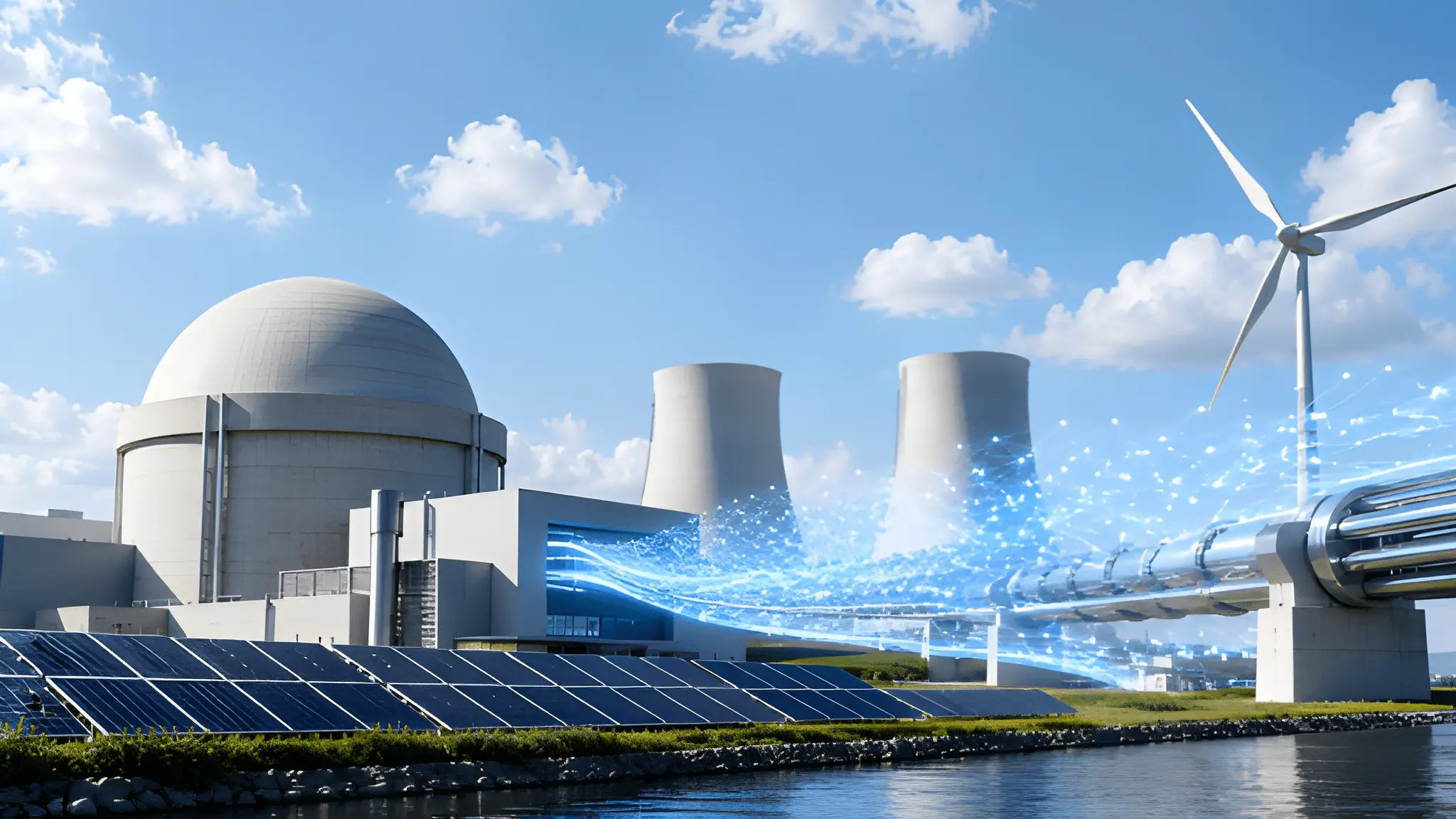
NANO Nuclear Energy has signed a non-binding Strategic Commercial Framework with Tillman Global Holdings and its data-center platform, Tillman Digital Gateway, to explore advanced nuclear power for large U.S. AI industrial zones. The agreement positions NANO Nuclear as Tillman’s anticipated preferred nuclear technology provider as the infrastructure developer expands a pipeline of power-intensive AI campuses. The companies plan to evaluate nuclear generation opportunities across Tillman’s U.S. portfolio, with potential expansion into selected international markets. Their framework connects advanced reactor development with the growing need for dependable electricity as hyperscale computing pushes campus power requirements into the gigawatt range.

The companies are targeting at least 2 GW of advanced nuclear capacity by the mid-2030s and at least 6 GW by 2040 across Tillman projects. Those targets depend on definitive agreements, customer commitments, financing, regulatory approvals and individual project requirements. Tillman’s development strategy focuses on sites that can support multiple generation sources while reserving room for advanced nuclear to provide medium- and long-term baseload power. Meanwhile, the framework gives both companies a route to move from early site assessment toward licensing, customer engagement and eventual project deployment.
KRONOS MMR brings modular nuclear into the equation
NANO Nuclear’s KRONOS MMR Energy System forms the technology centerpiece of the proposed collaboration. The company describes KRONOS as a 15 MWe High-Temperature Gas-Cooled Reactor that can support modular and phased deployment. Its architecture could allow large data-center campuses to add nuclear generation progressively as power becomes available, rather than relying on a single large generation buildout. That model fits the development pattern of AI infrastructure, where operators can expand computing capacity in stages and align power additions with demand growth.
Tillman develops, owns and scales digital and energy infrastructure, with experience spanning U.S. cell towers, fiber networks, in-building connectivity and electric vehicle charging infrastructure. The company says it has secured approximately $16 billion of capital since inception, giving the nuclear collaboration a broader infrastructure and financing platform. Tillman now applies that experience to a power-first approach aimed at serving hyperscale and AI customers that need substantial electricity with predictable delivery. However, the nuclear projects still require site-specific development, regulatory progress, financing and customer commitments before the companies can translate the framework into operating assets.
Companies align nuclear development with AI campuses
Under the framework, NANO Nuclear and Tillman will work across several stages of the nuclear project lifecycle, including site evaluation, diligence, licensing, development planning, customer engagement and deployment. Tillman brings infrastructure development, project financing and power-development capabilities, while NANO Nuclear contributes reactor technology, nuclear licensing expertise and an integrated fuel-cycle approach. That combination could give Tillman a way to incorporate nuclear generation into campus planning earlier, rather than treating nuclear power as a later addition to an established data-center site. For NANO Nuclear, the relationship also creates a potential commercial route into a pipeline where future AI tenants could generate sustained demand for new power capacity.
“Power availability is becoming one of the defining constraints on the continued expansion of AI infrastructure, and addressing this challenge will require both near-term execution and long-term planning,” said James Walker, Chief Executive Officer of NANO Nuclear Energy. “This framework represents a milestone in our future customer acquisition strategy, as Tillman brings deep infrastructure-development capabilities, access to capital and relationships across the technology ecosystem, together with a power-first approach to developing the next generation of AI campuses. By planning for nuclear at the earliest stages of site development, we believe we can establish a practical pathway to introduce reliable, baseload power as these campuses scale.”

“For NANO Nuclear, this framework represents an important potential commercialization pathway that connects our technology with an anticipated multi-gigawatt-site pipeline of power demand,” said Jay Yu, Founder and Chairman of NANO Nuclear Energy. “Importantly, the structure is intended to align both organizations around measurable project-development and commercial milestones as individual opportunities progress. We believe combining Tillman’s infrastructure-development capabilities with our nuclear technology, regulatory licensing pathway and deployment model can create a scalable foundation for future nuclear-powered AI infrastructure.”
Tillman sees nuclear as a long-term campus power option
“Meeting the extraordinary power requirements of next-generation AI infrastructure requires us to plan not only for what our campuses need today, but for the resilient, scalable power architecture they will require for decades to come,” said Sachit Ahuja, Co-President of Tillman Global Holdings. “We view NANO Nuclear as an emerging leader in advanced nuclear whose progress to date, commercially focused strategy and modular technology platform make it a compelling potential solution for our medium- and long-term power requirements. This framework combines Tillman’s infrastructure-development platform and relationships with large-scale technology customers and NANO Nuclear’s advanced nuclear capabilities, creating a pathway to benefit from the integration of nuclear generation into future Tillman campuses as our portfolio expands.”
The proposed collaboration ultimately links a modular nuclear technology platform with a development strategy built around the power demands of next-generation computing. NANO Nuclear and Tillman will also assess selected international opportunities where Tillman or its affiliates pursue large-scale digital infrastructure. The immediate focus remains the U.S. pipeline and the companies’ 2 GW-plus mid-2030s target, followed by the longer-term ambition of reaching 6 GW or more by 2040. The framework remains non-binding, making execution across regulation, financing, customers and project development the key test of whether the nuclear strategy can move from commercial planning to deployed AI power infrastructure.











