Skip to content
Europe’s AI infrastructure is becoming an energy-location story
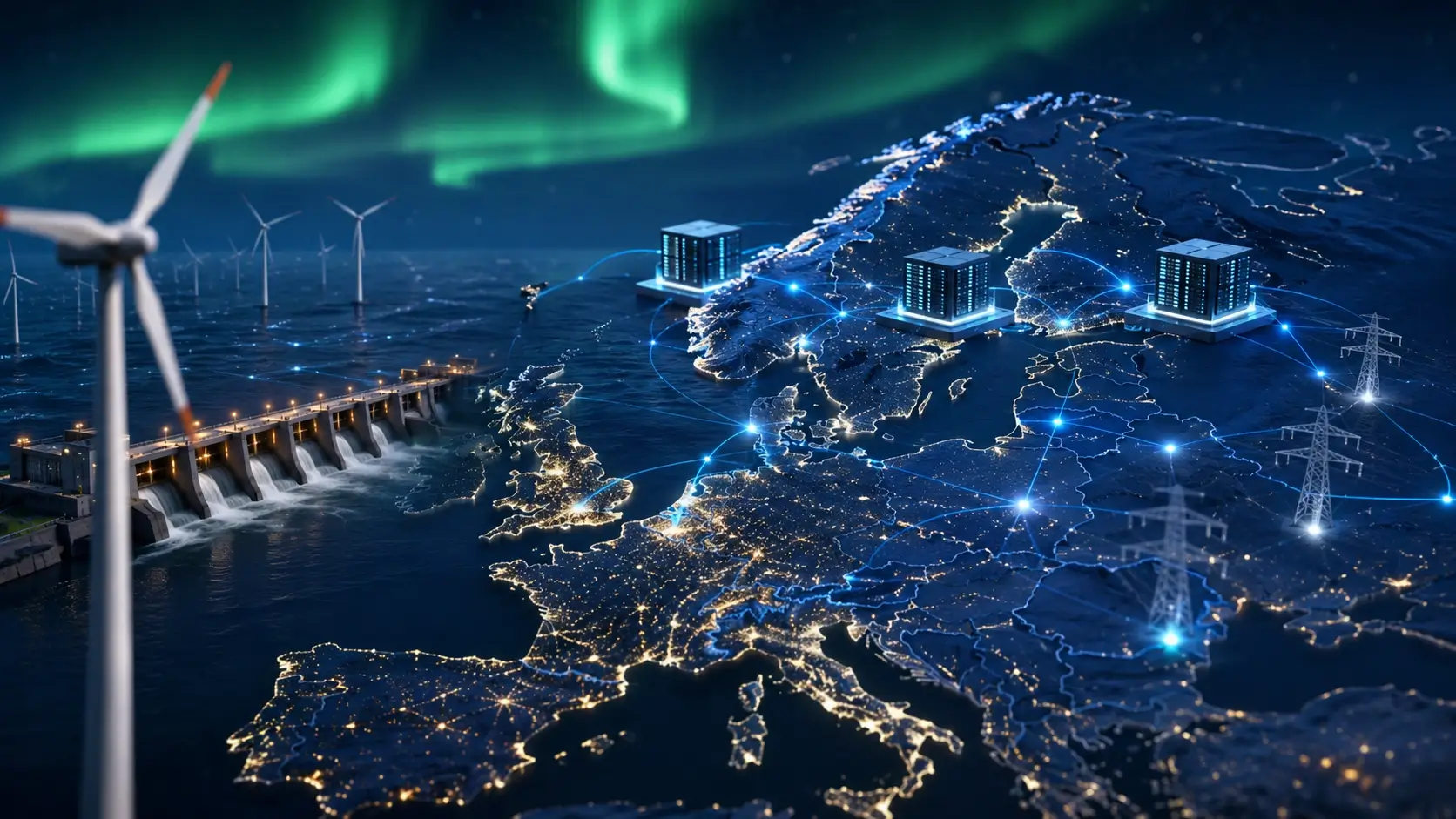
Europe’s artificial intelligence buildout is changing how developers evaluate data center locations across the continent. Computing capacity still depends on land, connectivity, skilled workers and proximity to customers, while electricity availability has become an increasingly important infrastructure variable for large AI facilities. AI workloads can create large and persistent power requirements, particularly when facilities support model training, high-performance computing and dense accelerator clusters. The International Energy Agency expects global data center electricity consumption to rise sharply this decade as digital services and AI expand. Europe faces the same structural pressure while trying to maintain its climate targets and strengthen energy security. That combination has encouraged developers to examine locations where electricity supply aligns more closely with long-term infrastructure requirements. Northern Europe has therefore gained attention because several markets combine substantial renewable generation with comparatively cool operating conditions. The physical location of electricity generation can influence the feasibility of digital infrastructure because transmission constraints can limit how much available generation a proposed data-center load can access.

The Nordic opportunity rests on several infrastructure characteristics rather than one single advantage. Norway has an electricity system dominated by hydropower, while Sweden combines hydropower, nuclear generation and rapidly expanded wind capacity. Finland produced 57% of its electricity from renewable sources in 2024, while renewable and nuclear generation together accounted for 95% of domestic electricity production. Those figures matter because large computing facilities need dependable electricity rather than simply access to occasional renewable generation. Hydropower can provide dispatchable capacity through reservoir management, while diversified generation portfolios can improve system flexibility. Sweden’s northern regions already host substantial hydropower and wind generation, creating a geographic relationship between power production and potential industrial loads. Finland has likewise developed a power system with a large fossil-free component and expanding wind generation. The resulting infrastructure profile makes northern markets relevant to companies assessing long-term electricity procurement.
Why power availability is becoming a site-selection metric
Data center developers traditionally assessed locations through land availability, connectivity, tax conditions, construction costs and customer proximity. AI changes the weighting because accelerator-heavy facilities can require much greater power density than conventional enterprise computing environments. A site may offer inexpensive land yet remain commercially unattractive if the local transmission network cannot deliver the required capacity within the project schedule. Grid connection queues have therefore become a strategic concern for developers planning large campuses. The IEA has identified grid infrastructure, transformers and other energy equipment as constraints that can slow data center expansion. Developers increasingly need to understand not only how much electricity a region generates but where that electricity can reach the proposed load. Transmission capacity, substations, interconnection timelines and local network constraints consequently influence investment decisions. Available generation capacity does not automatically translate into immediate connection capacity at a specific parcel.
The Nordic markets do not eliminate grid constraints, and treating them as unlimited power zones would misrepresent the infrastructure situation. Norway’s electricity system faces regional transmission constraints, with the IEA noting that limited transmission capacity between northern and southern areas contributes to significant differences in electricity prices between its bidding zones. Sweden faces its own transmission challenges because substantial hydropower and wind generation sits in northern areas while major demand centers remain farther south. Finland must likewise manage increasing electricity demand alongside industrial investment and renewable generation growth. These conditions mean that a data center developer still needs a detailed grid study before selecting a Nordic site. Available generation capacity does not automatically translate into immediate connection capacity at a specific location. Developers must therefore evaluate regional power prices, grid reinforcement plans, fiber routes, road access and equipment logistics together. The strongest projects will therefore combine renewable procurement with realistic transmission planning and construction schedules.

Norway brings hydropower depth to the equation
Norway presents one of Europe’s clearest examples of a power system built around hydrological resources. Norwegian Energy states that hydropower accounts for approximately 88% of the country’s normal annual electricity production. The country operates a large reservoir system that can retain water and adjust generation according to electricity requirements and market conditions. Such characteristics can provide a valuable foundation for electricity-intensive industrial activity. Data centers still require careful network planning because generation availability does not guarantee capacity at every location. Northern and western areas may offer strong renewable resources while facing different transmission and logistical conditions than the major population centers. Developers must therefore evaluate regional power prices, grid reinforcement plans, fiber routes, road access and equipment logistics together. Norway’s geography can support energy-intensive infrastructure, but the same geography can create additional engineering and construction considerations.
Norway’s hydropower system provides an important characteristic for electricity-intensive industries because reservoirs allow operators to manage generation over time. Reservoir levels, inflows, electricity demand and market conditions all influence how hydroelectric facilities operate. The system therefore differs from an electricity portfolio that depends primarily on weather-dependent generation at the moment of consumption. That flexibility can matter when large industrial consumers seek dependable electricity procurement. Norway also participates in the wider Nordic electricity market, which connects its power system with neighboring countries through interconnectors. Such connections can improve system flexibility while also exposing different regions to transmission constraints and market conditions. Regional electricity prices can vary substantially when transmission capacity limits power flows between bidding areas. A data center project consequently needs to examine both national generation characteristics and the specific grid conditions surrounding its proposed site.
Sweden combines diverse generation with industrial potential
Sweden offers a different energy configuration because its electricity system combines several large generation sources. Hydropower remains important, while nuclear generation provides a major share of electricity and wind power has expanded substantially. Official Swedish energy statistics show that hydropower, nuclear power and wind generation form the core of the country’s electricity production. Northern Sweden contains significant hydropower and wind resources, which can support industrial electrification and new electricity demand. Data center operators can therefore examine locations near generation while assessing transmission availability and regional demand. Sweden’s electricity market also operates within the wider European power market, meaning prices respond to supply, demand and cross-border transmission conditions. This structure can create opportunities for large consumers while retaining exposure to broader European market dynamics. The result is a market where renewable access and system diversity can support data center development without removing the need for detailed power planning.
Sweden’s northern electricity resources have become particularly relevant as industrial projects seek access to large quantities of lower-carbon power. Hydropower provides a substantial generation base, while wind development has increased the availability of renewable electricity in several areas. Nuclear generation adds another source of low-carbon electricity to the national system. The combination creates a power portfolio that differs from Norway’s stronger dependence on hydropower. Large electricity consumers must still consider how regional generation connects to the transmission system before committing to a location. Transmission capacity can determine whether a project can access available generation within its required development timeline. The availability of renewable electricity therefore needs to be assessed alongside grid connection conditions. Sweden’s infrastructure profile can support energy-intensive development, but the commercial case remains dependent on project-specific electricity and network conditions.
Finland adds renewable growth and AI computing capacity
Finland has emerged as another important location in Europe’s digital infrastructure landscape because its electricity system combines nuclear power with growing renewable generation. Statistics Finland reported that renewable sources produced 57% of Finnish electricity in 2024. Wind power became the country’s second-largest electricity production source after nuclear power during that year. Such a generation mix provides an important foundation for electricity-intensive facilities that seek lower-carbon power procurement. Finland also has an established high-performance computing ecosystem, demonstrated by the LUMI supercomputer hosted in Kajaani and the planned LUMI-AI system that will expand the country’s role in European AI computing infrastructure. The European Union has now selected Finland for another major AI-focused supercomputer, LUMI-AI, scheduled for operation in the second half of 2027. This development strengthens Finland’s role within Europe’s emerging AI computing architecture.
Finland’s computing infrastructure provides a useful example of how energy strategy and advanced computing can develop alongside each other. The LUMI supercomputer operates in Kajaani and forms part of Europe’s EuroHPC infrastructure network. The facility demonstrates Finland’s established capacity to host high-performance computing workloads at substantial scale. LUMI-AI will add a dedicated AI-focused computing capability to the same broader Finnish ecosystem. The new system is expected to support artificial intelligence research and development across Europe when it enters operation. Its planned deployment also illustrates how public investment can reinforce national computing capabilities beyond conventional commercial data center development. Finland’s electricity system provides another relevant component because nuclear and renewable sources account for most of its electricity production. The combination gives Finland a distinctive position in Europe’s developing AI infrastructure landscape.
Cooler climates can influence cooling economics
Temperature matters because cooling represents a significant part of data center infrastructure design and operating expenditure. Northern European climates can provide more opportunities for air-side or economizer cooling during suitable outdoor conditions. A lower ambient temperature can reduce the mechanical cooling workload when the facility design allows operators to use outside air effectively. The benefit depends on humidity, facility architecture, equipment specifications and operating requirements rather than geography alone. AI systems introduce another complication because high-density accelerator racks can generate substantially more heat than conventional server deployments. Liquid cooling can address those thermal densities, while facility-level systems still need to reject heat efficiently. Cooler weather can therefore complement advanced cooling architecture rather than replace it. Developers must evaluate annual temperature profiles, humidity conditions and cooling system design before assigning a specific efficiency advantage to a location.
The cooling advantage becomes more complex when operators consider the full mechanical system rather than only outdoor temperature. AI racks can require liquid distribution systems, heat exchangers, pumps and sophisticated control architectures. These systems must maintain stable thermal conditions even when computing loads change rapidly. Northern climates can reduce the workload of certain heat-rejection systems, but they do not remove the need for resilient mechanical infrastructure. Operators must account for local winter conditions, equipment maintenance and seasonal construction constraints when designing facilities in northern locations. Remote sites may require additional protection for external mechanical equipment and critical supply routes. Construction teams must likewise account for weather when scheduling heavy equipment deliveries, lifting operations and commissioning activities. A technically sound Nordic facility therefore treats climate as one input within a broader thermal and resilience model rather than as a standalone cost advantage.
Renewable procurement is becoming more sophisticated
Renewable electricity procurement gives data center operators another mechanism for managing the environmental profile of large computing loads. Power purchase agreements can connect corporate electricity demand with renewable generation projects through contractual arrangements that support long-term energy procurement. Such agreements do not necessarily mean that every electron consumed by a facility comes directly from a dedicated wind or solar plant at every moment. The physical grid continues to balance generation and demand across interconnected systems. Developers therefore need to distinguish between contractual renewable procurement, physical electricity supply and hourly system conditions. The distinction matters more as regulators and customers demand greater transparency around energy performance. The IEA has documented the use of renewable power purchase agreements by data-center operators as part of broader corporate clean-electricity procurement strategies. Strong procurement strategies can support renewable investment while giving operators greater visibility into long-term electricity costs and sustainability objectives.
European policy is pushing operators toward greater transparency around data center energy performance. The revised Energy Efficiency Directive introduced reporting requirements for data centers with significant energy demand, while the European Commission established a common reporting framework through delegated regulation. Operators must provide information that supports assessment of energy and environmental performance. The Commission is developing a broader data center energy efficiency package that includes work on rating systems and minimum performance standards. These measures create stronger incentives for developers to consider energy efficiency during site selection and facility design. Sustainability therefore moves from a marketing attribute toward a measurable operational characteristic. Data center investment decisions increasingly need to account for energy performance metrics alongside power availability and commercial economics. Renewable procurement consequently sits within a broader framework that connects electricity sourcing, reporting and operational efficiency.
Waste heat can change the value proposition
Electricity consumption is not the only resource consideration shaping data center development in Europe. Computing facilities convert most of their electrical input into heat, creating a continuous thermal output that operators must manage. Traditional facilities reject that heat through cooling systems, but some projects can redirect usable thermal energy into nearby heating networks. The economic case depends on temperature levels, distance to consumers, seasonal demand and the infrastructure required to connect the facility with the heat network. District heating systems can create a practical destination for recovered heat in locations with suitable urban or industrial demand. Stuttgart has become an example discussed in the industry because a data center project has pursued integration with a regional district heating system. Such arrangements are best integrated into facility planning from the beginning because thermal recovery requires appropriate equipment and a connection to a receiving network. Waste heat therefore becomes an infrastructure design question rather than a simple sustainability add-on.
The Nordic opportunity should not rely on a simple assumption that every data center can export useful heat. Many remote locations lack nearby district heating demand, and seasonal heating requirements can limit the amount of heat that a network can absorb. Temperature quality also matters because low-grade heat may require heat pumps before it can serve certain applications. Facility operators therefore need to evaluate nearby buildings, industrial processes, municipal networks and future heat demand during site selection. A data center located close to a suitable heat customer can create a different resource profile from one built in an isolated industrial zone. Heat recovery can reduce wasted thermal energy while creating potential value for another infrastructure system. European energy policy increasingly recognizes waste heat as a resource that can support efficient heating and cooling networks. Developers that integrate thermal planning early can therefore improve the technical options available after commissioning.
Grid resilience remains critical for AI workloads
Reliable electricity is as important as renewable procurement for AI infrastructure because large computing facilities require continuous power while operators increasingly seek lower-carbon electricity supplies. Large computing facilities can operate continuously, making interruptions expensive and operationally disruptive. Operators therefore use multiple layers of resilience, including redundant power paths, uninterruptible power systems, backup generation and energy storage. AI workloads can introduce high and rapidly changing power demand as accelerator clusters increase utilization. Electrical infrastructure must respond to those changes while maintaining stable voltage and frequency conditions. Battery energy storage can support short-duration events, peak management and selected forms of demand flexibility. Batteries cannot substitute for sufficient generation or transmission capacity, but they can improve operational flexibility when integrated into a broader power architecture. The resulting infrastructure model can treat the data center as an active participant in the electricity system rather than simply as a passive electricity consumer when operators use storage, flexible demand or other grid-interactive technologies.
Europe’s power challenge extends beyond generation because electrical equipment itself can constrain project schedules. Transformers, switchgear, cables and other grid components require manufacturing capacity and long procurement cycles. The IEA has identified supply-chain constraints across several energy technologies as data center investment accelerates. A developer can therefore secure land and negotiate renewable power while still waiting for the electrical infrastructure needed to energize the facility. This creates a stronger incentive to select locations with existing substations, transmission capacity and credible grid expansion plans. Nordic sites can benefit from strong generation resources, but they still require project-specific assessments of network capacity and connection timing. Large AI campuses may need dedicated substations or transmission upgrades that can take years to plan and construct. Site selection must consequently integrate energy engineering with real estate, permitting, construction and technology deployment schedules.
Northern geography creates operational trade-offs
Moving computing infrastructure north does not eliminate the practical challenges associated with geography. Remote sites can increase transportation distances for servers, transformers, generators, cooling equipment and replacement components. Severe winter weather can complicate road transportation and construction schedules in some northern regions. Snow, ice, high winds and limited daylight can affect logistics planning even when the operating facility itself performs reliably. Developers must therefore establish resilient supply routes and maintain appropriate inventories for critical components. Fiber connectivity requires similar attention because remote locations can require diverse network paths to provide appropriate resilience rather than relying on a single connection. Construction contractors must account for seasonal conditions when sequencing civil works, electrical installation and commissioning activities. Nordic development can therefore offer energy advantages while demanding stronger logistics and contingency planning.
Local infrastructure and community considerations will influence whether northern projects can expand at the pace investors expect. Data centers can create construction activity, technical employment and demand for supporting services, yet they can also place new pressure on electricity networks and local infrastructure. Planning and permitting authorities typically assess factors such as land use, infrastructure requirements, water use, noise, traffic and environmental impacts when evaluating data-center projects. European policy increasingly connects data center development with energy efficiency and resource management. The European Commission’s reporting framework seeks better visibility into electricity use, water footprint and other sustainability indicators. Developers therefore face a more detailed planning environment than the traditional model of securing land and building capacity. Strong projects will need transparent resource assessments and credible plans for managing local infrastructure impacts. Northern Europe can attract investment, but successful development will depend on how well projects fit within regional energy and community systems.
Europe’s AI strategy is reinforcing the northern shift
Europe’s investment in AI computing capacity gives the Nordic region another strategic dimension beyond private hyperscale development. The European Union’s EuroHPC programme has expanded access to advanced computing through a network of supercomputing and AI facilities. Finland’s selection for LUMI-AI demonstrates how European institutions are placing AI capacity in locations with established high-performance computing infrastructure. The project will sit alongside the existing LUMI supercomputer and is scheduled to become operational during the second half of 2027. This concentration can strengthen technical ecosystems around advanced computing, networking, cooling and research infrastructure. It can also increase demand for specialized engineering and operational expertise in the surrounding region. Such projects do not automatically guarantee commercial data center growth, but they contribute to an ecosystem that supports high-density computing. The combination of public computing investment and private infrastructure development can therefore reinforce the region’s relevance to Europe’s AI ambitions.
Finland’s position within the European AI computing network illustrates how infrastructure decisions can extend beyond commercial hyperscale facilities. Publicly supported supercomputing projects provide computing resources for researchers, companies and other organizations that need advanced computational capacity. The LUMI-AI deployment adds another layer by focusing infrastructure specifically on artificial intelligence workloads. Such facilities require substantial electricity, cooling and networking capabilities, making their location dependent on more than research demand alone. Finland’s existing LUMI infrastructure provides an established technical base for this type of deployment. The planned expansion can also increase the importance of local expertise in high-performance computing operations and infrastructure management. These developments do not determine where every private AI data center will be built. They do, however, demonstrate how European AI infrastructure is increasingly connecting computing capacity with energy and physical infrastructure decisions.
The investment map is becoming more distributed
European data center development is no longer defined solely by established metropolitan markets. Major hubs such as London, Frankfurt, Amsterdam, Dublin and Paris continue to provide strong connectivity, customer access and established digital ecosystems. Yet electricity constraints, permitting pressures and land availability can limit how quickly these markets add large amounts of new capacity. Selected northern European markets offer a combination of substantial renewable or fossil-free electricity generation, comparatively cool climatic conditions and, in some locations, land suitable for large-scale development. That does not make them automatic replacements for established hubs because latency, network diversity and customer requirements still matter. AI workloads can sometimes support greater geographic flexibility than latency-sensitive applications, depending on the workload and architecture. Training, batch processing and some high-performance computing applications can operate farther from major population centers when network requirements permit. Site selection will therefore increasingly depend on matching workload characteristics with energy, connectivity and infrastructure conditions.
Established European data-center hubs retain important advantages that northern locations cannot easily replicate. Proximity to customers can reduce network latency and simplify connections to enterprise systems, cloud platforms and major internet exchanges. Mature markets also offer established contractor networks, telecommunications infrastructure and operational expertise. Northern sites can offset some of those disadvantages when electricity availability and land conditions provide sufficient economic value. AI workloads create an additional variable because some computational processes can tolerate greater physical distance from end users. Training workloads, for example, do not always require the same latency characteristics as interactive applications. Batch processing can also operate in locations where network connectivity remains strong but customer proximity is less critical. The resulting market structure is more likely to involve workload-specific geographic decisions than a simple replacement of established European data-center hubs.
What the next phase of data center development will require
The emerging model for European AI infrastructure places power strategy at the center of development planning. Renewable generation can reduce exposure to carbon-intensive electricity, while diversified power systems can strengthen long-term energy security. Cooler climates can improve the operating conditions for selected cooling architectures, particularly when engineers combine outside-air systems with advanced liquid cooling. Grid access remains essential because renewable generation alone cannot deliver a data center connection without adequate transmission and distribution infrastructure. Waste heat recovery can create additional value when projects sit near suitable district heating or industrial demand. Energy storage can provide operational flexibility and support resilience without replacing generation or grid expansion. Current EU policy requirements are increasing the amount of information available about data-center energy and environmental performance through mandatory reporting and harmonised indicators. Taken together, these factors suggest that Europe’s next wave of AI facilities will be shaped less by a single location advantage and more by the quality of the entire infrastructure system surrounding each site.
Northern Europe therefore stands at an important point in the evolution of Europe’s digital infrastructure strategy. Its appeal comes from measurable characteristics such as renewable electricity generation, fossil-free power systems, cooler conditions and growing computing infrastructure. Norway brings an exceptionally hydropower-intensive electricity system, Sweden combines hydropower, nuclear generation and wind power, and Finland has developed a largely fossil-free electricity system alongside advanced computing capabilities. Each country has distinct infrastructure considerations, including transmission capacity, grid-connection requirements, permitting conditions, logistics and regional power availability. The strongest investment cases will need to demonstrate reliable grid access, competitive power procurement, resilient cooling, suitable fiber connectivity and realistic construction schedules. Europe’s policy direction reinforces this approach by demanding greater transparency around data center energy and environmental performance. Ultimately, the northward movement is not simply about finding colder locations or cheaper renewable electricity; it reflects a broader shift toward locating AI infrastructure where power, cooling, networks, land and energy systems can work together over the full operating life of the facility.