
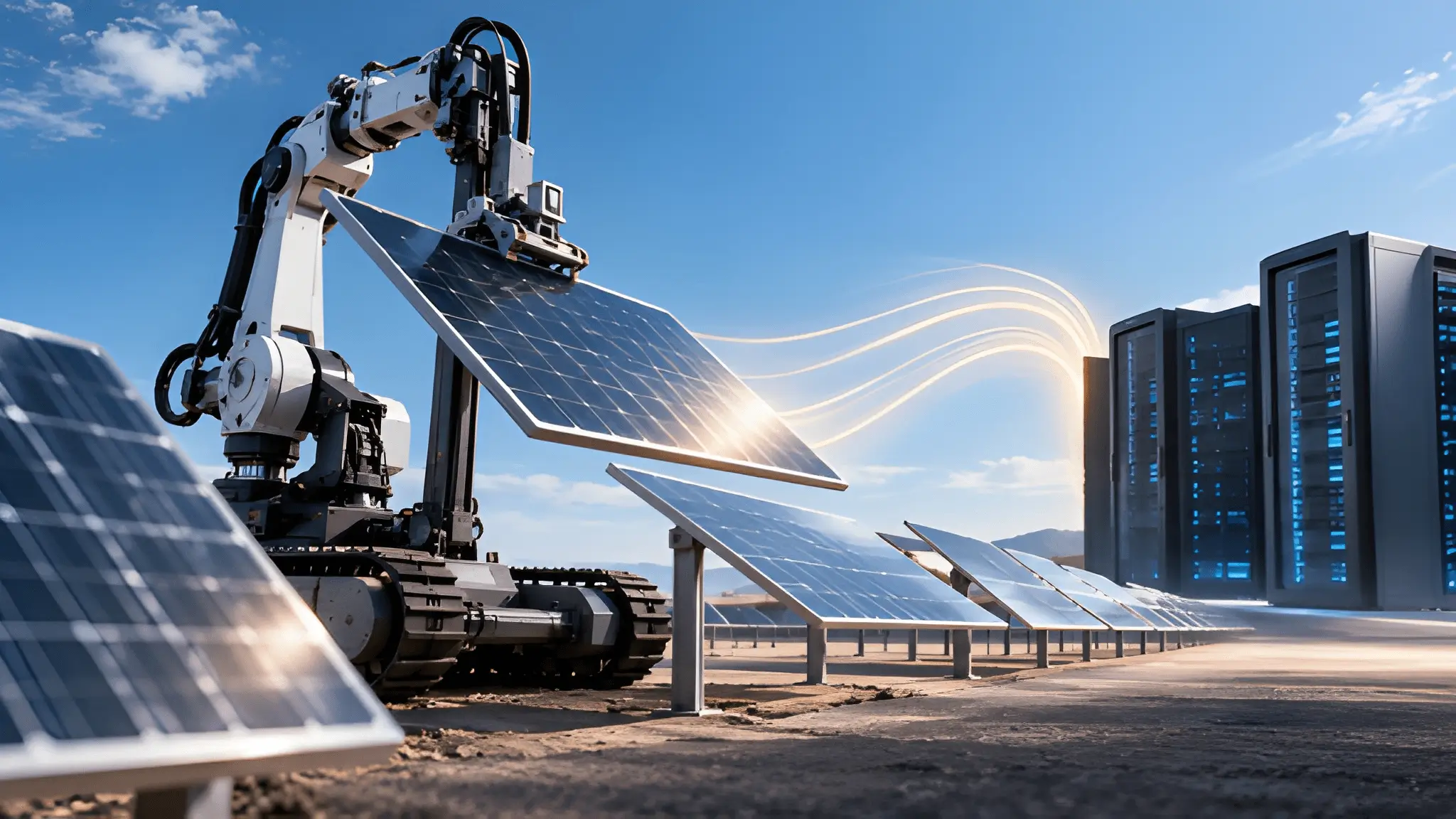
Google is adding another piece to its growing clean-energy strategy as electricity demand from AI infrastructure continues to accelerate. The company has backed Planted Solar, which has raised $31.8 million in a Series B round led by Piva Capital and RA Capital Management Planetary Health, with participation from Google, Khosla Ventures, Breakthrough Energy Ventures and Gigascale Capital. Planted is targeting a specific infrastructure bottleneck: deploying new solar capacity quickly enough to serve large energy buyers, including data center operators.

The Oakland-based company combines planning software, digital site models and field robotics to rethink how solar projects get built. Its system creates a digital twin that maps component locations before robots install them across uneven terrain, allowing projects to avoid extensive grading and use simpler structural components. Planted says its approach can reduce land requirements while accelerating construction, a combination that matters as data center developers face tighter timelines, constrained grid capacity and growing scrutiny over land use.
Planted Wants Solar Construction to Work Like Manufacturing
The company’s current deployment model uses modified tracked machines equipped with its robotics and control systems. Human operators currently guide the first-generation machines, while Planted plans to introduce Sage, a next-generation platform designed to operate autonomously and deliver more than twice the field productivity of its existing fleet. The funding will expand that robotic fleet as Planted works through a pipeline exceeding 20 GW, according to the company. Its existing fleet remains committed through 2027, making robot manufacturing a central constraint on how quickly Planted can increase deployment capacity. Planted plans to move from more than 10 MW deployed in 2025 to 100 MW in 2026 and as much as 1 GW in 2027.
Planted did not start specifically as an AI infrastructure company. Its broader thesis is that solar construction needs to become faster, more automated and more adaptable if renewable generation is going to keep pace with rapidly rising electricity demand. That thesis increasingly intersects with data centers. Planted says its most recent project included a 28 MW behind-the-meter installation serving a neocloud data center, moving from the initial customer conversation to power in 10 months, with field construction taking less than three months.

“We’ve thought about this very deliberately to cut all of the steps and processes [that can be eliminated], and automated what’s left over,” Eric Brown, Planted’s CEO, said. For Google, the investment fits a broader push to connect new electricity supply with the infrastructure driving AI growth. The company has pursued solar, storage, nuclear, geothermal and other clean-energy arrangements while also exploring approaches that can add capacity around data center demand.
Google Is Funding a Different Kind of Speed-to-Power Bet
Planted’s technology is also becoming a tool for navigating one of renewable energy’s less technical problems: local permitting. In Illinois, the company is working on a 7.3 MW community solar project that initially faced opposition over land use, property values and setbacks. The project encountered rejection from a county zoning board before a redesigned layout reduced the required land footprint and expected topsoil disturbance. The redesign helped address community concerns and put the project back on track. That matters for data center power because speed does not depend only on hardware or grid connections. Local approvals, available land, construction labor and project design can all become schedule constraints, making automation valuable beyond the solar field itself.
Planted’s funding puts robotics at the center of its expansion strategy rather than treating automation as an incremental construction upgrade. The company’s model depends on manufacturing more machines, deploying them across projects and increasing output as the fleet grows. The larger question is whether that manufacturing-style approach can scale from individual projects into the gigawatt range without recreating bottlenecks elsewhere in development. For AI infrastructure developers racing against fixed power-delivery schedules, Planted is betting that faster solar construction can become one more lever for closing the widening gap between electricity demand and available generation.











