
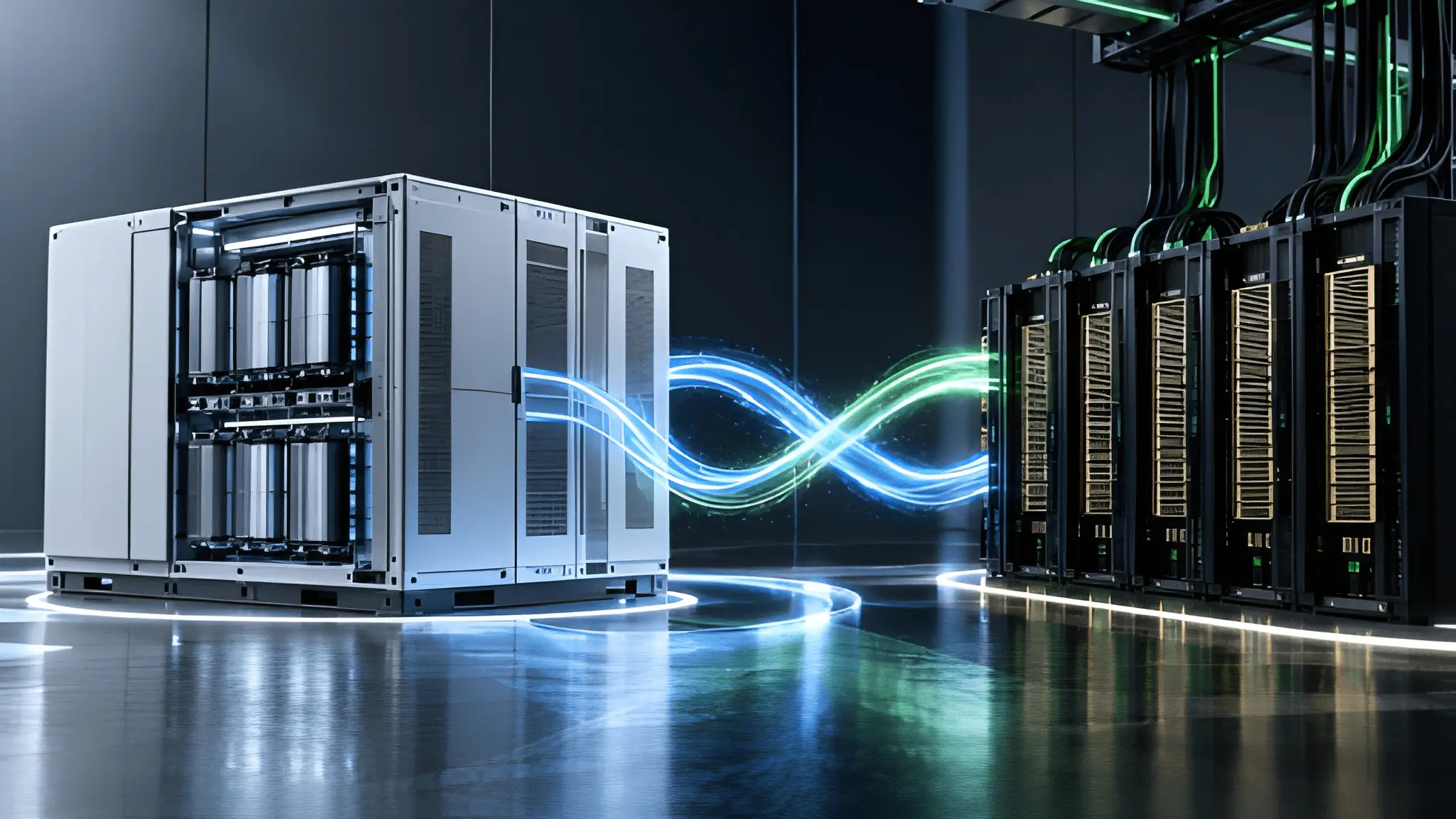
LG Energy Solution has secured NVIDIA DSX Ready qualification for its battery energy storage system (BESS), adding its technology to NVIDIA’s qualified ecosystem for AI factory infrastructure. The qualification connects the battery maker’s energy-storage technology with NVIDIA’s broader approach to designing AI factories, where computing hardware increasingly depends on coordinated power, cooling, networking and facility systems. That shift matters because AI facilities place unusual demands on electrical infrastructure, combining large power requirements with workloads that can change rapidly as computing systems operate at high intensity. LG Energy Solution says its qualified BESS meets the applicable requirements for AC energy storage solutions under the NVIDIA DSX Ready program. The company can now position the system within an ecosystem where energy storage increasingly sits alongside the electrical architecture supporting accelerated computing.

AI Infrastructure Is Changing the Role Of Battery Storage
The NVIDIA DSX Ready qualification sits within NVIDIA’s DSX framework, which brings computing, networking, power, cooling, facilities and software together as components of AI factory design and operation. NVIDIA DSX AI Factory Platform brings computing, networking, power, cooling, facilities and software into a broader infrastructure framework intended to support the deployment and operation of AI systems. That architecture places power availability closer to the center of the discussion because advanced computing cannot operate reliably when electrical infrastructure cannot respond to its requirements. Data center developers therefore need to consider more than available grid capacity when evaluating power infrastructure for AI facilities, including the electrical functions that NVIDIA’s DSX framework addresses. They must also consider how electrical systems respond when computing demand shifts, how equipment maintains voltage stability and how backup resources interact with the wider power architecture.
Battery storage can provide a controllable layer between the electrical grid and a large computing facility, allowing operators to manage specific power conditions without relying entirely on the grid response. In an AI environment, that capability can become particularly relevant when computing loads change faster than conventional electrical infrastructure can comfortably accommodate. A BESS can respond to changes in power demand, support voltage conditions and provide additional flexibility while the broader electrical system manages the underlying supply. This does not make batteries a replacement for transmission, distribution or generation capacity, but it changes how developers can think about the relationship between those systems and the data center. LG Energy Solution is positioning its system around functions including AI load smoothing, voltage ride-through and power reliability, while also linking the technology to efforts to bring additional power capacity online faster.
Modular Architecture Targets AI Power Requirements
LG Energy Solution’s qualified system uses modular 2.5 MW/5.1 MWh battery blocks, creating an architecture that can expand as customer requirements develop. Instead of forcing every project into a single fixed storage configuration, the modular approach allows customers to combine battery blocks according to their power and energy needs. That distinction becomes important for AI infrastructure because project requirements can change as operators add computing capacity, introduce new workloads or expand a facility in stages. A storage architecture that can scale alongside those changes gives developers another tool for aligning electrical infrastructure with the pace of compute deployment. LG Energy Solution also incorporates an integrated AC architecture that supports grid-forming capability, fast response and voltage ride-through. Together, those features position the system as an active electrical asset designed to interact with the operating conditions around it.

The technical architecture also reflects a broader industry movement toward treating power quality and power responsiveness as part of AI infrastructure design. Traditional data center planning often centers on continuous availability, redundancy and backup generation, with batteries playing a defined role within an uninterruptible power supply chain. AI facilities add another dimension because the electrical profile of accelerated computing can introduce rapid changes that require infrastructure to react without compromising equipment operation. That creates space for storage systems that can provide short-duration power flexibility while supporting the wider electrical network. LG Energy Solution’s emphasis on grid-forming capability also points toward a future in which storage systems can contribute more directly to the behavior of electrical infrastructure rather than simply absorb or release energy. The result is a shift in how BESS technology can be evaluated, with response characteristics and integration capabilities becoming as strategically relevant as storage capacity.
NVIDIA Qualification Creates A New Market Position
For LG Energy Solution, the qualification gives its BESS a recognized position within NVIDIA’s DSX Ready ecosystem for AI factory infrastructure. The company has already operated across energy storage applications, but alignment with NVIDIA’s DSX Ready program associates its BESS technology with an infrastructure architecture specifically shaped around accelerated computing. That association can matter as data center developers increasingly look beyond servers and networking when assessing whether a location can support AI workloads. Power infrastructure has become a defined component of NVIDIA’s AI factory architecture, with the DSX framework explicitly incorporating power alongside computing, networking, cooling, facilities and software. A qualified storage system can therefore be evaluated as part of the power infrastructure supporting AI factory deployments, although NVIDIA’s qualification does not replace project-specific engineering or site-level validation.
“Being selected as a partner for NVIDIA’s first-ever DSX Ready program validates the strength and competitiveness of our BESS products,” said Chang Beom Kang, Head of ESS Battery Division at LG Energy Solution. “Building on our differentiated local manufacturing capabilities and technology leadership, we will further expand our digital infrastructure business and accelerate growth in this rapidly evolving market,” he added. Those comments underline the company’s broader ambition around digital infrastructure rather than treating the NVIDIA qualification as a narrow technical endorsement. The strategic opportunity extends from the qualification itself to the manufacturing and integration capabilities that LG Energy Solution can bring to projects seeking localized supply. AI infrastructure developers increasingly need predictable equipment availability alongside engineering compatibility, particularly when electrical infrastructure has become one of the factors governing deployment schedules.
North American Manufacturing Adds Strategic Weight
The company is also building its North American position as demand for energy storage expands across data centers, infrastructure projects and utility-scale applications. LG Energy Solution said it plans to secure more than 50 GWh of LFP battery-cell production capacity by the end of 2026 through five regional production facilities. That manufacturing strategy matters because the AI infrastructure market increasingly intersects with industrial policy, domestic supply requirements and project-level incentives. Developers are not simply choosing technology based on technical specifications; they must also consider where equipment originates, how systems move through the supply chain and whether projects can qualify for applicable incentives. LG Energy Solution says its localized supply chain covers battery-cell manufacturing, pack production and system integration. That combination gives the company an opportunity to connect its battery manufacturing footprint with the infrastructure requirements emerging around AI power demand.
Its ESS portfolio extends across system integration, DC battery containers and PCS-integrated AC battery-container solutions, giving the company multiple ways to approach storage projects. The North American strategy also targets data centers alongside broader infrastructure developments and utility-scale energy storage, creating a market portfolio that does not depend on a single category of demand. LG Energy Solution offers IRA-compliant solutions eligible for applicable Investment Tax Credit incentives, as well as a local service network. Such capabilities can become increasingly important as AI developers seek power infrastructure that fits regional procurement and deployment requirements. The company’s manufacturing expansion therefore complements the NVIDIA qualification by addressing both the technology architecture and the supply-side questions surrounding deployment. In practical terms, the two developments give LG Energy Solution a stronger argument for participating in AI infrastructure projects from the planning stage.
Power Reliability Becomes An AI Infrastructure Issue
The deeper significance of the qualification comes from the changing relationship between computing and electricity. AI data centers require substantial electrical infrastructure, but their requirements do not end with securing enough generation or transmission capacity. Operators also need electrical systems that can manage demanding computing environments while maintaining stable operating conditions. That creates a growing distinction between having access to power and having power infrastructure capable of supporting the behavior of advanced computing systems. Battery storage can address part of that gap by providing a responsive layer that operates within the facility’s broader electrical architecture. The value therefore lies not simply in the amount of energy stored, but in how quickly and intelligently the system can interact with changing power conditions.
Transmission availability, interconnection timelines, transformers, substations, generation resources and local grid conditions remain fundamental elements of any large-scale power strategy. BESS can improve flexibility and resilience, but it does not eliminate the underlying requirement for sufficient electrical supply. That distinction will become increasingly important as developers evaluate storage as part of AI infrastructure rather than viewing it as a universal answer to power shortages. LG Energy Solution’s positioning reflects this more nuanced role, presenting BESS as a component that can help manage power conditions while supporting a larger infrastructure architecture. The NVIDIA qualification gives that positioning greater relevance because it connects the storage system to a reference framework built around the operational requirements of AI factories. NVIDIA also makes clear that DSX Ready qualification does not replace site-level engineering or imply site-level stability, making the qualification a product-level validation rather than a guarantee of performance at every deployment.
BESS Moves Closer To The AI Factory Core
The development ultimately illustrates how AI infrastructure is expanding beyond processors, networking equipment and conventional data center systems. As computing demand grows, the electrical layer becomes increasingly inseparable from the design of the AI facility itself, making batteries, power conversion systems, cooling equipment and grid connections part of a single strategic equation. LG Energy Solution’s NVIDIA DSX Ready qualification gives the company an opportunity to participate in that equation through an energy-storage system designed around responsiveness, modularity and power stability. Its North American manufacturing strategy adds another dimension by linking technology positioning with localized production and system integration. For data center developers, the development indicates that qualified BESS products can form part of the power architecture considered for AI factory deployments, while site-level engineering remains necessary.











