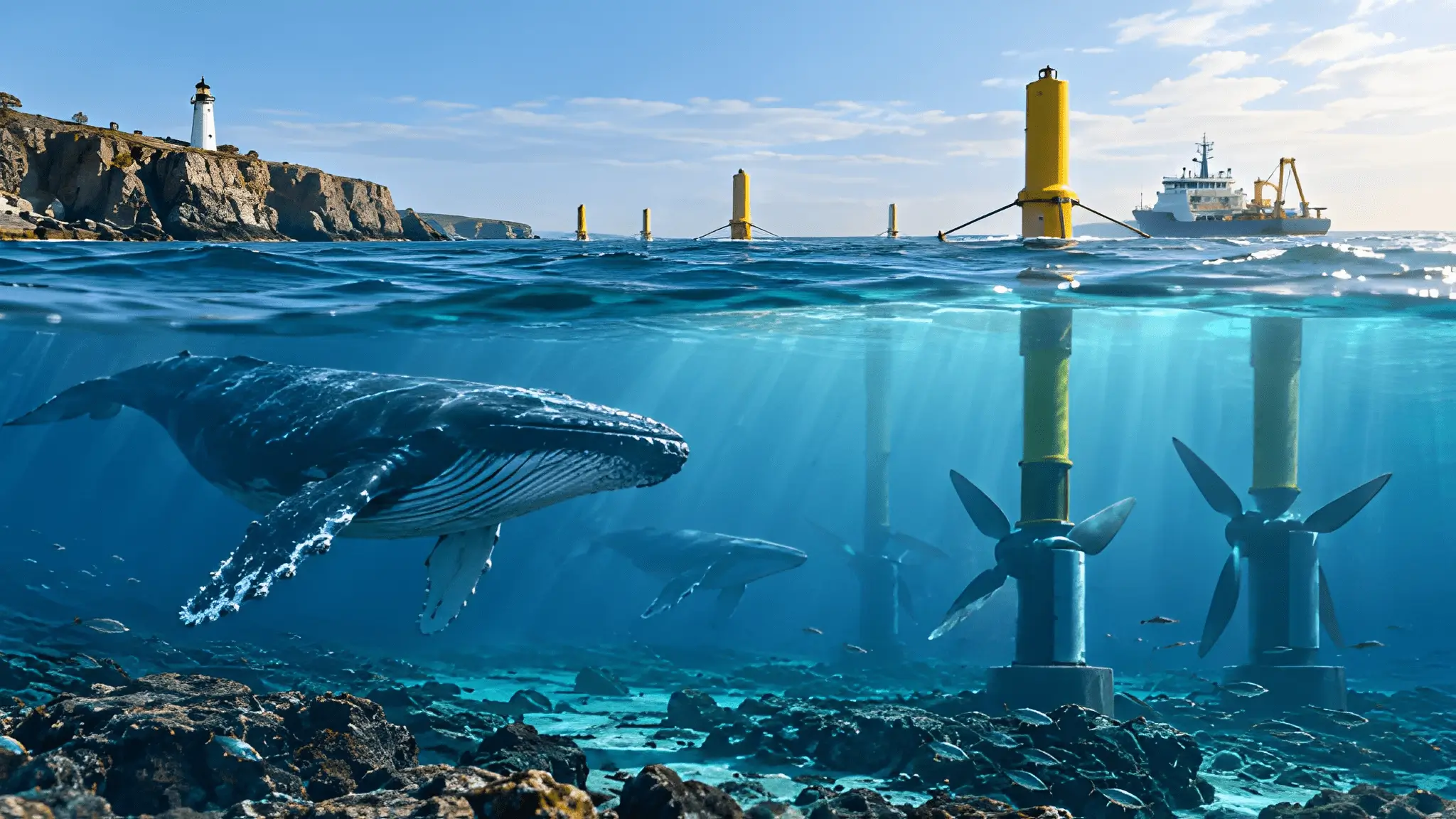
A proposed underwater AI data center in the waters off Maine has entered a new regulatory phase as conservationists challenge the project over potential impacts on endangered whales. DeepGreen Western Passage SPV LLC, established by the developers behind DeepGreen Holdings, is seeking to develop a tidal-powered subsea computing facility in the Western Passage of the Bay of Fundy near Kendall Head, outside Eastport. The proposal could deploy as many as 34 underwater tidal turbines and would rank among the first projects of its type in the United States if it advances to construction. The location has also placed the project at the intersection of emerging AI infrastructure ambitions, marine conservation concerns and increasingly complex permitting scrutiny.

The Federal Energy Regulatory Commission accepted DeepGreen’s application for a 48-month preliminary permit on Aug. 19, 2026. The approval does not allow construction, but it gives DeepGreen priority in pursuing a future project license while it conducts engineering and environmental studies. The federal process has also opened a 60-day period for public comments and interventions, with submissions due by Oct. 19. Meanwhile, the project area overlaps marine habitat used by North Atlantic right whales and fin whales, adding a significant environmental dimension to the federal review.
Conservationists Challenge Surveys And Future Construction
The Center for Biological Diversity filed a motion to intervene in the FERC proceeding on Sept. 24, arguing that both the proposed survey activity and any eventual underwater facility could create risks for marine ecosystems. The organization has raised concerns about additional vessel movements and underwater noise during preliminary studies, saying those activities could disrupt whale behavior, communication and feeding patterns. North Atlantic right whales remain among the world’s most endangered large whale populations, with fewer than 400 individuals estimated to remain. The conservation group also identified potential risks from construction activity, contamination, thermal pollution caused by heated seawater, underwater noise and the possibility of marine animals becoming trapped.
Kristen Monsell, oceans legal director at the Center for Biological Diversity, called the proposal “a truly terrible idea” and said the project “needs to be stopped in its tracks”. She argued that survey vessels and associated noise could disturb marine wildlife, while a completed facility could introduce additional hazards into an already sensitive environment. Her intervention puts environmental questions directly into the federal licensing process rather than leaving them solely to local political debate. The proceeding will now provide another forum for examining whether the proposed technology can operate within the ecological constraints of the site.

Eastport Opposition Adds Local Pressure
Opposition to the project began locally in June, when residents organized under the Eastport Coalition for Healthy Oceans submitted two petitions to the city council. One petition sought a permanent prohibition on data centers larger than 25,000 square feet within Eastport or its coastal waters. The second called for voter approval of industrial developments exceeding 25,000 square feet on land or 10,000 square feet in ocean areas. Passamaquoddy officials have also expressed strong opposition to the proposed development.
Following a packed public hearing on Aug. 5, the Eastport City Council unanimously approved a 180-day moratorium on Aug. 12. On Sept. 9, council members unanimously adopted an ordinance prohibiting large-scale data centers within the city, while rejecting the separate voter-approval measure after city attorneys determined that it would be unlawful and unenforceable. The local measures demonstrate that the project’s challenges extend beyond environmental permitting into questions over how coastal communities govern emerging infrastructure. However, the municipal action did not halt the separate federal permitting process.
Federal Review Continues Despite Moratorium
FERC accepted DeepGreen’s preliminary permit application only a week after Eastport imposed its moratorium, underscoring the different jurisdictions involved in the proposal. The federal filing does not establish permission to build, but it preserves DeepGreen’s position while the company studies technical and environmental requirements for a potential license. DeepGreen founder Louis Wolfson has described the preliminary permit as “a license to study, not a license to construct”. Neither the Maine proposal nor DeepGreen’s separate project in Alaska’s Cook Inlet has received authorization to build.
The dispute now moves into a broader assessment of whether subsea computing can move from experimental infrastructure toward commercial deployment in environmentally sensitive waters. For DeepGreen, the preliminary studies could provide engineering and environmental evidence needed for a future licensing application, while opponents will use the same process to press their concerns about marine impacts. The Oct. 19 intervention deadline will give stakeholders another opportunity to shape the federal record before any construction decision is considered. The project’s trajectory will therefore depend not only on the viability of tidal-powered underwater computing, but also on whether regulators determine that its environmental footprint can be reconciled with protections for one of North America’s most threatened whale populations. “The project needs to be stopped in its tracks,” added Monsell.