 Skip to content
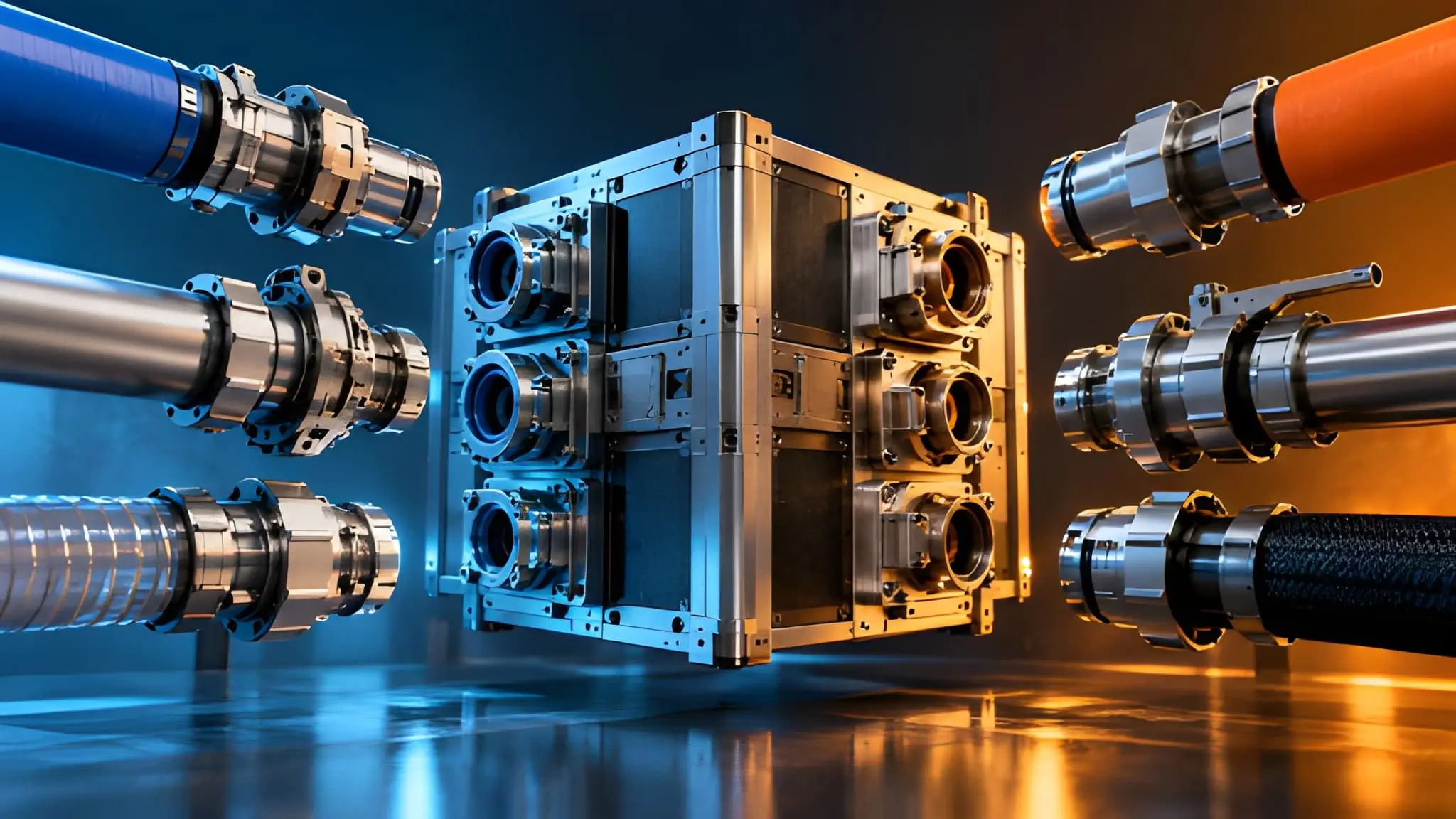
A modular cooling system can arrive on site looking complete, tested, and ready for installation, yet its most consequential procurement decisions may already sit beyond the owner’s control. A cold plate may fit inside a rack, and a replacement coolant may satisfy the required thermal properties, but neither guarantees compatibility with the connections, sensors, controls, and service procedures surrounding it. The commercial risk begins when an apparently replaceable component depends on interfaces that only one supplier can reproduce or validate. In that situation, modular construction can simplify initial delivery while making future purchasing decisions harder. Buyers may still own the equipment, approve the operating budget, and negotiate service agreements, yet the cost and complexity of changing suppliers can weaken their negotiating position. The central question is therefore not whether a module uses standardized equipment, but whether its engineering allows the owner to change a supplier without rebuilding the surrounding system.

The Real Lock-In Isn’t the Component, It’s the Interface
A cold plate rarely operates as an isolated piece of hardware because its performance depends on the surrounding coolant circuit, connection geometry, flow conditions, and control logic. A replacement unit may occupy the same physical space yet fail to meet the original system’s pressure-drop limits, flow requirements, or thermal operating envelope. Quick-disconnect couplings introduce another constraint because mating geometry, sealing materials, pressure ratings, and fluid compatibility all affect whether technicians can exchange components safely. Control interfaces create a separate dependency when the module expects proprietary sensor mappings, alarm thresholds, communication formats, or pump commands. These restrictions can turn an apparently straightforward replacement into a qualification exercise involving hydraulic testing, software changes, commissioning, and renewed operational acceptance. Procurement teams that evaluate only component prices and headline cooling capacity therefore risk overlooking the engineering dependencies that determine their future bargaining power.
The stronger approach treats the interface as a separately specified asset rather than an incidental feature of the equipment package. Owners should document connection dimensions, allowable tolerances, pressure and flow envelopes, wetted materials, sensor accuracy, alarm behavior, and control communication requirements before approving the module design. Each requirement should identify measurable acceptance criteria instead of relying on phrases such as equivalent performance or compatible equipment. The specification should also explain how engineers will verify a substitute, including the evidence required for pressure integrity, leak performance, thermal behavior, and control response. Such documentation does not guarantee that every alternative component will work, but it gives competing suppliers a defined target against which they can demonstrate compliance. That change moves the commercial discussion away from a supplier’s assurance that its own equipment is necessary and toward evidence that a replacement satisfies the owner’s operating requirements.
Factory Integration: Convenience Now, Leverage Later?
Factory integration compresses multiple engineering decisions into a package that arrives on site with piping, manifolds, cooling distribution equipment, instrumentation, and controls already assembled. This arrangement can reduce field labor, simplify installation sequencing, and move some testing into a controlled manufacturing environment. The same convenience can obscure the number of assumptions that the integrator has already embedded in the finished module. A manifold sized around one connector family, a control panel configured for a specific sensor set, or a mounting arrangement built around one cold-plate assembly can restrict later substitutions. Once those choices enter fabrication drawings and purchasing orders, changing them may require new tooling, revised documentation, additional testing, or changes to the delivery schedule. The owner consequently risks paying twice for flexibility: first through a premium for an integrated package and later through redesign costs when operating requirements change.

The commercial turning point often arrives before the factory releases the design for production. At that stage, the owner can still require interface drawings, alternative-component envelopes, control descriptions, and qualification procedures without disturbing a completed assembly. Contract negotiations should therefore separate responsibility for integration from ownership of the technical information needed to maintain or modify the system. The agreement can require delivery of current drawings, bills of materials, interface definitions, software configuration records, and approved replacement procedures as contractual deliverables. It should also establish who pays for requalification when a proposed replacement meets the original performance requirements but differs from the integrator’s preferred component. Without that allocation, the integrator may control the practical route to change even when the owner retains formal approval rights. Consequently, design-freeze approval should depend on demonstrated substitution pathways, not simply on successful factory acceptance of the initial configuration.
Designing for Second-Source Without a Rip-and-Replace
Second-source capability begins with a specification that defines what a replacement must do rather than which supplier must provide it. Mechanical drawings should identify connection locations, envelope dimensions, mounting points, service access, and allowable tolerances, while hydraulic requirements should establish acceptable flow, pressure drop, operating pressure, and temperature ranges. Fluid specifications must address chemistry, material compatibility, contamination limits, and maintenance requirements because two products described as dielectric coolants may not share the same operating characteristics. Electrical and control requirements should define signal ranges, communication behavior, alarm states, and the information an external monitoring system must receive. Engineers should also preserve access to isolation valves, drain points, fill connections, and coupling release mechanisms so technicians can perform replacements without dismantling adjacent equipment. These provisions create a measurable compatibility boundary while allowing suppliers to compete on performance, reliability, availability, and lifecycle cost.
Interchangeability requires more than a drawing that shows two components with similar dimensions. The owner should require a qualification process that tests representative alternatives against the actual operating envelope, including expected thermal loads, pressure conditions, fluid chemistry, control responses, and service procedures. A substitute that passes laboratory testing may still require system-level validation if it changes flow distribution, pump behavior, sensor interpretation, or heat-transfer performance. The specification should distinguish components that technicians can exchange directly from those that need adapters, revised settings, or controlled commissioning. It should also define whether the owner, integrator, or incoming supplier bears the cost of each qualification step and who retains the resulting test records. This arrangement preserves meaningful competition without promising universal compatibility or forcing the engineering team to accept a technically unsuitable replacement.
After Handover: Where Spare Parts and Serviceability Decide Your Leverage
A module’s commercial dependencies become more visible after commissioning, when maintenance teams need replacement seals, sensor kits, coupling assemblies, control boards, and fluid-service materials. These items may appear inexpensive compared with the installed cooling package, yet their availability can determine how quickly an operator restores capacity after a fault. A proprietary sensor assembly can create an unnecessary replacement dependency when the underlying measurement function does not require a unique design. Similarly, a control module that lacks documented configuration and recovery procedures can turn an ordinary hardware failure into a supplier-led intervention. Fluid management creates a related exposure because storage, sampling, filtration, replenishment, and disposal procedures depend on the selected coolant and the materials exposed to it. A procurement model that evaluates only the initial package price misses the recurring costs and operational constraints that accumulate throughout the module’s service life.
The three-year mark can serve as a useful procurement review point, but it should not be treated as a universal failure threshold or an industry-wide replacement deadline. By that stage, operators may have enough service history to assess actual consumption, recurring faults, spare-part lead times, support responsiveness, and the cost of maintaining the installed configuration. Contracts should define spare-parts availability periods, published replacement-part pricing or adjustment rules, escalation procedures, and support obligations beyond the initial warranty. Owners should also secure the right to maintain an agreed stock of critical components, access diagnostic information, and obtain replacement parts through qualified alternative channels where feasible. Control-system provisions should cover configuration backups, firmware availability, documented recovery procedures, and continued access to the information needed for independent troubleshooting. A service agreement that protects these rights makes supplier performance measurable and reduces the chance that a routine maintenance requirement becomes an expensive commercial dependency.
Leverage Is Set Before the First Module Ships
Modular cooling gives infrastructure owners a genuine opportunity to standardize deployment, simplify maintenance, and expand capacity without repeating every engineering task. Those advantages do not automatically extend to procurement flexibility because a factory-integrated system can still depend on proprietary interfaces, restricted documentation, and supplier-controlled service procedures. The decisive work happens when engineers define the mechanical, hydraulic, fluid, electrical, and control requirements that govern future substitutions. Buyers should make those requirements contractual, establish acceptance tests for alternatives, and preserve access to the technical records needed to operate and maintain the installed equipment. They should negotiate spare-parts availability, service obligations, configuration access, and change-control responsibilities before the supplier completes the manufacturing design. These provisions turn future flexibility into an engineered and commercially enforceable requirement rather than an expectation that may prove difficult to exercise.
The most useful day-zero question is not whether a supplier promises an open architecture, but what the owner can replace without redesigning the module or surrendering control of its operation. Procurement teams should demand a documented answer for cold plates, connectors, coolant specifications, sensors, control modules, and critical service parts before approving the design freeze. Engineering teams should confirm that the proposed alternatives meet defined performance limits and that technicians can access, isolate, test, and replace equipment safely. Commercial teams should translate those capabilities into enforceable documentation, support, pricing, and substitution provisions rather than relying on informal assurances. A module that meets these conditions can retain the benefits of factory integration while giving its owner a practical route to qualify alternatives when technology, operating demands, or supplier performance changes.










