 Skip to content

AI Data Center Construction Faces a Cable Supply Bottleneck
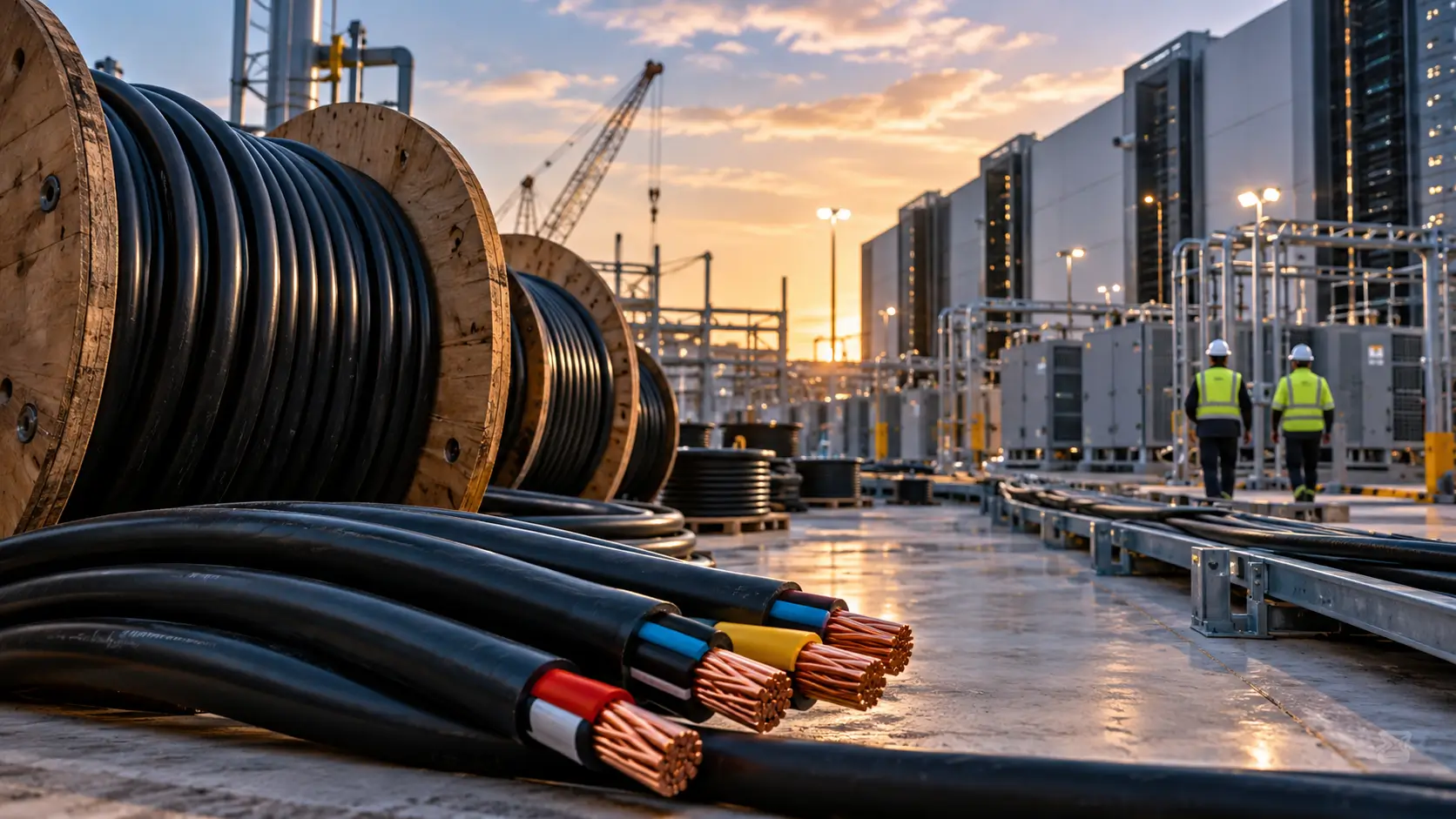
The global race to build artificial intelligence infrastructure is encountering another constraint, this time in the electrical cables needed to deliver power to data centers. Nexans Chief Financial Officer Vincent Piquet has warned that cable manufacturing capacity is struggling to keep pace with demand, creating a potential bottleneck for projects that already face pressure from power availability and construction timelines. The shortage affects low- and medium-voltage cables, which connect electrical infrastructure and distribute power across data center facilities. Expanding production capacity is not an immediate solution, as establishing a new manufacturing line for certain cable types can take around three years.

“Things can’t move quickly and the people building these data centres are in a great hurry,” Piquet told Reuters, describing the mismatch between infrastructure developers’ schedules and the cable industry’s ability to respond. His warning highlights a growing challenge for the AI infrastructure market: securing electricity is only one part of bringing a facility online, because developers must also obtain the physical equipment required to distribute that power. Even projects with funding, land and computing hardware can face delays if critical electrical components do not arrive on schedule. Cable availability is therefore emerging as a procurement and deployment concern alongside grid connections, transformers and other power infrastructure.
Why Low- and Medium-Voltage Cables Matter to AI Infrastructure
Power cables perform a fundamental role in turning an electricity connection into usable computing capacity. Data centers require extensive electrical distribution systems to move power between incoming supplies, substations, transformers, switchgear and equipment inside the facility. Low-voltage cables support distribution within electrical systems, while medium-voltage cables serve higher-capacity distribution requirements across larger installations. As AI campuses scale, the volume and specifications of cable required can increase substantially, adding pressure to manufacturing capacity that also serves utilities, industrial facilities and other infrastructure projects.
Larger data centers tend to consume proportionately more medium-voltage cable, according to Piquet. This creates an important distinction between the demand generated by conventional data center construction and the requirements of facilities designed for increasingly power-intensive AI workloads. Developers cannot treat cable procurement as a final-stage purchasing exercise because cable specifications, quantities and delivery schedules influence electrical installation and commissioning plans. A delay in one component category can affect the sequence of work across an entire project, even when other construction activities remain on schedule.

Three-Year Manufacturing Timelines Limit Supply Response
The cable industry’s challenge is not simply a shortage of finished products sitting in warehouses. Manufacturing additional capacity requires investment in specialized production equipment, factory infrastructure and processes that cannot be expanded overnight. Piquet said establishing a new production line for cross-linked polyethylene (XLPE) cables, known in the industry as a CV line, takes around three years. That timeline creates a structural mismatch between manufacturers’ investment cycles and data center developers’ expectations for rapid delivery.
XLPE insulation is used in power cables designed for electrical distribution applications, making the production capacity behind these products relevant to large infrastructure projects. Manufacturers must decide how much additional capacity to build while considering demand from multiple markets, the capital required and the time needed before new production becomes available. Even if suppliers begin expanding now, the additional output may arrive too late to resolve near-term shortages affecting projects already under development. Consequently, developers face a procurement challenge that cannot be solved simply by increasing purchase orders after a project has entered construction.
Grid Constraints Are Reshaping Cable Procurement
Power availability remains a major constraint on AI data center development, particularly in markets where grid connections cannot keep pace with the growth in electricity demand. The cable shortage adds another layer of uncertainty because developers need both access to electricity and the equipment required to distribute it reliably across their facilities. Reuters reported that Oracle issued a force majeure notice in September to a unit of Blue Owl developing a large data center in New Mexico, citing potential difficulties securing sufficient power for the site. The episode illustrates the broader challenge of aligning construction schedules with the availability of essential infrastructure, although grid constraints and cable supply shortages remain distinct issues.
Piquet said restrictions affecting power infrastructure have also supported demand for Nexans‘ products, allowing the company to be more selective when allocating production capacity. For manufacturers operating under supply pressure, allocation decisions can become increasingly important when several customers compete for limited output. Developers with established supplier relationships, clearer forecasts and longer procurement horizons may have greater scope to secure the products they need, although the outcome will depend on manufacturers’ capacity and contractual commitments. Meanwhile, buyers that leave cable orders until later project stages risk discovering that their construction schedules no longer align with supplier delivery windows.
Utilities Are Turning to Longer-Term Supply Agreements
The shift toward longer procurement commitments is already visible in the electricity distribution sector. French distribution network operator Enedis has moved from annual procurement agreements to contracts lasting six or seven years to secure cable supply, Piquet said. The change reflects the importance of obtaining predictable access to equipment when manufacturing capacity cannot respond quickly to changes in demand. For cable suppliers, longer agreements can improve demand visibility, while buyers gain a contractual mechanism for securing supply over an extended period.
Data center developers could face similar decisions as they compete with utilities and other infrastructure customers for manufacturing output. Multi-year commitments may help buyers establish supply relationships earlier, but they also require more accurate forecasts of project requirements, specifications and construction schedules. Contracts that do not account for changes in capacity needs or delivery timing may leave developers exposed when projects expand, slip or undergo design revisions. Procurement teams therefore need to evaluate cable availability alongside pricing, technical requirements and delivery obligations when establishing project budgets.
Europe and the United States Face Different Constraints
The cable supply challenge is unfolding across markets with different infrastructure and investment conditions. Piquet said Europe generally faces fewer grid-connection challenges than the United States and benefits from stronger electricity networks in some northern countries. However, lengthy regulatory processes continue to delay certain projects, showing that stronger existing networks do not automatically translate into faster infrastructure deployment. Differences in permitting, private investment and grid capacity will influence how quickly each region converts AI infrastructure spending into operational computing capacity.
Piquet does not expect demand linked to artificial intelligence to slow, although he expects Europe’s data center expansion to be less pronounced than that of the United States. He attributed the difference to Europe’s smaller capacity for private investment and the larger role of public funding. That outlook suggests cable manufacturers may continue to face strong demand even as project growth varies between regions. For developers, the relevant question is not simply where AI investment is growing fastest, but where electrical infrastructure and manufacturing supply can support the required deployment schedule.
Cable Availability Becomes a Strategic Planning Issue
The implications extend beyond purchasing teams to the economics of building AI computing capacity. Delays in cable delivery can disrupt the sequencing of electrical installation, postpone commissioning milestones and leave expensive computing equipment waiting for a facility to become operational. Such delays can increase carrying costs and complicate revenue planning, particularly when developers have committed to deliver capacity to customers on fixed schedules. Cable supply should therefore form part of early project risk assessments rather than remain an isolated concern within electrical procurement.
Developers can reduce exposure by identifying critical cable requirements early, confirming production lead times with suppliers and aligning delivery schedules with construction milestones. They can also assess whether approved alternative specifications or additional qualified suppliers are available, provided any changes satisfy engineering, safety and regulatory requirements. These measures cannot eliminate a market-wide capacity shortage, but they can improve visibility into supply risks before those risks affect site execution. Manufacturers, for their part, must weigh the cost and lead time of expansion against demand that may remain strong for years but can vary across individual markets.
The AI Buildout Depends on More Than Computing Hardware
The cable bottleneck reinforces a wider lesson for the AI infrastructure industry: computing capacity depends on a chain of interdependent physical systems. GPUs, servers and advanced networking equipment cannot deliver their intended value if power infrastructure is incomplete or essential electrical components arrive late. Cable manufacturing capacity may not attract the same attention as chips, electricity generation or large grid connections, yet it remains part of the infrastructure required to bring new computing capacity online. As demand grows, the availability of these less visible components could increasingly influence project schedules and the pace of deployment.
Nexans’ warning points to a mismatch between the speed of AI investment and the time required to expand industrial supply chains. A manufacturing line that takes around three years to establish cannot easily accommodate sudden changes in project demand, especially when utilities and other infrastructure customers also need cables. For data center developers, securing power and computing equipment will not be sufficient if the distribution systems connecting them remain unavailable. The ability to plan, contract and coordinate electrical equipment procurement early is becoming a central factor in determining how quickly planned AI capacity can become operational.










