...
NVIDIA H200 shipments delayed to Q3  · BREAKING: Microsoft confirms 3GW data centre expansion in Asia-Pacific ·  AWS announces new sovereign cloud regions in India and UAE  · Arm-based servers now 24% of hyperscale deployments ·  EU AI Act enforcement enters phase two  · Global data centre investment hits $612B in 2026 ·  TSMC Arizona yields improve to 68% on 3nm process  · OpenAI valuation reaches $400B after latest funding round ·  NVIDIA H200 shipments delayed to Q3  · BREAKING: Microsoft confirms 3GW data centre expansion in Asia-Pacific ·  AWS announces new sovereign cloud regions in India and UAE  · Arm-based servers now 24% of hyperscale deployments ·  EU AI Act enforcement enters phase two  · Global data centre investment hits $612B in 2026

A Single AI Rulebook: Washington Moves to Override State AI Laws

A Federal Reset for US AI Regulation We are witnessing a defining moment for US AI regulation as President Donald

Share
US AI Single Rulebook

A Federal Reset for US AI Regulation

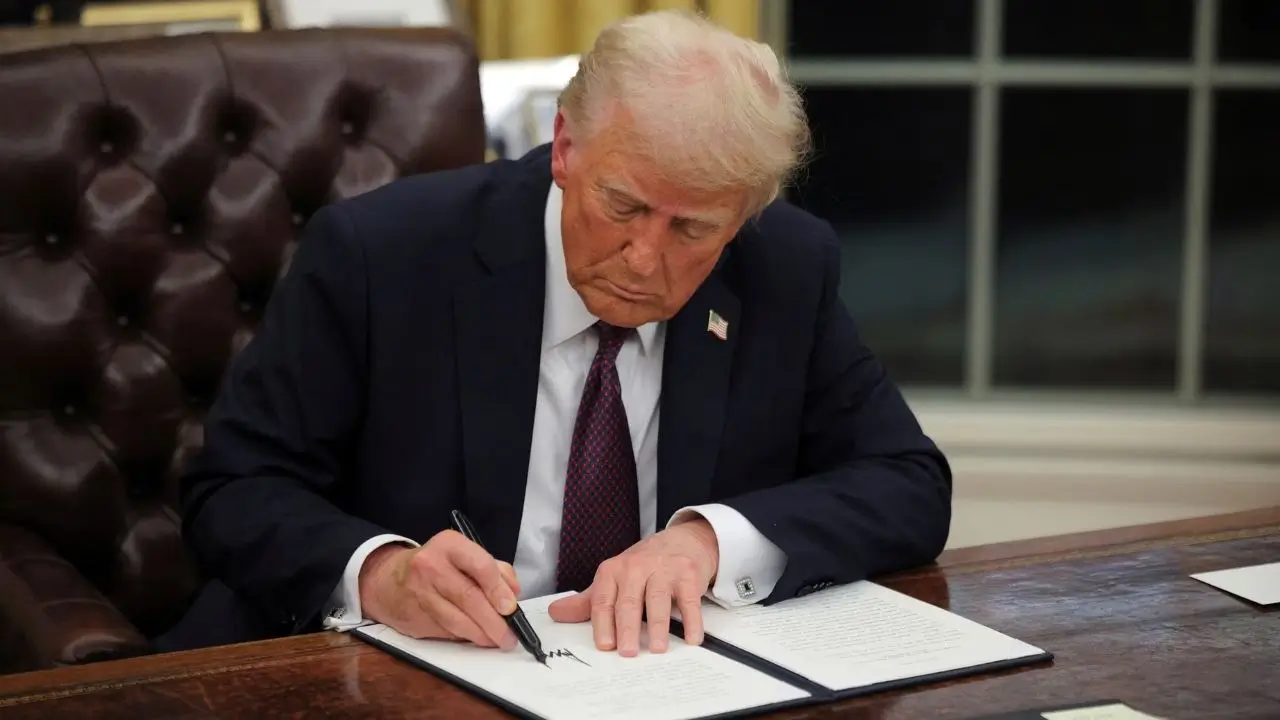
We are witnessing a defining moment for US AI regulation as President Donald Trump signs an executive order designed to block individual states from enforcing their own artificial intelligence laws. From our organizational perspective, this move signals a decisive push toward centralizing authority over AI governance at the federal level, reshaping how innovation, oversight, and compliance may unfold across the country.

Speaking from the Oval Office, President Donald Trump framed the decision as a need for uniformity, stating that the administration wants “one central source of approval.” The intent, as articulated by the White House, is to prevent what it views as fragmented and overly burdensome state-level frameworks that could slow national progress in artificial intelligence.

At its core, this executive order positions US AI regulation as a federal priority rather than a patchwork of local rules. For an industry evolving at extraordinary speed, the implications are significant not only for policymakers, but for companies, researchers, and citizens navigating AI’s expanding role in daily life.

Why the White House Is Pushing Back on State AI Rules

According to White House AI adviser David Sacks, the order equips the administration with tools to counter the most “onerous” state regulations. At the same time, he emphasized that the federal government will not oppose AI rules focused on children’s safety, an area that continues to raise bipartisan concern.

From where we stand, this reflects a balancing act within US AI regulation, reducing regulatory friction for developers while preserving safeguards in sensitive areas. Technology leaders have long argued that complying with dozens of different state laws could dilute innovation and weaken the United States’ ability to compete globally, particularly against China, which is investing aggressively in AI capabilities.

The executive order has therefore been welcomed by many in the technology sector as a step toward regulatory clarity, even as it intensifies debates about federal versus state authority.

The Scale of State-Level AI Activity

The backdrop to this decision is the sheer volume of state action on AI. While the US has no comprehensive national AI law, the White House notes that more than 1,000 AI-related bills have been introduced across state legislatures.

This year alone, 38 states,including California, home to many of the world’s largest technology firms, have enacted around 100 AI regulations, according to the National Conference of State Legislatures. These measures vary widely in scope, ambition, and enforcement mechanisms, underscoring the fragmented landscape that the administration now seeks to override.

For us, this highlights the complexity surrounding US AI regulation: innovation is accelerating faster than governance structures can easily adapt.

How State AI Laws Differ Across the Country

California has been among the most active states. One law requires platforms to regularly inform users when they are interacting with a chatbot, aiming to protect children and teenagers from potential harm. Another mandates that the largest AI developers outline strategies to mitigate catastrophic risks associated with their models.

Other states have taken different approaches. In North Dakota, a new law restricts the use of AI-powered robots for stalking or harassment. Arkansas has barred AI-generated content from infringing on intellectual property or existing copyright. Oregon has prohibited “non-human entities,” including those powered by AI, from using licensed medical titles such as registered nurse.

These examples illustrate why federal officials argue that a unified US AI regulation framework could simplify compliance while still addressing real-world risks.

Growing Opposition and Constitutional Concerns

Despite industry support, the executive order has sparked sharp criticism. Opponents argue that state governments are stepping in precisely because meaningful federal guardrails do not yet exist.

“Stripping states from enacting their own AI safeguards undermines states’ basic rights,” said Julie Scelfo of advocacy group Mothers Against Media Addiction, warning that residents could be left vulnerable in the absence of strong national protections.

California Governor Gavin Newsom, a vocal critic of the president, accused the administration of prioritizing technology allies over public interest. He argued that the order seeks to preempt state laws designed to protect Americans from unregulated AI technologies.

From our standpoint, these reactions underscore a central tension in US AI regulation: whether speed and uniformity should outweigh local autonomy and precaution.

Industry Voices Call for One Federal Standard

Major AI developers, including OpenAI, Google, Meta, and Anthropic did not immediately comment on the executive order. However, the move was praised by technology lobby group NetChoice.

Its director of policy, Patrick Hedger, said the group looks forward to working with the White House and Congress to establish nationwide standards and a clear rulebook for innovators. This sentiment reflects a broader industry concern about navigating conflicting legal obligations across jurisdictions.

Legal scholars have echoed this view, cautiously. Michael Goodyear, an associate professor at New York Law School, noted that while a single federal law would be preferable to a patchwork of state rules, its effectiveness depends entirely on the quality of that legislation.

What This Means for the Future of US AI Regulation

As we see it, this executive order does not end the debate,it intensifies it. The administration’s move places renewed urgency on Congress to develop comprehensive federal AI legislation that balances innovation, safety, and accountability.

Until such a framework exists, US AI regulation remains in flux. What is clear, however, is the question of who governs artificial intelligence and how it has become a central issue shaping America’s technological future.

[simple-author-box]

More from AI Infrastructure

AI infrastructure has a timing problem that traditional data center planning does not solve

A data center can move from blueprint to construction while still facing significant work

AI infrastructure is entering an uncomfortable phase in which securing more electricity does not

COMPUTE WEEKLY

The briefing that 40,000+ tech leaders read every Monday. Sharp, fast, essential.

Great! We’ve received your information.

Building an AI Startup Without Owning GPUs

Not owning GPUs has become the default, deliberate strategy for building an AI company — not a compromise founders accept reluctantly. H100 rental rates fell 64-75% in fifteen months, a dense ecosystem of neoclouds and inference-as-a-service providers now lets startups skip infrastructure entirely, and credit programs can fund a company’s first year before a founder writes a check
Most Read

Demand is broadening across enterprise workloads APAC’s infrastructure story is changing in ways that

AI infrastructure decisions increasingly influence what enterprises can build, test, and deliver. They also

Why Infrastructure Planning Now Starts With Availability A data center project can have a

A property can look enormous from the site entrance and still offer almost no

As rack power rises toward the megawatt range, the physical footprint of power-delivery equipment

Disruptor Spotlight

Cerebras Systems

The chip that makes Nvidia nervous. Cerebras’ Wafer Scale Engine is rewriting the rules of AI inference at scale.
Faster
0 x
YoY Revenue
0 x
Transistors
0 T
Market Pulse
MSFT
+1.02%
NVDA
+0.66%
AMZN
-0.078%
AMD
-6.95%
TSMC
-2.98%
Indicative only · Not financial advice
Upcoming Events
SEP
The AI Infrastructure Race (India)
WEBINAR · ONLINE
The AI Infrastructure Race: Won on Power, Land and Trust — Not Capital
MAY
0
AI Infrastructure Summit
DUBAI · IN PERSON
MEA’s premier AI infrastructure event.
JUN
0 0
Compute Forecast Summit
SINGAPORE · IN PERSON
Our flagship APAC event. Early bird open.
Latest Moves
Live
ecolab
Ecolab Deepens Cooling Strategy With $4.75B CoolIT Acquisition
Ecolab is making one of its biggest moves yet into AI infrastructure after completing its $4.75 billion acquisition of liquid cooling specialist CoolIT Systems
Pure DC AVK Europe data center microgrid Dublin 110MW AI infrastructure Ireland 2026
Pure DC and AVK Deploy Europe’s First 110 MW Data Center Microgrid in Dublin
The Pure DC Dublin microgrid has made history as Europe’s first large-scale on-site data center microgrid, launched in partnership with power solutions provider AVK at Pure DC’s campus in Ireland.
Pace Digitek
Pace Digitek Partners With MEGMEET to Expand AI Data Center Power Business
India’s AI infrastructure ecosystem continues to mature as domestic technology manufacturers move beyond traditional telecommunications and industrial markets toward high-growth digital infrastructure opportunities
Follow Compute Forecast
11K followers
1200 followers
Companies to Watch
CW
CoreWeave
Neo Cloud · $19B · IPO Watch
CB
Cerebras Systems
AI Hardware · $4.25B · Pre-IPO
G42
G42
Sovereign AI · Abu Dhabi
H
Humain
Saudi AI · $40B Fund
Latest Podcast
AI Capex, Cloud Margins & the Nuclear Bet
48 MIN · 25 APR 2026

A Single AI Rulebook: Washington Moves to Override State AI Laws

A Federal Reset for US AI Regulation We are witnessing a defining moment for US AI regulation as President Donald

Share
US AI Single Rulebook
10
847 SHARES

0
SHARES

[simple-author-box]

More from AI Infrastructure

Demand is broadening across enterprise workloads APAC’s infrastructure story is changing in ways that

AI infrastructure decisions increasingly influence what enterprises can build, test, and deliver. They also

Why Infrastructure Planning Now Starts With Availability A data center project can have a

A property can look enormous from the site entrance and still offer almost no

COMPUTE WEEKLY

The briefing that 40,000+ tech leaders read every Monday. Sharp, fast, essential.

Great! We’ve received your information.

Global AI Infrastructure Outlook 2026

The briefing that 40,000+ tech leaders read every Monday. Sharp, fast, essential.
Download Free
Most Read

Demand is broadening across enterprise workloads APAC’s infrastructure story is changing in ways that

AI infrastructure decisions increasingly influence what enterprises can build, test, and deliver. They also

Why Infrastructure Planning Now Starts With Availability A data center project can have a

A property can look enormous from the site entrance and still offer almost no

As rack power rises toward the megawatt range, the physical footprint of power-delivery equipment

Disruptor Spotlight

Cerebras Systems

The chip that makes Nvidia nervous. Cerebras’ Wafer Scale Engine is rewriting the rules of AI inference at scale.
Faster
0 x
YoY Revenue
0 x
Transistors
0 T
Market Pulse
NVDA
$924.60
+2.4%
MSFT
$421.30
+1.1%
AMZN
$192.80
-0.6%
NVDA
$924.60
+2.4%
NVDA
$924.60
+2.4%
Indicative only · Not financial advice
Upcoming Events
MAY
0 0
DCD Global — London
LONDON · IN PERSON
World’s largest DC event. CF is media partner.
MAY
0
AI Infrastructure Summit
DUBAI · IN PERSON
MEA’s premier AI infrastructure event.
JUN
0 0

Compute Forecast Summit

SINGAPORE · IN PERSON
Our flagship APAC event. Early bird open.
Latest Moves
  • Live
Sam Altman
OpenAI appoints new Chief Infrastructure Officer to lead $100B DC programme
27 APR · OPENAI
Sam Altman
OpenAI appoints new Chief Infrastructure Officer to lead $100B DC programme
27 APR · OPENAI
Sam Altman
OpenAI appoints new Chief Infrastructure Officer to lead $100B DC programme
27 APR · OPENAI
Follow Compute Forecast
18.4K followers
12.1K followers
9.3K subscribers
41 episodes
Companies to Watch
CW
CoreWeave
Neo Cloud · $19B · IPO Watch
CB
Cerebras Systems
AI Hardware · $4.25B · Pre-IPO
G42
G42
Sovereign AI · Abu Dhabi
CW
Humain
Saudi AI · $40B Fund
Latest Podcast
AI Capex, Cloud Margins & the Nuclear Bet
48 MIN · 25 APR 2026
Scroll to Top
Seraphinite AcceleratorOptimized by Seraphinite Accelerator
Turns on site high speed to be attractive for people and search engines.