 Skip to content
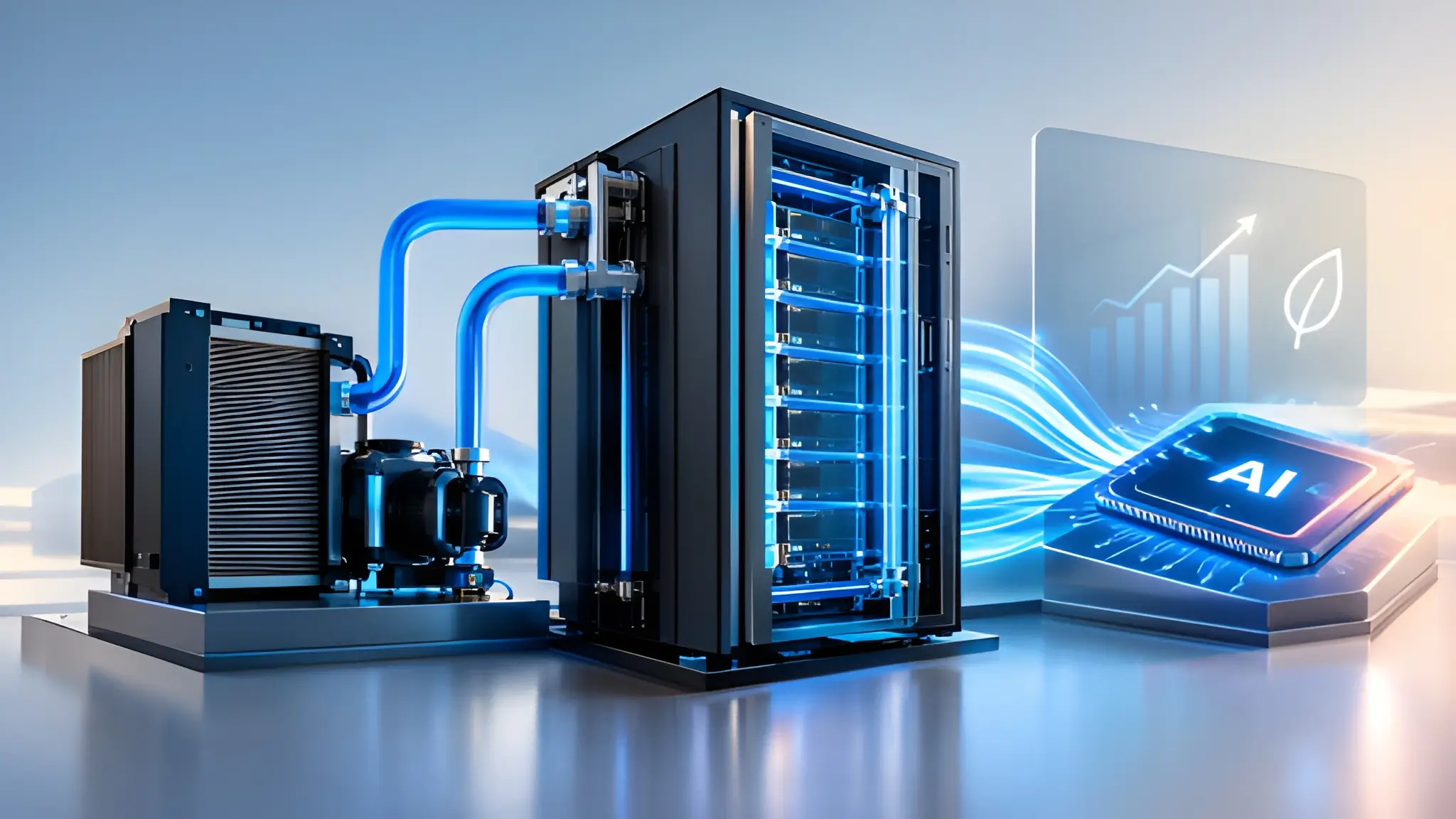
An AI rack can have all the processors, electricity and network capacity an operator can secure and still fail to deliver its expected workload if the heat cannot leave the system fast enough. That possibility changes the way infrastructure leaders may need to think about the next bottleneck in accelerated computing, because thermal capacity can increasingly determine whether electrical capacity becomes usable compute. The industry has placed substantial attention on obtaining GPUs and securing megawatts, yet the machinery sitting between those resources and sustained computation can determine how much of that investment actually performs. Liquid cooling therefore deserves scrutiny not simply as another data-center technology, but as infrastructure that can influence how aggressively operators use increasingly dense hardware.

Schneider Electric’s expansion of its liquid-cooling business provides a useful case study because the company is moving further into equipment that captures, circulates and rejects heat around high-density computing environments. Its September 2026 launch of a coolant distribution unit designed to combine liquid and air cooling also illustrates the growing use of flexible thermal architectures rather than one universal deployment model. The more important issue, however, is what happens when thermal capacity becomes a practical ceiling on an AI deployment after the computing equipment has already been purchased. That possibility pushes cooling closer to the economic center of AI infrastructure, where a seemingly secondary system can influence the productivity of a primary asset. The question is no longer simply how much computing a site can install, but how much of that computing the thermal system can continuously support.
AI Cooling Bottleneck: The Stranded-Compute Problem
The emerging risk is not necessarily a catastrophic cooling failure, but a quieter form of underutilization that can persist without immediately appearing as an obvious infrastructure constraint. A rack may have enough electrical headroom to operate additional accelerators while its thermal system lacks the flow, heat-rejection capacity or distribution architecture required to sustain that expansion. In that situation, the limiting resource can be the physical pathway through which heat must travel before it reaches the final rejection system. That pathway introduces pumps, coolant distribution units, heat exchangers, piping, controls and maintenance requirements that can become increasingly important as rack density rises. The result is a different definition of capacity, because installed megawatts do not automatically translate into equivalent computational output. Schneider Electric has explicitly framed liquid cooling around higher-density AI infrastructure, while its 2026 product announcements have pushed coolant distribution capacity into the multi-megawatt range.
Those developments matter less because a larger cooling unit sounds impressive and more because they illustrate how thermal infrastructure is scaling alongside the increasing compute density it must support. For end users, the practical concern is whether the cooling architecture allows processors to maintain their intended operating conditions during sustained workloads rather than only during controlled demonstrations or short periods of demand. The economic penalty from getting that equation wrong can emerge through constrained deployment, lower utilization or delayed expansion rather than only through an obvious equipment failure. That makes thermal capacity a potentially hidden source of stranded infrastructure in the AI buildout.

The Choke Point May Sit Behind the Rack, Not Inside It
The provocative part of the cooling story is that an AI bottleneck could develop in equipment that most end users never see when they think about AI performance. The processor performs the computation, while cooling equipment operates largely outside the user’s immediate field of view. Yet once thermal density reaches a point where air movement becomes increasingly difficult to scale, the invisible infrastructure becomes responsible for determining whether visible computing assets can operate as intended. That changes the strategic value of systems that move heat away from the rack because their inability to scale can limit additional compute attached to them. The implication does not mean liquid cooling will replace every other cooling method or that every AI deployment requires the same architecture.
It means thermal design is becoming increasingly linked to decisions about density, utilization, expansion and the useful life of expensive compute equipment. The market should therefore resist treating cooling as a late-stage facilities decision that follows the technology purchase. It increasingly belongs earlier in the infrastructure equation because the thermal boundary can influence what the technology purchase is actually capable of delivering. Schneider Electric’s expanding presence in this layer makes its cooling activity worth watching, not simply as a product expansion, but as one indication of where AI infrastructure economics may be moving. If computing becomes abundant while the ability to remove its heat remains constrained, the industry’s scarce resource could increasingly be the machinery that keeps computation running.
The Next AI Infrastructure Question is Brutally Physical
AI infrastructure has become an exercise in converting enormous amounts of electricity into useful computation, but every watt consumed by a processor ultimately creates a thermal consequence that someone must manage. That physical reality gives cooling greater relevance to AI deployment when capital discussions focus heavily on chips, power contracts and new capacity. The closer rack densities move toward extreme levels, the harder it becomes to separate computational architecture from thermal architecture. For end users, the issue is ultimately straightforward even if the engineering becomes increasingly complex: can the infrastructure sustain the compute that has been purchased, at the utilization level the business expects, for as long as the investment requires? Liquid cooling does not automatically answer that question, because distribution, controls, heat rejection, maintenance and operational readiness all remain part of the system.
But it can shift the boundary of what a site can physically support when conventional airflow approaches encounter density limits. The significance of Schneider Electric’s move therefore lies less in the novelty of liquid itself and more in the possibility that thermal infrastructure is becoming an increasingly strategic layer of the AI supply chain. An infrastructure choke point could emerge after the GPU, after the power connection and even after the data-center shell has been secured. It could sit in the machinery responsible for getting the heat out. If that happens, a central AI infrastructure question may no longer be how much computing an operator can buy, but how much of that computing the site can actually keep cool.












