 Skip to content
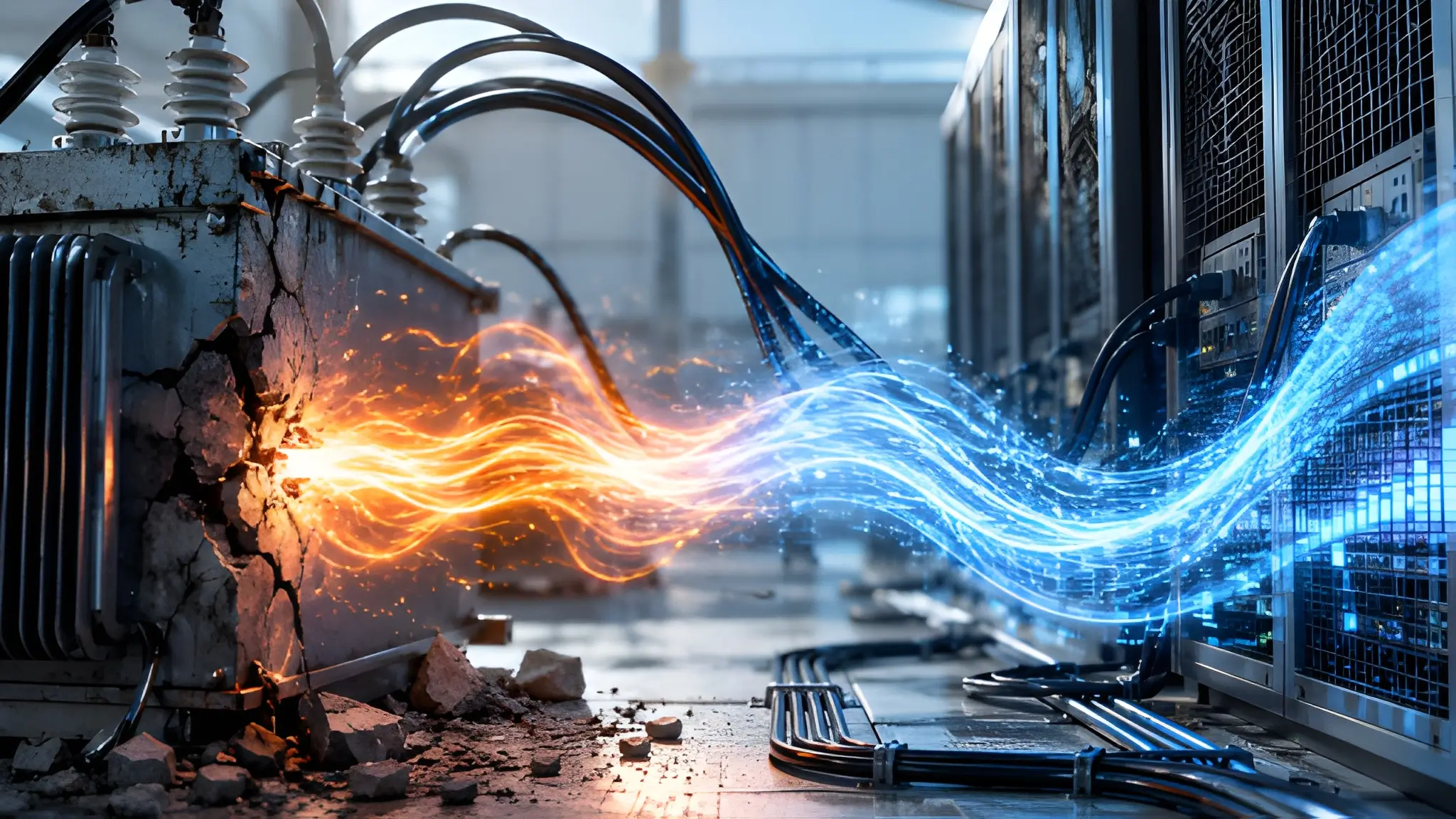
The more difficult question emerging in AI infrastructure is whether a data center can reliably accommodate the way large AI workloads can change electrical and thermal demand, even when sufficient power capacity exists. AI workload volatility is turning power demand into a dynamic engineering variable, particularly as large GPU clusters alternate between intensive training, inference activity, synchronization periods and comparatively quieter operating windows. Traditional data center engineering accounts for defined electrical and thermal operating conditions, while AI workloads can introduce faster and larger changes in demand that require additional consideration in power and cooling design.

A facility can therefore have sufficient contracted capacity while facing a harder operational problem if compute demand moves sharply across that capacity during short periods. The distinction matters because electrical equipment does not experience power as an abstract capacity number; transformers, switchgear, UPS systems, busways, cooling pumps and heat-rejection equipment respond to actual operating conditions. Repeated changes in load can contribute to thermal cycling and additional operating stress in equipment whose condition depends partly on temperature and loading history.
That does not mean every AI workload will damage infrastructure, but it creates another variable that engineers can evaluate alongside peak demand, redundancy, efficiency and the transient behavior of electrical and cooling systems. For end users, the consequence can extend beyond the GPU itself, because changes in workload behavior can affect the operating conditions and maintenance requirements of supporting electrical and cooling equipment.
The Megawatt Number Does Not Tell the Whole Story
A data center’s available megawatts describe only one part of a more complicated physical system that also includes electrical distribution, power quality, redundancy and cooling performance. A high-density GPU environment can change its electrical and thermal behavior depending on utilization, workload scheduling, accelerator communication and the number of systems operating simultaneously. Training can create sustained periods of high utilization, while inference environments may introduce different demand patterns as applications respond to fluctuating user traffic and service requirements.

Cluster-level orchestration can change which systems operate at higher utilization, contributing to changing electrical and thermal demand across the computing environment. The important issue is not whether those changes automatically create failures, because properly designed systems can accommodate load variation, but whether their frequency and magnitude remain within the operating conditions supported by the facility’s electrical and mechanical infrastructure. When those assumptions change, engineers may need to reconsider how they evaluate transformer loading, UPS behavior, cooling capacity, pump operation and power-quality controls.
A facility that passes a static capacity test may therefore require a more sophisticated assessment of transient and time-varying conditions before operators can understand its long-term reliability profile. For customers buying AI capacity, that difference can provide useful context alongside the headline megawatt figure because available electrical capacity does not by itself describe transient performance, cooling capability or power quality.
Thermal Cycling Could Become the Less Visible Cost
Electrical variability does not remain confined to the power room because changes in compute activity can propagate into the cooling system. Higher accelerator utilization increases heat output, which can alter coolant temperatures, flow requirements and the operating point of pumps, heat exchangers and heat-rejection equipment. Liquid-cooled AI infrastructure makes this relationship particularly important because direct-to-chip liquid cooling transfers heat from high-density compute hardware through a liquid-cooling loop, making changes in compute output directly relevant to cooling-system operation. Frequent changes in heat generation can require control systems to continuously adjust valves, pumps, fans and other components to maintain temperature and flow targets.
Each adjustment may remain well within the equipment’s design limits, yet repeated thermal and mechanical cycling can still become an important maintenance consideration over long operating periods. Data center operators have long used PUE and cooling efficiency as important measures of infrastructure performance, while AI workloads are adding greater attention to power density, cooling variability and transient operating conditions. That creates an engineering distinction between infrastructure that consumes less energy and infrastructure that experiences less operational stress. End users ultimately care about both because a highly efficient facility does not deliver much value if maintenance windows, component replacements or unexpected restrictions reduce the availability of the compute capacity they purchased.
AI Infrastructure May Need a New Definition of Wear
Data center maintenance can increasingly benefit from evaluating how equipment behaves across time rather than relying only on whether it remains within an instantaneous operating specification. Transformers, switchgear, UPS components, power electronics and cooling machinery already operate with established limits for temperature, current, voltage and other conditions. However, equipment longevity also depends on operating history, including thermal exposure, loading patterns, switching behavior and environmental conditions. AI can introduce more variable workload profiles, making the operating history of supporting electrical and cooling equipment an additional consideration in equipment-health assessment. Predictive maintenance systems can help operators correlate equipment condition with measurements such as temperature, electrical loading, vibration and cooling performance.
The objective does not necessarily require restricting AI workloads; operators can instead use equipment and workload telemetry to identify operating patterns that place greater stress on supporting infrastructure. That distinction could encourage more detailed definitions of capacity in future data center agreements, particularly where customers require high-density AI workloads with specific availability and performance requirements.. A customer may discover that a nominally available megawatt does not represent identical operational value during every hour if infrastructure constraints emerge under specific workload combinations.
Power Quality Becomes More Interesting Than Power Quantity
AI power discussions have placed substantial attention on generation capacity, grid connections and the amount of electricity required by expanding data center loads, while power quality inside the facility also warrants consideration. Yet the quality and behavior of power inside the facility deserve greater attention as compute density increases and electrical systems manage increasingly complex loads. UPS systems, power conversion equipment and distribution architectures must maintain stable electrical conditions while responding to changing demand and protecting sensitive computing hardware. Modern power electronics can manage significant variation, but that capability does not remove the need to understand harmonics, voltage stability, transient behavior and interactions between different electrical systems.
As compute environments become more dynamic, evaluating electricity solely by total consumption becomes less informative because electrical systems must also manage voltage, current, transients and power-quality conditions. Data center operators instead need to consider how power moves through the facility and how rapidly the infrastructure must respond when computational demand changes. That is especially relevant for end users because an infrastructure constraint does not necessarily have to result in a complete outage; depending on the facility architecture and operating controls, it can instead require load management, operating restrictions or maintenance activity. The commercial significance increases when customers pay for high-density AI capacity but the facility’s electrical, cooling or operational constraints limit how consistently that capacity can be delivered.
The Industry Has Optimized the Compute Stack Faster Than the Building
AI infrastructure has evolved rapidly at the server and rack level, with manufacturers and operators pursuing higher accelerator performance, greater rack density, faster interconnects and increasingly sophisticated cooling architectures. Building-scale electrical and mechanical infrastructure generally has longer planning and replacement horizons than rapidly evolving compute hardware, creating a lifecycle difference between the physical plant and the equipment it supports. That mismatch can create a durability consideration when workload behavior changes while the electrical and mechanical systems supporting it continue to operate within longer equipment lifecycles. A rack can be replaced relatively quickly, while a transformer, switchgear lineup or cooling plant represents a much larger capital decision with a longer planning horizon.
That mismatch creates a potential risk that infrastructure planning may not fully account for the lifecycle effects associated with changing compute and electrical load patterns. The practical response does not necessarily require making AI workloads artificially flat, because workload variability remains inherent to many AI services and operating strategies. That approach could use infrastructure telemetry as an input to workload management, allowing operators to account for electrical and thermal operating conditions when scheduling compute. For end users, the payoff would be straightforward: more predictable performance, fewer avoidable maintenance interruptions and greater confidence that purchased AI capacity remains available throughout the equipment’s useful life.
The Real AI Infrastructure Metric May Become How It Ages
The industry’s focus on adding power capacity raises another important question: how the physical plant performs and ages while delivering that capacity under changing AI workloads. AI workloads do not necessarily need to exceed a facility’s rated limits to create additional infrastructure stress, because equipment can experience thermal and electrical cycling while remaining within specified operating ranges. That possibility gives data center operators another variable to monitor alongside PUE, rack density, availability and power utilization: the variability of electrical and thermal loading over time. Equipment health, thermal cycling, load variability and maintenance frequency can provide additional indicators of how infrastructure performs under changing workloads, alongside established efficiency and availability metrics.
The shift would also change how end users compare facilities, because the cheapest or densest AI capacity may not necessarily offer the lowest long-term infrastructure risk. Customers can reasonably ask operators how workload variability factors into maintenance planning, capacity guarantees and the operating limits of high-density AI infrastructure. Those questions move the conversation away from the familiar race for more GPUs and more megawatts and toward the physical consequences of keeping those GPUs busy. Better orchestration can potentially improve how efficiently existing electrical and cooling infrastructure supports AI workloads by coordinating compute activity with available physical capacity.
The Next Constraint Could Be Infrastructure Fatigue
The provocative possibility is that AI does not need to exhaust a data center’s available power capacity for workload variability to create additional electrical and thermal operating considerations. Repeated changes in workload can require the physical plant to respond to changing electrical and thermal conditions, placing greater importance on controls, monitoring and equipment operating envelopes. Those conditions can be managed through appropriate engineering, monitoring, controls, redundancy and maintenance, all of which help keep electrical and cooling systems within their intended operating envelopes. An additional optimization target can therefore emerge alongside power availability: predictable physical behavior under variable workloads. Such a shift would recognize that infrastructure has a duty cycle, a thermal history and a maintenance burden that cannot be captured by a single megawatt figure.
For the end user, that distinction can influence whether an AI deployment maintains reliable productive capacity or incurs additional operational costs through maintenance, load-management requirements and infrastructure constraints. The most effective AI facilities may not simply be those with the largest electrical connections, but those that can coordinate computing demand with the physical operating capabilities of the infrastructure supporting it. AI infrastructure will still be measured by speed and capacity, but its long-term performance will also depend on how reliably electrical and cooling systems sustain changing workloads over the equipment’s operating life.












