Australia renewable energy price impact is becoming increasingly visible as the country’s rapid clean power expansion reshapes electricity prices and grid economics. What once appeared as a long-term climate ambition is now delivering measurable shifts in wholesale power markets, signalling a deeper structural transformation in how Australia generates, prices, and manages electricity.
Unlike many global peers where decarbonisation has collided with inflationary energy pressures, Australia has moved into a more complex and revealing stage of the transition: the moment when renewables begin to alter market structures rather than simply supplement them. The implications extend beyond energy policy into infrastructure investment, industrial competitiveness, and long-term macroeconomic resilience.
The current state of renewable energy in Australia
Australia’s renewable energy system has reached a scale that would have seemed improbable a decade ago. Clean power output has more than doubled since 2019, and renewables overtook fossil fuels in the electricity mix for the first time in 2025. Wholesale electricity prices fell to their lowest level in four years that same year, declining by an average of 11% across major states.
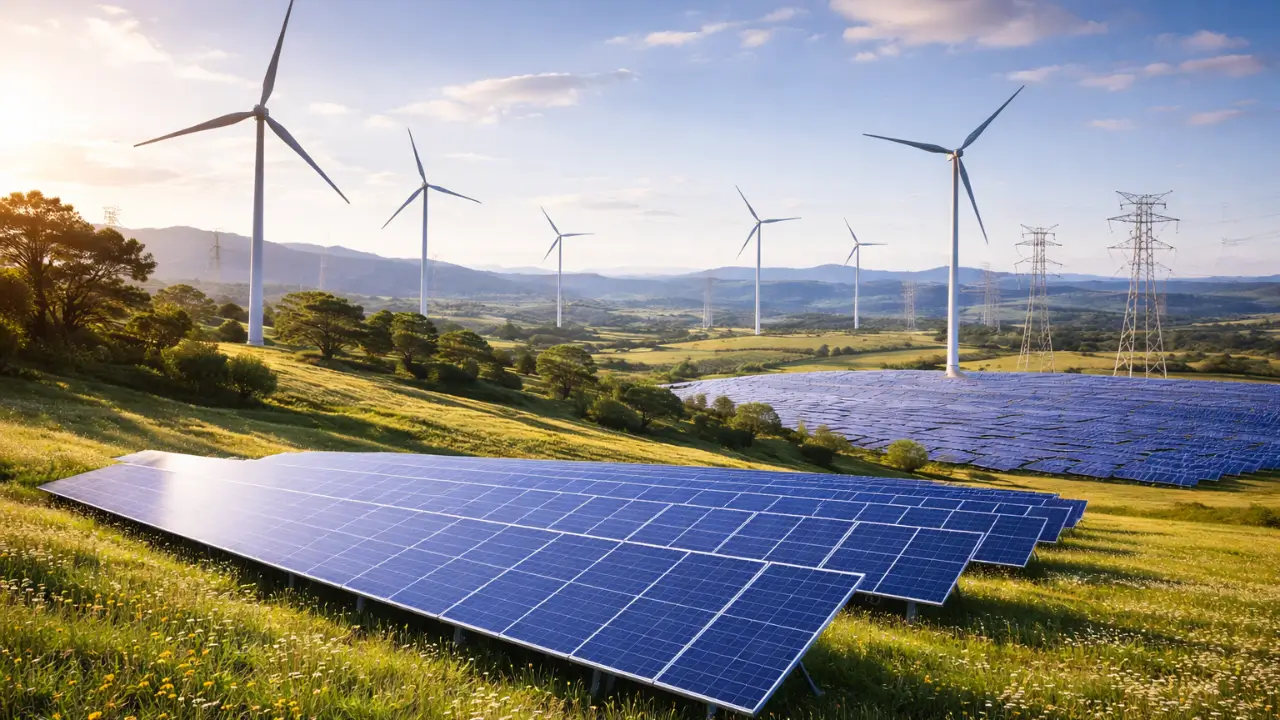
Solar and wind capacity growth has been rapid and structural rather than incremental. Renewables accounted for around 36% of total electricity generation in 2024, led by solar and wind, while rooftop solar alone contributes a significant share of demand. At peak moments, Australia’s grid has recorded renewable shares approaching or exceeding 70%, highlighting the depth of penetration achieved.
This transition unfolds against a backdrop of rising demand from electrification, data centres, and industrial decarbonisation. Australia’s grid must triple capacity by 2050, with a massive expansion of wind, solar, and storage required to keep pace with demand growth.
From policy aspiration to market outcome
For years, Australia’s renewable strategy was framed as a climate imperative rather than an economic lever. That framing has shifted. The recent decline in wholesale power prices suggests that renewables have crossed a threshold where scale changes the cost curve rather than merely adding complexity.
This shift matters because electricity markets respond not only to generation costs but also to volatility, fuel risk, and dispatch flexibility. Solar and wind reduce exposure to global commodity cycles, while battery storage increasingly smooths intermittency. The result is a system where marginal pricing reflects abundant low-cost generation rather than scarcity-driven spikes.
Yet the significance lies less in the headline price drop and more in what it signals: the beginning of a structural reordering of power economics. Australia’s experience suggests that once renewables reach critical mass, they exert downward pressure on wholesale prices even as demand grows.
The hidden architecture behind falling prices
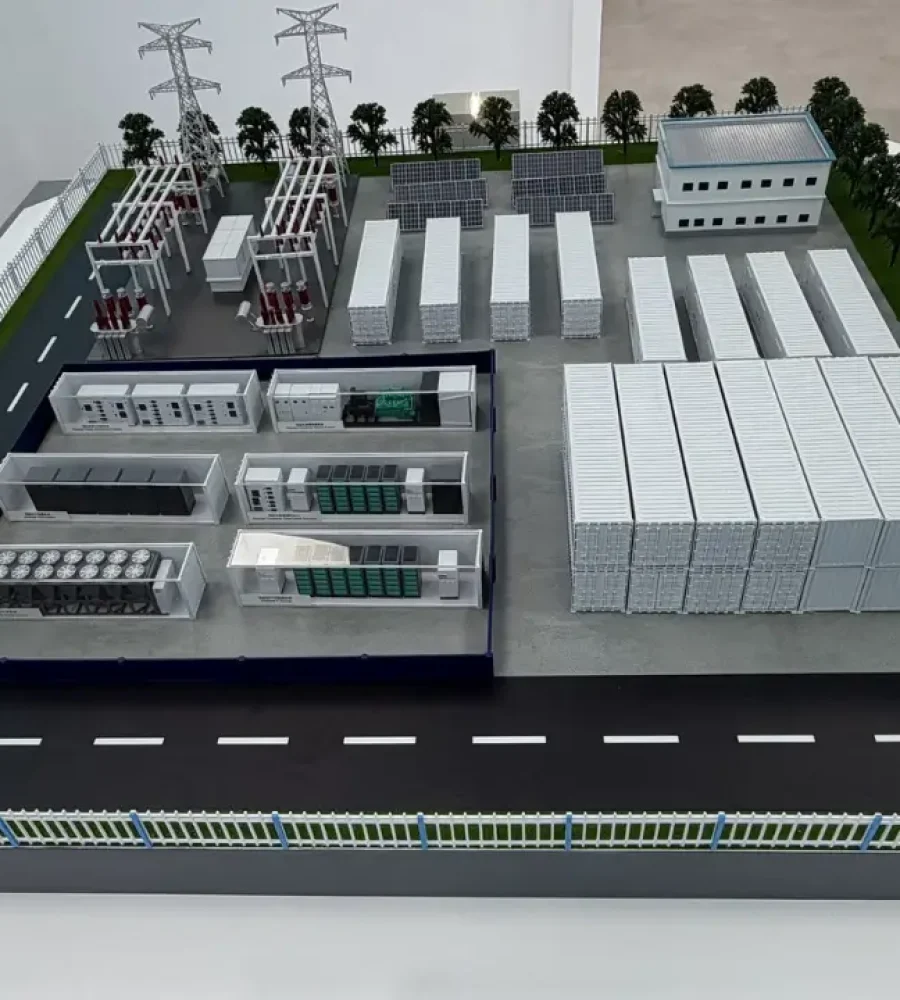
Australia’s price payoff did not emerge spontaneously. It reflects years of investment across three interconnected layers: generation, storage, and grid integration. First, generation capacity expanded rapidly. Solar and wind projects multiplied, supported by both utility-scale development and distributed rooftop installations. Second, battery storage scaled alongside renewables, allowing excess solar production to be deployed during peak demand. Third, market design evolved to accommodate variable generation without destabilising supply.
This layered architecture explains why Australia’s wholesale prices declined while many global markets faced persistent energy inflation. It also highlights an often-overlooked reality: renewable energy does not reduce prices simply by existing. It reduces prices when infrastructure, storage, and market mechanisms evolve in parallel.
The paradox of retail prices
Despite falling wholesale prices, consumer electricity bills have not yet fully reflected the shift. Structural delays in price transmission, network costs, and infrastructure investment continue to shape retail tariffs. This gap reveals a critical tension in the energy transition. Renewables can lower marginal generation costs, but transmission upgrades, grid reinforcement, and system balancing require capital. These costs often flow into regulated tariffs, creating a lag between wholesale market signals and household bills.
Australia’s case therefore underscores a broader lesson for global energy markets: decarbonisation can deliver cheaper power, but only if policymakers manage the distribution of transition costs effectively. Australia’s experience resonates far beyond its borders. Many economies face a similar challenge: how to accelerate renewable deployment without destabilising prices or reliability. Australia demonstrates that renewables can reduce wholesale costs at scale, but only when supported by storage and grid modernisation.
For policymakers, the message is pragmatic rather than ideological. Renewables do not merely serve climate objectives; they can become instruments of economic competitiveness. Lower wholesale power prices can strengthen industrial sectors, attract energy-intensive investments, and reshape national competitiveness in digital infrastructure and manufacturing.
For investors, Australia’s market offers a blueprint for identifying the inflection point where renewable penetration begins to change price dynamics. That inflection point is not uniform across regions, but its existence is now empirically visible.
Risks beneath the success narrative
Australia’s renewable boom also exposes structural vulnerabilities. Transmission bottlenecks, project delays, and curtailment risks threaten to slow momentum. Large-scale grid expansion remains essential to sustain growth and avoid stranded capacity.
Moreover, the transition introduces new forms of volatility. Periods of oversupply can depress prices sharply, while extreme weather events can stress system reliability. Australia’s challenge is no longer whether renewables can scale, but whether the grid can evolve fast enough to manage them. This dynamic illustrates a broader truth: the energy transition does not eliminate complexity; it relocates it from fuel markets to infrastructure systems.
A new economic narrative for renewables
Australia’s power price payoff marks a turning point in how renewable energy is perceived. For decades, renewables were framed as an environmental cost or a policy-driven obligation. Australia’s market now reframes them as an economic asset capable of reshaping national energy economics.
The deeper significance lies in timing. As global demand for electricity surges driven by electrification, artificial intelligence, and digital infrastructure countries that achieve low-cost clean power will gain strategic advantage. Australia’s experience suggests that renewables can deliver that advantage sooner than many expected.
Yet the story remains unfinished. Falling wholesale prices represent the first dividend of scale, not the final outcome. The next phase will test whether Australia can translate this advantage into durable competitiveness while managing the infrastructural and financial demands of a fully decarbonised grid.
Beyond transition, toward transformation
Australia’s renewable surge has moved beyond symbolism into measurable economic impact. The decline in wholesale power prices signals that the energy transition can deliver tangible financial benefits when executed at scale. However, the broader lesson is not that renewables guarantee cheaper power. It is that renewables, when integrated with storage, grid expansion, and market reform, can rewrite the economics of electricity itself.
In that sense, Australia’s experience is less a national success story and more a preview of the global power market’s future. The coveted payoff is not merely lower prices, it is the emergence of a new energy paradigm where clean power becomes a strategic economic foundation rather than a policy aspiration.