 Skip to content
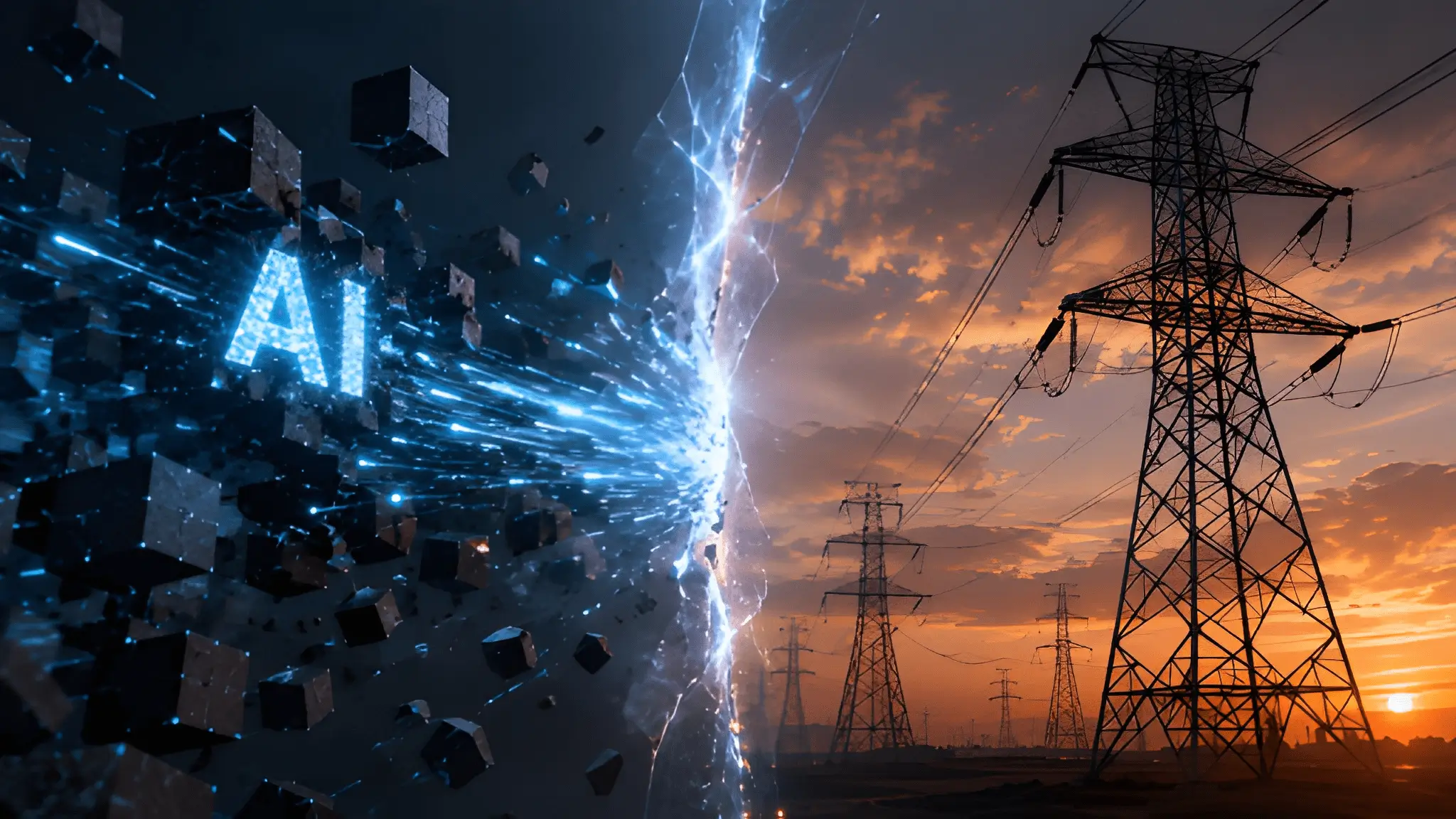
A 500-megawatt AI facility can represent a substantial engineering undertaking, but its resilience depends on how its electrical infrastructure distributes and manages failure risk The larger AI infrastructure becomes, the more consequential that distinction gets. A hyperscale computing site does not merely need enough electricity to operate its processors. It needs an electrical architecture capable of absorbing disturbances without turning a local problem into an outage across an entire computing operation. That changes the infrastructure question.

Industry and government planning around AI power demand has focused heavily on how many gigawatts data centers will require, where utilities can find generation and how quickly transmission projects can connect new loads. Those questions remain fundamental. But another problem is becoming harder to ignore as individual AI facilities grow larger: what happens when the power system serving an enormous computing cluster becomes the weakest link? The answer may not come from building one stronger connection. It may come from making the computing system less dependent on any single connection in the first place.
Bigger Connections Can Create Bigger Failure Domains
Grid expansion can add capacity without necessarily eliminating concentration risk. A large AI facility may still depend on a limited number of substations, transmission paths or high-voltage interconnections. Adding capacity to that pathway can increase the amount of electricity available without fundamentally changing the number of ways the facility can lose it. This is where distributed resilience becomes more interesting than simple redundancy.
Redundancy traditionally means adding another component that can perform the same function. Distributed resilience goes further by separating the system into components that can continue operating when another component becomes unavailable. For AI infrastructure, that could mean designing electrical systems around multiple power paths, strategically positioned storage, diverse interconnections and controllable onsite resources. It could also mean separating computing functions so that a localized electrical problem does not necessarily compromise an entire workload environment. The goal is not to make every component indestructible. It is to make failures smaller.
The Transformer May Matter More Than the GPU
Accelerators determine much of an AI system’s computing capacity, but their operation also depends on a substantial supporting electrical and cooling infrastructure. Yet the availability of those processors depends on a less glamorous collection of electrical hardware. Transformers, switchgear, substations, cooling systems and power distribution equipment increasingly determine how quickly computing capacity can become operational. The International Energy Agency has warned that grid connections and infrastructure constraints could delay a significant portion of planned data center capacity through 2030. Its analysis also highlights the long lead times associated with grid infrastructure and the growing mismatch between the pace of data center development and electricity-system expansion.
That creates an uncomfortable possibility. The constraint on AI expansion may not always be the availability of GPUs. It could be the physical architecture required to deliver electricity to those GPUs reliably. This is why distributed resilience deserves to be treated as an architectural principle rather than an emergency feature. A computing cluster with abundant processing capacity but a fragile electrical topology has a very different risk profile from one that distributes its dependencies across several independently resilient layers.

Smaller Energy Assets Could Become Infrastructure, Not Accessories
Batteries and onsite generation often enter the conversation as backup resources. That description may become too narrow. Energy storage can provide rapid response to disturbances, while onsite generation can create another source of supply when grid conditions deteriorate. Microgrids can coordinate generation, storage and loads within a defined electrical boundary. Those technologies do not necessarily eliminate dependence on the wider grid, but microgrids can disconnect from it and operate in islanded mode when their design and operating conditions allow They can, however, reduce the number of circumstances in which a single external disruption immediately becomes a computing failure.
That matters particularly for AI because the value of the computing equipment is not limited to its electricity consumption. An interruption can disrupt long-running workloads, interfere with data pipelines and create operational costs that extend beyond the duration of the electrical event. The resilience equation therefore involves more than keeping the lights on. It involves preserving computational continuity.
The Future Data Center May Look Less Like a Building and More Like an Electrical Network
This could eventually change the physical design philosophy of AI infrastructure. Instead of treating the data center as one enormous load attached to the grid, developers could increasingly design it as a collection of electrical and computational zones with different levels of independence. One section could draw primarily from the grid. Another could operate behind storage. A third could use onsite generation during defined conditions. Computing capacity could also become distributed across geographically separated facilities rather than concentrated entirely in one location.
The advantage would not necessarily be lower electricity consumption. It would be lower systemic exposure. A failure affecting one electrical path would not automatically become a failure affecting every processor. A constraint affecting one location would not necessarily eliminate an entire computing service. A delayed grid connection would not have to determine the schedule for every piece of capacity. That architecture resembles how resilient digital systems already think about failure: isolate components, diversify dependencies and prevent local disruptions from becoming system-wide events. AI infrastructure may now need to apply the same logic to electricity.
AI’s Power Problem May Ultimately Become a Topology Problem
The industry’s biggest mistake would be to assume that every AI electricity challenge can be solved by finding more electricity. More generation matters. More transmission matters. Faster interconnections matter. But physical expansion alone does not guarantee resilience. AI infrastructure is becoming larger, more geographically concentrated in some markets and more economically significant, increasing the importance of electrical architectures that avoid excessive dependence on any single critical pathway The more durable strategy may involve distributing those dependencies before a crisis exposes them.
That leads to a less obvious measure of AI infrastructure progress. The winning system may not be the one that secures the largest electrical connection. It may be the one that can lose part of its electrical system without losing the computing system with it. In an AI economy built around increasingly concentrated power and processing demands, resilience may ultimately depend not only on adding generation and grid capacity, but also on designing electrical systems so that a failure in a critical power component does not automatically become a system-wide computing outage.












