The phrase “Nvidia Tax” has gained traction in discussions about the economics of AI infrastructure. It refers to the structural cost burden borne by hyperscale cloud providers and AI service operators as a result of Nvidia’s dominant position in the accelerator market. That burden emerges from three interrelated dynamics: Nvidia’s hardware pricing power in a market with limited substitutes, deep software ecosystem lock-in centered on CUDA, and persistent supply chain constraints that slow infrastructure deployment. Together, these forces have raised the cost of scaling AI services and compressed margins for operators heavily dependent on Nvidia GPUs.
Recent developments, however, suggest that hyperscalers are beginning to recover some of that margin. The shift is most visible at the inference layer of the AI stack, where workload characteristics and economic pressures differ meaningfully from those of training. As inference becomes the primary driver of long-term AI costs, hyperscalers are adjusting their infrastructure strategies accordingly.
What the “Nvidia Tax” Really Is
The first pillar of the so-called “Nvidia Tax” is hardware pricing power. For years, Nvidia GPUs have offered the most compelling blend of performance and programmability for both training and inference. As large language models and generative AI workloads surged, demand for Nvidia accelerators exceeded supply. That imbalance strengthened Nvidia’s leverage over pricing and availability. Hyperscalers seeking rapid capacity expansion often faced premiums or were forced to commit to large orders far in advance.
The second pillar is software ecosystem lock-in. CUDA, along with Nvidia’s libraries and tooling, became the default standard for accelerated deep learning. This standardization simplified adoption but imposed high switching costs. Models, frameworks, compilers, and operational workflows grew tightly coupled to Nvidia-specific optimizations. As a result, infrastructure economics became closely tied to Nvidia’s product cadence and pricing decisions.
The third pillar involves supply chain dependency and deployment friction. Even the largest cloud providers encountered constraints in scaling infrastructure on predictable timelines. Long lead times for flagship accelerators and intermittent shortages translated into delayed deployments and lost revenue opportunities during periods of peak demand.
While Nvidia’s position in training remains robust, inference operates under a different set of constraints. That divergence is creating room for hyperscalers to pursue alternative approaches and improve margins.
Maia 200 and the Economics of Inference
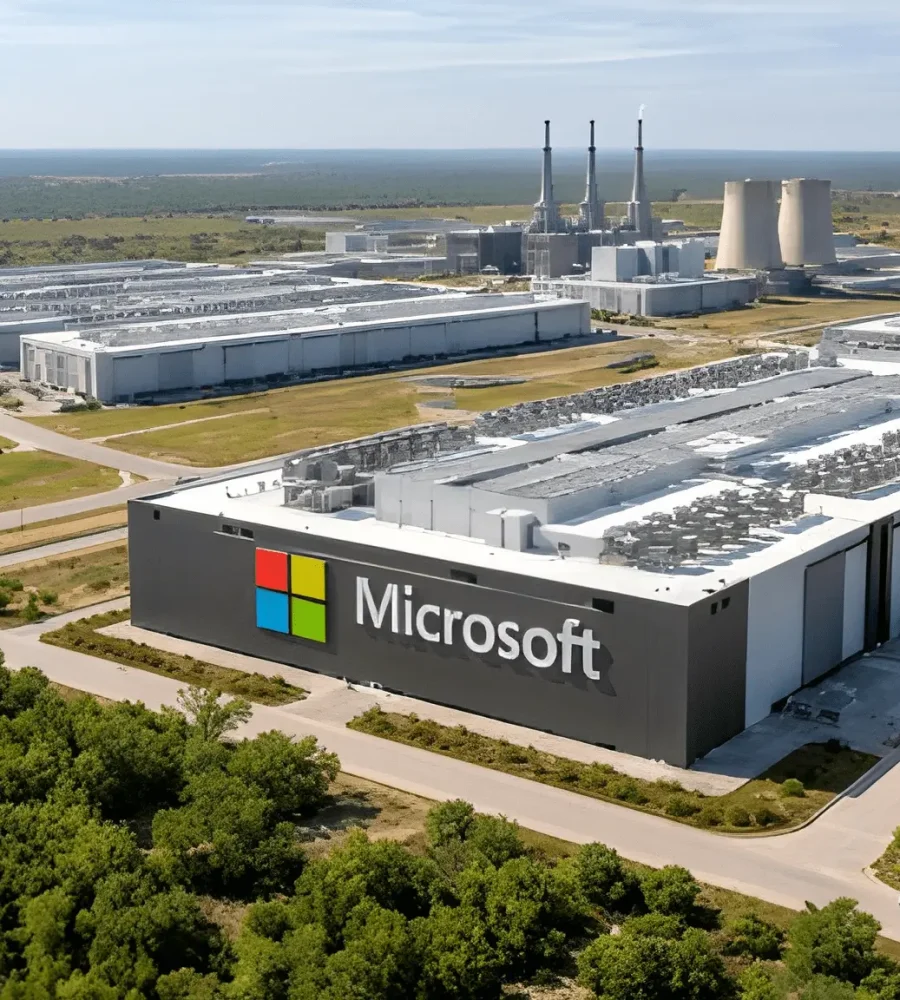
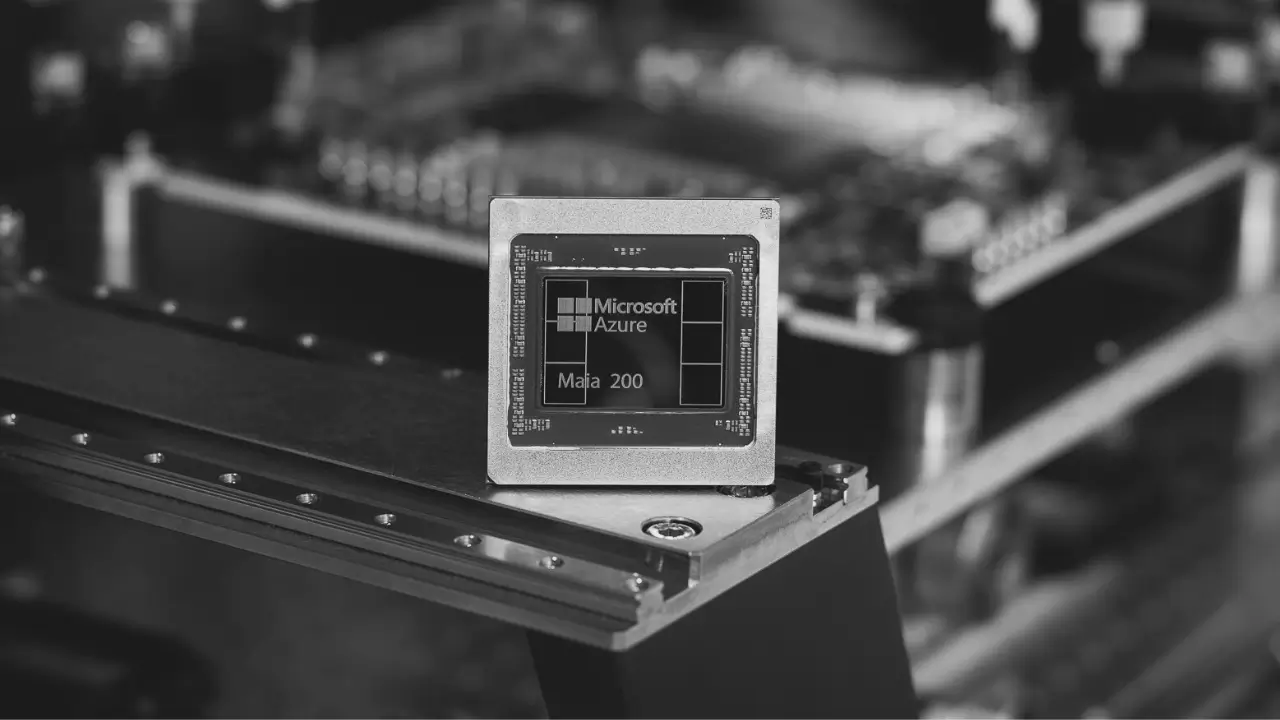
In January 2026, Microsoft introduced Maia 200, a custom AI accelerator designed specifically for inference workloads. The chip was positioned as a response to the economics of large-scale token generation rather than as a general-purpose replacement for GPUs. Built on TSMC’s 3-nanometer process, Maia 200 features low-precision tensor units, a high-bandwidth memory subsystem, and optimized data movement engines designed to sustain throughput under continuous load. Microsoft reports that Maia 200 delivers substantially higher performance per dollar on inference tasks relative to existing alternatives in its fleet.
Maia 200 should be understood as a strategic infrastructure investment, not a challenge to Nvidia’s relevance. Hyperscalers occupy a unique position that allows them to design silicon tightly integrated with their data center networks, systems software, and operational workflows. In this respect, Microsoft’s effort mirrors other vertical integration initiatives, such as Apple’s transition to its M-series processors. Apple achieved efficiency and performance gains through tight hardware–software coordination without relying as heavily on external vendors.
For Microsoft, Maia 200 serves as an economic lever. Inference workloads emphasize sustained token generation rather than peak training throughput. By tailoring silicon to that profile, Microsoft can lower the unit cost of delivering AI features embedded in products like Microsoft 365 Copilot. Deployed within Azure data centers, Maia 200 targets high-volume, production inference workloads where compute spend dominates ongoing costs.
Software enablement is central to this strategy. Microsoft’s work on runtimes such as Triton, combined with deep integration into frameworks like PyTorch, reduces friction between model development and custom hardware. Rather than attempting to displace CUDA outright, Microsoft provides a software bridge that preserves developer productivity while unlocking infrastructure efficiencies. This approach acknowledges the depth of existing ecosystem investment while still allowing meaningful diversification.
Why Inference Dominates Long-Term Economics
The emphasis on inference reflects a broader shift in AI cost structures. Long-term expenses accumulate where workloads run continuously and scale with user demand. Training remains capital intensive but episodic. Inference represents the ongoing cost of serving AI features across products and platforms.
For AI systems embedded in productivity software or consumer applications, inference workloads can exceed training workloads by orders of magnitude when measured in total compute consumed. As a result, even incremental improvements in performance per dollar at the inference layer can translate into meaningful margin expansion. Custom silicon optimized for memory bandwidth, power efficiency, and low-precision computation directly targets this opportunity.
Maia’s architectural choices reflect that reality. The goal is not maximum theoretical throughput but sustained, efficient operation at scale, where power, cooling, and utilization drive total cost of ownership.
What This Clarifies
Several realities emerge from this shift:
- Nvidia continues to anchor frontier model training, where flexibility, programmability, and peak performance remain decisive.
- Hyperscalers are diversifying rather than disengaging. Custom accelerators like Maia, alongside Google’s TPUs and Amazon’s Trainium, augment GPU fleets rather than replace them.
- Mixed hardware environments are becoming standard. Operators increasingly match workloads to the most cost-effective silicon rather than relying on a single architecture.
Acknowledging these points strengthens the argument. Nvidia’s ecosystem retains substantial value, while hyperscalers gain leverage by aligning hardware design with specific workload economics.
Conclusion
The “Nvidia Tax” will not disappear abruptly. Nvidia continues to shape pricing, software ecosystems, and supply dynamics across the AI industry. What is changing is the balance of economic power at the inference layer. Initiatives like Microsoft’s Maia 200 demonstrate how hyperscalers are methodically reclaiming margin by tailoring infrastructure to their most persistent and costly workloads.
This shift reflects neither vendor antagonism nor technological displacement. It reflects a deliberate move toward deeper ownership of the stack, tighter alignment between silicon and operational reality, and reduced exposure to external pricing pressure where recurring costs dominate.
Nvidia remains central to training innovation. At the same time, hyperscalers are creating breathing room on inference economics by designing hardware that matches how AI is actually consumed. How this balance evolves through 2026 will offer a revealing signal about the future cost structure and competitive dynamics of cloud AI.