
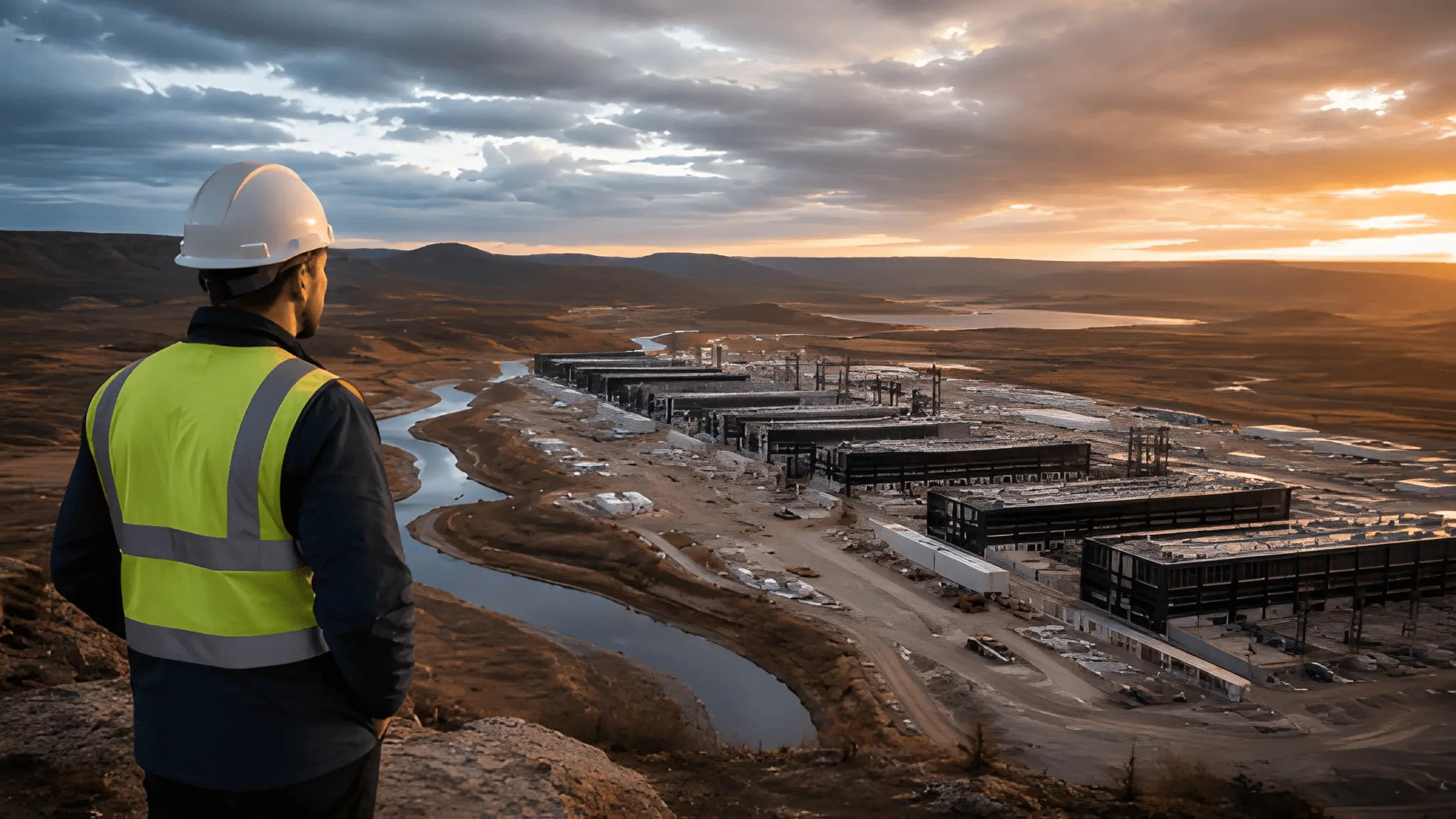
The discussion surrounding AI infrastructure often begins with power capacity, network connectivity, and capital investment. Those variables determine where new data centers, transmission corridors, and supporting facilities can operate efficiently. Yet infrastructure planning still overlooks another factor that increasingly shapes project outcomes: the cultural significance of land. This gap matters because AI infrastructure no longer occupies isolated industrial zones. Developers now evaluate remote regions, renewable energy corridors, and previously underdeveloped landscapes to secure long-term expansion opportunities.

Many of those locations overlap with territories where Indigenous communities maintain cultural traditions, environmental stewardship, and historical connections that cannot be measured through conventional site-selection models. That reality is beginning to redefine infrastructure risk. The industry has invested heavily in forecasting electricity demand and optimizing construction timelines, but successful deployment increasingly depends on understanding whether development aligns with community expectations before construction begins. The strongest AI projects may ultimately emerge not from the fastest approvals but from the most durable relationships with the people who already have deep connections to the land.
AI infrastructure planning must recognize that land carries more than commercial value
Modern site-selection software evaluates hundreds of variables before identifying a preferred location. Developers assess substation proximity, transmission reliability, cooling potential, transportation access, environmental regulations, and construction costs. These tools have become remarkably sophisticated, yet they remain limited by the data they collect. Cultural heritage rarely appears as a measurable infrastructure variable until a project enters consultation or permitting. By that stage, engineering designs, investment models, and development schedules often assume the selected location represents the optimal outcome. Any later discovery of cultural significance introduces delays that many organizations describe as unexpected despite the reality that local communities understood those connections long before planning began.
This disconnect reflects a broader challenge within digital infrastructure planning. Engineering frameworks excel at quantifying physical assets but struggle to evaluate values that communities define through history, identity, and shared responsibility. Infrastructure decisions therefore risk treating land as an available resource instead of recognizing it as a place with existing meaning. As AI deployment accelerates, that distinction becomes increasingly important because infrastructure footprints continue expanding beyond traditional technology hubs.

Faster deployment should not replace stronger engagement
The pressure to accelerate AI deployment has reshaped infrastructure decision-making across multiple regions. Governments want digital investment. Utilities seek large industrial customers. Investors prioritize faster returns. Developers compete to secure favorable locations before available power capacity disappears. Those incentives naturally reward speed. However, faster permitting does not necessarily produce stronger projects. Infrastructure that advances without meaningful engagement can generate prolonged disputes that extend well beyond construction timelines. Community opposition, legal challenges, reputational scrutiny, and regulatory uncertainty often prove more expensive than comprehensive consultation during the earliest planning stages.
The issue extends beyond legal compliance. Consultation should function as an input into infrastructure design rather than a procedural requirement completed after major decisions have already been made. Projects that incorporate community perspectives earlier often identify opportunities for route adjustments, environmental protections, or operational commitments before engineering plans become fixed. Those changes may appear incremental during planning, yet they can significantly improve long-term project stability. The AI industry frequently describes resilience as the ability to maintain operations despite technical disruptions. That definition deserves expansion. Infrastructure also becomes more resilient when communities view projects as collaborative developments instead of external impositions.
Environmental stewardship already exists before infrastructure arrives
AI infrastructure discussions increasingly emphasize sustainability. Operators publish renewable energy commitments, water management strategies, and emissions targets. These initiatives represent important progress, but sustainability should also recognize the environmental stewardship already practiced across many Indigenous territories. Many Indigenous communities possess generations of ecological knowledge that reflects continuous observation of local landscapes, water systems, biodiversity, and seasonal environmental changes. That understanding developed long before modern environmental monitoring technologies became available. Infrastructure planning does not need to position traditional knowledge against technical expertise. The stronger approach integrates both perspectives.
Environmental assessments supported by engineering analysis and community knowledge can produce more comprehensive evaluations than either framework independently. Such collaboration strengthens environmental planning while improving confidence that development decisions reflect conditions beyond engineering models alone. The AI sector consistently promotes data-driven decision-making. Applying that philosophy should include recognizing multiple forms of knowledge rather than limiting analysis to datasets generated during project development.
Infrastructure credibility will increasingly depend on social governance
Public expectations surrounding AI infrastructure continue evolving. Communities now evaluate projects through broader questions than economic investment alone. They increasingly ask how developments affect local ecosystems, cultural heritage, resource access, and regional planning priorities. Investors also pay closer attention to governance practices that influence long-term operational certainty. Infrastructure projects face growing scrutiny from regulators, financial institutions, and customers who increasingly evaluate environmental, social, and governance performance alongside technical execution. That shift means community relationships have become an operational consideration rather than solely a public affairs issue.
Developers already recognize cybersecurity, grid reliability, and supply chain resilience as strategic priorities because each influences long-term infrastructure performance. Community trust deserves similar treatment. It shapes permitting confidence, operational continuity, and public acceptance throughout the life of an infrastructure asset. Organizations that integrate Indigenous engagement into strategic planning may discover that stronger governance creates practical business advantages instead of additional administrative obligations.
The next generation of AI infrastructure should redefine what responsible growth means
AI infrastructure will continue expanding because digital demand shows little sign of slowing. Larger campuses, stronger transmission networks, and greater computing capacity will remain central to economic development strategies across many countries. The industry’s long-term success, however, will depend on more than engineering excellence. Responsible infrastructure requires recognizing that development occurs within landscapes shaped by communities, ecosystems, and histories that predate modern technology. Technical capability determines what engineers can construct. Social legitimacy determines whether those projects become enduring parts of the regions they enter.
The strongest AI infrastructure strategies will therefore combine engineering precision with cultural awareness, environmental responsibility, and meaningful engagement from the earliest planning stages. That approach does not slow innovation. It strengthens its foundation. The AI economy often measures success through computational scale, investment volume, and deployment speed. Those metrics will remain important. Yet the industry’s lasting legacy may depend on whether future infrastructure reflects an equally sophisticated understanding of the land beneath it.











