 Skip to content
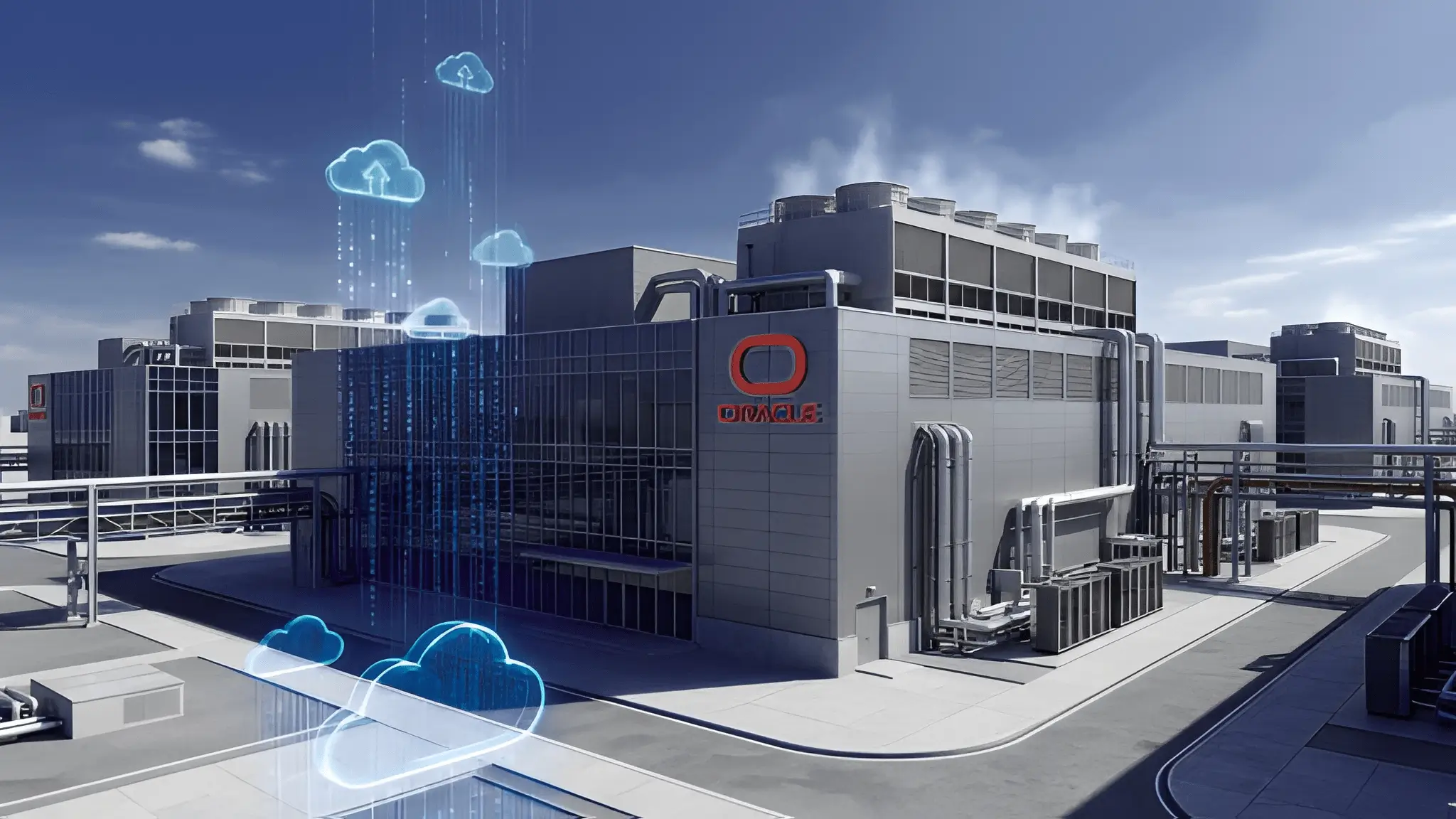
For decades, Oracle operated with the predictability of a mature enterprise software giant. Its reputation depended on databases, long-term enterprise contracts, and stable recurring revenue streams that rewarded operational discipline over aggressive experimentation. That identity now appears increasingly secondary.

The company’s latest direction signals something far more ambitious and financially aggressive. Oracle has entered the AI infrastructure race with the posture of a hyperscaler rather than a traditional enterprise vendor. Data center construction, GPU acquisition, cloud-region expansion, and AI compute capacity have become central to its public narrative. The transformation represents more than a product strategy adjustment. It reflects a complete repositioning of Oracle’s long-term relevance inside the technology industry.
That shift carries enormous consequences. The modern AI economy rewards companies that control infrastructure scale. Access to GPUs, power availability, cooling efficiency, networking density, and cloud distribution increasingly determine who can compete in enterprise AI deployment. Oracle appears determined to avoid becoming a peripheral software layer in a market now dominated by compute ownership.
The timing explains the urgency. Generative AI changed investor expectations across the technology sector almost overnight. Cloud providers no longer compete only on software ecosystems or pricing structures. They now compete on raw infrastructure readiness. The companies capable of delivering AI training clusters and inference capacity at hyperscale occupy the center of enterprise spending conversations. Oracle understands the danger of standing still in that environment.

What makes the company’s strategy controversial is not the existence of AI investment itself. Nearly every major technology company is expanding infrastructure spending. The tension comes from the scale and speed of Oracle’s transformation relative to its historical business model. A company once associated with disciplined enterprise margins is now embracing capital intensity at levels that resemble infrastructure-first cloud operators.
That introduces a difficult question for investors and the broader market: Is Oracle engineering a historic comeback, or reacting to an industry shift that already changed the competitive hierarchy years ago?
The AI Boom Has Rewritten Corporate Survival Rules
The AI market created a new technological hierarchy based on infrastructure ownership rather than software dominance alone. That distinction matters because infrastructure economics behave very differently from enterprise software economics.
Software businesses historically produced strong margins with relatively controlled operational expansion. Hyperscale infrastructure businesses operate under an entirely different framework. They require constant capital deployment, continuous hardware refresh cycles, expensive power agreements, large-scale networking investments, and geographic expansion that rarely slows once initiated.
Oracle appears willing to accept those realities. The company’s AI push suggests leadership believes enterprise demand for generative AI services will remain durable for years rather than quarters. If that assumption proves correct, Oracle could strengthen its position dramatically by offering AI infrastructure capacity during a period of global compute shortages.
That possibility explains why Wall Street continues rewarding aggressive AI expansion narratives across the sector. Investors increasingly view AI infrastructure not as optional spending but as a prerequisite for long-term relevance. Companies that hesitate risk losing strategic importance to rivals capable of scaling faster.
Still, market enthusiasm does not eliminate execution risk. The AI boom currently rewards expansion announcements almost automatically. Data center projects, GPU partnerships, and cloud investments frequently generate investor optimism before revenue durability becomes fully visible. That environment creates pressure for technology companies to appear aggressive even when long-term demand visibility remains uncertain.
Oracle now sits directly inside that pressure cycle. The company cannot afford to look absent from the AI transition. At the same time, aggressive infrastructure expansion creates exposure that Oracle historically avoided. Massive capital commitments become difficult to reverse if enterprise AI adoption slows, pricing compression intensifies, or cloud competition weakens profitability.
The infrastructure race also changes competitive expectations. Oracle no longer competes solely against enterprise software providers. It competes against hyperscale operators with deeper cloud ecosystems, broader developer adoption, larger infrastructure footprints, and stronger AI platform visibility. That shift may become the defining challenge of Oracle’s AI era.
Oracle’s Biggest Risk May Be Structural, Not Technical
The technology industry often treats AI competition as a product battle. In reality, the larger struggle increasingly revolves around operational endurance.
Building AI infrastructure at hyperscale requires sustained spending momentum over multiple years. Hardware becomes obsolete rapidly. GPU supply chains remain constrained. Energy demand continues rising. Data center cooling systems are becoming more complex as rack densities increase. Profitability timelines can stretch longer than investor enthusiasm cycles. Oracle is entering that environment while attempting to transform external perceptions of its identity.
The company spent decades establishing itself as a stable enterprise software provider. AI infrastructure competition demands a different reputation entirely. Customers now evaluate cloud operators based on scalability, AI workload optimization, compute availability, latency performance, networking architecture, and ecosystem maturity. Those expectations favor companies already deeply embedded in modern cloud development pipelines.
Oracle’s challenge therefore extends beyond building facilities or acquiring GPUs. The company must convince enterprises that it deserves long-term strategic consideration in an AI-driven cloud economy increasingly dominated by scale perception. That is where the commentary surrounding Oracle becomes especially complicated.
Some observers view the company’s expansion as overdue adaptation. From that perspective, Oracle recognized a major industry transition and moved aggressively before the AI infrastructure market consolidated permanently around a smaller group of dominant providers. In this interpretation, Oracle’s willingness to spend heavily reflects strategic realism rather than panic. Others interpret the same expansion differently.
They see a company responding to market fear as much as opportunity. The concern is not that Oracle lacks technological capability. The concern is that the AI market now punishes companies perceived as cautious. Infrastructure announcements have become signals of survival. Every major technology company wants investors to believe it possesses sufficient AI relevance to remain competitive over the next decade.
That environment encourages escalation. The result is an industry-wide infrastructure arms race where nearly every major cloud operator continues increasing AI-related spending simultaneously. Oracle’s strategy exists inside that broader pattern, but its transformation feels sharper because the company historically projected operational conservatism rather than hyperscale ambition.
The Entire Bet Depends On AI Demand Remaining Explosive
Oracle’s AI strategy ultimately rests on one foundational assumption: enterprise demand for AI compute will continue expanding aggressively enough to justify enormous infrastructure investment.
If that assumption holds, Oracle could emerge stronger than many critics expect. Enterprises seeking alternatives to dominant cloud providers may welcome additional large-scale AI infrastructure options. GPU shortages and rising AI deployment needs could create enough demand to support multiple major infrastructure players simultaneously. Under that scenario, Oracle’s current spending cycle may eventually appear prescient. If demand weakens, however, the economics become more difficult.
AI infrastructure expansion does not operate like traditional software scaling. Excess data center capacity creates expensive operational drag. Hardware depreciation accelerates rapidly. Infrastructure utilization rates become critical financial indicators. Competitive pricing pressure can intensify quickly if too many providers chase the same enterprise workloads.
That possibility explains why Oracle’s AI buildout generates such polarized interpretations across the industry. The company is not merely launching AI products. It is restructuring itself around infrastructure economics that require constant scale acceleration. Success could reposition Oracle as a legitimate AI-era cloud force. Failure could expose the risks of transforming a historically stable software business into a capital-intensive infrastructure competitor during the most overheated AI investment cycle the technology industry has seen in years.
For now, Oracle appears committed to the wager. The broader technology sector may eventually determine whether that decision represented strategic vision or an expensive response to the fear of irrelevance.












