...
NVIDIA H200 shipments delayed to Q3  · BREAKING: Microsoft confirms 3GW data centre expansion in Asia-Pacific ·  AWS announces new sovereign cloud regions in India and UAE  · Arm-based servers now 24% of hyperscale deployments ·  EU AI Act enforcement enters phase two  · Global data centre investment hits $612B in 2026 ·  TSMC Arizona yields improve to 68% on 3nm process  · OpenAI valuation reaches $400B after latest funding round ·  NVIDIA H200 shipments delayed to Q3  · BREAKING: Microsoft confirms 3GW data centre expansion in Asia-Pacific ·  AWS announces new sovereign cloud regions in India and UAE  · Arm-based servers now 24% of hyperscale deployments ·  EU AI Act enforcement enters phase two  · Global data centre investment hits $612B in 2026

Vertical Integration Won’t Save ReNew’s Solar Growth Narrative

The strategic pivot toward manufacturing control ReNew Energy Global has sharpened its strategic posture by expanding beyond power generation into

Share
ReNew Vertical

The strategic pivot toward manufacturing control

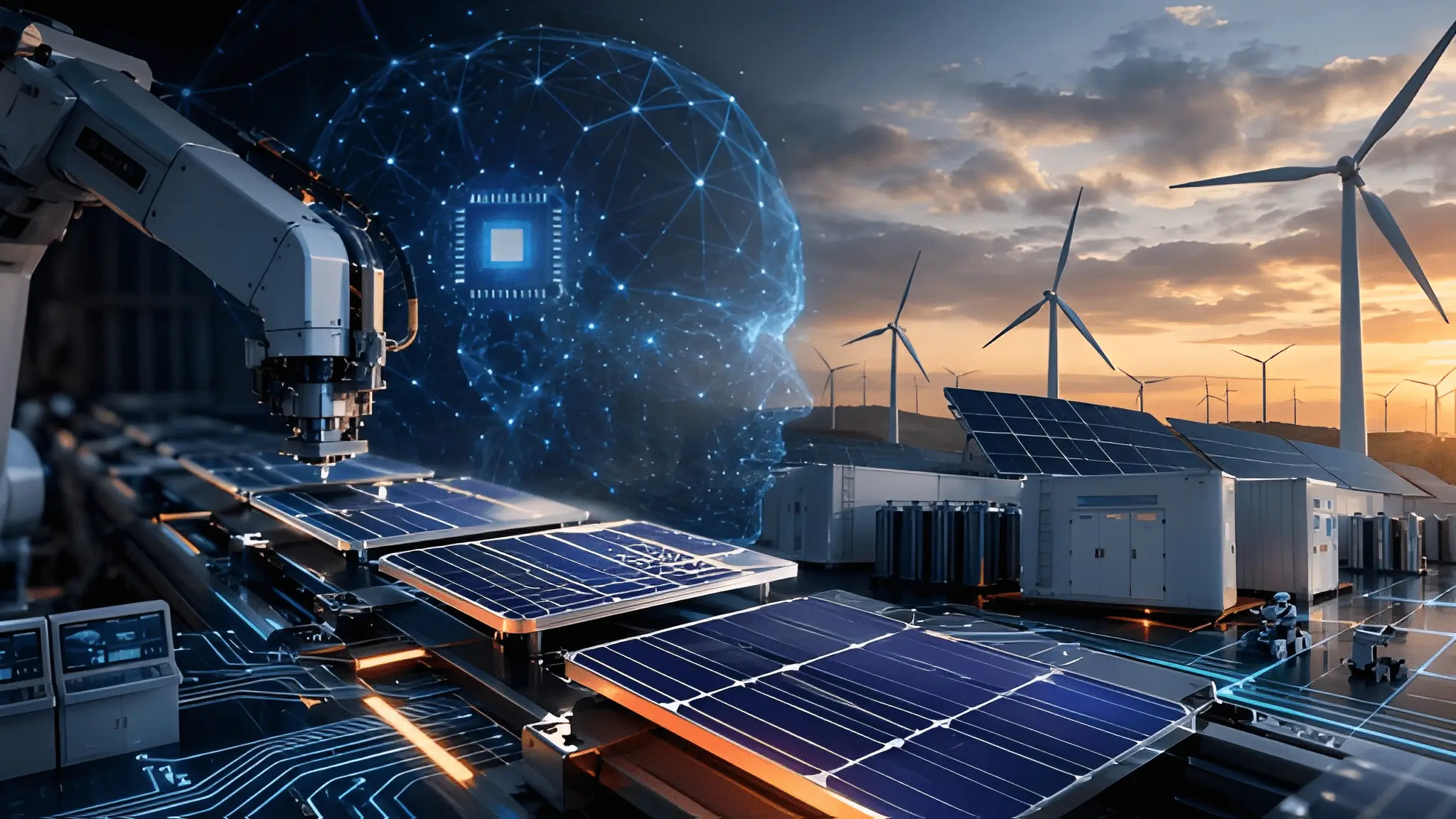
ReNew Energy Global has sharpened its strategic posture by expanding beyond power generation into solar manufacturing. The move reflects a broader industry shift, where developers seek tighter control over supply chains, cost structures, and long-term competitiveness. In theory, vertical integration offers insulation against volatile module pricing, geopolitical disruptions, and supplier concentration risks.

This pivot aligns with a market reality shaped by aggressive global manufacturing capacity, particularly from dominant export economies. By stepping into module and component production, ReNew aims to internalize value that would otherwise leak across the supply chain. The ambition is clear: reduce dependency, improve procurement certainty, and stabilize project economics.

Yet the shift raises a fundamental question. Control does not inherently translate into profitability.

The illusion of margin expansion in a commoditized chain

Solar manufacturing operates within one of the most commoditized segments of the energy transition. Margins remain thin, pricing remains volatile, and differentiation remains limited. Even scale, often positioned as a competitive moat, struggles to deliver sustained advantage when global supply exceeds demand.

ReNew’s entry into this ecosystem does not change these structural realities. Manufacturing scale may compress costs, but it also exposes the company to the same pricing pressures faced by established players. The expectation that vertical integration will unlock superior margins risks oversimplifying the economics of solar production.

The value chain rewards efficiency, not just ownership. Without a clear technological or cost advantage, integration risks becoming an operational expansion rather than a financial breakthrough.

Execution complexity becomes the hidden variable

The transition from energy generation to manufacturing introduces operational layers that extend beyond traditional competencies. Project development, power purchase agreements, and grid integration differ significantly from managing fabrication lines, raw material sourcing, and yield optimization.

Execution risk emerges as a central concern. Manufacturing demands precision, scale discipline, and continuous process innovation. Any misalignment between capacity expansion and demand realization can quickly erode returns.

For ReNew, the challenge lies not in entering manufacturing, but in executing at a level that competes with deeply entrenched global suppliers. This is not a marginal extension of its business model; it is a structural transformation.

Capital intensity reshapes the risk profile

Vertical integration requires substantial capital deployment. Manufacturing facilities, technology investments, and supply chain infrastructure demand upfront expenditure with long payback horizons. This shifts the company’s financial profile from asset-light development toward capital-heavy operations.

Such a transition amplifies exposure to market cycles. When pricing weakens or demand softens, manufacturing assets do not scale down as easily as project pipelines. Fixed costs remain, compressing margins and increasing financial strain.

The strategy may improve cost visibility, but it also concentrates risk. Investors often underestimate how quickly capital-intensive expansions can alter balance sheet resilience.

Supply chain resilience versus overextension

One of the strongest arguments for integration lies in supply chain security. Global disruptions have exposed vulnerabilities in relying on external suppliers, particularly in critical energy infrastructure. By internalizing production, ReNew positions itself to mitigate these risks.

However, resilience can quickly evolve into overextension. Managing upstream and downstream operations simultaneously requires coordination across multiple domains. Missteps in one segment can cascade across the entire value chain.

The balance between control and complexity becomes critical. Integration strengthens resilience only when operational discipline matches strategic ambition.

Competing with entrenched manufacturing ecosystems

The global solar manufacturing landscape remains dominated by players with deep cost advantages, established supply networks, and continuous innovation cycles. These companies benefit from economies of scale that extend beyond production into logistics, procurement, and financing.

ReNew’s expansion places it in direct competition with these ecosystems. The challenge is not only to match pricing but to sustain competitiveness over time. Short-term gains in cost control may not offset long-term pressures from global oversupply and technological shifts.

In this context, vertical integration does not level the playing field. It simply changes the terms of competition.

The disconnect between capacity and profitability

Capacity expansion often signals growth, but it does not guarantee value creation. The solar industry has repeatedly demonstrated that rapid capacity additions can outpace demand, leading to price erosion and margin compression.

ReNew’s manufacturing ambitions must navigate this disconnect. Scaling production without a corresponding edge in cost or technology risks diluting returns. The narrative of growth becomes fragile when profitability does not scale alongside capacity.

This dynamic challenges the core assumption underpinning the bull case: that integration will inherently strengthen financial performance.

Strategic intent versus market reality

The company’s strategy reflects a logical response to evolving market conditions. Supply chain volatility, pricing pressures, and geopolitical considerations have reshaped how energy companies approach growth. Vertical integration offers a pathway to greater control in an uncertain environment.

However, market realities impose constraints that strategy alone cannot overcome. The solar value chain rewards specialization as much as integration. Companies that excel in one segment often outperform those that attempt to control multiple layers without distinct advantages.

ReNew’s success will depend on how effectively it bridges this gap between intent and execution.

The margin advantage remains unproven

At the center of the narrative lies a critical uncertainty: whether manufacturing scale can translate into sustainable margin advantage. This remains unproven. The solar sector’s history suggests that cost leadership requires continuous optimization, not just capacity ownership.

ReNew’s integration strategy may deliver incremental efficiencies, but the leap to durable margin expansion demands more. It requires differentiation, operational excellence, and adaptability in a rapidly evolving market.

Until these elements materialize, the promise of improved margins remains aspirational.

A growth narrative under pressure

ReNew Energy Global’s move into vertical integration reflects ambition and strategic awareness. It acknowledges the need for greater control in a competitive and volatile industry. Yet ambition alone does not secure outcomes.

The company now operates within a more complex, capital-intensive, and competitive framework. Each of these factors introduces new variables that can influence performance. The growth narrative, while compelling, faces pressure from structural realities that integration cannot fully mitigate.

In the end, the strategy’s success will not be measured by capacity additions or supply chain control. It will be defined by the company’s ability to convert scale into consistent, sustainable returns.

That outcome remains uncertain.

[simple-author-box]

More from AI Infrastructure

The modern AI data center faces a problem that does not fit inside a

Brazil’s data-center opportunity is increasingly being defined not by how many facilities the country

Ireland’s nuclear debate is no longer arriving as an abstract argument about reactor technology.

COMPUTE WEEKLY

The briefing that 40,000+ tech leaders read every Monday. Sharp, fast, essential.

Great! We’ve received your information.

Building an AI Startup Without Owning GPUs

Not owning GPUs has become the default, deliberate strategy for building an AI company — not a compromise founders accept reluctantly. H100 rental rates fell 64-75% in fifteen months, a dense ecosystem of neoclouds and inference-as-a-service providers now lets startups skip infrastructure entirely, and credit programs can fund a company’s first year before a founder writes a check
Most Read

AI infrastructure decisions for high-density deployments increasingly involve what happens after electricity enters the

Demand is broadening across enterprise workloads APAC’s infrastructure story is changing in ways that

AI infrastructure decisions increasingly influence what enterprises can build, test, and deliver. They also

Why Infrastructure Planning Now Starts With Availability A data center project can have a

A property can look enormous from the site entrance and still offer almost no

Disruptor Spotlight

Cerebras Systems

The chip that makes Nvidia nervous. Cerebras’ Wafer Scale Engine is rewriting the rules of AI inference at scale.
Faster
0 x
YoY Revenue
0 x
Transistors
0 T
Market Pulse
MSFT
+1.02%
NVDA
+0.66%
AMZN
-0.078%
AMD
-6.95%
TSMC
-2.98%
Indicative only · Not financial advice
Upcoming Events
SEP
The AI Infrastructure Race (India)
WEBINAR · ONLINE
The AI Infrastructure Race: Won on Power, Land and Trust — Not Capital
MAY
0
AI Infrastructure Summit
DUBAI · IN PERSON
MEA’s premier AI infrastructure event.
JUN
0 0
Compute Forecast Summit
SINGAPORE · IN PERSON
Our flagship APAC event. Early bird open.
Latest Moves
Live
ecolab
Ecolab Deepens Cooling Strategy With $4.75B CoolIT Acquisition
Ecolab is making one of its biggest moves yet into AI infrastructure after completing its $4.75 billion acquisition of liquid cooling specialist CoolIT Systems
Pure DC AVK Europe data center microgrid Dublin 110MW AI infrastructure Ireland 2026
Pure DC and AVK Deploy Europe’s First 110 MW Data Center Microgrid in Dublin
The Pure DC Dublin microgrid has made history as Europe’s first large-scale on-site data center microgrid, launched in partnership with power solutions provider AVK at Pure DC’s campus in Ireland.
Pace Digitek
Pace Digitek Partners With MEGMEET to Expand AI Data Center Power Business
India’s AI infrastructure ecosystem continues to mature as domestic technology manufacturers move beyond traditional telecommunications and industrial markets toward high-growth digital infrastructure opportunities
Follow Compute Forecast
11K followers
1200 followers
Companies to Watch
CW
CoreWeave
Neo Cloud · $19B · IPO Watch
CB
Cerebras Systems
AI Hardware · $4.25B · Pre-IPO
G42
G42
Sovereign AI · Abu Dhabi
H
Humain
Saudi AI · $40B Fund
Latest Podcast
AI Capex, Cloud Margins & the Nuclear Bet
48 MIN · 25 APR 2026

Vertical Integration Won’t Save ReNew’s Solar Growth Narrative

The strategic pivot toward manufacturing control ReNew Energy Global has sharpened its strategic posture by expanding beyond power generation into

Share
ReNew Vertical
15
847 SHARES

0
SHARES

[simple-author-box]

More from AI Infrastructure

AI infrastructure decisions for high-density deployments increasingly involve what happens after electricity enters the

Demand is broadening across enterprise workloads APAC’s infrastructure story is changing in ways that

AI infrastructure decisions increasingly influence what enterprises can build, test, and deliver. They also

Why Infrastructure Planning Now Starts With Availability A data center project can have a

COMPUTE WEEKLY

The briefing that 40,000+ tech leaders read every Monday. Sharp, fast, essential.

Great! We’ve received your information.

Global AI Infrastructure Outlook 2026

The briefing that 40,000+ tech leaders read every Monday. Sharp, fast, essential.
Download Free
Most Read

AI infrastructure decisions for high-density deployments increasingly involve what happens after electricity enters the

Demand is broadening across enterprise workloads APAC’s infrastructure story is changing in ways that

AI infrastructure decisions increasingly influence what enterprises can build, test, and deliver. They also

Why Infrastructure Planning Now Starts With Availability A data center project can have a

A property can look enormous from the site entrance and still offer almost no

Disruptor Spotlight

Cerebras Systems

The chip that makes Nvidia nervous. Cerebras’ Wafer Scale Engine is rewriting the rules of AI inference at scale.
Faster
0 x
YoY Revenue
0 x
Transistors
0 T
Market Pulse
NVDA
$924.60
+2.4%
MSFT
$421.30
+1.1%
AMZN
$192.80
-0.6%
NVDA
$924.60
+2.4%
NVDA
$924.60
+2.4%
Indicative only · Not financial advice
Upcoming Events
MAY
0 0
DCD Global — London
LONDON · IN PERSON
World’s largest DC event. CF is media partner.
MAY
0
AI Infrastructure Summit
DUBAI · IN PERSON
MEA’s premier AI infrastructure event.
JUN
0 0

Compute Forecast Summit

SINGAPORE · IN PERSON
Our flagship APAC event. Early bird open.
Latest Moves
  • Live
Sam Altman
OpenAI appoints new Chief Infrastructure Officer to lead $100B DC programme
27 APR · OPENAI
Sam Altman
OpenAI appoints new Chief Infrastructure Officer to lead $100B DC programme
27 APR · OPENAI
Sam Altman
OpenAI appoints new Chief Infrastructure Officer to lead $100B DC programme
27 APR · OPENAI
Follow Compute Forecast
18.4K followers
12.1K followers
9.3K subscribers
41 episodes
Companies to Watch
CW
CoreWeave
Neo Cloud · $19B · IPO Watch
CB
Cerebras Systems
AI Hardware · $4.25B · Pre-IPO
G42
G42
Sovereign AI · Abu Dhabi
CW
Humain
Saudi AI · $40B Fund
Latest Podcast
AI Capex, Cloud Margins & the Nuclear Bet
48 MIN · 25 APR 2026
Scroll to Top
Seraphinite AcceleratorOptimized by Seraphinite Accelerator
Turns on site high speed to be attractive for people and search engines.