Skip to content
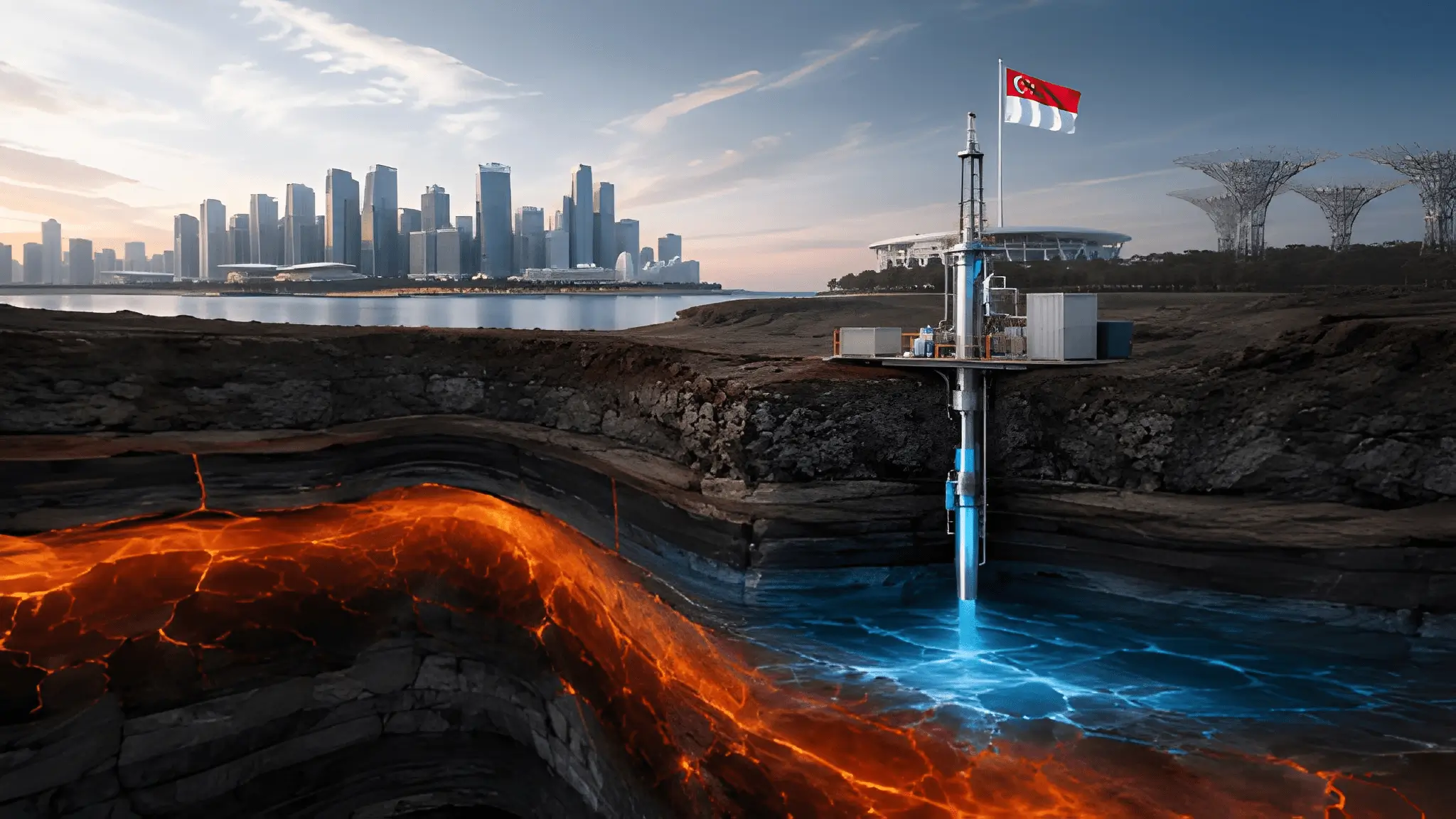
Singapore rarely enters energy conversations as a country defined by what exists beneath its surface. The discussion almost always begins with imported fuels, cross-border electricity, liquefied natural gas, or renewable energy partnerships stretching beyond national boundaries. That framing reflects Singapore’s long-standing energy strategy, which has relied on imported fuels, liquefied natural gas, and regional electricity partnerships because the country has limited domestic energy resources. Geothermal exploration introduces a different perspective. Instead of asking where Singapore should purchase cleaner electricity, it asks whether part of the country’s future energy resilience already exists underground. That distinction matters because it shifts the conversation from procurement toward production, even if the available resource ultimately serves only a fraction of national demand.

This possibility deserves attention beyond climate objectives. Much of the current discussion positions geothermal as another decarbonization pathway for energy-intensive industries, particularly digital infrastructure. While emissions remain important, the larger strategic implication concerns sovereignty. Energy security research consistently recognizes domestic energy production as one factor that can strengthen diversification, long-term resilience, and infrastructure planning. The emerging debate therefore extends beyond renewable generation. It reflects a broader question about whether Singapore’s next infrastructure advantage could originate from geology rather than geography.
Energy Independence Is Becoming An Infrastructure Question
Digital infrastructure has steadily transformed electricity into a strategic asset rather than an operational expense. Data centers, semiconductor manufacturing, cloud services, and advanced computing all depend upon predictable power availability. Reliability increasingly influences investment decisions as much as connectivity, land availability, or tax policy. Singapore already operates one of Asia’s most sophisticated infrastructure ecosystems. However, its energy model remains closely connected to external supply chains. Imported fuels and regional electricity cooperation have supported decades of economic growth, yet those arrangements also expose infrastructure planning to variables beyond domestic control.
Consequently, the collaboration expands long-term fiber manufacturing capacity while giving customers an additional source of optical connectivity for AI data center deployments. Market volatility, regional disruptions, infrastructure maintenance, or changing trade dynamics can all influence long-term energy costs. Geothermal exploration represents a different category of investment because, if commercially viable, it could contribute a domestic source of electricity alongside imported energy supplies. Even if geothermal contributes only a modest share of electricity generation, domestic energy sources can strengthen supply diversification and energy resilience. Infrastructure resilience rarely depends upon replacing every external dependency. It often improves through diversification.

The Ground Beneath Singapore Deserves More Strategic Attention
Singapore’s limited land area has historically constrained the development of many domestic energy resources, contributing to a long-standing reliance on imported energy. Developing geothermal resources requires specialized expertise, extensive geological surveys, exploratory drilling, and longer project timelines than many conventional energy projects. Exploration itself should not be mistaken for guaranteed commercial success. Geological conditions ultimately determine whether geothermal resources can support economically viable electricity generation. Yet uncertainty does not diminish strategic relevance. Infrastructure planning frequently begins long before commercial certainty exists. Countries routinely invest in mapping mineral resources, offshore energy potential, and underground storage capacity because understanding national assets creates future options. Geothermal deserves similar consideration. If commercially viable geothermal reservoirs are identified beneath Singapore, they would provide a domestic source of electricity that would not depend on imported fuels or cross-border electricity imports.
Decarbonization Should Not Overshadow Infrastructure Sovereignty
Climate objectives often dominate discussions surrounding renewable energy. Carbon reduction, sustainability commitments, and emissions reporting remain essential priorities for governments and private industry alike. However, limiting geothermal’s value to environmental performance risks understating its broader significance. Infrastructure resilience increasingly influences economic competitiveness. Companies evaluating major digital investments examine energy reliability alongside sustainability metrics because uninterrupted operations require both.
Domestic generation contributes differently than imported renewable electricity. Imported clean power still depends upon external transmission infrastructure, cross-border agreements, and regional market conditions. Locally generated electricity strengthens the physical foundation supporting national infrastructure regardless of how international markets evolve. That distinction becomes increasingly relevant as countries compete to attract advanced manufacturing, artificial intelligence infrastructure, and high-performance computing facilities. Reliable domestic energy sources strengthen investment confidence because they reduce one category of strategic uncertainty. Geothermal therefore belongs within conversations about national competitiveness as much as environmental policy.
Digital Infrastructure Benefits From Stable Energy Foundations
Data centers often appear at the center of electricity discussions because their demand continues expanding alongside artificial intelligence deployment. That visibility sometimes creates the impression that infrastructure merely consumes available power. A different interpretation deserves consideration. Digital infrastructure increasingly follows locations capable of demonstrating long-term energy confidence. Investors examine generation diversity, grid resilience, transmission capacity, and future expansion potential before committing billions of dollars to physical assets expected to operate for decades. Energy availability shapes infrastructure growth rather than simply responding to it.
Any domestic resource capable of strengthening grid resilience therefore influences future digital investment, regardless of whether its initial contribution appears modest. Geothermal’s greatest advantage may not involve replacing existing generation capacity. Instead, it could expand the diversity of energy sources supporting essential infrastructure. Diversification has repeatedly strengthened infrastructure systems because different technologies respond differently to operational challenges, maintenance cycles, and market conditions. The same principle applies to national energy planning.
Infrastructure Planning Often Rewards Early Exploration
Large infrastructure transformations rarely emerge from immediate commercial success. They typically begin with exploratory investments whose long-term value remains uncertain during the earliest stages. Fiber-optic networks, subsea cables, renewable generation, and advanced manufacturing all required years of technical validation before becoming foundational infrastructure. Geothermal exploration follows a similar trajectory. The most important outcome may initially be knowledge rather than electricity. Geological surveys, drilling programs, thermal mapping, and resource assessments create information that influences future planning regardless of immediate commercial results.
Infrastructure decisions improve when uncertainty decreases. Waiting until every commercial question receives definitive answers often delays opportunities that require years of preparation. Singapore has historically demonstrated strength through long-term infrastructure planning instead of reactive investment cycles. Applying that same philosophy to geothermal exploration would remain consistent with the country’s broader development approach. Strategic infrastructure rarely emerges accidentally. It develops through disciplined evaluation of possibilities before market conditions fully mature.
The Underground Economy May Become Part Of The Digital Economy
National infrastructure conversations frequently focus on visible assets. Ports, airports, transmission lines, industrial parks, and data centers dominate public attention because their economic contributions appear tangible. Underground resources receive far less visibility despite influencing economic resilience in many countries. Geothermal introduces an opportunity to reconsider that imbalance. If commercially viable resources exist beneath Singapore, they would not simply contribute renewable electricity. They would expand the country’s portfolio of domestic infrastructure assets supporting long-term economic growth. Singapore has built extraordinary economic strength through connectivity, logistics, trade, and infrastructure excellence despite limited natural resources. Discovering a commercially useful domestic energy source would introduce an entirely different dimension to that narrative.
The Strategic Conversation Should Begin Below The Surface
Geothermal exploration should not be viewed as a guaranteed solution to Singapore’s future energy requirements. Geological realities will ultimately determine its commercial potential, and no exploration program can alter those facts. Nevertheless, the strategic question deserves greater prominence than it currently receives. Countries increasingly compete through infrastructure resilience rather than infrastructure scale alone. Domestic energy production strengthens resilience because it reduces exposure to external variables that governments cannot fully control. Singapore’s energy future will almost certainly continue relying upon diverse international partnerships. Geothermal does not replace that reality. It complements that strategy by continuing to evaluate whether geothermal resources can make a meaningful contribution to Singapore’s future energy mix. The long-term value of geothermal exploration will ultimately depend on geological findings, but continued assessment will determine whether a domestic renewable resource can play a meaningful role in Singapore’s future energy system.