 Skip to content
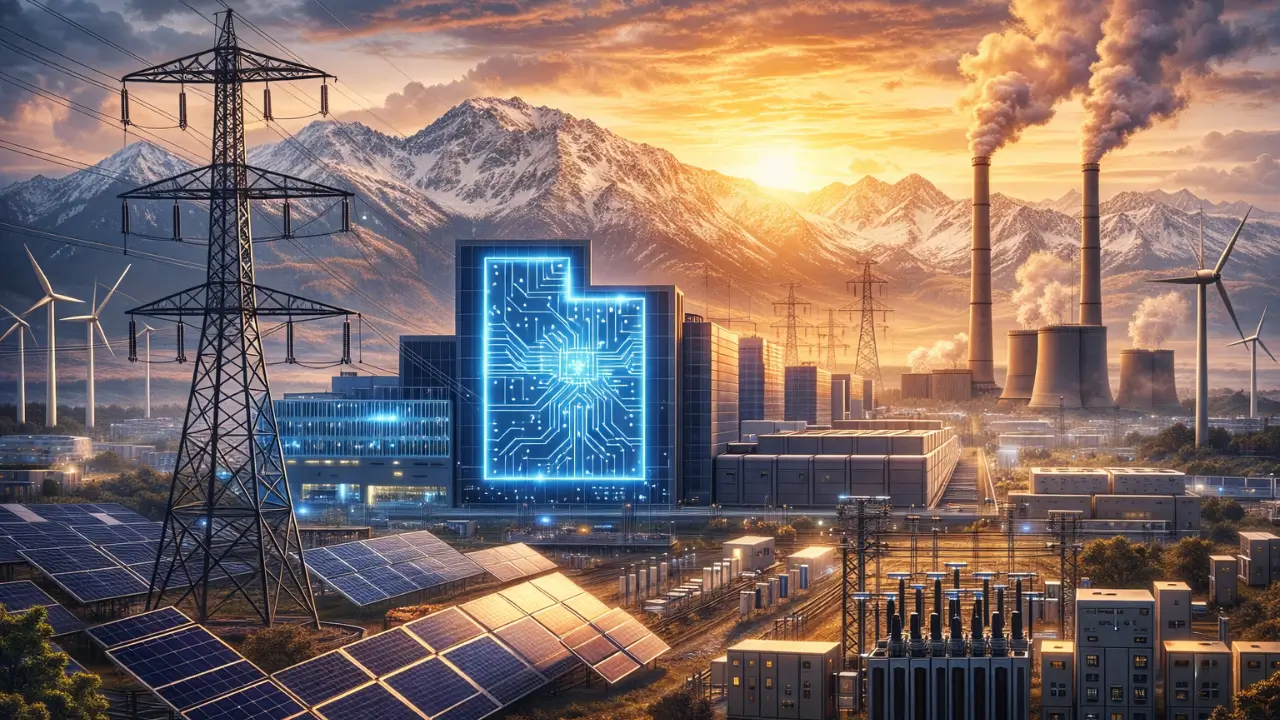
Utah’s power grid stands at a pivotal moment as artificial intelligence accelerates electricity consumption across the United States. What once looked like a manageable rise in digital infrastructure demand now resembles a structural shift in energy economics. Hyperscale data centers no longer represent incremental load growth. They introduce sustained, high-density consumption patterns that test transmission networks, fuel supply chains and regulatory agility. This surge in Utah AI power demand now defines the state’s infrastructure and energy strategy debate.

Utilities across the West have flagged tightening reserve margins. Transmission interconnection queues stretch for years. Large-load customers increasingly negotiate directly with power developers rather than relying solely on traditional utility procurement models. Utah, long viewed as business-friendly and geographically suited for industrial-scale campuses, now finds itself balancing growth with grid resilience.
Millard County, in Utah’s western desert, illustrates this transformation. Sparse population density, expansive land availability and relative distance from urban centers make the region attractive for large-scale data projects. Yet the same isolation complicates grid interconnection and generation planning. AI’s electricity intensity demands firm capacity, not intermittent supply alone.
Industry analysts note that advanced AI training clusters can require hundreds of megawatts per campus. Inference workloads, once distributed, are also consolidating into larger facilities. The result: round-the-clock power demand with minimal tolerance for interruption. Utah’s grid must accommodate this load while maintaining reliability for residential and industrial customers.
The state’s energy profile traditionally leaned on a mix of coal, natural gas and growing renewable capacity. Coal retirements and renewable expansion reshaped generation portfolios over the past decade. Now AI-driven load growth is forcing a recalibration of baseload assumptions. Grid operators must ensure dispatchable capacity remains available during peak demand and seasonal variability.
Energy companies see opportunity in that tension. AI’s electricity appetite creates long-term offtake prospects, bankable contracts and financing clarity. Developers who can combine firm generation with cleaner technologies position themselves to capture hyperscale demand.

The 10GW Bet in the Desert
Creekstone Energy’s planned “Gigasite” in Millard County represents one of the most ambitious responses to Utah AI power demand. The company broke ground in December 2025 and aims to bring more than 300 megawatts of gas-powered capacity online by the first half of 2027. At full buildout, the campus targets 10 gigawatts of capacity, positioning it among the largest AI-optimized data center sites globally.
The scale alone reframes Utah’s grid debate. Ten gigawatts rivals the output of multiple large power plants combined. Even phased development requires careful sequencing of generation, interconnection and load ramp-up.
Ray Conley, CEO of Creekstone Energy, has underscored the structural pressure AI places on power systems.
“AI workloads are driving unprecedented demand for power,” he says. “At Creekstone, we plan to deliver over 600MW of baseload power to our Gigasite customers in 2027 in Phase 1 of our project. Our collaboration with Zeo reflects the market urgency of using all available energy sources to rapidly provide baseload power.”
“With solar power and Zeo’s long-duration energy storage solution, we plan to significantly expand the amount of clean power we offer our hyperscalers and artificial intelligence data centre customers.”
Creekstone’s approach blends natural gas baseload generation with renewable additions. In February, the company signed a memorandum of understanding with Zeo Energy to deliver roughly 280 megawatts of solar generation paired with storage systems at the site. The model signals a pragmatic strategy: anchor early phases with dispatchable gas while layering in renewable capacity supported by long-duration storage.
This hybrid framework reflects broader industry thinking. Gas turbines can respond quickly to load changes and support reliability during ramp-up phases. Solar reduces marginal fuel costs and emissions during daylight hours. Storage extends renewable output beyond immediate generation windows, supporting peak evening loads and enhancing grid flexibility.
For Utah, the project tests whether localized generation tied directly to large campuses can relieve broader system strain. If successful, the approach could reduce pressure on statewide transmission upgrades. If misaligned, it risks adding concentrated demand that still relies on shared infrastructure.
Storage, Capital and Competitive Edge
Zeo Energy’s participation adds another dimension to the evolving power equation. The company acquired energy storage firm Heliogen in August 2025, expanding its capabilities in thermal and chemical storage technologies. Long-duration storage, often defined as systems capable of discharging for eight hours or more, remains critical for smoothing renewable intermittency at scale.
Tim Bridgewater, CEO of Zeo, framed the partnership as a strategic inflection point. “Since our acquisition of Heliogen, we have been actively seeking to apply our long-duration storage expertise to the unprecedented power demand in the data centre space.
“Our MoU with Creekstone is a milestone in this effort and we are in discussions with several other projects that we believe can benefit from our clean baseload power solutions. The Creekstone collaboration is an opportunity to validate the application of our expertise in renewable power generation and long-duration storage to increase power delivery for data centre customers in a cost-effective, low-emissions manner.
“We expect our ability to access the public capital markets to provide project financing could give us a competitive edge in our business development efforts.”
Capital markets increasingly favor projects that combine predictable revenue streams with decarbonization pathways. AI data centers, backed by hyperscale tenants, offer long-term contracts that can underpin project financing. Storage-enhanced renewable systems strengthen environmental credentials while preserving reliability.
Yet Utah’s grid operators and policymakers must scrutinize integration risks. Large behind-the-meter generation reduces some transmission congestion, but interconnection standards, reserve margins and contingency planning still apply. Rapid deployment of gigawatt-scale campuses can outpace regulatory processes if oversight lags. Water usage, fuel supply logistics and environmental permitting add further complexity. Gas-fired capacity requires steady pipeline access. Solar arrays demand significant land. Storage systems introduce materials sourcing and lifecycle considerations. Each element interacts with local communities and statewide planning frameworks.
A Statewide Stress Test
Utah AI power demand now functions as a stress test for energy governance. State leaders must reconcile economic development ambitions with long-term grid stability. Hyperscale investment brings jobs, tax revenue and technological prestige. It also concentrates load in unprecedented ways. Other states have confronted similar dilemmas. Some utilities paused data center interconnections to reassess capacity. Others accelerated new gas builds despite decarbonization targets. Utah’s response may shape its competitive positioning in the AI economy.
Creekstone’s 10-gigawatt ambition and its gas-solar-storage pairing illustrate one possible blueprint. The model leans on firm capacity first, then expands clean supply with storage support. It recognizes that AI workloads demand continuous power and minimal downtime.
Whether that blueprint proves scalable depends on execution. Construction timelines must align with generation milestones. Fuel contracts must hold firm during peak demand seasons. Storage systems must perform reliably under sustained cycling.Utah’s grid does not face a single project. It faces a structural shift in electricity demand driven by AI. Energy companies see growth. Investors see bankable returns. Policymakers see both opportunity and risk.
The Gigasite Gamble ultimately asks a broader question: Can Utah’s power system evolve fast enough to support hyperscale AI while preserving reliability for everyone else? The answer will determine not only the state’s energy trajectory, but its role in the global AI infrastructure race.












