 Skip to content

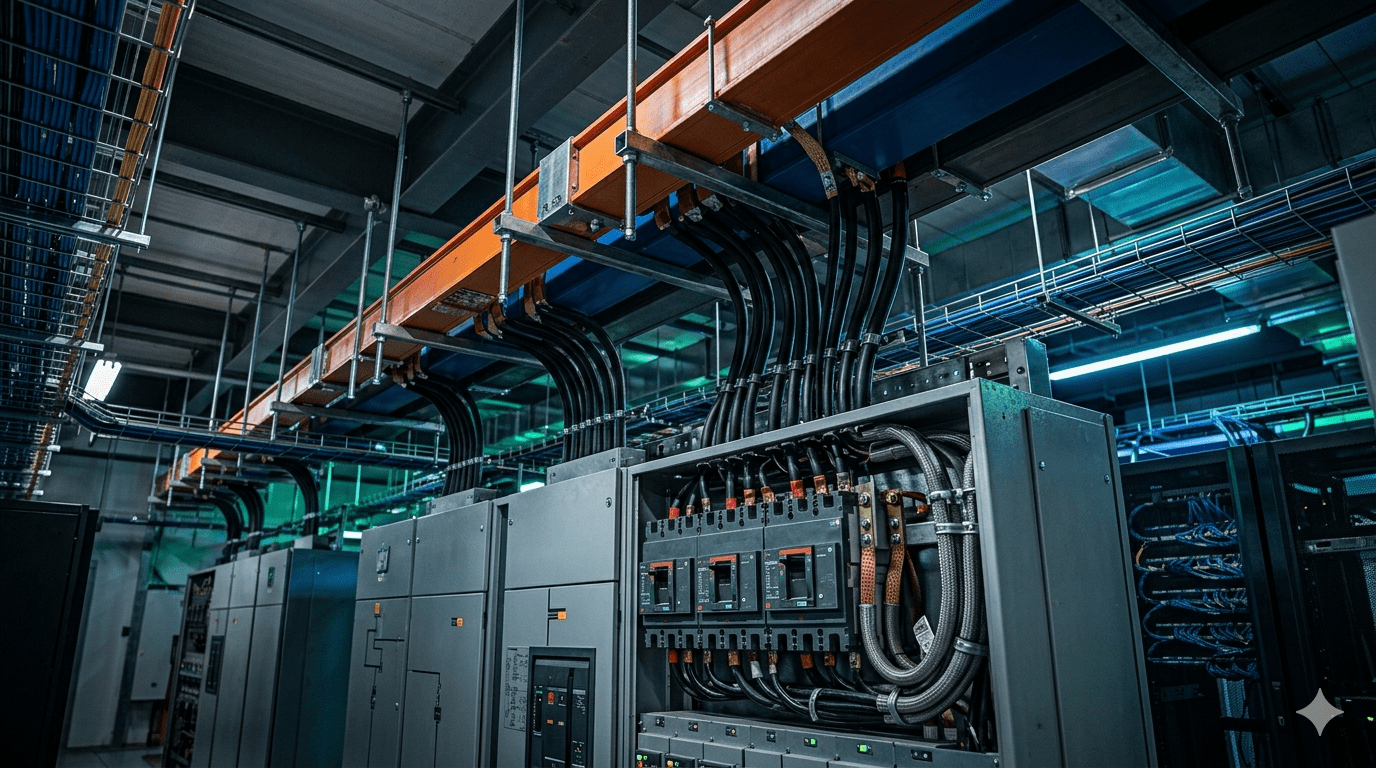
For the past two years, 800 VDC power architecture has been the most talked-about infrastructure concept that nobody was actually building at scale. Every major conference featured sessions on it. Nvidia published technical papers on it. Schneider Electric released white papers on it. The industry acknowledged almost universally that 800 VDC was the right direction for AI data center power delivery. However, the gap between architectural consensus and construction reality remained wide. That gap is now closing faster than most operators anticipated, and the implications for facility design, supply chains, and operational practices are arriving simultaneously.

The shift became visible at GTC 2026 in March, where 800 VDC moved from background topic to dominant conversation on the show floor. Multiple vendors shipped validated reference designs rather than concepts. Texas Instruments unveiled a complete 800 VDC power architecture solution built around Nvidia’s reference design, requiring only two conversion stages from 800 volts to GPU core power. Delta Electronics, STMicroelectronics, and Flex all made marquee announcements specifically on 800 VDC developments at the same event. Additionally, at Data Center World 2026 in April, Schneider Electric’s CTO framed the transition not as a future aspiration but as an active engineering response to constraints that are already limiting what operators can do inside the rack today.
Why the Rack Is the Forcing Function
The technical case for 800 VDC has always been strong. Higher voltage reduces current for a given power level, which enables smaller conductors, less copper, fewer conversion stages, and lower resistive losses across the power chain. Nvidia’s technical documentation shows that switching from 415 VAC to 800 VDC allows operators to transmit 85% more power through the same conductor size while reducing copper requirements by 45%. However, the immediate forcing function is not efficiency but space. As rack power densities push beyond 400 kilowatts, power conversion equipment increasingly takes up space that operators would otherwise allocate to compute infrastructure.
Schneider Electric’s CTO Jim Simonelli made this point explicitly at Data Center World 2026. The motivation for 800 VDC, he argued, is primarily about creating more space for GPUs to do what they need to do. By relocating power conversion outside the rack entirely through sidecar or centralized approaches, operators recover rack volume for compute at densities that conventional in-rack power cannot support. As covered in our analysis of why rack density is now the first design decision in any AI data center, the rack is where every other infrastructure constraint ultimately intersects. Consequently, the pressure on rack-level power architecture is not separate from the broader AI infrastructure buildout. It is one of its most immediate expressions.

What Operators Are Actually Building
The transition to 800 VDC is not happening uniformly or simultaneously across the market. Instead, it is following a pattern of graduated adoption driven by new facility design for the highest-density GPU deployments. Operators building facilities around Nvidia’s Vera Rubin and GB300 platforms are designing for 800 VDC from the outset because these platforms assume it. Facilities designed for previous GPU generations are adopting sidecar approaches that introduce localised 800 VDC distribution zones without requiring full facility redesign. Simonelli described sidecars as a stepping stone rather than an end state, but acknowledged their importance for operators who cannot afford to redesign existing infrastructure on the timescales that GPU refresh cycles demand.
The supply chain is advancing faster than most expected. Texas Instruments, Delta Electronics, STMicroelectronics, Flex, and Eaton have all validated 800 VDC components in production or active sampling. Schneider Electric and Eaton are already shipping integrated power solutions designed around Nvidia’s reference architecture. Furthermore, as explored in our analysis of the AI factory model replacing conventional data center infrastructure, developers are not building these facilities as incremental upgrades to existing designs. Instead, they are building purpose-built AI factories where power, cooling, networking, and compute are designed together as a single, integrated system from the ground up.
The Operational Challenges Nobody Is Discussing Enough
The engineering case for 800 VDC is settled, while operators are still defining the operational case. Higher-voltage DC systems introduce fault isolation, arc-flash risk, and protection coordination challenges that differ materially from those of conventional 480 VAC infrastructure. Simonelli was direct about this at Data Center World. Safety procedures, operational practices, and standards development will be as important as advances in power electronics. Operators deploying 800 VDC systems need technicians trained for high-voltage DC environments, maintenance procedures written for architectures that did not exist at commercial scale three years ago, and commissioning practices that account for the interaction between energy storage, grounding schemes, and upstream protection devices.
The standards gap is real and is being actively addressed. UL, IEC, and NFPA are all working on updated guidance for high-voltage DC data center environments, but the process takes years and construction timelines do not wait for standards bodies. Operators building today are making design decisions in advance of the regulatory clarity that would make those decisions unambiguous. Additionally, as covered in our analysis of how direct-to-chip cooling scales from rack to AI factory, the cooling implications of 800 VDC architecture add another layer of operational complexity that operators need to plan for concurrently rather than sequentially. Facilities being built around 800 VDC today will determine whether the transition succeeds at scale. The phase of conference talks is over.










