 Skip to content
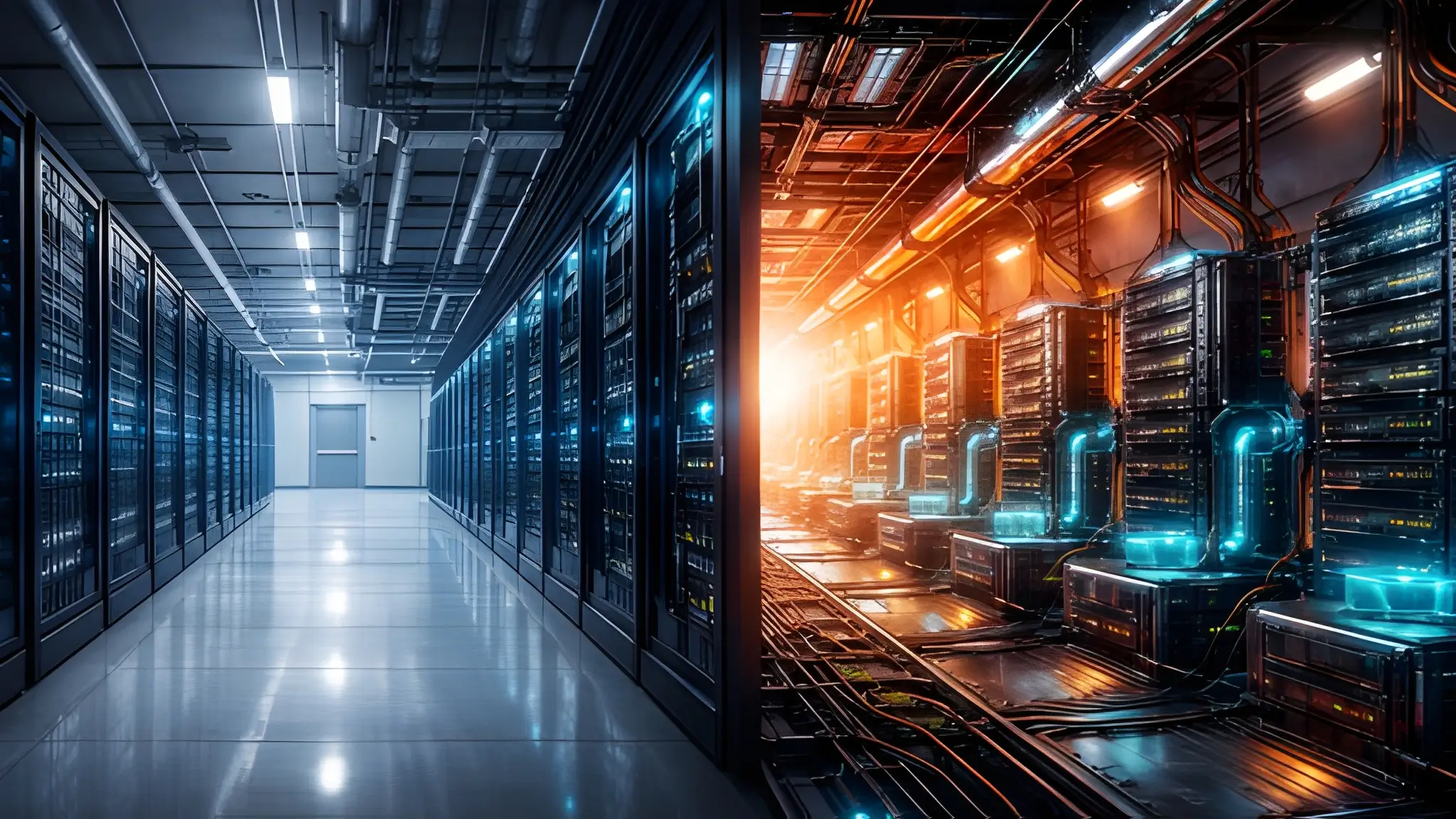
From Facilities to Production Systems
Traditional data centers emerged as environments optimized for uptime, redundancy, and service continuity, where reliability metrics dictated architectural decisions at every layer. Operators designed these facilities to ensure that applications remained accessible despite hardware failures or network disruptions, reinforcing a service-oriented mindset. AI factories introduce a contrasting paradigm, where infrastructure operates as a continuous production system that prioritizes computational output over availability metrics. Instead of measuring success through uptime percentages, these environments evaluate performance through throughput, iteration velocity, and model convergence efficiency. This shift redefines the role of infrastructure from a passive host of workloads to an active participant in computational manufacturing. As a result, design philosophies now align more closely with industrial engineering principles than traditional IT operations.

AI workloads demand sustained, high-duration processing cycles that increasingly resemble production pipelines in behavior, where consistency and throughput take precedence over the variability seen in transactional computing systems. Training large-scale models requires consistent data ingestion, synchronized compute execution, and predictable hardware utilization across thousands of accelerators. Facilities that were once optimized for bursty enterprise workloads now adapt to long-duration compute cycles that can extend for weeks or months. This transformation requires architects to rethink redundancy strategies, as excessive failover mechanisms can disrupt synchronized workloads. Production-oriented environments instead focus on minimizing variability and maintaining steady-state operations across the entire compute stack. Consequently, infrastructure begins to resemble a tightly controlled production pipeline where each component contributes directly to output generation.
The operational mindset also evolves alongside architectural changes, as teams shift from IT service management to production engineering disciplines. Engineers monitor performance metrics such as tokens processed per second, training efficiency, and hardware utilization rather than traditional service-level agreements. This realignment introduces new optimization targets that emphasize computational yield instead of system availability. AI factories require coordination between hardware, software, and orchestration layers to sustain high-performance output over extended periods. Teams must therefore adopt cross-functional expertise that integrates data engineering, systems design, and machine learning optimization. The result is a cohesive operational model that treats infrastructure as a production asset rather than a support function.
Deterministic Design vs Elastic Design
Conventional data centers rely on elastic design principles that accommodate fluctuating workloads across diverse tenants and applications. Virtualization, containerization, and cloud orchestration enable dynamic resource allocation that adjusts to changing demand patterns in real time. AI factories, however, adopt more deterministic design approaches that predefine infrastructure configurations for large-scale training workloads, while still allowing selective elasticity in areas such as inference and cloud-integrated execution environments. These environments operate under tightly controlled conditions where resource allocation remains fixed to ensure consistent performance across all compute nodes. This deterministic approach eliminates variability that could otherwise degrade training efficiency or introduce synchronization issues. Infrastructure design therefore becomes a deliberate process of aligning hardware capabilities with workload requirements from the outset.
Elastic systems thrive on flexibility, yet they often sacrifice predictability in favor of resource efficiency and multi-tenant utilization. AI workloads do not benefit from such flexibility, as training processes require stable and uniform execution environments. Deterministic design ensures that each compute node operates under identical conditions, which simplifies optimization and reduces performance variance. Architects must therefore design networks, power delivery systems, and cooling mechanisms to support consistent behavior across large-scale clusters. This level of precision demands careful planning and extensive simulation before deployment. As a result, infrastructure becomes less adaptable but significantly more efficient for its intended purpose.
The shift toward deterministic design also influences procurement and deployment strategies, as organizations invest in standardized hardware configurations tailored to specific AI models. Instead of building generalized infrastructure capable of supporting diverse workloads, companies now prioritize specialized systems optimized for large-scale training tasks. This approach reduces operational complexity while maximizing performance for targeted use cases. Engineers can fine-tune system parameters with greater confidence, knowing that environmental variables remain controlled. The trade-off lies in reduced flexibility, yet the gains in efficiency and predictability often justify the investment. Therefore, deterministic design emerges as a foundational principle in the architecture of AI factories.

The Collapse of Multi-Tenancy Assumptions
Multi-tenancy has long defined the economics of traditional data centers, where shared infrastructure maximizes utilization and reduces costs across multiple clients. Cloud providers built their business models on this principle, enabling diverse workloads to coexist within the same physical environment. AI factories disrupt this model by increasingly favoring single-tenant or tightly controlled environments that dedicate large portions of infrastructure to specific workloads or organizations, reducing reliance on traditional shared models without fully eliminating them. These environments eliminate resource contention and ensure that all infrastructure components operate in alignment with a single computational objective. This shift reflects the unique demands of large-scale AI training, where even minor performance inconsistencies can impact outcomes. As a result, shared infrastructure models lose relevance in the context of high-performance AI systems.
Single-tenant designs enable tighter integration between hardware, software, and operational processes, creating vertically optimized compute stacks. Organizations can customize every aspect of the infrastructure to match their specific training requirements, from accelerator selection to network topology. This level of control enhances performance and reduces inefficiencies associated with generalized environments. However, it also increases capital expenditure and limits the ability to share resources across multiple users. Despite these challenges, companies prioritize performance gains over cost efficiency when building AI factories. The collapse of multi-tenancy assumptions therefore signals a broader shift toward performance-centric infrastructure models.
The implications extend beyond architecture, influencing how organizations approach partnerships, deployment strategies, and long-term planning. Cloud neutrality gives way to vertically integrated ecosystems where hardware vendors, software frameworks, and infrastructure providers operate in close alignment. This integration accelerates innovation while reducing compatibility issues that can arise in heterogeneous environments. At the same time, it creates new dependencies that organizations must manage carefully. AI factories thus represent a departure from the open, shared infrastructure paradigm that has defined the data center industry for decades.
Infrastructure Becomes Workload-Specific
General-purpose data centers once supported a wide range of applications, from enterprise software to web services, without requiring significant architectural modifications. AI factories abandon this versatility in favor of workload-specific designs that optimize performance for particular model types and training objectives. Engineers tailor infrastructure components to align with the computational characteristics of specific AI workloads. This includes selecting appropriate accelerators, configuring memory hierarchies, and designing network topologies that support efficient data movement. Each facility becomes a bespoke environment engineered for a defined purpose. This specialization marks a significant departure from the one-size-fits-all approach of traditional data centers.
Workload-specific design extends to power and cooling systems, which must accommodate the unique thermal and energy profiles of high-density AI clusters. Facilities integrate advanced cooling techniques such as liquid cooling to manage heat generated by densely packed accelerators. Power distribution systems also evolve to deliver consistent energy across all compute nodes without introducing variability. These changes require close collaboration between hardware engineers, facility designers, and software developers. Infrastructure no longer operates independently of workloads but becomes deeply intertwined with them. Consequently, each AI factory reflects the specific requirements of the models it supports.
The benefits of workload-specific infrastructure include improved efficiency, reduced latency, and enhanced scalability for targeted applications. However, this approach limits the ability to repurpose facilities for different workloads without significant modifications. Organizations must therefore make strategic decisions about which models and use cases justify dedicated infrastructure investments. This level of commitment underscores the importance of aligning infrastructure strategy with long-term business objectives. AI factories thus embody a new form of specialization that prioritizes performance over versatility.
The Rise of Synchronous Infrastructure
AI factories rely on tightly coordinated infrastructure where compute, networking, power, and cooling systems operate with high levels of alignment to support distributed training efficiency, rather than functioning as fully independent subsystems.Traditional data centers often function as loosely coupled systems, where individual components can scale or fail independently without disrupting overall operations. AI workloads require a different approach, as training processes depend on precise synchronization across thousands of compute units. Any deviation in performance can lead to inefficiencies or failures in model training. This requirement drives the development of tightly integrated systems that maintain consistent behavior across all layers of the infrastructure. Synchronous operation becomes essential for achieving optimal performance in large-scale AI environments.
Networking plays a critical role in enabling synchronization, as high-speed interconnects facilitate rapid data exchange between compute nodes. Engineers design network architectures that minimize latency and maximize bandwidth to support distributed training processes. Power delivery systems must also provide stable and uniform energy to prevent fluctuations that could disrupt synchronized operations. Cooling systems ensure that thermal conditions remain consistent across the entire facility, preventing performance degradation caused by overheating. These elements must work together seamlessly to maintain the integrity of the training process. Therefore, synchronization becomes a defining characteristic of AI factory architecture.
The complexity of synchronous infrastructure introduces new challenges in design, deployment, and maintenance, as even minor inconsistencies can have significant consequences. Engineers must adopt advanced monitoring and control systems to maintain alignment across all components. Predictive analytics and automation play a crucial role in identifying and mitigating potential disruptions before they impact performance. This level of coordination requires a holistic approach to infrastructure management that integrates multiple disciplines. AI factories thus represent a convergence of technologies that operate in unison to achieve a common objective.
The Breakpoint Is Philosophical, Not Physical
The transition from traditional data centers to AI factories reflects a deeper philosophical shift in how infrastructure is conceptualized and utilized. Facilities no longer exist solely to host applications but increasingly prioritize computational output efficiency alongside service delivery, reflecting an evolving balance between traditional operational goals and performance-driven infrastructure design.This transformation challenges long-standing assumptions about flexibility, multi-tenancy, and general-purpose design. AI factories embody a new paradigm where infrastructure aligns closely with specific workloads and operational goals. The emphasis shifts from service delivery to output generation, redefining the role of data centers in the digital economy. Consequently, the architectural breakpoint extends beyond physical design into the realm of strategic intent.
This evolution also influences how organizations approach investment, innovation, and competitive differentiation in the technology landscape. Companies that embrace the principles of AI factory design can achieve significant advantages in performance and scalability. However, they must also navigate the complexities associated with specialized infrastructure and reduced flexibility. The balance between efficiency and adaptability becomes a critical consideration in long-term planning. Meanwhile, traditional data centers continue to serve a vital role for diverse and dynamic workloads. The coexistence of these paradigms highlights the diversity of infrastructure needs in a rapidly evolving digital ecosystem.
Ultimately, the architectural breakpoint between AI factories and traditional data centers represents a redefinition of infrastructure as a strategic asset. This shift emphasizes the importance of aligning design principles with specific computational objectives rather than adhering to legacy models. Organizations must therefore rethink how they build, operate, and scale their infrastructure to meet the demands of modern AI workloads. The future of infrastructure lies in its ability to adapt to these new paradigms while maintaining operational excellence. AI factories stand as a testament to the transformative potential of purpose-built systems in the age of artificial intelligence.












