 Skip to content
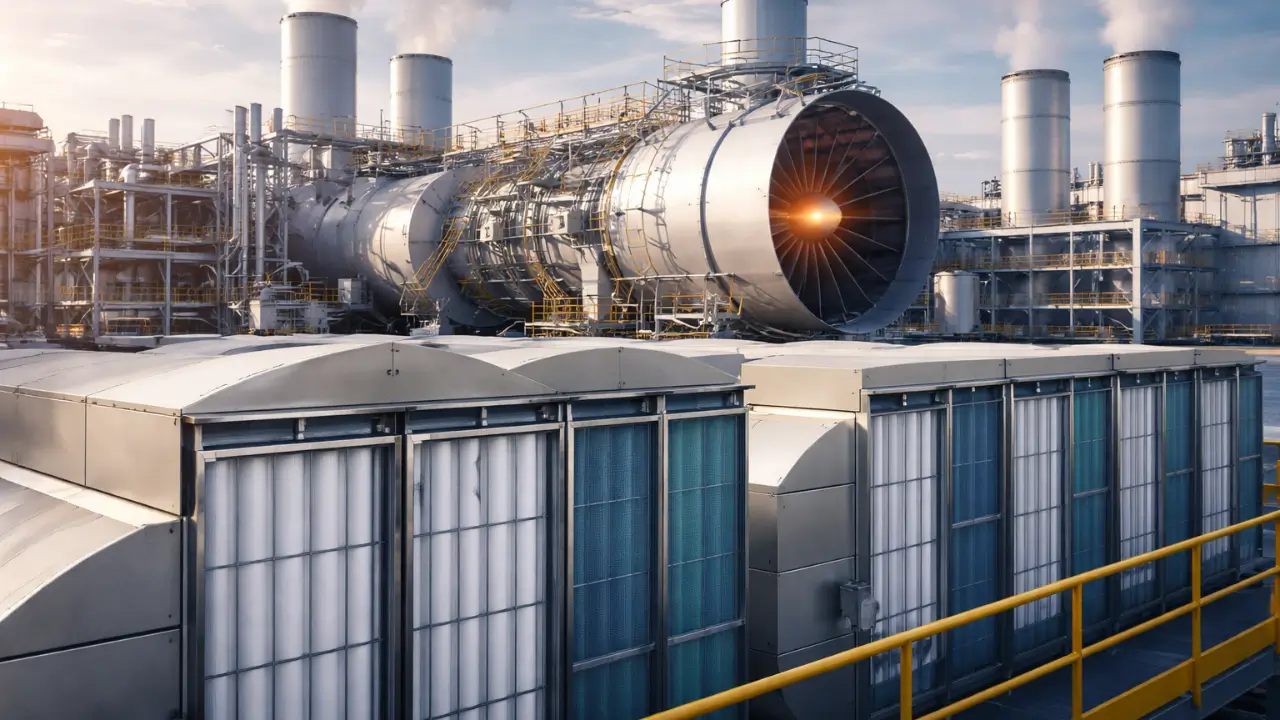
On-site gas generation has moved from niche backup architecture to a primary energy strategy for hyperscale and edge facilities seeking autonomy from grid instability. As operators invest in high-efficiency gas turbines to secure consistent electrical supply, attention often concentrates on fuel contracts, thermal efficiency, and emissions performance. Air, despite serving as the largest mass input into combustion, rarely receives equivalent strategic scrutiny at the planning stage. Turbine systems ingest enormous volumes of ambient air every hour, and that intake environment directly shapes performance curves and degradation patterns. Mechanical reliability therefore begins at the intake housing rather than inside the combustion chamber alone. Operational resilience depends not only on fuel supply security but also on the invisible quality of the atmosphere surrounding the plant.

Modern data centers operate within environments that range from coastal humidity corridors to dust-intensive inland logistics hubs. Environmental variability exposes turbine components to contaminants that differ significantly by geography and industrial density. While engineers calculate heat rates with precision, they sometimes underestimate how airborne particulates alter those calculations over time. Polluted air does not simply pass through the system without consequence, because each microscopic particle interacts with rotating surfaces at high velocity. Maintenance logs across power sectors consistently show that intake conditions correlate with blade fouling and compressor efficiency loss. Strategic infrastructure planning must therefore treat atmospheric conditions as a core engineering variable rather than an externality.
Gas Turbines and the Quality of Combustion
Gas turbines rely on tightly controlled airflow to sustain stable and efficient combustion cycles under continuous load. Air enters through filtration assemblies, passes through compressors, and reaches the combustion chamber where it mixes with natural gas at carefully calibrated ratios. Even minor deviations in airflow quality can disrupt flame stability and pressure distribution across turbine stages. Dust particles, salt aerosols, and industrial pollutants alter boundary layer behavior on compressor blades and reduce aerodynamic efficiency. Such disruptions force the system to compensate through higher firing temperatures or altered fuel flow, which stresses materials beyond ideal parameters. Clean, consistent intake air supports combustion symmetry and preserves thermal balance across rotating assemblies.
Microscopic contaminants attach to compressor blades and form deposits that distort blade geometry and surface smoothness. Accumulated fouling narrows airflow passages and increases pressure drop, which directly reduces overall turbine output. Operators often observe gradual performance decline rather than sudden failure, which masks the underlying cause until efficiency losses become measurable. Salt particles in coastal environments introduce corrosion pathways that weaken protective coatings on high-temperature components. Moisture combined with industrial sulfur compounds accelerates oxidation in hot sections and shortens material lifespan. Air quality therefore shapes combustion integrity long before visible damage appears.
High-efficiency turbines depend on precise compressor ratios to deliver optimal energy conversion rates under sustained load. Contaminated airflow disrupts that precision by altering mass flow characteristics across multiple stages. Blade erosion from abrasive dust reduces aerodynamic lift and increases mechanical vibration within the rotor assembly. Increased vibration not only reduces efficiency but also contributes to bearing wear and shaft alignment issues. Engineers design combustion systems for specific atmospheric assumptions that may not reflect real-world industrial exposure. Air thus functions as a determining factor in turbine health rather than a passive medium for combustion chemistry.
Contaminated Air as a Silent Operational Risk
Airborne contaminants rarely trigger alarms at the moment of ingestion, yet their cumulative impact reshapes maintenance cycles and outage probability. Data centers powered by on-site turbines operate under strict uptime commitments that leave little tolerance for mechanical uncertainty. Intake contamination introduces gradual efficiency decline that increases fuel consumption per megawatt generated. Urban pollution compounds this effect through fine particulate matter that penetrates insufficient filtration layers. Coastal facilities face chloride exposure that corrodes compressor components and weakens structural integrity over time. Invisible environmental exposure therefore becomes a silent operational risk embedded within daily power production.

Desert-adjacent regions present different challenges where sand and dust storms introduce abrasive particles at high concentrations. Fine silica particles erode blade coatings and accelerate surface pitting within compressor stages. Repeated exposure increases the likelihood of forced outages for cleaning or component replacement. Maintenance teams often attribute these events to normal wear rather than environmental misalignment in system design. However, intake contamination directly influences inspection intervals and spare part inventory requirements. Strategic risk assessment must incorporate airborne particulate profiles as part of reliability modeling.
Industrial corridors introduce chemical pollutants that interact with turbine materials under high temperature conditions. Sulfur oxides and nitrogen compounds can combine with moisture to create corrosive deposits within the system. These deposits compromise protective coatings and reduce component fatigue resistance. Power reliability models typically emphasize fuel supply risk, grid volatility, and mechanical redundancy. Environmental intake quality deserves equal treatment within resilience planning frameworks. Airborne threats remain silent until performance degradation reveals their presence through efficiency decline or vibration anomalies.
Filtration as the First Line of Mechanical Defense
Modern turbine installations deploy multi-stage filtration systems designed to capture contaminants before they reach sensitive components. Primary filters remove large particulates while secondary and tertiary stages capture finer particles and aerosols. Advanced systems incorporate coalescers that separate moisture and salt from intake streams in coastal regions. Engineers select filtration efficiency ratings based on particle size distribution and expected environmental exposure. Properly configured systems maintain stable airflow while minimizing pressure drop across filter media. Filtration therefore functions as proactive mechanical defense rather than optional accessory equipment.
Basic particulate filters address visible dust but may fail to capture submicron pollutants common in urban environments. High-efficiency filter media target fine particulate matter that would otherwise pass into compressor stages. Cartridge designs and pulse-cleaning mechanisms extend operational lifespan while maintaining airflow consistency. Operators must balance filtration efficiency with acceptable pressure loss to preserve turbine performance metrics. Advanced monitoring systems track differential pressure to signal optimal replacement timing. Robust intake design prevents contamination from entering the system at the earliest possible stage.
Engineering teams increasingly integrate environmental monitoring data into filtration strategy decisions. Particle counters and humidity sensors provide real-time insight into intake conditions. Such data allows operators to adjust maintenance schedules before fouling reduces performance. Filtration technology continues to evolve with materials engineered for corrosive and high-humidity conditions. Design decisions at the intake stage shape the long-term reliability profile of the entire generation asset. Mechanical defense begins at the perimeter where ambient air first meets engineered infrastructure.
Maintenance Cycles, Downtime, and the Cost of Compromise
Maintenance planning for turbine-powered facilities depends heavily on predictable degradation curves. Clean intake air stabilizes compressor efficiency and extends intervals between major inspections. Facilities that compromise on filtration often experience shortened maintenance cycles that disrupt operational continuity. Unexpected fouling increases the frequency of offline water washing or chemical cleaning procedures. Each maintenance intervention introduces downtime risk and labor cost escalation. Reliable intake protection reduces cumulative operational interruptions across the asset lifecycle.
Unplanned outages create cascading effects within data environments that demand continuous power stability. Backup systems mitigate short interruptions, yet extended turbine maintenance events strain redundancy layers. Data center operators negotiate service-level agreements that depend on predictable power availability. Contaminated intake air erodes predictability by accelerating wear patterns beyond modeled expectations. Preventive filtration investment reduces the likelihood of emergency shutdowns triggered by performance alarms. Cost of compromise therefore exceeds the initial savings from lower-grade filtration assemblies.
Component lifespan correlates strongly with the quality of operating conditions experienced throughout service life. Erosion, corrosion, and fouling increase cumulative stress on rotating assemblies and hot section materials. Extended exposure to contaminants amplifies fatigue cycles and elevates failure probability. Maintenance budgets reflect these realities through higher parts replacement rates in poorly protected systems. Clean airflow supports consistent thermal distribution and mechanical balance across turbine stages. Lifecycle economics favor proactive intake protection rather than reactive component repair.
Regional Realities: Designing for Dust, Salt, and Humidity
Geographic context dictates filtration architecture in turbine-powered facilities. Coastal installations confront persistent salt-laden air that penetrates inadequately sealed intake systems. High humidity environments increase moisture carryover into compressor stages if separation mechanisms remain insufficient. Corrosion risk escalates when chloride deposits combine with elevated operating temperatures. Engineers must evaluate local meteorological data during site planning to inform filtration configuration. Site-specific design ensures that environmental exposure aligns with protective capacity.
Arid and semi-arid regions present continuous dust exposure with seasonal storm intensification. Fine desert particulates exhibit abrasive characteristics that degrade blade coatings rapidly under high rotational speeds. Filtration systems in these regions require enhanced pre-filtration and self-cleaning capabilities to manage load variability. Industrial zones add complexity through mixed pollutant profiles that include metallic particles and chemical residues. Standardized filtration packages often fail to address these nuanced conditions effectively. Environmental assessment must precede procurement decisions for turbine intake systems.
Edge deployments near ports or manufacturing clusters experience fluctuating air quality tied to shipping traffic and industrial cycles. Intake design must account for episodic pollution spikes that exceed average environmental baselines. Real-time monitoring tools enable adaptive maintenance responses during high-contamination periods. Engineering teams benefit from integrating regional air quality data into digital twin models for turbine performance forecasting. Customized filtration strategies strengthen reliability across diverse deployment contexts. Strategic planning recognizes that geography shapes mechanical destiny.
Treating Air as Critical Infrastructure
On-site gas generation provides data centers with autonomy, scalability, and insulation from grid volatility. That autonomy depends on sustained turbine performance under diverse environmental pressures. Air serves as the primary working fluid that enables combustion, compression, and energy conversion within these systems. Infrastructure planners who elevate intake protection to strategic priority strengthen operational resilience across the facility lifecycle. Investment in advanced filtration safeguards not only hardware but also contractual uptime commitments. Clean atmospheric input stands as structural support for reliable digital infrastructure in turbine-powered environments.












