Skip to content
Cooling decisions historically centered on engineering, facilities, and infrastructure teams because thermal management was primarily evaluated through operational performance and facility reliability metrics. That separation has started to disappear as AI infrastructure pushes rack densities beyond assumptions that shaped traditional data center economics. Executive teams now face questions that extend beyond thermal performance and into operating margins, capital allocation, and long-term asset productivity. Rising utility costs, increasing scrutiny of water consumption, and larger concentrations of expensive GPU assets have forced finance organizations to evaluate infrastructure through a broader economic lens. What once appeared as an engineering upgrade increasingly looks like a immersion finance variable capable of influencing multi-year cost structures and risk exposure.

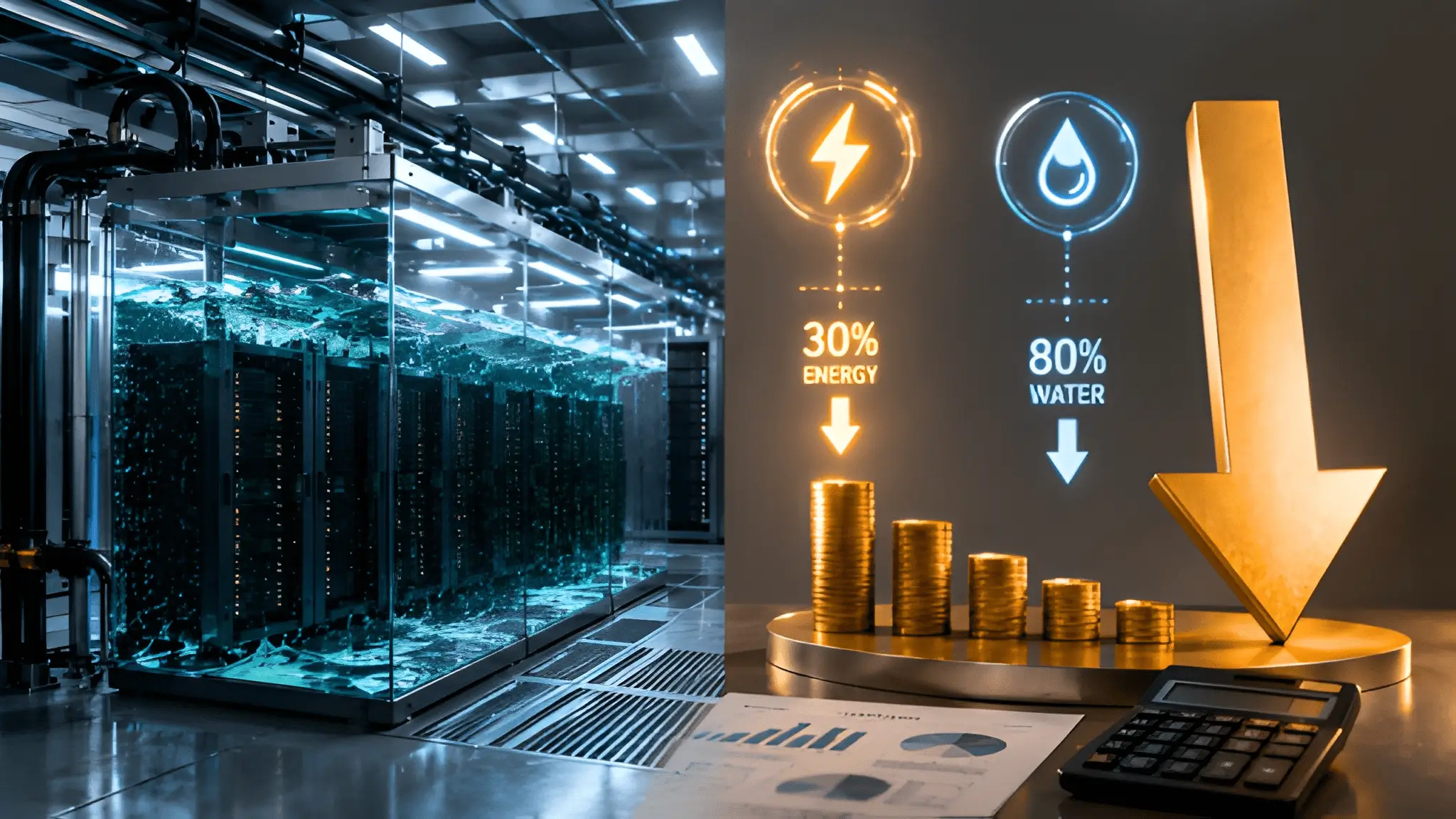
The shift has less to do with cooling technology itself and more to do with how infrastructure economics have changed. AI clusters consume substantially more power than traditional enterprise workloads, while cooling systems must remove greater thermal loads without compromising reliability. As a result, the cost of keeping hardware operational now represents a larger share of overall operating expenditure than many financial models anticipated several years ago. Industry leaders including Castrol’s Sung Kim have highlighted scenarios where immersion deployments can reduce energy consumption while dramatically lowering water usage compared with conventional cooling approaches. Those operational improvements become financially meaningful when organizations translate them into utility expenses, maintenance obligations, and infrastructure planning assumptions. Consequently, finance executives increasingly view cooling architecture as a business model variable rather than a facilities management decision.
The Boardroom Metric Nobody Modeled: Water Risk
Many data center projects historically operated in regions where water availability was treated as a dependable utility input, allowing infrastructure planning to focus more heavily on power, connectivity, and land availability. Conditions have changed across major digital infrastructure hubs where resource constraints, environmental regulations, and permitting challenges influence expansion strategies. Financial leaders now monitor water exposure with greater attention because shortages can trigger additional charges, operating restrictions, or project delays that affect forecasted returns. Facilities that depend heavily on evaporative cooling remain particularly sensitive to those developments because water costs can fluctuate independently from electricity markets. Sustainability metrics increasingly appear in investment disclosures, environmental reporting frameworks, and infrastructure due-diligence processes used by investors evaluating long-term data center assets. Under those circumstances, water consumption becomes an economic variable rather than a sustainability reporting metric.
Immersion cooling enters this discussion because it significantly reduces reliance on large-scale water-intensive cooling processes. Sung Kim has referenced reductions approaching eighty percent in certain deployment scenarios, creating a financial hedge against future water-related operating pressures. Lower water dependence reduces overall exposure to water availability constraints and helps operators maintain more predictable resource consumption profiles across the facility lifecycle. Finance teams value that outcome because forecasting improves when fewer external variables influence operational expenses. The result is not merely a reduction in utility consumption but a reduction in uncertainty surrounding future cost structures. Therefore, water efficiency increasingly appears alongside power efficiency when CFOs evaluate long-term infrastructure investments.

Capex Shock vs Opex Bleed: The Payback Math Shifts
Many organizations initially evaluate immersion cooling through the lens of installation cost, which naturally creates resistance among finance stakeholders. Tanks, fluid systems, supporting infrastructure, and operational adjustments often appear more expensive than extending existing air-cooled designs. That perspective can distort investment analysis because it isolates upfront expenditure from broader lifecycle economics. Total cost of ownership evaluations commonly include energy consumption, cooling equipment maintenance, and infrastructure utilization because these factors contribute materially to long-term operating expenses. Financial modeling becomes more informative when decision-makers examine total cash flows across several years instead of comparing construction invoices. Once organizations adopt that approach, the economics frequently look different from the first budget estimate.
Research examining immersion-cooled environments has demonstrated measurable reductions in energy consumption and operational overhead when compared with conventional cooling approaches. Eliminating large portions of air management infrastructure removes multiple cost centers that continue generating expenses throughout the facility lifecycle. Fan removal, reduced HVAC dependency, and improved thermal efficiency collectively influence annual operating budgets more than many procurement models initially recognize. Meanwhile, denser compute deployments can improve facility utilization rates without proportional increases in supporting infrastructure costs. Organizations evaluating infrastructure investments frequently model energy, maintenance, and utilization costs across multi-year planning periods to understand long-term ownership economics in high-density environments. As a result, investment discussions gradually shift from installation cost concerns toward predictable operating cash flow performance.
Insurance Underwriters Are Asking About Fluid
Insurance discussions historically focused on fire suppression systems, physical security controls, and business continuity procedures. Modern AI facilities introduce new concentrations of capital equipment that elevate the financial consequences of hardware failures or operational disruptions. A single rack can now contain hardware investments worth several million dollars, creating larger insured exposures than many legacy facilities carried. Temperature management remains an important component of operational reliability because thermal instability can contribute to component degradation and affect overall infrastructure performance. The quality of heat removal influences hardware operating conditions and overall system reliability. Reliable thermal management supports broader operational resilience objectives that data center operators monitor closely.
Fluid management has become part of those conversations because immersion environments operate differently from conventional airflow-dependent systems. Properly managed dielectric fluid ecosystems reduce dust accumulation, eliminate mechanical fan failures, and create more consistent thermal conditions across computing assets. Service providers have also expanded lifecycle management capabilities that include fluid monitoring, filtration, and maintenance programs designed to sustain operational consistency. Those capabilities help organizations demonstrate structured risk management practices to insurers and auditors. Moreover, fewer thermal fluctuations can contribute to improved hardware stability over time. The resulting reduction in operational risk has implications that extend beyond maintenance budgets into the broader cost of risk carried by the organization.
The Depreciation Schedule Nobody Talked About
Finance leaders often focus on power costs because those expenses appear clearly in monthly reporting structures. Hardware lifespan receives less attention despite representing one of the largest capital commitments inside modern AI environments. GPU deployments involve substantial investments that organizations expect to utilize across multiple years before replacement cycles begin. Thermal stress influences that equation because excessive heat accelerates wear on electronic components and supporting hardware systems. Consistent operating temperatures help preserve performance characteristics while reducing the frequency of unexpected equipment failures. Consequently, cooling architecture can indirectly influence capital productivity.
Immersion environments create conditions that reduce exposure to dust, humidity variation, and thermal cycling, all of which contribute to long-term hardware stress. While exact lifespan improvements vary according to deployment conditions and equipment configurations, operators increasingly examine whether stable thermal conditions can extend useful asset life. Even modest extensions to refresh cycles can produce meaningful financial outcomes when applied across thousands of GPUs. Deferred replacement schedules improve capital efficiency because organizations extract more productive value from existing infrastructure investments. That effect becomes particularly important when demand for advanced accelerators exceeds available supply. Therefore, asset longevity increasingly appears in financial models evaluating cooling strategies rather than remaining solely within engineering assessments.
When Your Lease Writes Your Budget
Colocation agreements traditionally focused on space allocation, power commitments, connectivity services, and operational responsibilities. The economics of AI infrastructure have expanded those discussions because utility consumption now plays a larger role in tenant cost structures. Some operators have begun exploring facility designs that support advanced cooling methods capable of improving energy and resource efficiency. Those developments create opportunities for contract structures that better align tenant and operator incentives. Financial leaders increasingly examine whether efficiency gains can translate into measurable reductions in occupancy costs. Lease negotiations therefore extend beyond square footage and power availability.
Organizations deploying high-density compute environments often seek contractual mechanisms that allow them to benefit from operational efficiencies generated by the facility. Immersion-ready halls provide one example because improved cooling performance may reduce resource consumption associated with supporting infrastructure. Tenants evaluating multi-year commitments often examine how utility costs, infrastructure requirements, and operational efficiency assumptions are reflected within pricing structures. Facility operators, meanwhile, view advanced cooling capabilities as a potential differentiator in competitive markets. Nevertheless, the most important outcome remains transparency regarding how operational savings translate into financial outcomes. CFOs increasingly expect those calculations to appear within lease negotiations rather than after contracts have been finalized.
The Verdict: TCO Isn’t a Spec Sheet, It’s a Forecast
The conversation surrounding immersion cooling has evolved because infrastructure economics now demand broader analysis than technical performance alone. Finance teams increasingly evaluate how power consumption, water exposure, asset longevity, operational risk, and facility utilization interact across extended planning horizons. Individual efficiency gains matter, yet their cumulative effect often carries greater strategic significance. Organizations that model those variables together gain a clearer understanding of future cost structures than those examining isolated metrics. The discussion therefore moves away from component specifications and toward enterprise financial outcomes. That shift explains why cooling strategy now appears in executive planning conversations more frequently than it did only a few years ago.
Industry discussions around immersion cooling have traditionally focused on heat removal capabilities, thermal efficiency, and support for higher-density computing environments. Today, CFOs increasingly approach the subject from a different direction because financial forecasting depends on understanding how operational decisions influence long-term economics. Energy consumption, water dependency, maintenance exposure, insurance considerations, and hardware replacement cycles each contribute to the broader ownership equation. When analyzed together, those factors transform cooling architecture into a financial instrument that shapes future cash flows. The question no longer centers exclusively on whether the technology can cool modern AI hardware effectively. Instead, executive teams increasingly ask when its economic assumptions should enter formal planning models.