Skip to content
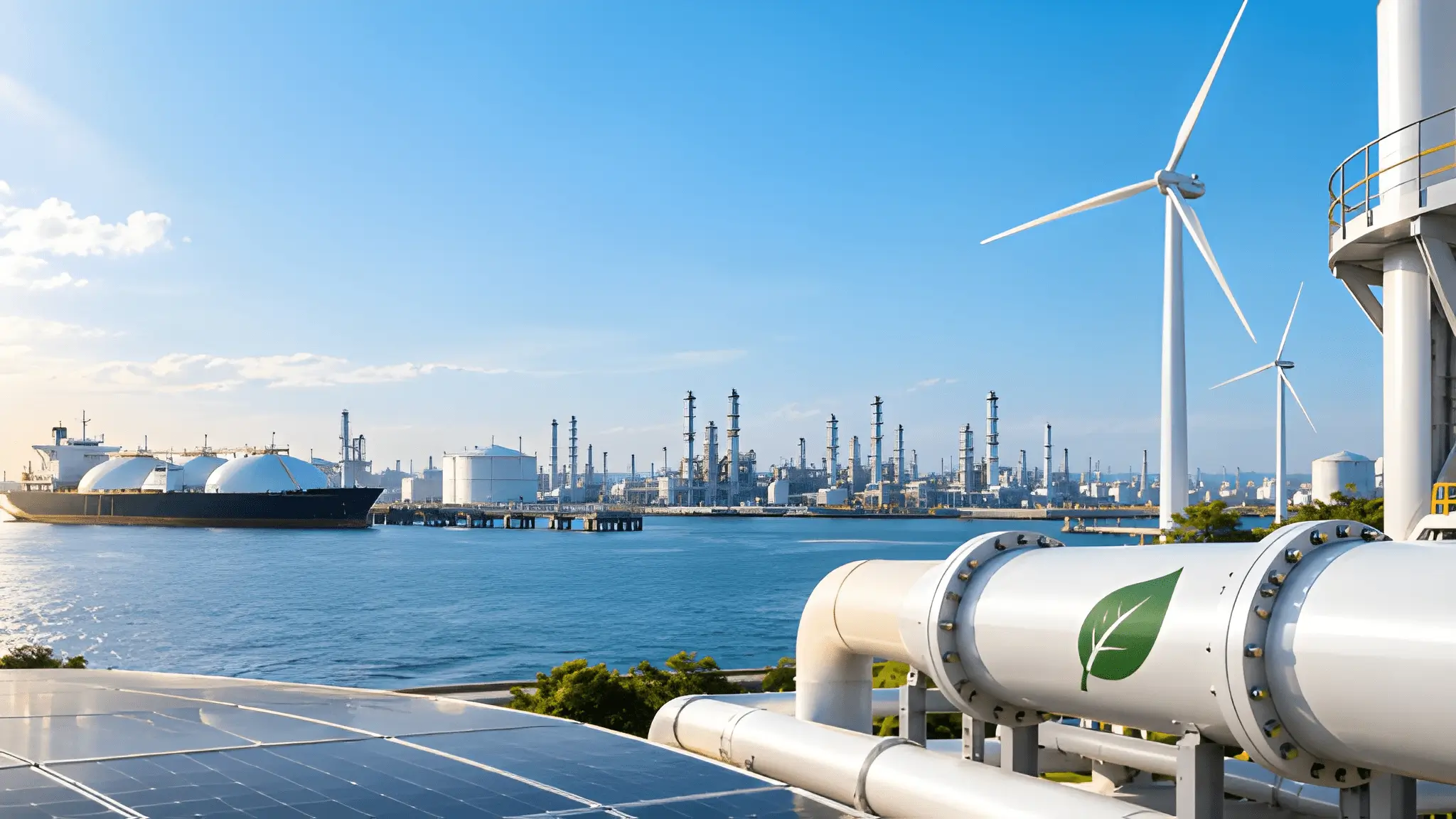
Singapore is turning one of its most carbon-intensive industrial zones into a proving ground for the next generation of digital infrastructure, energy systems and industrial technology. Jurong Island, long associated with refining, petrochemicals and energy-intensive manufacturing, will host the country’s largest low-carbon data center park as authorities reshape the island around new sources of power and industrial decarbonization. JTC and the Economic Development Board have allocated about 20 hectares for the data center development, with the site capable of supporting as much as 700 megawatts of data center capacity.

The decision matters beyond Singapore’s data center market because it places high-density computing inside an established energy and chemicals ecosystem rather than treating digital infrastructure as an isolated real-estate development. That model could allow operators to connect computing demand with shared energy storage, utilities, emerging low-carbon fuels and new power-generation infrastructure already planned for the island. For Singapore, the strategy represents a broader attempt to make scarce land and power infrastructure work harder as artificial intelligence drives demand for increasingly energy-intensive computing.
Jurong Island Moves Beyond Its Fossil-Fuel Legacy
The shift carries particular significance because Jurong Island sits at the center of Singapore’s energy and chemicals economy, with more than 100 companies and more than 27,000 employees operating across the industrial hub. The refining and petrochemicals sector accounts for roughly a third of Singapore’s greenhouse-gas emissions, making the island a critical part of the country’s decarbonization challenge rather than simply another industrial district. Authorities have therefore positioned the island as a place where existing industrial infrastructure can support new energy technologies instead of becoming stranded as the global chemicals sector responds to climate regulation and changing product demand. Close to 300 hectares, or about 10% of the island, have been identified for new energy uses, including lower-carbon fuels and associated infrastructure. The data center allocation sits within that larger transformation, giving digital infrastructure a role in the island’s emerging industrial ecosystem rather than making it a standalone technology enclave.
The distinction is important because the data center park is not simply a land-allocation exercise. Its proposed 700MW capacity places it closer to a strategic power platform than a conventional collection of server buildings, particularly as AI workloads increasingly concentrate electricity demand into fewer, higher-density facilities. JTC says operators will be able to leverage shared energy storage infrastructure, utilities, available power capacity and emerging low-carbon energy sources across Jurong Island. The resulting ecosystem could give developers access to infrastructure that would otherwise require separate investment at individual data center sites. It could also create opportunities to coordinate electricity supply, thermal management, energy storage and backup systems across a larger industrial environment. For data center investors, that changes the value proposition from securing a parcel of land to securing access to an integrated energy and infrastructure network.

700MW Changes the Data Center Equation
The scale of the planned park puts power at the center of Singapore’s digital infrastructure strategy. A 700MW allocation can support a substantial concentration of computing capacity, although facility design, efficiency requirements, electrical architecture and operator allocation will determine the eventual usable IT load. The government has made clear that new data center growth must align with efficiency and sustainability requirements under Singapore’s broader Green Data Centre Roadmap. That creates a different development equation from markets where developers can pursue capacity primarily through additional grid connections and conventional generation. Here, the data center park is emerging alongside an industrial transition that includes hydrogen-ready power generation, ammonia infrastructure, storage and other low-carbon technologies. However, the strategic value will depend on how effectively those systems operate together under real commercial conditions rather than simply existing within the same geographic boundary.
The proximity of power-intensive computing to industrial energy infrastructure could become particularly relevant as AI changes the shape of data center demand. Traditional enterprise facilities can distribute workloads across broader infrastructure footprints, while AI systems increasingly favor dense computing environments that require substantial electrical and cooling capacity in concentrated locations. Singapore’s decision to reserve dedicated land for such facilities therefore signals that authorities view AI infrastructure as part of national industrial planning rather than solely as a technology-sector requirement. JTC has subsequently described the park as supporting AI use cases and has moved toward a partnership with the National University of Singapore to study a second Sustainable Tropical Data Centre Testbed. That testbed will examine technologies including liquid cooling, direct-to-chip systems, immersion cooling, advanced power architectures and low-water approaches for tropical data centers.
Energy Infrastructure Becomes Part of Data Center Design
Jurong Island’s energy transition gives the data center park an unusual advantage because several supporting systems are being developed in parallel. Singapore has identified hydrogen-ready power plants, energy storage and ammonia-based power generation among the technologies that will contribute to the island’s future energy mix. A consortium led by Keppel has been appointed to advance studies for a low- or zero-carbon ammonia project that could generate between 55MW and 65MW through direct ammonia combustion, although the project has not yet reached a final investment decision. That distinction matters because the infrastructure should not be treated as guaranteed capacity before projects reach construction and commissioning. For prospective data center operators, the opportunity therefore sits at the intersection of planned capacity, emerging energy technologies and Singapore’s ability to execute infrastructure projects on a tightly constrained island.
The ammonia project also illustrates the difference between an energy concept and an operational power source. The Energy Market Authority and Maritime and Port Authority of Singapore appointed the Keppel-led consortium to conduct the next stage of engineering work, with the proposed system intended to support both power generation and marine bunkering. The project remains subject to further engineering studies and a future investment decision, meaning developers must distinguish between announced infrastructure and infrastructure that can reliably serve a live data center. That discipline becomes increasingly important as AI operators seek firm power rather than simply access to nominal generation capacity. Meanwhile, Jurong Island offers a physical environment where energy storage, generation, cooling and industrial utilities can be evaluated as connected systems. The island could therefore become a test of whether low-carbon infrastructure can satisfy the reliability expectations of high-density computing without recreating the same carbon-intensive dependencies elsewhere.
Singapore Is Building an Industrial Digital Ecosystem
The park also changes the relationship between data centers and the industrial economy surrounding them. Conventional data center development often treats the facility as a self-contained asset with dedicated power, cooling, backup generation and network infrastructure. Jurong Island creates an opportunity to share selected infrastructure and connect digital loads with industrial energy systems, potentially improving how resources move across the wider district. JTC and NUS are studying technologies that could enable data centers to integrate with hydrogen-ready power plants, low-carbon fuels, batteries and alternative energy sources. The same research agenda includes waste-heat recovery and industrial symbiosis, suggesting that the future data center could become part of an energy network rather than simply consuming resources from it. That distinction could become strategically important as operators face pressure to demonstrate not only efficient facilities but also more intelligent relationships with the surrounding energy system.
Cooling provides another link between the computing and industrial strategies. Singapore’s tropical climate makes thermal management a central design consideration, particularly as AI infrastructure pushes rack densities beyond the assumptions that shaped many conventional data center designs. The proposed Sustainable Tropical Data Centre Testbed 2.0 will examine liquid cooling approaches, including direct-to-chip and immersion technologies, alongside ultra-low-water concepts and seawater-based heat rejection. Those technologies could allow operators to rethink the traditional relationship between computing density, cooling demand and water consumption. Moreover, locating the testbed within the planned data center park could shorten the distance between technology validation and commercial deployment. The strategic opportunity lies in creating a repeatable infrastructure model that other high-density computing projects could adopt across Singapore and potentially other tropical markets.
Jurong Island Could Become a New AI Infrastructure Model
Singapore’s decision also reflects a wider change in how governments evaluate data centers. The industry once competed primarily around connectivity, land availability, construction costs and access to conventional electricity. AI has pushed power availability, cooling architecture and energy resilience much closer to the center of site-selection decisions. Jurong Island combines several of those requirements in one industrial environment, giving Singapore a platform to test whether infrastructure built for heavy industry can support the next generation of computing. The model could prove particularly relevant in markets where new transmission infrastructure takes years to develop and where land constraints make standalone energy systems increasingly difficult to justify. The island’s industrial history could therefore become an asset in the digital economy rather than simply a legacy that Singapore must decarbonize.
The strategy also aligns the data center buildout with Singapore’s broader research and innovation agenda. Tan See Leng, Singapore’s minister-in-charge of Energy and Science & Technology, said Jurong Island will serve as a global test bed for new energies and low-carbon technologies, while the country plans to expand research and development aimed at decarbonizing power and industry. “All these efforts ensure that Jurong Island continues to be home to great firms, and create meaningful career opportunities in the growing green economy,” he said. Government agencies have similarly argued that the island’s integrated industrial base makes it well suited to developing, piloting and scaling new energy technologies. The strategy consequently connects data center investment with industrial policy, energy transition and workforce development rather than treating computing as an isolated growth sector.
The Strategic Question Is What Gets Built Around 700MW
The headline capacity makes Jurong Island attractive, but the deeper proposition lies in the infrastructure that surrounds it. A data center park can secure land and electrical capacity yet still struggle if generation, cooling, storage, transmission and permitting develop at different speeds. Singapore’s approach attempts to coordinate those elements within a concentrated industrial zone where infrastructure operators and technology companies can work from the same physical ecosystem. As a result, the park could provide a useful blueprint for jurisdictions seeking to accommodate AI growth without repeatedly constructing isolated power and cooling systems for every new campus. The success of that model will depend on execution, technology maturity and the ability to maintain reliable low-carbon power as computing demand grows.
Jurong Island is therefore becoming more than a redevelopment story for Singapore’s energy and chemicals sector. It is emerging as a strategic experiment in combining industrial decarbonization with high-density digital infrastructure, using existing utilities and new energy systems to support an increasingly power-intensive economy. The planned 20-hectare data center park gives Singapore a significant platform for AI infrastructure while the surrounding 300 hectares of new-energy allocation create room for a broader transition in how the island produces, stores and consumes energy. Subsequent developments, including the NUS testbed and low-carbon technology initiatives, suggest that Singapore intends to use the site not merely to host computing capacity but to develop the infrastructure models behind it. For the global data center industry, the important question is no longer whether industrial zones can accommodate digital infrastructure, but whether their energy ecosystems can be redesigned to make large-scale computing compatible with a lower-carbon power system.