 Skip to content
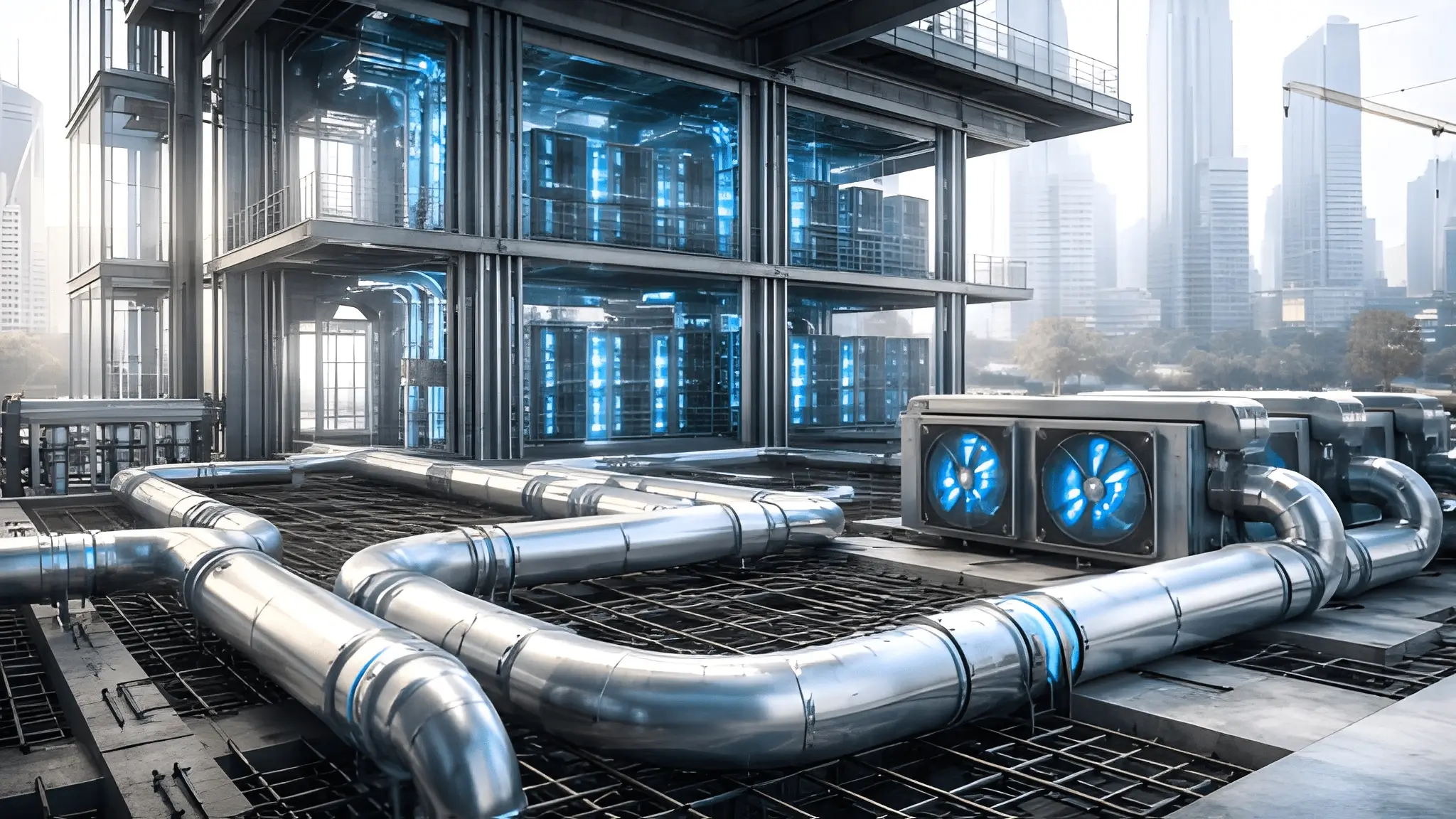
Lightweight data center cooling is increasingly shaping how engineers approach structural efficiency and infrastructure planning. Engineers quantify the cumulative weight of piping networks, coolant volumes, manifolds, and distribution units while calculating slab capacity and reinforcement strategies. Liquid-based systems often introduce concentrated loads that require precise distribution planning across raised floors and structural grids. However, new lightweight materials and optimized fluid volumes have begun to reduce these burdens, supporting more efficient load balancing across racks within defined structural limits.This shift allows facilities to increase rack density, although structural adjustments may still be required depending on load thresholds and building design constraints. Consequently, cooling selection now directly influences how structural engineers allocate safety margins and optimize building material usage.

The evolution of lighter cooling infrastructure also changes how dynamic loads behave within operational environments. Fluid movement, pump vibrations, and thermal expansion introduce variables that engineers must account for in structural modeling. Advanced simulation tools now incorporate these factors into real-time load distribution scenarios, offering more precise predictions. Reduced system weight minimizes stress on slabs and decreases the need for heavy-duty reinforcements, which lowers both cost and construction complexity. Designers can therefore push density thresholds while maintaining structural integrity under variable operating conditions. As a result, cooling design integrates tightly with structural engineering workflows from the earliest planning stages.
Legacy data centers and commercial buildings often face limitations due to strict load-bearing capacities that restrict modernization.Heavy infrastructure has historically introduced structural challenges that can limit the deployment of high-density workloads in such environments. Lighter cooling architectures may help address some of these constraints by reducing the structural burden on existing floor plates in certain retrofit scenarios.This change can support retrofit strategies, although structural reinforcement or design adjustments may still be required based on existing building conditions. Additionally, modular infrastructure approaches can support phased upgrades that align with evolving compute demands. Therefore, facilities that once faced obsolescence can re-enter the ecosystem with upgraded capabilities and improved efficiency.
The implications extend beyond traditional data centers into commercial real estate repurposing strategies. Office buildings, industrial spaces, and mixed-use developments can now accommodate compute workloads due to reduced infrastructure weight. Engineers evaluate floor loading thresholds and integrate compact cooling systems that fit within existing structural tolerances. This approach minimizes disruption while maximizing asset utilization in urban environments. Furthermore, retrofit viability improves investment returns by extending the lifecycle of existing properties. As a result, cooling technology becomes a key enabler in transforming underutilized real estate into high-value digital infrastructure.
Urban land constraints have driven interest in vertical data center architectures that stack compute capacity across multiple floors. Traditional cooling systems introduced weight penalties that made such designs structurally complex and financially intensive. Lightweight cooling solutions may contribute to vertical expansion strategies by helping manage cumulative load across upper levels of a building. Engineers can distribute equipment more evenly, ensuring that each floor operates within safe structural limits. This development allows high-density deployments in cities where horizontal expansion remains impractical. Consequently, vertical scaling becomes a viable strategy for meeting growing compute demand in dense metropolitan regions.
Structural engineers must also consider how vertical load distribution interacts with cooling system placement. Lighter systems enable more flexible positioning of cooling units across floors, reducing reliance on centralized heavy infrastructure.This flexibility can support airflow management and thermal zoning while maintaining structural balance within engineered limits. Additionally, vertical facilities may experience variations in foundation requirements depending on overall building weight and structural design considerations. The integration of lightweight cooling thus aligns with high-rise engineering principles, supporting both safety and efficiency. In contrast, heavier systems would require extensive reinforcement that limits scalability and increases construction costs.

Construction timelines in data center projects often depend on the readiness of cooling infrastructure, which historically required significant civil works. Heavy infrastructure can require reinforced foundations and specialized supports, which may influence installation complexity and timelines. Lightweight alternatives may reduce some of these requirements, contributing to more streamlined deployment of structural and mechanical components. Prefabricated modules integrate seamlessly into building frameworks, minimizing on-site construction complexity. Moreover, reduced weight simplifies transportation and handling, accelerating installation across multiple phases of development. As a result, operators may be able to bring capacity online more efficiently while maintaining structural compliance.
Faster deployment also enhances the feasibility of incremental expansion strategies in response to demand fluctuations. Facilities can add cooling capacity without undertaking major structural modifications or disrupting ongoing operations. This agility supports scalable growth models that align with evolving compute requirements. Engineers design structures with adaptable load margins that accommodate future cooling upgrades. Therefore, the relationship between structural design and deployment speed becomes increasingly interdependent. However, the long-term benefits include reduced capital expenditure and improved time-to-market for new capacity.
Edge deployments require infrastructure that fits within constrained environments such as urban neighborhoods and distributed network nodes. Structural and logistical challenges associated with heavy infrastructure can influence site selection considerations.Lightweight cooling technologies may expand the range of viable locations by reducing load requirements and spatial constraints in certain deployment scenarios. Operators can deploy compute resources closer to end users, improving latency and service performance. This shift aligns with emerging applications such as real-time analytics, autonomous systems, and content delivery networks. Consequently, cooling design plays a critical role in enabling decentralized infrastructure strategies.
Urban environments present additional challenges related to zoning regulations, building codes, and space availability. Lighter cooling systems may support compliance efforts by reducing structural impact and facilitating integration into existing buildings where feasible. Engineers can design compact facilities that align with urban planning requirements while maintaining operational efficiency. Furthermore, reduced infrastructure weight lowers transportation and installation barriers in densely populated areas. The ability to deploy in unconventional spaces increases resilience and redundancy across distributed networks. As a result, cooling decisions directly influence geographic expansion strategies for modern data infrastructure.
Structural Engineering Becomes a Cooling DecisionThe relationship between cooling systems and structural engineering has evolved into a tightly coupled design consideration that shapes every stage of development. Engineers no longer treat thermal management as a secondary system but as a primary factor influencing load calculations and architectural decisions. Lightweight cooling solutions redefine how facilities approach density, scalability, and site selection in both urban and edge environments. This transformation supports more efficient use of materials and greater flexibility in retrofitting existing structures, alongside broader design and deployment considerations. Moreover, the integration of cooling and structural planning supports long-term adaptability in rapidly changing technological landscapes. Ultimately, cooling choices influence operational efficiency as well as aspects of the physical form and geographic distribution of data centers within broader planning frameworks.












