 Skip to content
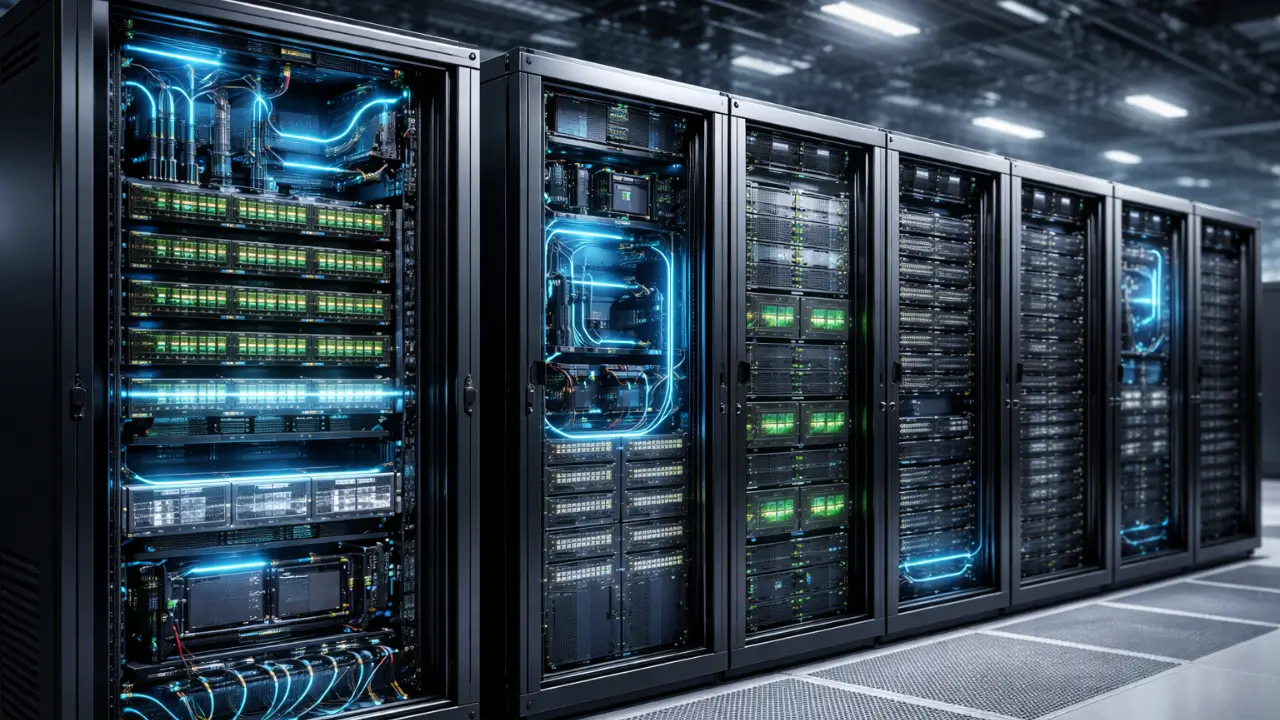
The landscape of modern data centers is changing with an intensity that mirrors the rapid evolution of artificial intelligence workloads, turning once standardized server rooms into highly optimized computing factories where speed, efficiency, and flexibility define competitive advantage. At the heart of this transformation lies the emergence of modular racks as the fundamental deployment units that no longer just house equipment but actively shape how compute, power, and cooling converge to serve AI‑driven demands, compelling original equipment manufacturers (OEMs) to rethink their role from mere component suppliers to strategic architects of integrated solutions. This shift is not a subtle evolution but a disruptive realignment that affects how infrastructure is designed, deployed, and managed across enterprises and hyperscale operators alike. Driven by needs for faster deployment, seamless scalability, and tighter integration across system layers, data centers are becoming living ecosystems that reflect a new technical narrative where modular design principles reduce friction at every stage of the infrastructure lifecycle. As AI workloads push power densities and thermal challenges beyond what legacy architectures were designed to handle, the modular approach not only simplifies physical deployment but also aligns operational models with business imperatives for agility and resilience.

The Rise of Modular Racks in Modern Data Centers
Modern facilities now treat racks as standardized deployment units that encapsulate compute density, structured cabling, and optimized airflow within a compact footprint. Engineers design these units to support AI accelerators that generate intense heat loads and require consistent power quality. Instead of configuring every cabinet individually, teams replicate validated rack blueprints across halls and regions. That approach reduces design ambiguity and strengthens operational consistency across distributed campuses. Furthermore, modular racks allow pre-validation in controlled environments before installation on-site. Deployment cycles accelerate because teams install integrated systems rather than assembling fragmented parts.
High-performance workloads place immense strain on electrical and thermal infrastructure, which forces designers to reimagine rack-level architecture. Engineers now embed intelligent power distribution units and environmental sensors directly within rack frameworks. These enhancements enable real-time visibility into load distribution and thermal behavior at granular levels. Operators gain actionable insights that help prevent hotspots and imbalance across clusters. Such awareness strengthens reliability without demanding continuous manual intervention. Consequently, racks now anchor operational intelligence rather than merely housing hardware.
Vendors have responded by creating configurable rack platforms that accommodate diverse accelerator configurations without extensive redesign. Manufacturers collaborate closely with chipmakers to align mechanical layouts with next-generation silicon roadmaps. Integration at this level reduces surprises during deployment and enhances long-term compatibility. Data center planners benefit from predictable performance envelopes that simplify capacity planning. In parallel, standardized rack architectures support global replication across colocation and enterprise facilities. This structural consistency empowers organizations to expand AI environments with confidence.
Redefining the Rack: From Passive Hardware to Intelligent Units
Historically, racks functioned as passive steel frames that organized servers and network devices. Today, they operate as intelligent enclosures that coordinate power flow, airflow pathways, and workload density. Designers integrate busbars, liquid cooling manifolds, and cable management systems directly into structural elements. Such integration reduces clutter while optimizing efficiency within confined spaces. Operational teams interact with racks through digital dashboards that provide continuous telemetry. Therefore, each rack acts as a managed micro-environment within the broader facility ecosystem.
Liquid cooling adoption further transforms rack identity by embedding thermal management infrastructure at the cabinet level. Engineers design rear-door heat exchangers and direct-to-chip loops that integrate seamlessly with compute nodes. This approach minimizes reliance on room-level cooling while supporting higher power densities. Facilities teams coordinate closely with IT planners to ensure fluid distribution aligns with workload demands. Integrated thermal pathways reduce inefficiencies that arise from fragmented cooling strategies. Consequently, rack-level intelligence strengthens overall facility performance.

Digital control layers now extend into racks through embedded monitoring systems that track voltage stability and airflow dynamics. Operators leverage this data to fine-tune performance and anticipate maintenance requirements. Predictive insights improve uptime while preserving operational agility. Integrated management interfaces allow centralized oversight across multiple sites. This cohesion simplifies governance and compliance in complex enterprise environments. As a result, racks embody both physical and digital infrastructure in unified form.
Simplifying Deployment: Speed and Scalability as Core Drivers
Speed defines competitive advantage in AI-driven markets, and modular deployment directly addresses that imperative. Organizations can pre-configure racks off-site, validate them against workload requirements, and ship them ready for activation. This streamlined process reduces on-site engineering complexity and shortens commissioning timelines. Teams focus on integration and optimization rather than basic assembly tasks. Additionally, modular racks enable phased expansion without major structural redesign. Enterprises gain flexibility to scale infrastructure alongside evolving application demands.
Scalability also benefits from standardized rack blueprints that align with facility-wide electrical and cooling architectures. Designers replicate proven configurations across new data halls without reinventing foundational elements. That repeatability strengthens governance and reduces deployment risk. Supply chains align more efficiently when procurement centers on integrated units instead of disparate components. Coordination improves between OEMs, integrators, and operators during expansion cycles. Consequently, growth becomes strategic rather than reactive.
Flexible layouts further enhance adaptability within constrained urban facilities and edge environments. Engineers design racks to support varying density profiles without compromising structural integrity. Such adaptability allows operators to adjust workloads as AI models evolve in complexity. Infrastructure teams can redeploy racks between sites with minimal disruption. This mobility fosters resilience in distributed digital ecosystems. Ultimately, modular deployment aligns infrastructure planning with dynamic business objectives.
OEMs’ New Role: From Component Providers to Solution Architects
Original equipment manufacturers once focused primarily on delivering discrete hardware components to system integrators. The AI era compels them to expand their value proposition toward integrated solution design. OEMs now collaborate across compute, networking, and cooling domains to deliver cohesive platforms. This transition demands deeper engagement with enterprise architecture teams. Vendors must understand workload characteristics and operational goals before proposing configurations. As a result, OEMs increasingly operate as strategic advisors rather than transactional suppliers.
Full-stack integration requires OEMs to coordinate firmware, management software, and mechanical engineering within unified frameworks. Customers expect seamless interoperability across layers without extensive customization. Manufacturers therefore invest in reference architectures that validate compatibility under demanding workloads. These validated designs reduce integration risk and accelerate procurement decisions. Service models evolve alongside hardware offerings to include lifecycle management and remote support. OEM transformation thus reflects both technical and commercial evolution.
Partnership ecosystems also expand as OEMs align with semiconductor firms and cooling specialists. Collaborative development ensures alignment between silicon innovation and physical infrastructure capabilities. Joint engineering initiatives reduce fragmentation across supply chains. Customers benefit from cohesive support structures that simplify accountability. Market differentiation increasingly hinges on integration expertise rather than standalone hardware performance. Consequently, OEM identity shifts toward orchestration and systems thinking.
Integration Challenges: Aligning Hardware, Cooling, and AI Workloads
Despite its advantages, modular integration introduces design complexities that demand rigorous planning. High-density accelerators generate concentrated heat loads that challenge conventional airflow strategies. Engineers must align power distribution, cable routing, and cooling pathways within confined rack geometries. Cross-disciplinary coordination becomes essential to prevent performance bottlenecks. Operational readiness depends on thorough validation before deployment. Therefore, integration discipline determines long-term success.
Workload variability further complicates alignment between infrastructure and application performance. AI training cycles differ significantly from inference workloads in resource consumption patterns. Infrastructure teams must anticipate these shifts when configuring rack-level capacity. Continuous collaboration between IT and facilities departments strengthens adaptability. Proactive design minimizes disruptive retrofits later in the lifecycle. Integrated planning thus mitigates operational friction.
Security considerations also intensify as racks consolidate multiple critical systems into compact units. Engineers must protect firmware, management interfaces, and physical access points simultaneously. Robust governance frameworks ensure compliance across distributed environments. OEMs integrate security features at hardware and software layers to strengthen resilience. Coordinated policies reduce vulnerability across interconnected deployments. Consequently, integration extends beyond performance into trust and assurance.
Future-Proofing Data Centers Through Modular Innovation
Future readiness depends on infrastructure that adapts gracefully to technological evolution. Modular racks provide a flexible foundation that accommodates emerging processor architectures and cooling techniques. Designers can update internal components without reconstructing entire facilities. This adaptability supports experimentation with novel compute paradigms. Infrastructure teams retain agility while preserving structural stability. Therefore, modular innovation aligns with long-term strategic planning.
Sustainability objectives further reinforce the case for modular design principles. Integrated systems optimize power distribution and thermal efficiency at granular levels. Operators can refine configurations to reduce energy waste without disruptive overhauls. Responsible design strengthens environmental stewardship across digital ecosystems. Stakeholders increasingly evaluate infrastructure through sustainability lenses. Modular thinking thus supports responsible growth alongside technological advancement.
Digital transformation across industries continues to accelerate demand for scalable compute environments. Enterprises require infrastructure that evolves in parallel with software innovation. Modular racks offer structured pathways for incremental upgrades and strategic expansion. OEMs who embrace integration-centric strategies position themselves as long-term partners in this journey. Continuous refinement replaces periodic overhaul as the guiding philosophy. Infrastructure resilience emerges from adaptability rather than rigidity.
Embracing the Modular and Integrated Era
The evolution of racks from passive frames to intelligent deployment units reflects a broader transformation within digital infrastructure strategy. Organizations that once optimized around components now prioritize cohesive systems that unify compute, power, and cooling. OEMs respond by redefining their roles as architects of integrated platforms and lifecycle services. Modular deployment empowers enterprises to scale with confidence while navigating technological uncertainty. Strategic collaboration across ecosystems ensures alignment between silicon innovation and physical design. Ultimately, the modular and integrated era reshapes how data centers support the ambitions of artificial intelligence and beyond.












