 Skip to content
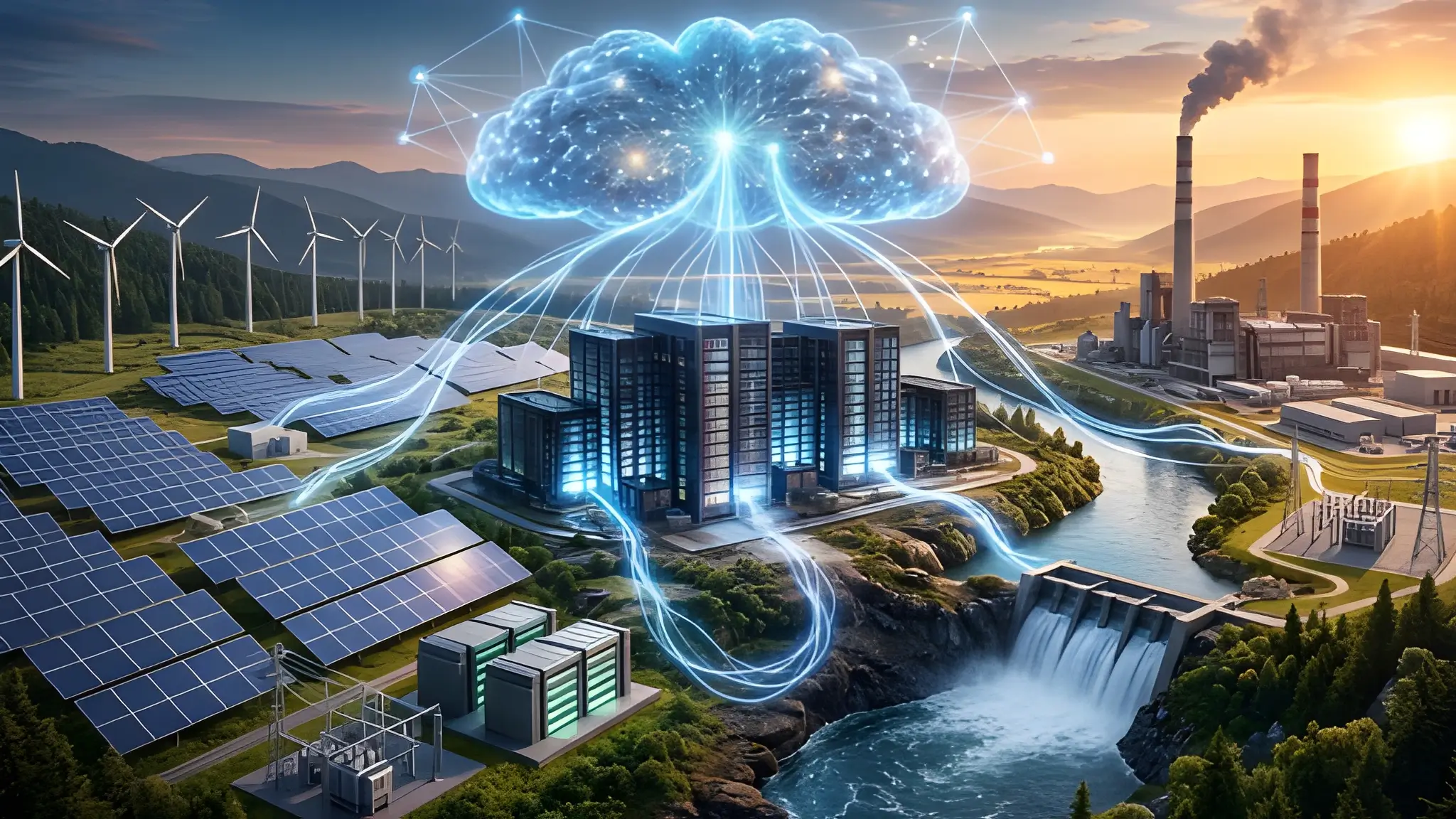
Artificial intelligence infrastructure operates within far narrower electrical tolerances than conventional data center environments, making power quality a defining parameter rather than a background variable. Voltage stability determines whether high-density GPU clusters maintain synchronized computation without triggering protective shutdowns or silent performance degradation. Frequency control plays an equally critical role because even minor deviations can cascade into timing inconsistencies across distributed training nodes. Transient response, often overlooked in traditional IT environments, directly affects how systems recover from rapid load shifts typical in AI workloads. These conditions elevate power quality into a core design constraint rather than a secondary engineering consideration.

High-performance AI clusters rely on tightly coupled hardware systems that exchange data at extremely high speeds, which amplifies sensitivity to electrical disturbances. Even microsecond-scale voltage dips can interrupt training processes or corrupt intermediate computations, leading to costly reruns. Hardware such as GPUs and accelerators depend on stable input conditions to sustain peak efficiency across prolonged workloads. Cooling systems, which operate in tandem with compute loads, also respond dynamically to power fluctuations and can lose efficiency when instability occurs. This interdependence creates a feedback loop where poor power quality affects both compute and thermal management.
Power conditioning technologies such as uninterruptible power supplies and advanced inverters attempt to mitigate these risks, but they introduce additional complexity and cost layers. Grid-side instability forces operators to overspecify infrastructure to maintain consistent performance under variable conditions. Engineers now prioritize harmonic distortion limits and voltage regulation ranges as part of site selection criteria. Clean power delivery has shifted from a compliance metric to a performance enabler in AI infrastructure planning. These evolving requirements reflect a structural shift in how energy systems support compute-intensive applications.
Dispatchability vs Intermittency: Matching Energy to Workload Behavior
AI workloads often demand sustained, high-continuity power delivery that aligns poorly with the inherent variability of renewable energy sources such as solar and wind. Intermittent generation introduces supply gaps that can disrupt long-running training cycles, which can span days or weeks and benefit from consistent power availability. “Dispatchable energy sources provide the ability to match generation output with real-time demand, significantly improving continuity in compute operations. This distinction has become central to infrastructure planning as AI adoption accelerates across industries. The mismatch between energy supply patterns and workload behavior creates operational friction that cannot be ignored.
Grid operators increasingly rely on firming mechanisms to bridge the gap between intermittent supply and continuous demand. Hydropower, natural gas, and battery storage systems offer controllable output that stabilizes energy delivery during periods of low renewable generation. These resources allow data centers to maintain consistent performance without relying solely on grid availability. Hybrid energy models combine renewable generation with dispatchable backup systems to create more reliable and operationally stable power profiles. This approach supports both sustainability goals and operational requirements without compromising either objective.
Workload-aware energy strategies are emerging as a response to this challenge, enabling dynamic alignment between compute intensity and energy availability. AI systems can schedule less critical tasks during periods of lower power reliability while reserving stable windows for intensive training. However, this flexibility remains limited for mission-critical workloads that require uninterrupted execution. Therefore, infrastructure design must prioritize energy consistency over theoretical efficiency gains from intermittent sources. The industry continues to explore solutions that integrate flexibility without sacrificing reliability.

Baseload Is Back: AI’s Dependence on Always-On Energy
The resurgence of baseload power reflects the growing need for constant energy supply in AI-driven infrastructure environments. “Baseload sources such as nuclear and large-scale thermal plants provide continuous output that aligns closely with the sustained demand phases of many AI workloads. Traditional cloud computing systems could tolerate variability through workload shifting and redundancy, but AI systems operate under stricter continuity requirements. This shift redefines the value of always-on energy in modern data center design. The demand for uninterrupted power has elevated baseload from a legacy concept to a strategic necessity.
AI training clusters often operate at sustained high utilization levels during training phases, leaving limited room for demand-side flexibility. Continuous operation ensures efficient use of expensive hardware while minimizing training time for large models. Interruptions in power supply can force systems to restart processes, resulting in wasted computational effort and increased operational costs. Baseload energy provides the stability needed to sustain these long-duration workloads without disruption. This dependency underscores the importance of reliable generation capacity in AI infrastructure planning.
Energy planners now consider baseload capacity as a critical input in site selection for hyperscale AI facilities. Regions with stable and abundant baseload resources attract significant investment due to their ability to support continuous operations. This trend influences grid development priorities, encouraging expansion of reliable generation sources alongside renewable capacity. The interplay between baseload and renewable energy defines the next phase of energy system evolution. AI infrastructure acts as a catalyst for rebalancing these energy portfolios.
The Hidden Cost of Power Variability in Model Training
Power variability introduces operational inefficiencies that extend beyond immediate system disruptions, affecting the entire lifecycle of AI model development. Training interruptions can invalidate hours or days of computation, requiring restarts that consume additional energy and time. Hardware components operate less efficiently under fluctuating power conditions, reducing overall system performance. Cooling systems also experience instability, leading to suboptimal thermal management and increased wear on equipment. “These factors collectively increase the total cost of ownership for AI infrastructure and can amplify operational inefficiencies over time.
Financial implications of power instability manifest through extended training timelines and reduced hardware utilization rates. Organizations must allocate additional resources to compensate for lost productivity and increased energy consumption. Downtime caused by power issues can delay deployment schedules and impact competitive positioning in fast-moving markets. Cost models for AI infrastructure now incorporate energy reliability as a key variable rather than a fixed assumption. This shift highlights the economic significance of stable power supply in high-performance computing environments.
Infrastructure redundancy offers partial mitigation but introduces its own set of challenges and expenses. Backup systems require capital investment and ongoing maintenance, adding complexity to facility operations. Overprovisioning capacity to handle variability leads to inefficiencies that counteract sustainability objectives. Therefore, addressing power variability at the source remains more effective than relying solely on downstream solutions. The industry continues to evaluate strategies that balance reliability with cost efficiency.
Firming the Grid: Storage, Hybrid Systems, and Energy Stacking
Energy storage technologies play a pivotal role in transforming intermittent renewable generation into reliable power suitable for AI workloads. Battery systems store excess energy during peak generation periods and release it when supply drops, smoothing out fluctuations. This capability enhances the predictability of renewable energy sources and supports continuous operation of data centers. Hybrid systems combine solar, wind, and storage components to create integrated energy solutions that deliver consistent output. These configurations represent a significant advancement in grid design for high-demand applications.
Energy stacking strategies further optimize resource utilization by combining multiple energy sources to meet varying demand conditions. Facilities can draw from different generation assets based on availability and cost, ensuring efficient operation across diverse scenarios. This approach reduces reliance on any single energy source while maintaining overall system reliability. Advanced control systems coordinate these resources in real time, enabling seamless transitions between energy inputs. The integration of digital technologies enhances the effectiveness of these strategies.
Grid modernization efforts increasingly focus on enabling these complex energy configurations through improved infrastructure and evolving regulatory frameworks to support emerging high-density loads such as AI data centers. Investments in transmission capacity and smart grid technologies facilitate the integration of distributed energy resources. Policymakers increasingly recognize the need to support flexible and resilient energy systems that can accommodate evolving demand patterns driven in part by AI infrastructure growth. AI infrastructure acts as a driving force behind these developments, pushing the boundaries of traditional grid capabilities. The evolution of energy systems reflects a broader shift toward adaptability and resilience.
AI Infrastructure Demands Power That Is Engineered, Not Just Supplied
The transformation of energy requirements in AI infrastructure highlights the limitations of traditional metrics that focus solely on capacity. Megawatts alone fail to capture the qualitative aspects of power that determine system performance and reliability. Engineers must consider factors such as stability, dispatchability, and consistency when designing energy solutions for AI workloads. These considerations reshape the relationship between energy systems and computing infrastructure. The integration of these elements defines the future of scalable AI deployment.
Energy systems designed for AI must balance multiple objectives, including reliability, efficiency, and sustainability. This balance requires coordinated efforts across generation, transmission, and consumption layers. Infrastructure planning now involves collaboration between energy providers and technology companies to align capabilities with requirements. The convergence of these sectors drives innovation in both energy and computing domains. This alignment ensures that future systems can support increasingly complex workloads.
Ultimately, AI infrastructure demands a shift from passive energy consumption to active energy engineering. Systems must deliver not only sufficient power but also the right type of power to meet stringent operational requirements. This evolution positions energy design as a central component of infrastructure strategy rather than a supporting function. The industry must continue to refine approaches that integrate reliability, flexibility, and scalability into cohesive solutions. The future of AI depends on energy systems that meet these elevated standards.












