 Skip to content
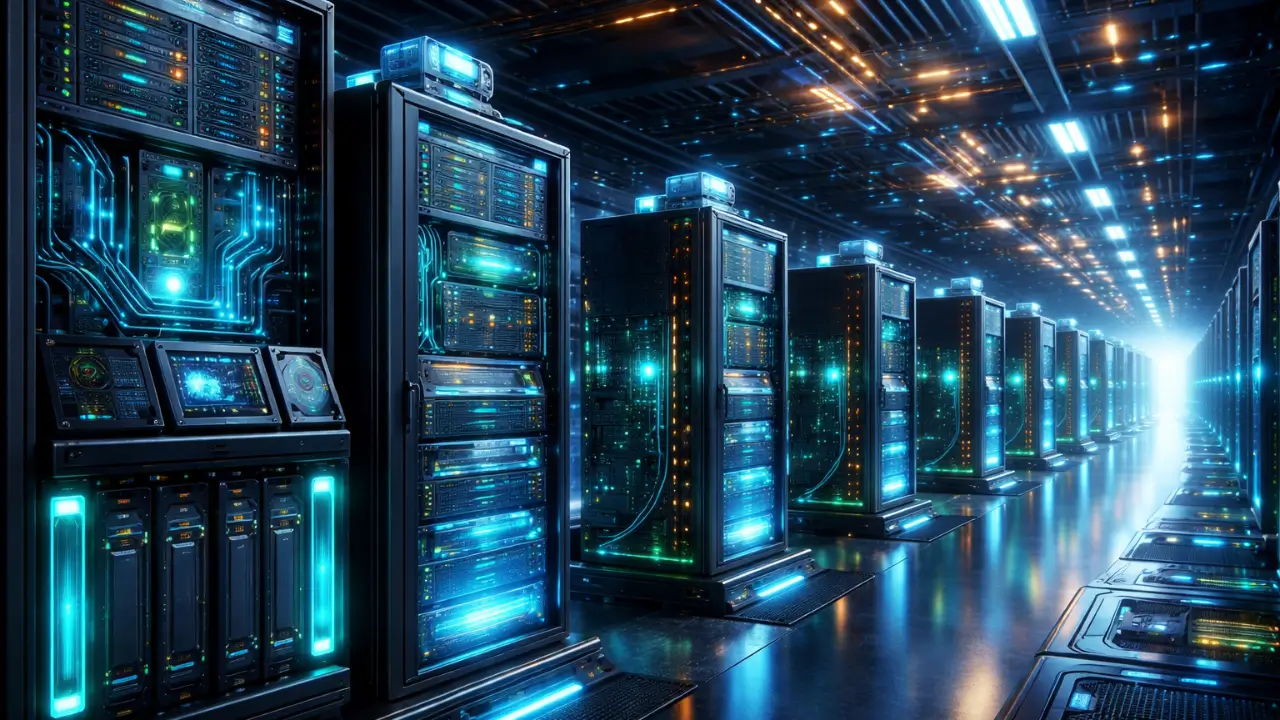
The physical architecture of the modern data center is undergoing a profound transformation that prioritizes localized autonomy over the traditional monolithic command structure, a shift technically defined as distributed operational architecture. Global digital infrastructure providers are increasingly moving away from the “single pane of glass” philosophy that once dominated the industry’s operational playbook. This shift occurs not through a sudden pivot in strategy, but through a series of incremental adjustments to power distribution and cooling logic. Engineers now favor systems that can sustain independent functionality even when disconnected from a primary administrative core. Such developments represent a fundamental change in how uptime is managed across vast server halls. The industry’s reliance on a singular, all-encompassing control node is quietly fading into the background of legacy design.

Technical management teams are witnessing a redistribution of decision-making authority within the hardware layer itself. Modern power modules and cooling units now possess integrated logic controllers that handle immediate fluctuations without seeking permission from a central server. This evolution ensures that localized stressors do not propagate through the entire facility’s network, creating a natural buffer against cascading failures. While the term decentralization is often avoided in official press releases, the practical application of the concept is increasingly visible in many newly commissioned Tier III and Tier IV facilities. Industry leaders are prioritizing autonomous subsystems in these environments to enhance overall resilience as rack density and operational complexity continue to rise. Consequently, the operational burden is gradually shifting from a centralized human team to automated, site-specific hardware protocols.
Redefining Power Distribution Through Localized Logic
The traditional model of power management relied on a top-down approach where a central Uninterruptible Power Supply (UPS) governed the entire floor’s electricity flow. Today, designers are moving toward modular power architectures where individual rows or even individual racks manage their own energy conversion and storage. This granular approach limits the blast radius of any potential electrical fault, ensuring that a localized short circuit remains isolated. By embedding intelligence directly into the Power Distribution Units (PDUs), facilities can balance loads with millisecond precision that far exceeds human-monitored capabilities. This shift reduces the necessity for a constant, high-bandwidth connection to a master control room for routine operations. The resulting infrastructure is more robust, as each segment functions as a self-contained unit of productivity.
Furthermore, the integration of local energy storage at the rack level represents a departure from the massive battery rooms of the previous decade. These localized systems provide an immediate bridge during power transitions, bypassing the latency inherent in calling for central backup reserves. Operators are finding that this distributed energy model provides a higher degree of flexibility for high-performance computing (HPC) environments. Because these environments demand rapid surges in power, a centralized system often struggles to react without impacting the entire facility’s voltage stability. Distributing the logic allows the infrastructure to absorb these spikes locally, maintaining steady state for neighboring hardware. This design choice reflects a pragmatic move toward operational independence within the physical site.

Thermal Autonomy and the End of Global Cooling Loops
Cooling systems are following a similar trajectory toward localized, autonomous regulation. Historically, a central chiller plant dictated the temperature for the entire hall based on a few strategically placed sensors. Modern facilities now utilize in-row or on-chip cooling solutions that respond exclusively to the thermal profile of specific hardware clusters. These units utilize internal PID (Proportional-Integral-Derivative) loops to adjust fan speeds and coolant flow rates in real-time. This ensures that a heat spike in a high-density AI cluster does not trigger an unnecessary cooling surge in a low-activity storage row. By decoupling the cooling logic from the central building management system, providers achieve higher energy efficiency and tighter thermal control.
The shift toward liquid cooling further emphasizes the need for localized control mechanisms. Manifolds equipped with independent leak detection and flow regulation now manage the thermal exchange at the source of heat generation. This localized oversight prevents a minor sensor error in one corner of the facility from impacting the cooling setpoints elsewhere. As rack densities rise into significantly higher power envelopes, particularly within AI and high-performance computing clusters, the lag time of a centralized cooling response becomes a measurable risk factor. Engineers are therefore building thermal islands that operate under their own logic parameters, reporting back to the center primarily for long-term telemetry. This ensures that the primary cooling mission maintaining the hardware’s safe operating range is never compromised by network congestion or central logic failures.
Edge-Informed Architectures and the Shift in Latency Management
The rise of regional processing hubs has forced a rethink of how data centers interact with their broader networks. Instead of funneling every operational metric to a global headquarters for analysis, facilities are processing their own operational data on-site. This edge-informed approach allows the building to react to environmental changes, such as a sudden rise in outside humidity or a grid frequency fluctuation, without external guidance. The latency involved in sending diagnostic data to a remote cloud and waiting for a command signal is increasingly unacceptable for mission-critical sites. Therefore, the local facility acts as its own brain, making executive decisions about resource allocation in real-time. This autonomy is essential for maintaining the extremely high availability thresholds demanded by mission-critical digital infrastructure. Local decision making allows facilities to respond instantly to environmental or grid-level changes without waiting on remote orchestration, reducing exposure to latency-driven failures.
This operational shift also changes how maintenance is performed and how upgrades are rolled out. When each section of the data center operates with a degree of autonomy, technical teams can isolate and service specific blocks without interrupting the global logic. This modularity facilitates a rolling update style of facility management, where the infrastructure evolves in stages. It removes the risk associated with a global reboot or a comprehensive software update to the building’s management system. As a result, the facility becomes a living organism composed of many independent parts rather than a rigid, single-entity structure. This provides the agility required to support rapidly changing workloads like generative artificial intelligence and real-time data streaming.
The Evolution of Hardware-Level Security and Compliance
Security protocols are also migrating from the perimeter and the central server to the individual component level. In the previous era, a central firewall and a primary access controller managed the security posture of the entire facility. Now, each server node and storage array often carries its own root-of-trust silicon, ensuring that boot sequences are secure regardless of the network state. This distributed security model ensures that if the central management network is compromised, the individual hardware assets remain protected and locked down. Such a design reflects a Zero Trust philosophy applied to physical and logical infrastructure management. It effectively turns every rack into a secure fortress that doesn’t rely solely on the gates of the central control room.
Compliance monitoring is similarly becoming a more localized function within the data center ecosystem. Automated auditing tools increasingly reside within local management controllers, continuously recording configurations and validating them against defined operational and security policies. These local logs are synchronized with central repositories for oversight and reporting, while immediate safeguards can be applied locally to limit exposure until human or centralized review occurs. It eliminates the delay between the detection of a compliance gap and its remediation. By empowering the local hardware to self-correct, the industry is reducing the human error factor associated with manual central overrides.
Software-Defined Infrastructure as the Invisible Coordinator
While the physical control is moving outward, a new layer of software-defined infrastructure acts as a non-intrusive coordinator. This layer does not command the hardware in the traditional sense; instead, it sets the boundaries within which the local controllers must operate. Think of it as a set of guardrails rather than a steering wheel, allowing the local systems to navigate their own paths. This distinction is crucial because it allows for the diversity of hardware found in modern multi-tenant facilities. A single central controller often struggles to manage a mix of legacy air-cooled racks and modern liquid-cooled pods effectively. Software-defined coordination allows each system to use its native logic while still contributing to a unified operational goal.
This approach also facilitates better integration with renewable energy sources and microgrids. Localized controllers can adjust their power draw based on the immediate availability of solar or wind energy at the site level. They do not need to wait for a global command to switch to eco-mode if the local conditions are favorable. This responsiveness is vital for data centers aiming to meet aggressive sustainability targets without sacrificing performance. The invisible coordinator ensures that while the racks are acting independently, they are not acting at cross-purposes. It creates a harmonious environment where the sum of the parts is more resilient than a single, centralized whole.
The Future of the Autonomous Data Hall
The trajectory of this shift points toward data halls that rely far less on continuous centralized intervention and far more on localized optimization and fault response. In several advanced facilities today, machine learning systems are already being used to identify early warning signs of component degradation by analyzing temperature patterns, power behavior, and vibration data. These insights allow operators to adjust workloads, cooling profiles, or maintenance schedules proactively, with decision logic situated close to the source of data generation.
The transition away from central control is a pragmatic response to the sheer scale of modern digital infrastructure. As data centers grow into gigascale campuses, the old methods of centralized management become a bottleneck and a point of failure. By distributing the intelligence throughout the facility, operators can manage complexity while increasing reliability. This quiet exit of the central command model marks a new maturity in the industry. It acknowledges that in a world of massive data and instant demands, the most effective control is the one that is closest to the work. The data center of tomorrow will not be a single machine, but a collaborative colony of independent, intelligent systems.
Conclusion: A New Standard of Resilience
The industry’s move toward distributed operational architecture is now a standard practice for high-availability environments. By focusing on localized logic and autonomous subsystems, data centers are mitigating the risks inherent in monolithic designs. This evolution ensures that the global digital economy remains stable, even as individual components or network segments face challenges. The shift is subtle, often hidden within the specifications of a PDU or a cooling manifold, yet its impact is transformative. As we look forward, the trend of empowering the edge within the data center itself will only accelerate. This represents the most significant, albeit quiet, revolution in data center management in the last twenty years.










