 Skip to content
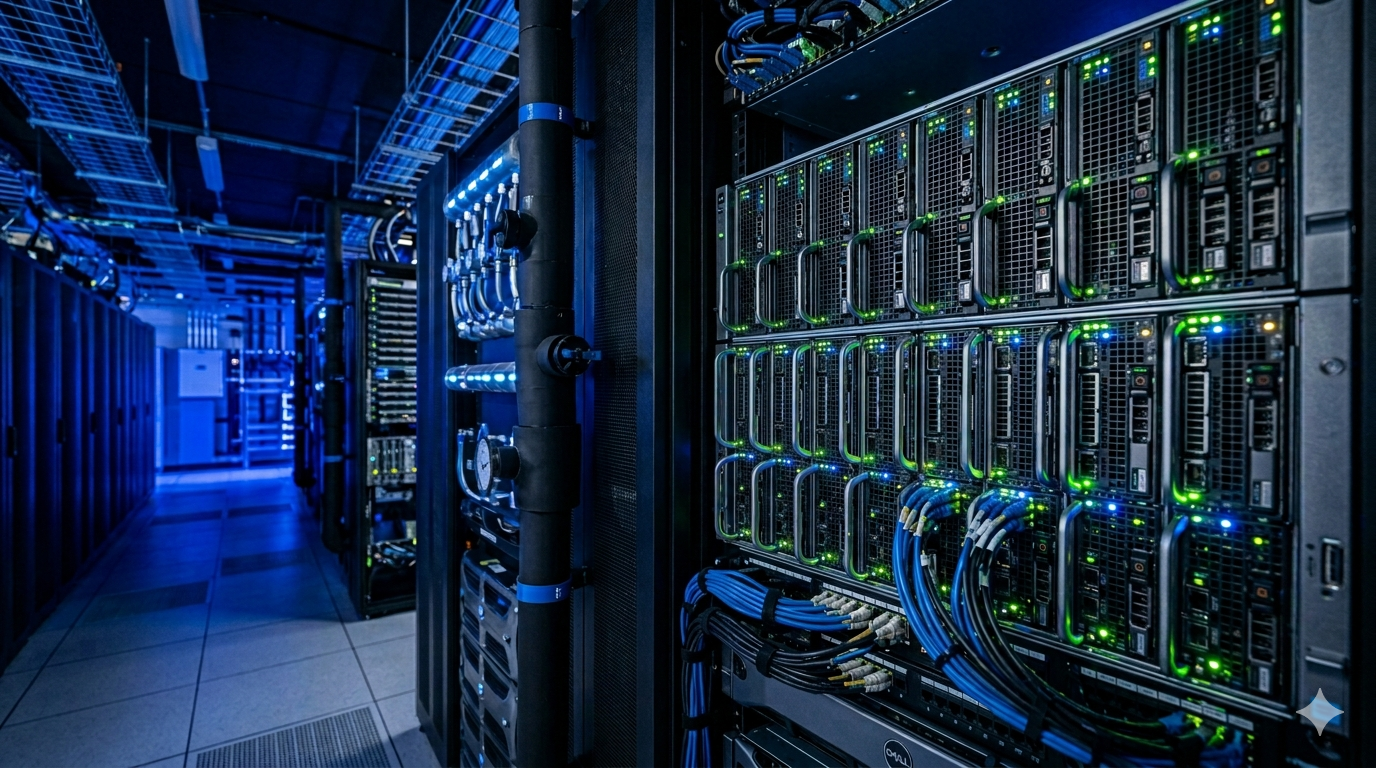
The rack was never the bottleneck. For most of data center history, the limiting factor was floor space, fiber, or power at the facility level. The rack itself was a passive container. Engineers filled it with servers, ran cables, and moved on. That era is ending. AI compute hardware is pushing rack-level power consumption toward thresholds that surrounding infrastructure cannot support. The 600kW rack is not a future problem. It is arriving now. The industry does not have a clean answer for it.

How the Rack Became the Hardest Problem in AI Infrastructure
Nvidia‘s current GB200 chips consume around 120 kilowatts per rack. Future generations are expected to push that figure toward 600 kilowatts by late 2027. That number forces a complete rethink of how power gets delivered and heat gets removed at the rack level. Conventional alternating current power distribution targets kilowatt-scale racks. It cannot efficiently serve megawatt-scale compute. Conversion losses and infrastructure complexity grow in ways that undermine the efficiency gains AI operators need.
The industry response centers on two parallel tracks. The first is a shift toward 800-volt direct current power architecture. This reduces conversion losses and delivers high-density power to the rack more efficiently. Vertiv, Schneider Electric, Hitachi, and several other vendors have announced 800VDC platform designs timed to Nvidia’s Rubin Ultra rollout in 2027. The second track is liquid cooling. It is the only realistic method of removing heat at densities that 600kW racks generate. Air cannot move fast enough or carry enough thermal load to keep these systems within safe operating temperature ranges.
Why Neither Solution Is Ready at Scale
The problem is not that 800VDC or liquid cooling are technically unproven. Both work. Deploying them at scale inside existing facilities requires infrastructure changes that take time and capital. Most colocation facilities use conventional AC power distribution and air-cooled raised-floor designs. Retrofitting them for liquid cooling and high-voltage DC power delivery is an engineering challenge that no single vendor has fully solved. Maintaining operational continuity for existing customers during that retrofit makes it harder still.

New builds have more flexibility but face a different constraint. Supply chains for components that support 600kW racks are not yet mature. Centralized rectifiers, high-efficiency DC busways, rack-level DC-to-DC converters, and coolant distribution units all carry long lead times. Procurement challenges compress development timelines in ways that developers have not fully absorbed. Facilities planned today for hardware arriving in 2027 require procurement decisions now. Many of those component specifications are still being finalised.
What the 600kW Rack Actually Demands From the Facility
A 600kW rack does not exist in isolation. It sits inside a facility that must support its power delivery, thermal management, structural load, and network connectivity simultaneously. Liquid cooling infrastructure adds weight that older floor systems cannot carry. Piping, coolant distribution units, and associated mechanical systems require floor penetrations that conflict with conventional cable management approaches.
Power delivery at this density creates campus-level electrical demands that go far beyond what conventional data center development assumed. A 1,000-rack AI cluster drawing 600kW per rack needs 600 megawatts of total facility power. Connecting that load to the grid requires transmission-level infrastructure, dedicated substations, and interconnection agreements. Securing those agreements takes years in most markets. The rack problem and the grid problem are not separate challenges. They are the same challenge viewed from different points in the infrastructure stack.
The Operators Who Move First Will Set the Terms
Hyperscalers and AI-native operators committing to infrastructure designs for megawatt-scale compute today build a development advantage that compounds over time. Facilities designed around 800VDC power delivery and direct-to-chip liquid cooling from the ground up avoid the retrofit costs that operators who delay will eventually face. Building right the first time costs less than rebuilding under competitive pressure.
Moving first also builds something less visible but equally valuable. Organizational expertise to run these facilities at scale develops before that expertise becomes widely available in the labor market. Operating 600kW racks reliably requires engineering capability that does not exist in large supply today. Facilities that deploy these systems early develop that capability internally. Those that wait will find themselves competing for a limited pool of engineers who learned it elsewhere. In a market where execution speed determines competitive position, the talent gap may prove harder to close than the infrastructure gap.
Why the 600kW Rack Is a Systems Problem, Not a Component Problem
Framing the 600kW rack as a power problem or a cooling problem understates what it actually demands. It is a systems integration problem. Power delivery, thermal management, structural support, facility water, and grid access all need to work together. Conventional data center development never required that level of coordination. Solving the cooling problem without solving power delivery still produces a facility that cannot support 600kW racks. Solving both without grid capacity produces the same result.
The vendors and operators making progress on this problem treat it as a systems challenge from the start. Power, cooling, and structural requirements get specified together rather than sequentially. Utility planners and grid operators come into the conversation years before facilities come online. Supply chain relationships for 800VDC components and liquid cooling infrastructure develop now rather than when demand materialises. The 600kW rack will define the next phase of AI infrastructure development. The operators who treat it as a systems problem will build the facilities that win the workloads.












